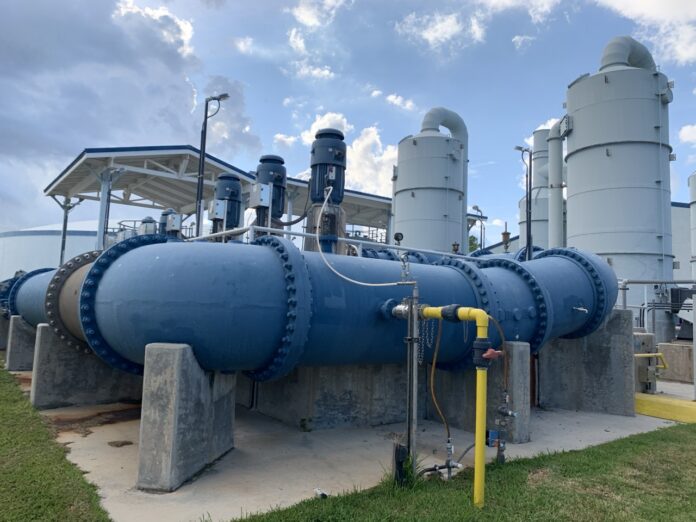

















Proposed East Texas water pipeline and the growing thirst for distant water – resilience.org

Report on Groundwater Resource Conflict in East Texas and Implications for Sustainable Development Goals
1.0 Introduction: Water Rights and Sustainable Management
A conflict over groundwater extraction in the Neches Trinity Valleys Groundwater Conservation District, East Texas, highlights critical challenges in water resource management that directly impact the achievement of several United Nations Sustainable Development Goals (SDGs). The dispute centers on a proposal to transfer vast quantities of water from a rural aquifer to serve growing urban centers, pitting economic interests against local livelihoods and environmental sustainability. This case serves as a microcosm of the global struggle to ensure equitable access to water, as outlined in SDG 6 (Clean Water and Sanitation), while balancing the needs of agriculture, urban development, and ecosystem preservation.
2.0 Case Analysis: The Carizzo-Wilcox Aquifer Dispute
2.1 The Proposal and Legal Framework
The conflict was initiated by permits sought by entities controlled by Dallas-based hedge fund manager Kyle Bass. The plan involves the annual withdrawal of approximately 15 billion gallons of water from the Carizzo-Wilcox aquifer for potential sale to metropolitan areas. The legal basis for this proposal is Texas’s “rule-of-capture” water rights doctrine, which permits landowners to withdraw water from an aquifer beneath their property. This legal framework raises significant questions regarding its compatibility with modern principles of sustainable and equitable resource management, a core tenet of SDG 16 (Peace, Justice and Strong Institutions), which calls for effective and accountable institutions.
2.2 Stakeholder Concerns and Community Impact
The primary stakeholders in opposition are local farmers and ranchers whose livelihoods are dependent on the aquifer. Their concerns focus on the potential for their wells to be depleted, which would undermine the regional agricultural economy. This directly threatens the achievement of:
- SDG 2 (Zero Hunger): Depleting water resources for agriculture jeopardizes local food production and the viability of farming enterprises, undermining targets for sustainable agriculture.
- SDG 8 (Decent Work and Economic Growth): The potential collapse of agricultural livelihoods represents a significant threat to sustained and inclusive economic growth in the rural community.
While the plan has faced legal setbacks, the ongoing nature of the dispute underscores the tension between different economic models and their alignment with sustainable development principles.
3.0 Urban Expansion and Resource Pressure
3.1 The Driving Force of Urban Demand
The demand for this water transfer is driven by the rapid growth of Texas’s metropolitan areas, including Dallas, San Antonio, and Austin. This phenomenon, where “water moves uphill toward money,” reflects a pattern of resource extraction from rural areas to support urban expansion. This trend presents a major challenge to SDG 11 (Sustainable Cities and Communities), which requires cities to develop sustainable and resilient infrastructure without negatively impacting surrounding regions.
3.2 Precedent and Consequences
The existing 140-mile Vista Pipeline, which already transports 16 billion gallons of water annually from the same aquifer to San Antonio, serves as a precedent. Reports indicate that this existing withdrawal has already adversely affected water flows in nearby wells. This situation highlights a failure in integrated water resources management, a key target of SDG 6, and points to the need for urban planning that incorporates principles of SDG 12 (Responsible Consumption and Production) to manage water demand more effectively.
4.0 Conclusion: A Call for Integrated and Sustainable Water Governance
The East Texas groundwater conflict illustrates the profound interconnectedness of various Sustainable Development Goals. The resolution of such disputes requires a holistic approach that moves beyond outdated legal frameworks toward integrated water governance. Key considerations for achieving a sustainable outcome include:
- Policy and Institutional Reform: Re-evaluating water rights laws like the “rule-of-capture” to ensure they promote equitable and sustainable water allocation, in line with SDG 16.
- Integrated Resource Management: Implementing comprehensive management plans for aquifers that account for the needs of all users—urban, rural, and environmental—as mandated by SDG 6.
- Sustainable Urban Planning: Encouraging water conservation and efficiency in growing cities to reduce pressure on external water sources, thereby supporting SDG 11 and SDG 12.
- Protecting Rural Livelihoods and Ecosystems: Recognizing the critical link between rural water resources, food security (SDG 2), and the health of terrestrial ecosystems (SDG 15).
Ultimately, ensuring long-term water security for all Texans requires a governance model that acknowledges the finite nature of water resources and prioritizes sustainable and equitable management over short-term economic gain.
Analysis of Sustainable Development Goals in the Article
1. Which SDGs are addressed or connected to the issues highlighted in the article?
-
SDG 6: Clean Water and Sanitation
The entire article revolves around the management, rights, and sustainable use of freshwater resources, specifically groundwater from aquifers in Texas. It discusses issues of water withdrawal, scarcity, and conflicts between different users (rural communities vs. urban centers).
-
SDG 2: Zero Hunger
The article directly connects water availability to agriculture and food production. It highlights the concerns of “farmers and ranchers” whose “livelihoods” are threatened by large-scale water extraction, which could undermine local and regional food security.
-
SDG 11: Sustainable Cities and Communities
The conflict described is driven by the water demands of “growing metropolises” like Dallas, San Antonio, and Austin. The article discusses the infrastructure (pipelines) built to move water from rural areas to cities, raising questions about the sustainability of urban water supplies and their impact on surrounding regions.
-
SDG 15: Life on Land
The article focuses on the exploitation of major aquifers like the Ogallala and Carizzo-Wilcox. These aquifers are critical inland freshwater ecosystems, and their depletion affects not only human water supply but also the health of the surrounding terrestrial ecosystems that depend on them.
2. What specific targets under those SDGs can be identified based on the article’s content?
-
Target 6.4: By 2030, substantially increase water-use efficiency across all sectors and ensure sustainable withdrawals and supply of freshwater to address water scarcity.
The article’s central theme is the conflict over “dwindling water resources” and the need to manage withdrawals. The plan to extract “15 billion gallons annually” and the existing pipeline moving “16 billion gallons of water per year” from the same aquifer highlight the challenge of ensuring sustainable withdrawals to prevent water scarcity for existing users like farmers and ranchers.
-
Target 6.5: By 2030, implement integrated water resources management at all levels.
The article discusses various levels of water management, from individual property rights (“rule-of-capture”) to regulatory bodies (“Neches Trinity Valleys Groundwater Conservation District”) and legal challenges (“adverse court rulings”). The conflict between urban needs, commercial interests (Kyle Bass), and rural livelihoods demonstrates the critical need for an integrated approach to manage competing demands on a shared resource.
-
Target 2.4: By 2030, ensure sustainable food production systems and implement resilient agricultural practices.
The article explicitly states that farmers and ranchers “worry that their water supplies will be adversely affected and thereby undermine their livelihoods.” This directly links the sustainability of water resources to the viability of agricultural production systems in the region.
-
Target 11.a: Support positive economic, social and environmental links between urban, peri-urban and rural areas by strengthening national and regional development planning.
The article illustrates a negative environmental and social link, where urban growth is sustained by extracting essential resources from rural areas, creating conflict. The movement of water via the “140-mile Vista Pipeline” from rural counties to San Antonio is a clear example of a rural-urban resource flow that requires better regional planning to be sustainable and equitable.
3. Are there any indicators mentioned or implied in the article that can be used to measure progress towards the identified targets?
-
Indicator for Target 6.4 (Implied): Volume of annual freshwater withdrawal.
The article provides specific figures that can be used as indicators of water stress, such as the “15 billion gallons annually” sought by one entity and the “16 billion gallons of water per year” already being moved by the Vista Pipeline. Tracking these volumes is essential for measuring the sustainability of withdrawals.
-
Indicator for Target 6.4 (Implied): Water levels in wells and aquifers.
The text mentions that existing withdrawals have “adversely affected water flows from wells near where the pipeline pumps its water supply.” This implies that monitoring water levels in local wells and the overall health of the aquifer serves as a direct indicator of the impact of water extraction and progress towards sustainability.
-
Indicator for Target 6.5 (Implied): Existence and enforcement of water management laws and agreements.
The article references Texas’s “rule-of-capture water rights,” the role of a “Groundwater Conservation District,” and ongoing “court rulings.” The development, implementation, and effectiveness of these legal and regulatory frameworks are indicators of progress in integrated water resources management.
-
Indicator for Target 2.4 (Implied): Economic viability of farms and ranches.
The concern that water extraction will “undermine their livelihoods” points to the economic health of the agricultural sector as a key indicator. A decline in the number of active farms or agricultural output in the region could indicate a failure to maintain sustainable food production systems due to water scarcity.
Summary of SDGs, Targets, and Indicators
| SDGs | Targets | Indicators |
|---|---|---|
| SDG 6: Clean Water and Sanitation | 6.4: Ensure sustainable withdrawals and supply of freshwater to address water scarcity. |
|
| SDG 6: Clean Water and Sanitation | 6.5: Implement integrated water resources management at all levels. |
|
| SDG 2: Zero Hunger | 2.4: Ensure sustainable food production systems. |
|
| SDG 11: Sustainable Cities and Communities | 11.a: Support positive links between urban and rural areas through regional planning. |
|
| SDG 15: Life on Land | 15.1: Ensure the conservation and sustainable use of inland freshwater ecosystems. |
|
Source: resilience.org
What is Your Reaction?
 Like
0
Like
0
 Dislike
0
Dislike
0
 Love
0
Love
0
 Funny
0
Funny
0
 Angry
0
Angry
0
 Sad
0
Sad
0
 Wow
0
Wow
0