
























































READ adult literacy program looking for volunteer tutors – thealpenanews.com
READ Adult Literacy Program Advances Sustainable Development Goals in Northeast Michigan
Program Overview and Impact
For over 40 years, the READ adult literacy program has provided free educational services to more than 400 residents of Northeast Michigan. The program focuses on enhancing literacy skills, teaching English as a second language (ESL), and assisting adults in earning their GEDs. This initiative directly supports the United Nations Sustainable Development Goal (SDG) 4: Quality Education, by promoting inclusive and equitable quality education and lifelong learning opportunities for all.
Volunteer Tutor Training and Engagement
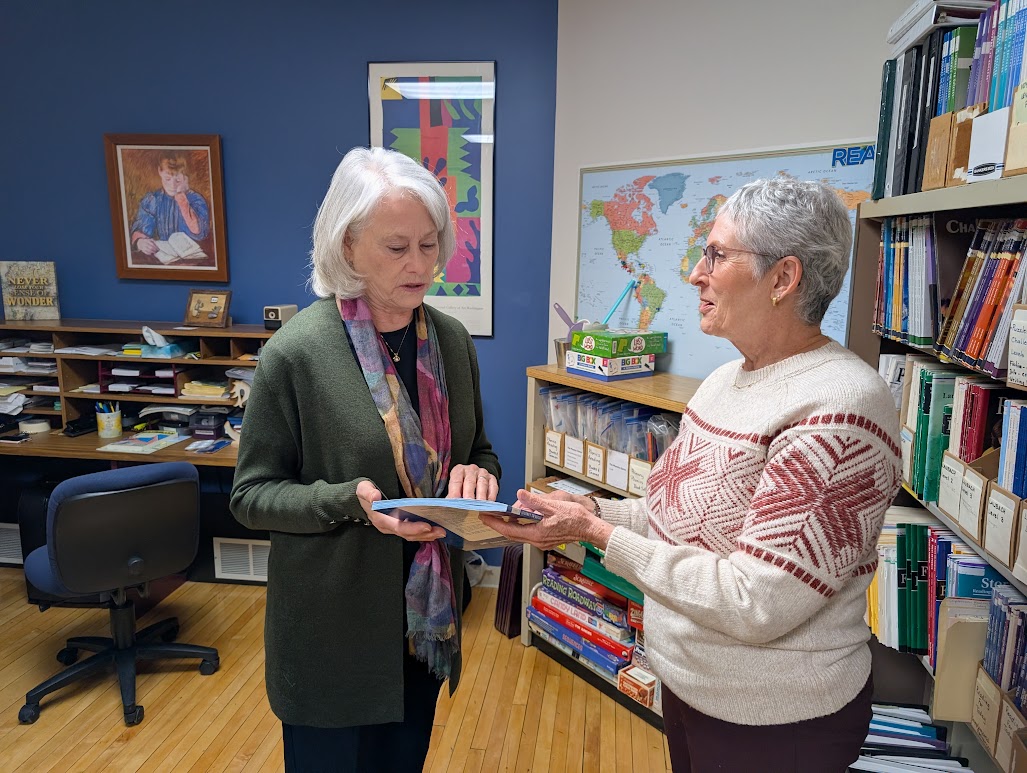
The program is actively recruiting and training volunteer literacy tutors to expand its reach. Coordinators Pat Garant and Leslie Kirchoff, both former educators and Alpena County Library affiliates, oversee the program. They emphasize individualized tutoring, matching one tutor with one learner to tailor instruction to specific needs, thereby enhancing learning outcomes.
Tutor Roles and Commitment
- Volunteers select their preferred tutoring focus: literacy, ESL, or GED preparation.
- No prior teaching experience is required, encouraging broader community participation.
- Tutors commit to a minimum of one year, with many extending their service beyond this period.
Current Program Statistics
- Number of active learners: 18
- GED learners: 2
- Literacy learners: 7
- ESL learners: 9
- Volunteer tutors on the list: Approximately 25 (not all actively tutoring)
Addressing Diverse Learner Needs
Adult learners engage with the program for various reasons, including:
- Learning to read for the first time
- Improving existing literacy skills
- Achieving specific personal goals, such as renewing disability benefits
This personalized support aligns with SDG 10: Reduced Inequalities, by empowering marginalized adults through education and skill development.
Community Impact and Volunteer Benefits
Volunteers experience a strong sense of community and personal fulfillment by contributing to one-on-one learning. The program fosters social inclusion and community engagement, supporting SDG 11: Sustainable Cities and Communities.
Examples include new residents building local relationships through tutoring, demonstrating the program’s role in social cohesion.
Training Schedule and Participation
The annual in-person tutor training sessions are scheduled as follows at the Alpena County Library:
- January 20: Basic Literacy I
- January 22: Basic Literacy II
- January 27: ESL Training
- January 29: GED Training
Each session runs from 4:30 p.m. to 6:30 p.m. Volunteers may attend sessions of interest. Additionally, online training is available year-round to accommodate diverse schedules.
Contact Information
- Phone: 989-356-6188 ext. 15
- Email: readprogram@alpenalibrary.org
Conclusion
The READ adult literacy program exemplifies community-driven efforts to achieve multiple Sustainable Development Goals by providing accessible education, reducing inequalities, and fostering inclusive communities. Continued volunteer involvement and training are vital to sustaining and expanding these impacts.
1. Sustainable Development Goals (SDGs) Addressed or Connected
- SDG 4: Quality Education
- The article focuses on adult literacy, ESL education, and GED preparation, which directly relate to ensuring inclusive and equitable quality education and promoting lifelong learning opportunities for all.
- SDG 10: Reduced Inequalities
- The program supports adults who may have limited literacy or language skills, helping reduce social inequalities by providing free educational resources and personalized tutoring.
- SDG 17: Partnerships for the Goals
- The collaboration between the READ program, Alpena County Library, and community volunteers exemplifies partnerships to achieve sustainable development goals.
2. Specific Targets Under Those SDGs
- SDG 4: Quality Education
- Target 4.6: Ensure that all youth and a substantial proportion of adults, both men and women, achieve literacy and numeracy.
- Target 4.4: Increase the number of youth and adults who have relevant skills, including technical and vocational skills, for employment and entrepreneurship.
- SDG 10: Reduced Inequalities
- Target 10.2: Empower and promote the social, economic and political inclusion of all, irrespective of age, sex, disability, race, ethnicity, origin, religion or economic or other status.
- SDG 17: Partnerships for the Goals
- Target 17.17: Encourage and promote effective public, public-private and civil society partnerships, building on the experience and resourcing strategies of partnerships.
3. Indicators Mentioned or Implied to Measure Progress
- For SDG 4 Targets:
- Number of adults enrolled and completing literacy, ESL, and GED programs (implied by the count of learners and tutors).
- Proportion of adults achieving literacy and numeracy skills (implied by learner progress and success stories such as the gentleman renewing disability benefits).
- Number of trained volunteer tutors providing individualized instruction (implied by the volunteer tutor list and training sessions).
- For SDG 10 Targets:
- Number of marginalized adults accessing free literacy and language education (implied by the program serving over 400 residents at zero cost).
- For SDG 17 Targets:
- Number and quality of partnerships between community organizations and volunteers (implied by the collaboration between the library, coordinators, and volunteers).
4. Table of SDGs, Targets, and Indicators
| SDGs | Targets | Indicators |
|---|---|---|
| SDG 4: Quality Education |
|
|
| SDG 10: Reduced Inequalities |
|
|
| SDG 17: Partnerships for the Goals |
|
|
Source: thealpenanews.com
What is Your Reaction?
 Like
0
Like
0
 Dislike
0
Dislike
0
 Love
0
Love
0
 Funny
0
Funny
0
 Angry
0
Angry
0
 Sad
0
Sad
0
 Wow
0
Wow
0