
















Record cocaine seizure in Haitian waters underlines country’s ‘pivotal’ trafficking role – UN News
Report on the Security Crisis and Illicit Trafficking in Haiti: An SDG Perspective
Introduction: A Compounding Crisis Undermining Sustainable Development
Haiti is experiencing a severe security crisis characterized by gang warfare for territorial control, which is exacerbating humanitarian and economic distress. This situation represents a significant setback for the achievement of the Sustainable Development Goals (SDGs), particularly SDG 16 (Peace, Justice and Strong Institutions). The violence and instability have led to the displacement of hundreds of thousands, directly impeding progress on SDG 1 (No Poverty) and SDG 11 (Sustainable Cities and Communities). Furthermore, evidence suggests an increasing nexus between local gangs and international organized crime networks, primarily for drug trafficking, which threatens regional stability and undermines SDG 8 (Decent Work and Economic Growth).
Analysis of Illicit Drug Trafficking Operations
Recent Major Seizures
Recent interdictions highlight the scale of trafficking and the failure to meet SDG Target 16.4, which aims to significantly reduce illicit financial and arms flows. Notable seizures include:
- Cocaine: A record 1,045 kilograms seized in July 2025 near Île de la Tortue, marking the largest bust in over three decades.
- Cannabis: 426 kilograms confiscated in Petite-Anse in July 2025.
- Regional Interdiction: Over 1,350 kilograms of cannabis seized in Jamaica in July 2025, involving two Haitian nationals.
Established Trafficking Routes and Destinations
The flow of narcotics through Haiti indicates sophisticated transnational networks that challenge global partnerships for sustainable development (SDG 17). Intelligence suggests the following routes:
- Cocaine originating from South America is trafficked through Haiti for distribution across the Caribbean and to the United States.
- Evidence from the UN Office on Drugs and Crime (UNODC) confirms shipments to Europe, with Belgian authorities seizing 1,156 kg of cocaine in Antwerp from a container originating in Haiti in August 2025.
The Role of Gangs in Undermining Peace and Justice (SDG 16)
Control of Strategic Corridors
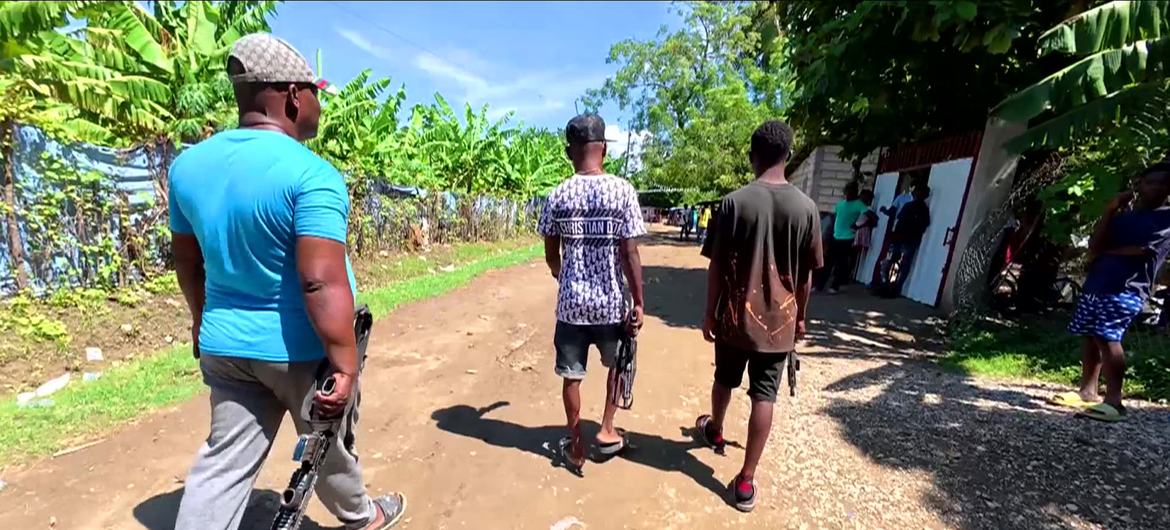
Gangs have entrenched their control over strategic transit corridors in Port-au-Prince and along the border with the Dominican Republic. This control subverts state authority and creates lawless zones, directly contravening the principles of SDG 16. By managing these routes, gangs facilitate the movement of drugs and other contraband, including arms, with impunity. This activity not only fuels violence but also cripples local economies through extortion, hindering progress on SDG 8.
Maritime Criminal Activities
Gangs are extending their influence to maritime routes, extorting tolls from boats and engaging in armed robbery at sea. This demonstrates a breakdown in governance and the rule of law on which SDG 16 is built. Intelligence from Jamaica also confirms a guns-for-drugs trade involving Haitian gangs, further fueling the cycle of violence and instability.
Contributing Factors to Haiti’s Role as a Transshipment Hub
Geostrategic Vulnerabilities
Haiti’s geography, particularly remote areas like Île de la Tortue, is exploited by criminal networks. The island’s size, remoteness, and direct maritime access to the Bahamas, Jamaica, and the Turks and Caicos Islands make it an ideal logistics platform for illicit shipments, undermining efforts to build safe and resilient communities under SDG 11.
Institutional Weaknesses
The primary enabler of this illicit trade is the nation’s struggle to build a robust justice and penal system, a core objective of SDG 16. The inability of state institutions to counter the expansion of criminal gangs allows traffickers to operate with minimal risk, perpetuating a cycle of corruption and violence that erodes public trust and institutional integrity.
Regional Impact and Setbacks for the 2030 Agenda
Haiti’s crisis has significant regional implications, making it a central hub in a multinational trafficking network and threatening collective progress on the SDGs. The involvement of Bahamian and Jamaican nationals in trafficking operations underscores the need for enhanced regional cooperation, as called for in SDG 17. The convergence of drug routes with migrant smuggling operations further complicates the security landscape and creates multifaceted humanitarian challenges. The drug trade contributes directly to regional instability, undermines governance (SDG 16), disrupts economies (SDG 8), and fuels violence, impacting public health and well-being (SDG 3).
UNODC Interventions to Reinforce SDG 16
Strengthening National Capacity
In response, UNODC is supporting Haitian authorities with a multi-pronged strategy aimed at restoring the rule of law and advancing SDG 16. Key initiatives include:
- Border Management: A nationwide initiative to increase interdiction capacity at ports, airports, and land borders to curb illicit flows.
- Maritime Security: The Global Maritime Crime Programme is strengthening the Haitian Coast Guard to secure routes used for narcotics and human trafficking.
- Intelligence-Led Policing: Enhancing law enforcement’s ability to conduct operations against organized crime and improving information exchange with regional partners.
- Anti-Corruption and Justice Reform: Implementing initiatives to strengthen institutional integrity and accountability. This includes the launch of specialized tribunals to handle financial crime, money laundering, and gang-related offenses, with the objective of reducing impunity and restoring public confidence in the justice system.
Analysis of SDGs in the Article
1. Which SDGs are addressed or connected to the issues highlighted in the article?
-
SDG 16: Peace, Justice and Strong Institutions
- The article’s primary focus is on the breakdown of peace and security in Haiti due to gang violence, the struggle to maintain the rule of law, and the proliferation of organized crime, including drug and arms trafficking. It details the weakness of the justice system and the efforts by UNODC to strengthen institutions, combat corruption, and improve law enforcement, which are all central themes of SDG 16.
-
SDG 11: Sustainable Cities and Communities
- The article highlights that gangs are battling for control of territory in the capital, Port-au-Prince, directly impacting urban safety. The resulting “displacement of hundreds of thousands of Haitians” undermines the goal of creating safe and inclusive human settlements.
-
SDG 8: Decent Work and Economic Growth
- The security crisis is explicitly linked to worsening “humanitarian and economic crises” in Haiti. Furthermore, the article mentions “human smuggling” and “trafficking in persons,” which are forms of modern slavery and exploitation that SDG 8 aims to eradicate.
2. What specific targets under those SDGs can be identified based on the article’s content?
-
Under SDG 16: Peace, Justice and Strong Institutions
- Target 16.1: Significantly reduce all forms of violence and related death rates everywhere. This is relevant as the article describes a “security crisis as gangs battle for control of territory” leading to violence and displacement.
- Target 16.2: End abuse, exploitation, trafficking and all forms of violence against and torture of children. The mention of “human smuggling” and “trafficking in persons” directly relates to this target.
- Target 16.3: Promote the rule of law at the national and international levels and ensure equal access to justice for all. The article points to Haiti’s “struggles to build a robust justice and penal system” and UNODC’s efforts to launch “specialized tribunals” to “reduce impunity.”
- Target 16.4: By 2030, significantly reduce illicit financial and arms flows, strengthen the recovery and return of stolen assets and combat all forms of organized crime. This is a core theme, with extensive details on international drug trafficking, the “guns-for-drugs trade,” and the involvement of “international organized crime networks.”
- Target 16.5: Substantially reduce corruption and bribery in all their forms. The article states that “drug trafficking is enabled by entrenched corruption” and that UNODC is working on “strengthening institutional integrity and accountability.”
-
Under SDG 11: Sustainable Cities and Communities
- Target 11.1: By 2030, ensure access for all to adequate, safe and affordable housing and basic services and upgrade slums. The “displacement of hundreds of thousands of Haitians” due to gang violence in the capital directly impacts access to safe housing and community stability.
-
Under SDG 8: Decent Work and Economic Growth
- Target 8.7: Take immediate and effective measures to eradicate forced labour, end modern slavery and human trafficking. This is addressed through the article’s reference to “migrant smuggling operations” and “trafficking in persons” in which Haitian nationals are involved.
3. Are there any indicators mentioned or implied in the article that can be used to measure progress towards the identified targets?
-
Indicators for Target 16.4 (Combat organized crime and illicit flows):
- The article provides specific quantitative data on the volume of illicit drugs seized, which serves as a direct indicator of interdiction efforts. Examples include:
- “A record 1,045 kilograms of cocaine was seized in July 2025”
- “426 kg of cannabis were confiscated”
- “1,156 kg of cocaine in the port of Antwerp in a container originating from Haiti”
- The article provides specific quantitative data on the volume of illicit drugs seized, which serves as a direct indicator of interdiction efforts. Examples include:
-
Indicator for Target 16.1 (Reduce violence):
- The article mentions the “displacement of hundreds of thousands of Haitians” due to insecurity. The number of internally displaced persons (IDPs) due to conflict and violence is a key indicator of the level of insecurity.
-
Indicator for Target 16.3 (Promote rule of law and access to justice):
- The article implies an indicator through the action of launching “specialized tribunals…capable of handling cases involving financial crime, money laundering, gang-related offences.” The establishment and operational capacity of these tribunals can be measured to track progress in strengthening the justice system.
4. Table of SDGs, Targets, and Indicators
| SDGs | Targets | Indicators |
|---|---|---|
| SDG 16: Peace, Justice and Strong Institutions |
16.1: Reduce all forms of violence
16.3: Promote the rule of law and access to justice 16.4: Combat organized crime and illicit flows |
Number of displaced persons (“displacement of hundreds of thousands of Haitians”).
Establishment of justice mechanisms (“Specialized tribunals are being launched”). Volume of seized illicit goods (e.g., “1,045 kilograms of cocaine was seized,” “426 kg of cannabis were confiscated”). |
| SDG 11: Sustainable Cities and Communities | 11.1: Ensure access to safe and adequate housing | Number of people displaced from their homes in urban areas due to violence (“displacement of hundreds of thousands of Haitians” from the capital and beyond). |
| SDG 8: Decent Work and Economic Growth | 8.7: End modern slavery and human trafficking | Prevalence of human trafficking and smuggling (“migrant smuggling operations, in which Haitian nationals are increasingly involved,” “trafficking in persons”). |
Source: news.un.org
What is Your Reaction?
 Like
0
Like
0
 Dislike
0
Dislike
0
 Love
0
Love
0
 Funny
0
Funny
0
 Angry
0
Angry
0
 Sad
0
Sad
0
 Wow
0
Wow
0