



















































Rewilding efforts boosts carbon storage and soil fertility on the Tarutino Steppe – Rewilding Europe
Report on Grassland Rewilding and its Contribution to Sustainable Development Goals
A Case Study of the Tarutino Steppe, Ukraine
This report analyses the impact of rewilding initiatives on grassland ecosystems, focusing on research from the Tarutino Steppe in Ukraine. It evaluates these efforts through the framework of the United Nations Sustainable Development Goals (SDGs), particularly SDG 13 (Climate Action) and SDG 15 (Life on Land).
Analysis of the Tarutino Steppe Ecosystem and Rewilding Initiatives
Ecological Significance and Land Use Context
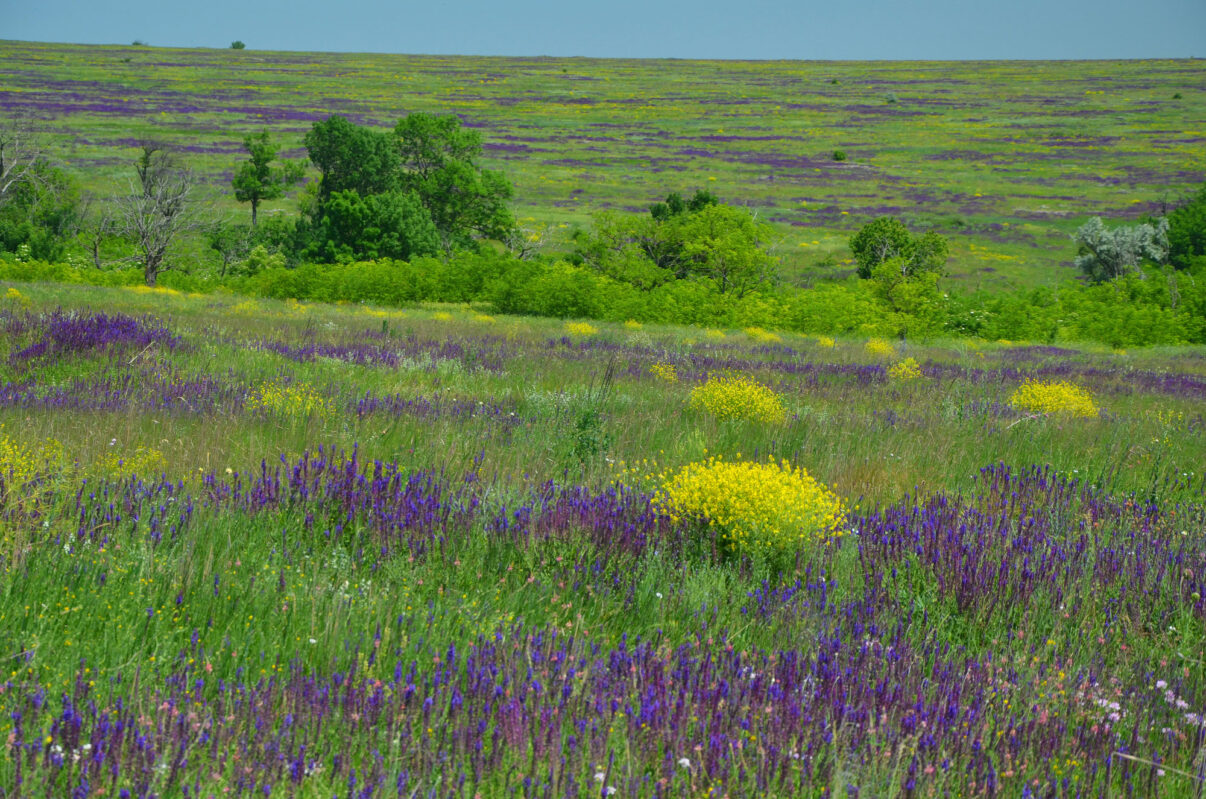
The Tarutino Steppe, a 6,000-hectare grassland within the Danube Delta rewilding landscape, is a critical remnant of European steppe ecosystems. Its fertile, carbon-rich soils are vital for biodiversity and climate regulation. Historically, the productivity of such soils has led to widespread conversion to agriculture, threatening their ecological functions. Current rewilding efforts aim to restore natural processes, directly addressing the targets of SDG 15 by protecting and restoring this vital terrestrial ecosystem.
Rewilding Interventions and Alignment with SDG 15 (Life on Land)
The Rewilding Ukraine team has implemented several key interventions to restore the steppe’s ecological integrity:
- Restoration of illegally ploughed land to combat land degradation.
- Reintroduction of keystone wild herbivores, including fallow deer and kulan (Asiatic wild ass), to restore natural grazing patterns and enhance biodiversity.
These actions directly contribute to SDG 15 by halting biodiversity loss, restoring degraded land, and promoting the sustainable management of terrestrial ecosystems.
Research Findings: Land Management Impacts on Carbon Sequestration and Soil Health
Comparative Analysis of Land Use Practices
A report by the Askania-Nova Biosphere Reserve and the Institute of Botany evaluated soil health across different land-use scenarios within the steppe. The findings highlight a clear hierarchy of environmental impact:
- Optimal Condition (Maximum SDG 13 & 15 Alignment): Areas with low-intensity grazing by wild herbivores exhibited the healthiest soils, characterized by high moisture, balanced pH, and maximum carbon storage.
- Degraded Condition: Land subjected to intensive ploughing for agriculture or repeated, unnaturally frequent wildfires showed the poorest soil quality and significant carbon loss, undermining climate action goals.
- Sustainable Alternative: Sustainable mowing was identified as a viable economic activity that maintains ecosystem health better than intensive agriculture or overgrazing, offering a pathway toward achieving SDG 2 (Zero Hunger) and SDG 8 (Decent Work and Economic Growth) without compromising environmental integrity.
The Role of Wild Herbivores in Climate Action (SDG 13)
The research confirms the critical role of wild herbivores in enhancing the climate resilience of grasslands. Their grazing patterns contribute to carbon sequestration by:
- Transferring carbon from aboveground vegetation to more stable, deep-soil reservoirs through grazing and nutrient cycling (dung and urine).
- Improving soil structure and promoting plant diversity, which increases overall carbon storage capacity.
- Maintaining the ecosystem’s function as a reliable carbon sink, which is crucial for mitigating climate change.
Global Implications for Sustainable Development
Grasslands as a Critical Carbon Sink
Globally, grasslands are essential reservoirs of terrestrial carbon, storing up to 30% of the world’s total, primarily below ground. This makes them more resilient carbon sinks than forests in the face of wildfires. However, unsustainable land management, particularly the expansion of intensive livestock grazing, is transforming many grasslands from carbon sinks into net sources of greenhouse gases. This trend directly conflicts with the objectives of SDG 12 (Responsible Consumption and Production) and SDG 13 (Climate Action).
Recommendations for Policy and Practice
The Tarutino Steppe case study provides a replicable model for grassland management that aligns with the SDGs. The key conclusions are:
- Support Rewilding: Promoting low-intensity grazing by reintroduced wild herbivores is the most effective method for maximizing soil carbon storage and enhancing biodiversity (SDG 13, SDG 15).
- Prevent Degradation: Policies must discourage intensive agricultural practices like ploughing and manage wildfire risks to prevent carbon loss and soil degradation.
- Integrate Sustainable Livelihoods: Supporting sustainable economic activities, such as regulated mowing, allows local communities to benefit from healthy ecosystems. Future opportunities in carbon markets could provide income from nature recovery, contributing to SDG 8.
A global shift towards rewilding and sustainable management of grasslands is a cost-effective and critical strategy for protecting biodiversity, supporting human livelihoods, and achieving the global targets for climate action.
1. SDGs Addressed in the Article
SDG 13: Climate Action
- The article extensively discusses the role of grasslands in mitigating climate change by “absorbing and locking up carbon in their vegetation and soils.” It highlights how rewilding enhances this “carbon storage potential,” thereby having a “positive climate impact” and helping to “bring climate change to a halt.” The text directly addresses the problem of rising “atmospheric carbon dioxide (CO₂)” and the “accelerating climate catastrophe.”
SDG 15: Life on Land
- This is a central theme of the article. It focuses on the restoration and protection of the Tarutino Steppe, a terrestrial ecosystem. Key actions discussed include restoring “parts of the steppe that were illegally ploughed,” reintroducing wild herbivores to restore natural processes, improving soil health, and halting biodiversity loss. The article contrasts sustainable land use (low-intensity grazing) with degrading practices like intensive agriculture and overgrazing, which turn grasslands from “carbon sinks into carbon sources.”
SDG 8: Decent Work and Economic Growth
- The article connects conservation efforts with the economic well-being of local communities. It acknowledges that “the needs of local people still need to be taken into account” and mentions “sustainable mowing” as an “important economic activity.” Furthermore, it points to future economic opportunities, suggesting that healthy ecosystems will “provide an opportunity for local communities to generate income from rewilding and nature recovery via the international carbon market.”
2. Specific Targets Identified
SDG 13: Climate Action
- Target 13.2: Integrate climate change measures into national policies, strategies and planning.
- The article’s promotion of rewilding as a method to enhance carbon sequestration in grasslands is a nature-based solution that can be integrated into climate strategies. The research report mentioned provides the scientific basis for such policy integration, demonstrating how land management can “counter climate change.”
SDG 15: Life on Land
- Target 15.1: By 2020, ensure the conservation, restoration and sustainable use of terrestrial and inland freshwater ecosystems and their services…
- The work of the Rewilding Ukraine team to “create a wilder Tarutino Steppe governed by natural processes” and to have “restored parts of the steppe that were illegally ploughed” is a direct effort towards the conservation and restoration of a terrestrial ecosystem.
- Target 15.3: By 2030, combat desertification, restore degraded land and soil…
- The article’s focus is on improving soil health. The research found that rewilding efforts led to “healthiest soils,” while areas that were “repeatedly burned or intensively ploughed for agriculture were found to have the poorest soils.” This directly addresses the restoration of degraded land and soil.
- Target 15.5: Take urgent and significant action to reduce the degradation of natural habitats, halt the loss of biodiversity…
- The reintroduction of “free-roaming wild herbivores such as fallow deer and kulan (Asiatic wild ass)” is a significant action to restore natural ecological processes and boost biodiversity, thereby halting the degradation of the steppe habitat.
SDG 8: Decent Work and Economic Growth
- Target 8.4: Improve progressively, through 2030, global resource efficiency in consumption and production and endeavour to decouple economic growth from environmental degradation…
- The article proposes shifting from degrading economic activities like “crop production and intense overgrazing” to more sustainable alternatives. It highlights “sustainable mowing” and generating income from the “international carbon market” as ways to create economic value while restoring, rather than degrading, the environment.
3. Indicators for Measuring Progress
Indicators for SDG 13 and SDG 15
- Amount of Carbon Stored in Soil: The article explicitly states that research was conducted to determine “how much carbon is stored and where.” It contrasts the high carbon storage in healthy soils with the “highest levels of carbon loss” in degraded areas. This is a direct, measurable indicator of progress.
- Soil Health Metrics: The research used specific metrics to determine soil quality, which can serve as indicators. These include “higher moisture, a balanced pH (7–8),” and “higher levels of dissolved and labile organic carbon.”
- Proportion of Land Under Sustainable Management: The article categorizes land use into types such as “untouched steppe,” “areas grazed at low intensity,” and “ploughed or mowed farmland.” The percentage of land transitioned from degrading uses (ploughing, intensive grazing) to sustainable uses (low-intensity grazing by wild herbivores) is a clear indicator of restoration progress.
- Biodiversity Levels: The reintroduction and population growth of species like “fallow deer,” “kulan,” and “European bison” serve as a key indicator of ecosystem health and the success of rewilding efforts aimed at halting biodiversity loss.
Indicators for SDG 8
- Income Generated from Sustainable Activities: The article implies an indicator by mentioning the future “opportunity for local communities to generate income from rewilding and nature recovery via the international carbon market.” The amount of income generated from these new, sustainable sources would be a direct measure of success.
4. Summary Table of SDGs, Targets, and Indicators
| SDGs | Targets | Indicators |
|---|---|---|
| SDG 13: Climate Action | 13.2: Integrate climate change measures into national policies, strategies and planning. | Amount of carbon stored in grassland soils. |
| SDG 15: Life on Land | 15.1: Ensure the conservation, restoration and sustainable use of terrestrial ecosystems. | Proportion of land under sustainable management (e.g., low-intensity grazing) versus degraded land (e.g., ploughed). |
| 15.3: Combat desertification, restore degraded land and soil. | Soil health metrics (moisture, pH, organic carbon levels). | |
| 15.5: Halt the loss of biodiversity. | Population counts and health of reintroduced species (kulan, fallow deer). | |
| SDG 8: Decent Work and Economic Growth | 8.4: Decouple economic growth from environmental degradation. | Income generated by local communities from sustainable activities like carbon markets or sustainable mowing. |
Source: rewildingeurope.com
What is Your Reaction?
 Like
0
Like
0
 Dislike
0
Dislike
0
 Love
0
Love
0
 Funny
0
Funny
0
 Angry
0
Angry
0
 Sad
0
Sad
0
 Wow
0
Wow
0