

























Sesi Technologies Is Tackling Africa’s Food Loss Problem with a Moisture Meter – Hackster.io
Report on Agritech Innovation for Sustainable Development: The Case of Sesi Technologies
1. The Global Challenge of Food Loss and its Impact on Sustainable Development Goals
Global food systems face a significant challenge, with approximately 1.3 billion tons of food, one-third of all production, being lost or wasted annually. This issue directly contravenes the objectives of several Sustainable Development Goals (SDGs), particularly in developing nations where post-harvest food loss undermines food security and economic stability.
- SDG 2 (Zero Hunger): Food loss exacerbates food insecurity, particularly for smallholder farmers in regions like Africa, hindering progress towards ending hunger.
- SDG 12 (Responsible Consumption and Production): The scale of food loss highlights inefficiencies in production and supply chains, directly opposing Target 12.3, which aims to halve food waste and reduce food losses, including post-harvest losses, by 2030.
- SDG 1 (No Poverty): For smallholder farmers, who often operate on minimal profit margins, post-harvest losses represent a direct loss of income, perpetuating cycles of poverty.
2. Sesi Technologies: A Localized Approach to Achieving Global Goals
Sesi Technologies, a Ghana-based agritech company founded in 2018, has established a mission directly aligned with achieving SDG 1 (No Poverty) and SDG 2 (Zero Hunger) in Africa. The company focuses on developing and deploying impactful technology solutions to reduce post-harvest losses and improve farm productivity for smallholder farmers and agribusinesses.
3. Technological Interventions for Sustainable Agriculture
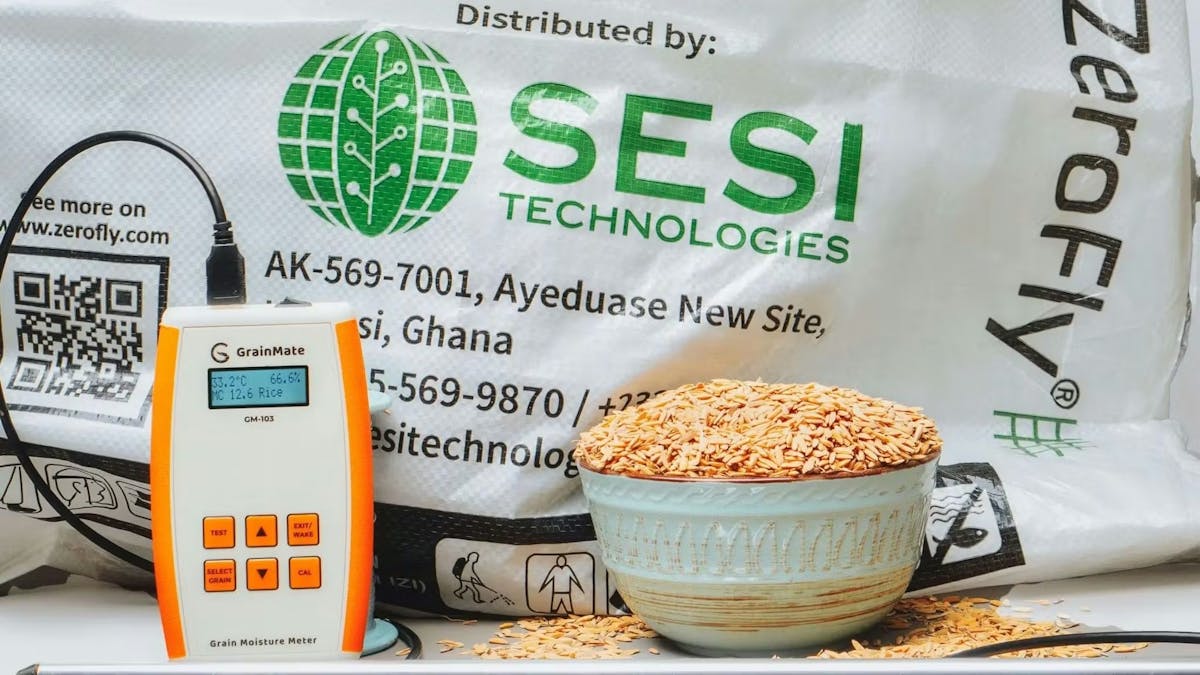
The company’s product suite is designed to address critical points of failure in the post-harvest process, contributing to multiple SDG targets. The GrainMate moisture meter was developed to combat losses during grain storage by providing objective data to farmers, replacing traditional, unreliable methods. Its implementation directly supports SDG 12.3 by reducing post-harvest losses caused by mold and pests.
- Functionality: Measures moisture, temperature, and humidity for 32 different grain types.
- Accessibility: Priced at approximately $73, making it significantly more affordable than professional-grade alternatives.
- Impact: Empowers farmers to make informed decisions about grain storage, preserving crop value and enhancing food security (SDG 2) and income stability (SDG 1).
Sesi Technologies also offers a broader ecosystem of tools that promote sustainable agricultural practices in line with SDG 2.4.
- FarmSense: A soil intelligence platform, comprising a handheld sensor and digital dashboards, which helps optimize farm inputs and increase yield, contributing to SDG 2.3 (double agricultural productivity).
- Hermetic Storage Bags: The company facilitates access to advanced storage solutions which protect grains from pests and mold for up to two years, further securing harvests and reducing loss.
4. Challenges and Outlook for Scaling Impact
Despite serving over 8,000 farmers, Sesi Technologies has encountered challenges in achieving widespread adoption. The primary barrier is the reluctance of smallholder farmers to make upfront investments in new equipment, a significant hurdle in advancing SDG 1 and SDG 9 (Industry, Innovation, and Infrastructure) in rural contexts.
The continued commercialization and accessibility of technologies like GrainMate are crucial for making substantive progress on reducing post-harvest losses. Overcoming financial barriers for farmers will be key to scaling these innovations and realizing their full potential to contribute to the Sustainable Development Goals across Sub-Saharan Africa.
Analysis of Sustainable Development Goals in the Article
1. Which SDGs are addressed or connected to the issues highlighted in the article?
- SDG 1: No Poverty – The article directly mentions this goal in the mission of Sesi Technologies and discusses the financial stability and thin profit margins of smallholder farmers.
- SDG 2: Zero Hunger – This goal is explicitly stated in the company’s mission. The core issue of the article is post-harvest food loss, which directly impacts food security and availability.
- SDG 9: Industry, Innovation and Infrastructure – The article focuses on an agritech company that designs and commercializes innovative hardware and software (GrainMate, FarmSense) to solve agricultural challenges in Africa.
- SDG 12: Responsible Consumption and Production – The article’s central theme is the reduction of food loss, which is a key component of this goal. It opens with the statistic that “One-third of all food produced globally… is lost or wasted each year.”
2. What specific targets under those SDGs can be identified based on the article’s content?
-
SDG 1: No Poverty
- Target 1.2: By 2030, reduce at least by half the proportion of men, women and children of all ages living in poverty in all its dimensions according to national definitions. The article highlights that reducing post-harvest loss can make a “huge difference” for farmers operating on “thin profit margins,” thereby directly contributing to poverty reduction by increasing their income.
- Target 1.4: By 2030, ensure that all men and women, in particular the poor and the vulnerable, have equal rights to economic resources, as well as access to… new technology. Sesi Technologies aims to make its moisture meter “accessible to millions of farmers across Sub-Saharan Africa” by making it affordable (“four times cheaper than professional-grade moisture meters”), thus improving access to crucial technology.
-
SDG 2: Zero Hunger
- Target 2.1: By 2030, end hunger and ensure access by all people, in particular the poor and people in vulnerable situations, including infants, to safe, nutritious and sufficient food all year round. Reducing post-harvest food loss, the main focus of the article, directly increases the amount of available food, which is critical for a continent described as a “net importer of food products.”
- Target 2.3: By 2030, double the agricultural productivity and incomes of small-scale food producers… The company’s stated purpose is to help smallholder farmers “increase their yield and maximise their profits” through technology that prevents loss and improves practices.
-
SDG 9: Industry, Innovation and Infrastructure
- Target 9.5: Enhance scientific research, upgrade the technological capabilities of industrial sectors in all countries, in particular developing countries… The article details the process of modifying a moisture meter created by the U.S. Department of Agriculture to create GrainMate, an “indigenous moisture meter specifically built for African smallholders.”
- Target 9.b: Support domestic technology development, research and innovation in developing countries… Sesi Technologies is a “Ghana-based agritech company” founded by a “Ghanaian entrepreneur and engineer,” representing local innovation to solve local problems.
-
SDG 12: Responsible Consumption and Production
- Target 12.3: By 2030, halve per capita global food waste at the retail and consumer levels and reduce food losses along production and supply chains, including post-harvest losses. The entire article is dedicated to this target, focusing on how crude storage techniques lead to post-harvest loss and how technology like GrainMate and hermetic bags can significantly reduce it.
3. Are there any indicators mentioned or implied in the article that can be used to measure progress towards the identified targets?
-
Reduction in Post-Harvest Loss
This is the primary indicator for Target 12.3. The article implies this is the key metric by stating that “even a small reduction in post-harvest loss can make a huge difference.” Measuring the percentage of grain saved by farmers using GrainMate and hermetic bags compared to traditional methods would directly track progress.
-
Farmer Income and Profitability
This indicator measures progress towards Targets 1.2 and 2.3. The article notes that food loss affects the “financial stability” of farmers and that Sesi’s goal is to help them “maximise their profits.” Tracking the change in income for farmers who adopt the technology would be a direct measure of impact.
-
Adoption Rate of Technology
This indicator is relevant for Target 1.4 and 9.b. The article provides a specific number, stating that Sesi’s products “have served more than 8,000 farmers.” It also notes that “adoption has been much slower than Sesi and his team expected,” highlighting that the number of farmers using the technology is a key performance indicator for the company and its mission.
-
Affordability and Accessibility of Technology
This indicator relates to Target 1.4. The article provides a specific price point for the GrainMate meter (“800 cedis (approximately $73)”) and compares it to alternatives (“about four times cheaper than professional-grade moisture meters”), using cost as a direct measure of accessibility for smallholder farmers.
4. Summary Table of SDGs, Targets, and Indicators
| SDGs | Targets | Indicators |
|---|---|---|
| SDG 1: No Poverty | 1.2: Reduce poverty in all its dimensions. 1.4: Ensure equal rights to economic resources and access to new technology. |
– Increase in farmer income and profitability. – Affordability of technology (e.g., price of GrainMate at $73). – Number of farmers adopting the technology (8,000+ served). |
| SDG 2: Zero Hunger | 2.1: End hunger and ensure access to food. 2.3: Double the agricultural productivity and incomes of small-scale food producers. |
– Reduction in post-harvest food loss. – Increase in farm productivity/yield. |
| SDG 9: Industry, Innovation and Infrastructure | 9.5: Enhance scientific research and upgrade technological capabilities. 9.b: Support domestic technology development and innovation. |
– Development of indigenous technology (GrainMate, FarmSense). – Commercialization of research (modifying a USDA design for local use). |
| SDG 12: Responsible Consumption and Production | 12.3: Halve food waste and reduce food losses, including post-harvest losses. | – Percentage reduction in post-harvest loss for users of the technology. – Global food loss statistic mentioned as context (1.3 billion tons annually). |
Source: hackster.io
What is Your Reaction?
 Like
0
Like
0
 Dislike
0
Dislike
0
 Love
0
Love
0
 Funny
0
Funny
0
 Angry
0
Angry
0
 Sad
0
Sad
0
 Wow
0
Wow
0