





















































Spatial patterns and future potential of tree species richness and structural diversity in China’s forests – Nature
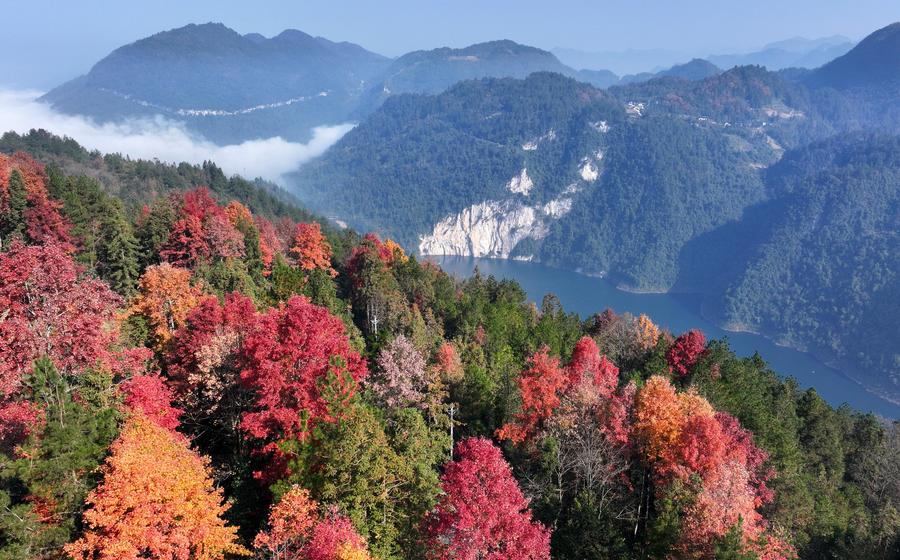
Report on Forest Diversity in China and Implications for Sustainable Development Goals
Introduction and Alignment with SDG 15 (Life on Land)
This report analyzes the spatial patterns, determinants, and future potential of tree species richness and structural diversity within China’s natural forests. The study’s focus on understanding and projecting forest biodiversity directly supports the objectives of Sustainable Development Goal 15 (Life on Land), which aims to protect, restore, and promote the sustainable use of terrestrial ecosystems and halt biodiversity loss. The analysis is based on a comprehensive dataset from 3,396 plots, encompassing 314,613 trees.
Key Findings on Forest Diversity Metrics
- Species Richness: The study found that patterns of species richness, a key indicator of biodiversity, are distinct from those of structural diversity. Understanding these patterns is crucial for effective conservation planning under SDG 15.
- Structural Diversity: The physical complexity of forests was also assessed, as it is integral to ecosystem function and resilience, contributing to the sustainable management of forests as targeted by SDG 15.
Analysis of Dominant Drivers
The investigation revealed that the primary drivers for these two diversity metrics are distinct, which is critical for developing targeted conservation and management strategies.
- The foremost predictor of tree species richness was identified as precipitation seasonality.
- The leading predictor of structural diversity was determined to be forest age.
Future Projections and Contribution to SDG 13 (Climate Action)
Projections based on future climate scenarios (SSP126 and SSP245) indicate significant potential for biodiversity enhancement by the year 2100. This has direct implications for SDG 13 (Climate Action) by enhancing nature-based solutions for climate mitigation.
- Fine-grained Species Richness: A potential increase of approximately 36%.
- Structural Diversity: A potential increase of approximately 27%.
This projected increase in overall forest diversity is expected to enhance carbon sequestration capabilities, contributing directly to the goals of climate change mitigation outlined in SDG 13.
Challenges and Considerations for Sustainable Management
While the potential for increased biodiversity and carbon storage is a positive outcome for SDG 13 and SDG 15, the report also identifies potential trade-offs that require careful management.
- Positive Implication: Enhanced carbon sequestration through more diverse and complex forests.
- Negative Implication: Intensified competition for limited ecological niches may pose significant threats to endangered species, potentially undermining specific biodiversity conservation targets within SDG 15.
Conclusion: Integrating Findings for Sustainable Policy
This research provides critical insights into the differing mechanisms that drive forest diversity. For policy-making, it underscores the need for nuanced management strategies that can harness the potential for increased carbon sequestration while simultaneously implementing measures to protect vulnerable species from competitive exclusion. Achieving a balance between these outcomes is essential for the successful and integrated implementation of both SDG 13 (Climate Action) and SDG 15 (Life on Land).
Analysis of Sustainable Development Goals in the Article
1. Which SDGs are addressed or connected to the issues highlighted in the article?
The article primarily addresses two Sustainable Development Goals (SDGs) based on its focus on forest biodiversity, climate change, and ecosystem services.
- SDG 15: Life on Land: This goal is central to the article. It aims to “protect, restore and promote sustainable use of terrestrial ecosystems, sustainably manage forests, combat desertification, and halt and reverse land degradation and halt biodiversity loss.” The article directly investigates “tree species richness and structural diversity in natural forests,” which are core components of terrestrial biodiversity and forest health. It also touches upon threats to endangered species, a key concern of SDG 15.
- SDG 13: Climate Action: This goal, which urges “urgent action to combat climate change and its impacts,” is also relevant. The article connects forest diversity to climate change by using future climate scenarios (SSP126 and SSP245) to project changes in biodiversity. Furthermore, it explicitly states that “this increase in diversity could enhance carbon sequestration,” linking forest management and biodiversity directly to climate change mitigation.
2. What specific targets under those SDGs can be identified based on the article’s content?
Several specific targets under SDG 13 and SDG 15 can be identified from the article’s analysis of China’s forests.
- Under SDG 15: Life on Land
- Target 15.1: By 2020, ensure the conservation, restoration and sustainable use of terrestrial and inland freshwater ecosystems and their services, in particular forests… The study’s core purpose is to “elucidate spatial patterns, determinants and future potential of tree species richness and structural diversity in natural forests,” providing foundational knowledge for the conservation and sustainable use of these ecosystems.
- Target 15.2: By 2020, promote the implementation of sustainable management of all types of forests, halt deforestation, restore degraded forests and substantially increase afforestation and reforestation globally. The article’s finding that “forest age is the leading predictor of structural diversity” provides a critical insight for sustainable forest management, emphasizing the importance of allowing forests to mature to increase their structural complexity and resilience.
- Target 15.5: Take urgent and significant action to reduce the degradation of natural habitats, halt the loss of biodiversity and, by 2020, protect and prevent the extinction of threatened species. The article directly addresses this target by analyzing “species richness” and warning that increased diversity “may also pose threats to endangered species due to intensified competition for limited ecological niches.” This highlights the complexity of managing ecosystems to protect vulnerable species.
- Under SDG 13: Climate Action
- Target 13.2: Integrate climate change measures into national policies, strategies and planning. The research uses “future climate scenarios SSP126 and SSP245” to project ecological changes and links increased forest diversity to enhanced “carbon sequestration.” This type of scientific analysis is essential for developing national policies that leverage natural ecosystems for climate mitigation.
3. Are there any indicators mentioned or implied in the article that can be used to measure progress towards the identified targets?
The article, being a scientific abstract, does not explicitly name official SDG indicators. However, it discusses several key metrics and concepts that function as direct or implied indicators for measuring progress.
- Species Richness: This is a primary focus of the study and a fundamental indicator of biodiversity. The article quantifies it by analyzing data on “314,613 trees” and projects a potential “~36%” increase. This directly measures a core component of biodiversity health, relevant to Target 15.5.
- Structural Diversity: This is the other key metric analyzed. It serves as a more sophisticated indicator of ecosystem health, stability, and habitat availability than species richness alone. The finding that it is driven by forest age and could increase by “~27%” makes it a valuable indicator for assessing the success of sustainable forest management under Target 15.2.
- Forest Age: The article identifies “forest age” as the “leading predictor of structural diversity.” Therefore, the average age of natural forests can be used as a practical indicator to track progress towards restoring ecosystem complexity and function, aligning with Target 15.2.
- Carbon Sequestration Potential: The article implies this as an indicator by stating that increased diversity could “enhance carbon sequestration.” Measuring the carbon stock and sequestration rate in forests with varying levels of diversity would be a direct way to quantify progress towards the climate mitigation goals of Target 13.2.
- Status of Endangered Species: The article implies the need to monitor this by highlighting that increased competition “may also pose threats to endangered species.” This aligns with the concept behind Indicator 15.5.1 (Red List Index), which tracks the conservation status of species.
4. Create a table with three columns titled ‘SDGs, Targets and Indicators” to present the findings from analyzing the article. In this table, list the Sustainable Development Goals (SDGs), their corresponding targets, and the specific indicators identified in the article.
| SDGs | Targets | Indicators |
|---|---|---|
| SDG 15: Life on Land | Target 15.1: Ensure conservation and sustainable use of terrestrial ecosystems, particularly forests. | Structural Diversity |
| SDG 15: Life on Land | Target 15.2: Promote sustainable management of all types of forests. | Forest Age |
| SDG 15: Life on Land | Target 15.5: Halt biodiversity loss and protect threatened species. | Species Richness; Status of Endangered Species |
| SDG 13: Climate Action | Target 13.2: Integrate climate change measures into national policies and planning. | Carbon Sequestration Potential |
Source: nature.com
What is Your Reaction?
 Like
0
Like
0
 Dislike
0
Dislike
0
 Love
0
Love
0
 Funny
0
Funny
0
 Angry
0
Angry
0
 Sad
0
Sad
0
 Wow
0
Wow
0