St. Pete residents urged to conserve water, follow irrigation schedules – Bay News 9
Report on Water Shortage and Conservation Measures in St. Petersburg, Florida
Introduction: Addressing Water Scarcity through Sustainable Management
In response to insufficient rainfall, the Southwest Florida Water Management District (SWFWMD) has enacted a Phase 1 Water Shortage Order for the city of St. Petersburg. This measure is a critical step towards the sustainable management of water resources, directly aligning with the objectives of the United Nations’ Sustainable Development Goals (SDGs), particularly SDG 6 (Clean Water and Sanitation).
Alignment with Sustainable Development Goals (SDGs)
The implemented water restrictions and conservation efforts are fundamental to achieving several key SDGs:
- SDG 6: Clean Water and Sanitation: The core objective of the water shortage order is to ensure the availability and sustainable management of water. By regulating consumption, the community actively participates in protecting vital water resources from depletion.
- SDG 11: Sustainable Cities and Communities: Responsible water management is essential for urban resilience. These conservation measures help make St. Petersburg a more sustainable and environmentally conscious community.
- SDG 12: Responsible Consumption and Production: The mandate encourages a shift towards more sustainable consumption patterns, promoting the efficient use of natural resources and reducing waste.
Mandated Water Use Regulations
To ensure equitable and reduced water usage, the following regulations are in effect for all residents and businesses within the designated area.
Lawn and Landscape Irrigation Schedule
Watering schedules are allocated based on property addresses to manage demand on the water supply system.
- Even-Numbered Addresses: Permitted to irrigate on Tuesdays and Saturdays during the hours of 5 a.m. to 9 a.m. or 7 p.m. to 11 p.m.
- Odd-Numbered Addresses: Permitted to irrigate on Wednesdays and Sundays during the hours of 5 a.m. to 9 a.m. or 7 p.m. to 11 p.m.
Guidelines for Alternative and Manual Watering
Specific rules apply to non-automated irrigation methods to support water conservation goals.
- Hand watering of non-lawn landscapes is permitted at any time on any day.
- Hand watering of lawns must adhere to the designated days and times for the address.
- Micro-irrigation of plants, excluding lawns, may be performed on any day at any time.
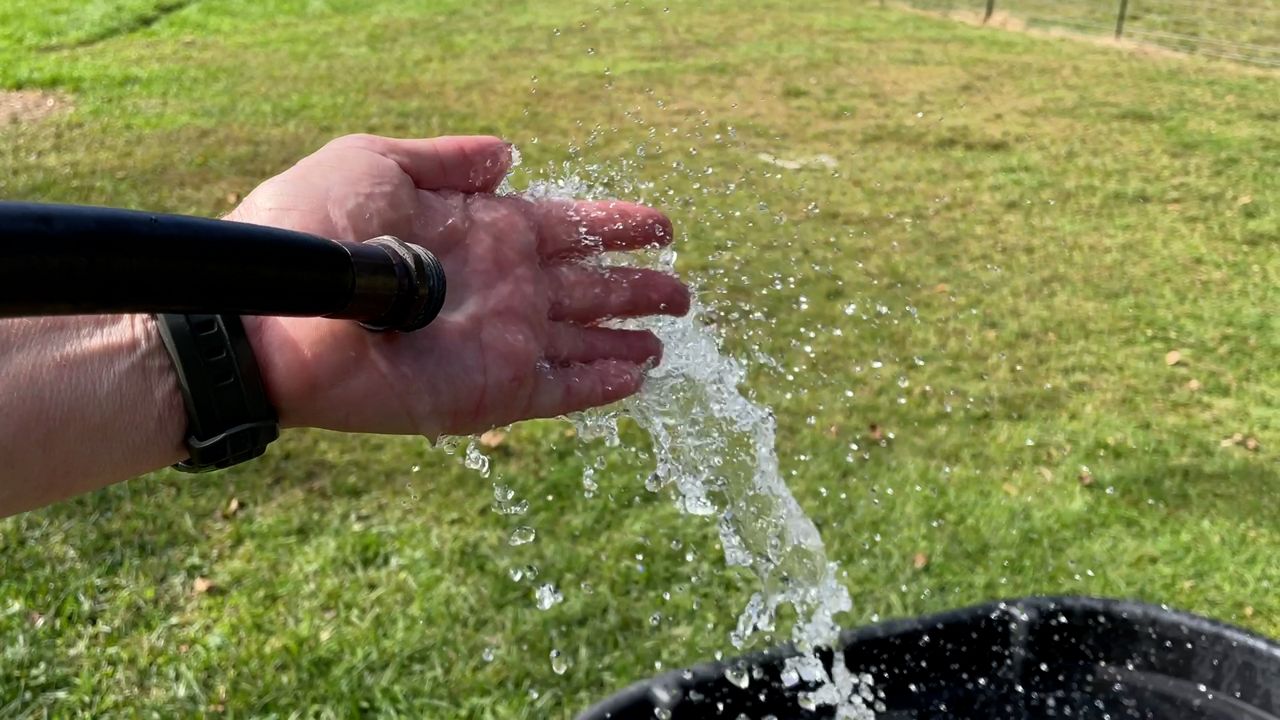
- All hoses must be equipped with an automatic shutoff device that is functional at all times of use.
Recommended Conservation Practices for Sustainable Impact
Adherence to the following best practices is encouraged to further support the community’s contribution to SDG 6 and SDG 12.
Outdoor Water Conservation Strategies
- Limit lawn watering to an as-needed basis; dormant winter lawns typically only require irrigation every 10-14 days.
- Conduct regular maintenance on irrigation systems to fix broken or misdirected sprinkler heads.
- Ensure that rain sensors are functioning correctly to prevent unnecessary watering.
- Investigate the installation of smart irrigation controllers, with potential rebates available through programs like Tampa Bay Water Wise.
- Explore financial incentives for water-saving installations, such as shallow wells and high-efficiency toilets.
Indoor Water Conservation Strategies
- Reduce water consumption by taking shorter showers.
- Eliminate wasteful water flow by turning off faucets while brushing teeth or shaving.
- Perform regular checks for household leaks, with particular attention to worn toilet flappers, a common source of water waste.
Analysis of Sustainable Development Goals (SDGs) in the Article
1. Which SDGs are addressed or connected to the issues highlighted in the article?
-
SDG 6: Clean Water and Sanitation
- The entire article is centered on the sustainable management of water. The “Phase 1 Water Shortage Order” issued due to a “lack of recent rain” directly addresses the need to ensure the availability and sustainable management of water for all, which is the core mission of SDG 6.
-
SDG 11: Sustainable Cities and Communities
- The water restrictions and conservation tips are implemented at a municipal level in St. Petersburg. This initiative is a key component of making a city resilient and sustainable by managing its resources, particularly in the face of water-related challenges.
-
SDG 12: Responsible Consumption and Production
- The article is a direct call to action for residents and businesses to change their water consumption patterns. Tips like “take shorter showers,” “turn off the water when brushing teeth,” and fixing leaks are all aimed at promoting responsible consumption of a finite natural resource.
-
SDG 13: Climate Action
- The underlying cause for the water shortage is a “lack of recent rain,” which can be linked to climate-related hazards like drought. The water conservation measures described in the article represent an adaptive action to strengthen resilience against the impacts of climate change on water resources.
2. What specific targets under those SDGs can be identified based on the article’s content?
-
Target 6.4: By 2030, substantially increase water-use efficiency across all sectors and ensure sustainable withdrawals and supply of freshwater to address water scarcity.
- The article’s primary goal is to increase water-use efficiency among residents and businesses through mandatory restrictions (e.g., lawn watering schedules) and voluntary conservation tips (e.g., installing high-efficiency toilets) to combat the current water shortage.
-
Target 6.b: Support and strengthen the participation of local communities in improving water and sanitation management.
- The article is an official communication from the Southwest Florida Water Management District to the local community, asking for their active participation in managing water resources by adhering to rules and adopting conservation habits.
-
Target 12.2: By 2030, achieve the sustainable management and efficient use of natural resources.
- The water restrictions and conservation tips are practical measures aimed at achieving the efficient and sustainable use of freshwater, a critical natural resource.
3. Are there any indicators mentioned or implied in the article that can be used to measure progress towards the identified targets?
-
Compliance with Water Use Regulations
- Progress can be measured by monitoring adherence to the specific lawn and landscape watering rules, such as irrigating only on designated days (Tuesdays/Saturdays for even addresses, Wednesdays/Sundays for odd addresses) and times.
-
Adoption of Water-Efficient Technologies
- The article implies that progress can be tracked by the number of residents taking advantage of rebates for “high-efficiency toilets” and the “Tampa Bay Water Wise” program for “smart irrigation controllers.” The mandatory use of an “automatic shutoff device” on hoses is another measurable indicator of technology adoption.
-
Reduction in Water Waste
- An implied indicator is the reduction of water loss through maintenance. This could be measured by tracking reports or observing the effects of residents fixing “broken or misdirected sprinkler heads,” ensuring “rain sensors work properly,” and checking for leaks by replacing “worn toilet flappers.”
-
Changes in Household Water Consumption
- While not explicitly stated, the collective impact of behavioral changes like taking “shorter showers” and turning “off the water when brushing teeth and shaving” can be measured through aggregate data on household water usage, indicating a shift towards more sustainable consumption.
Summary Table of SDGs, Targets, and Indicators
| SDGs | Targets | Indicators |
|---|---|---|
| SDG 6: Clean Water and Sanitation |
6.4: Increase water-use efficiency and address water scarcity.
6.b: Strengthen participation of local communities in water management. |
|
| SDG 11: Sustainable Cities and Communities | 11.5: Reduce the impact of water-related disasters. |
|
| SDG 12: Responsible Consumption and Production | 12.2: Achieve sustainable management and efficient use of natural resources. |
|
| SDG 13: Climate Action | 13.1: Strengthen resilience and adaptive capacity to climate-related hazards. |
|
Source: baynews9.com
What is Your Reaction?
 Like
0
Like
0
 Dislike
0
Dislike
0
 Love
0
Love
0
 Funny
0
Funny
0
 Angry
0
Angry
0
 Sad
0
Sad
0
 Wow
0
Wow
0