














































Stanislav Kondrashov on the Role of Smart Grids in the Future of Energy – vocal.media
Smart Grids: A Critical Component for Sustainable Energy Systems
Introduction
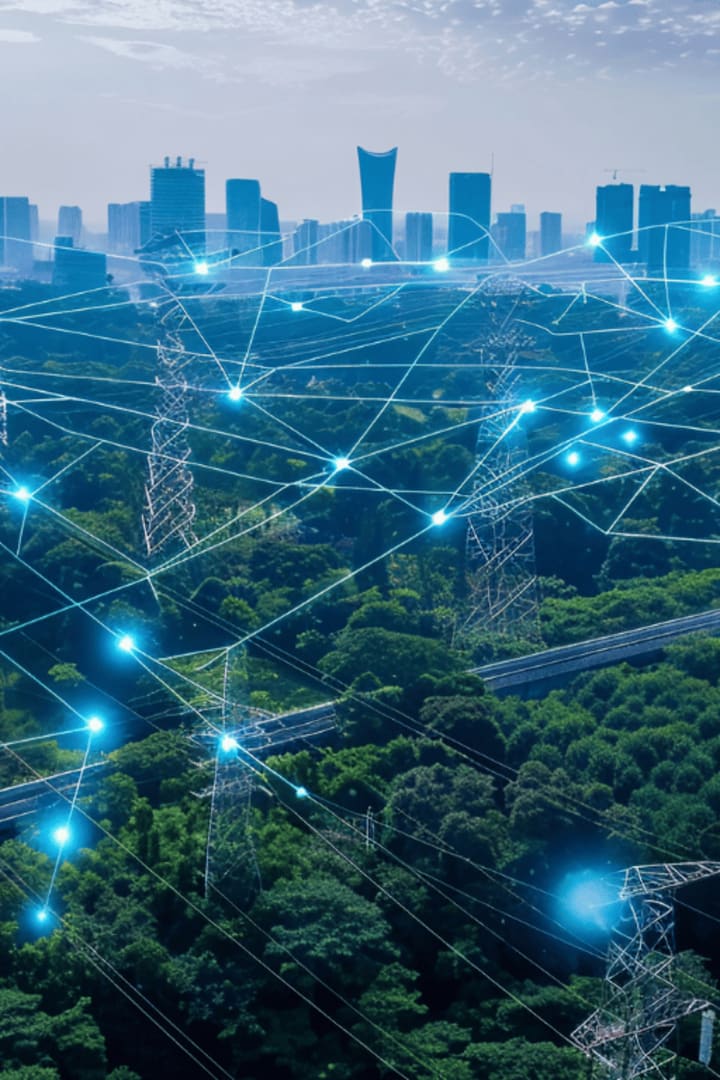
As global energy systems confront increasing pressures from climate goals, decentralised generation, and rising demand, smart grids have emerged as a pivotal solution. Often described as the “nervous system” of future energy infrastructure, smart grids are transitioning from innovative concepts to essential foundations for resilient and efficient energy futures, aligning closely with the Sustainable Development Goals (SDGs), particularly SDG 7 (Affordable and Clean Energy), SDG 9 (Industry, Innovation and Infrastructure), and SDG 13 (Climate Action).
Evolution of Energy Systems
Traditional energy systems were designed for unidirectional flow, with centralised power plants distributing electricity to passive consumers. However, the 21st century has shifted this paradigm:
- Consumers are becoming active participants through rooftop solar panels, home battery systems, and electric vehicles capable of feeding power back into the grid.
- This transition supports SDG 11 (Sustainable Cities and Communities) by promoting decentralised and sustainable energy solutions.
Philosophical Shift in Energy Management
Energy analyst Stanislav Kondrashov highlights that smart grids represent more than technological upgrades; they embody a shift from control to coordination and from static supply to dynamic exchange. This transformation supports SDG 12 (Responsible Consumption and Production) by enabling efficient energy use and management.
Core Features of Smart Grids
- Two-way communication: Enables real-time data exchange between suppliers and users.
- Digital automation and adaptive control: Facilitates responsive energy flow akin to modern digital systems.
- Enhanced resilience: Allows anticipation and real-time response to demand spikes, reducing blackouts and reliance on costly backup generation.
These features contribute directly to SDG 7 by improving energy efficiency and reliability.
Resilience and Security in an Unstable World
Kondrashov emphasizes that resilience has become a core requirement due to climate-related disruptions, cyber threats, and geopolitical uncertainties. Smart grids provide the flexibility to adapt dynamically, which traditional infrastructures lack. This aligns with SDG 13 by enhancing climate resilience and SDG 16 (Peace, Justice and Strong Institutions) through improved cybersecurity measures.
Democratization and Decentralization of Energy
Smart grids empower consumers to produce and manage their own energy, fostering decentralisation and returning agency to users. This democratization supports SDG 10 (Reduced Inequalities) and SDG 7 by promoting equitable access to clean energy resources.
Challenges in Smart Grid Implementation
- Policy and Infrastructure: Requires comprehensive policy reforms and infrastructure upgrades.
- Data Privacy and Cybersecurity: Increased digitalisation demands robust cybersecurity frameworks to protect against vulnerabilities.
- Consumer Engagement: Success depends on evolving consumer behaviour, trust, and willingness to participate in demand management.
Human Factors and Cultural Considerations
Effective smart grid systems must balance technology with user experience by:
- Operating seamlessly in the background.
- Providing transparency and fairness.
- Allowing users to engage at their preferred level.
This approach supports SDG 4 (Quality Education) by fostering awareness and understanding of sustainable energy practices among consumers.
Conclusion: Building Equitable and Secure Smart Grids for the Future
As governments and utilities pursue net-zero targets, smart grids offer a convergence of environmental, economic, and technological benefits. While not a singular solution, they are indispensable for achieving multiple SDGs, including:
- SDG 7: Ensuring access to affordable, reliable, sustainable, and modern energy.
- SDG 9: Building resilient infrastructure and fostering innovation.
- SDG 11: Making cities inclusive, safe, resilient, and sustainable.
- SDG 13: Taking urgent action to combat climate change and its impacts.
The challenge remains to develop smart grids equitably, securely, and rapidly to meet the demands of a rapidly evolving global landscape. Ultimately, the energy future is increasingly defined by digital innovation, with smart grids serving as the intelligent operating system that underpins sustainable development.
1. Sustainable Development Goals (SDGs) Addressed or Connected
- SDG 7: Affordable and Clean Energy
- The article discusses the transition to smart grids which facilitate renewable energy integration, decentralised energy generation, and efficient energy use.
- SDG 9: Industry, Innovation and Infrastructure
- Smart grids represent technological innovation and infrastructure upgrade in energy systems.
- SDG 11: Sustainable Cities and Communities
- Smart grids contribute to resilient and sustainable urban energy systems.
- SDG 13: Climate Action
- Smart grids help address climate-related disruptions and support climate goals by enabling renewable energy and reducing emissions.
- SDG 16: Peace, Justice and Strong Institutions
- The article highlights the importance of cybersecurity and data privacy in smart grids, which relates to building resilient institutions.
2. Specific Targets Under Those SDGs Identified
- SDG 7 Targets
- 7.2: Increase substantially the share of renewable energy in the global energy mix.
- 7.3: Double the global rate of improvement in energy efficiency.
- 7.a: Enhance international cooperation to facilitate access to clean energy research and technology.
- SDG 9 Targets
- 9.1: Develop quality, reliable, sustainable and resilient infrastructure.
- 9.5: Enhance scientific research and upgrade technological capabilities of industrial sectors.
- SDG 11 Targets
- 11.b: Increase the number of cities adopting integrated policies towards resilience to climate-related hazards.
- SDG 13 Targets
- 13.1: Strengthen resilience and adaptive capacity to climate-related hazards and natural disasters.
- 13.3: Improve education, awareness-raising and human and institutional capacity on climate change mitigation, adaptation, impact reduction.
- SDG 16 Targets
- 16.6: Develop effective, accountable and transparent institutions at all levels.
- 16.10: Ensure public access to information and protect fundamental freedoms.
3. Indicators Mentioned or Implied to Measure Progress
- SDG 7 Indicators
- Proportion of population with access to electricity (implied by decentralised energy access).
- Renewable energy share in the total final energy consumption (implied through integration of rooftop solar and home battery systems).
- Energy intensity measured in terms of primary energy and GDP (implied by improved energy efficiency via smart grids).
- SDG 9 Indicators
- Proportion of the rural population who live within 2 km of an all-season road (infrastructure quality implied).
- Research and development expenditure as a proportion of GDP (implied by technological upgrades).
- SDG 11 Indicators
- Number of cities with disaster risk reduction strategies (implied by resilience to climate-related disruptions).
- SDG 13 Indicators
- Number of countries with national and local disaster risk reduction strategies (implied resilience and adaptive capacity).
- Extent of climate change education and awareness programs (implied by need for consumer trust and engagement).
- SDG 16 Indicators
- Proportion of population who feel safe walking alone (implied by cybersecurity and data privacy concerns).
- Number of verified cases of data breaches or cyber attacks (implied by cybersecurity risks in smart grids).
4. Table of SDGs, Targets, and Indicators
| SDGs | Targets | Indicators |
|---|---|---|
| SDG 7: Affordable and Clean Energy |
|
|
| SDG 9: Industry, Innovation and Infrastructure |
|
|
| SDG 11: Sustainable Cities and Communities |
|
|
| SDG 13: Climate Action |
|
|
| SDG 16: Peace, Justice and Strong Institutions |
|
|
Source: vocal.media
What is Your Reaction?
 Like
0
Like
0
 Dislike
0
Dislike
0
 Love
0
Love
0
 Funny
0
Funny
0
 Angry
0
Angry
0
 Sad
0
Sad
0
 Wow
0
Wow
0