Strong efforts made to improve Viet Nam’s urban air quality – Nhan Dan Online
Report on Air Quality in Vietnam and Alignment with Sustainable Development Goals
1.0 Introduction: Air Pollution as a Barrier to Sustainable Development
Vietnam is confronting a significant environmental and public health crisis due to escalating air pollution, a challenge that directly impedes progress toward several key Sustainable Development Goals (SDGs). As one of the nations most affected by climate change, the deteriorating air quality in major urban centers threatens SDG 3 (Good Health and Well-being), SDG 11 (Sustainable Cities and Communities), and SDG 13 (Climate Action). This report outlines the current state of air pollution, its primary drivers, and proposed national strategies aimed at mitigating its impact, framed within the context of the 2030 Agenda for Sustainable Development.
2.0 Analysis of Current Air Pollution Status
2.1 Public Health and Urban Sustainability Impacts
The health of Vietnam’s urban population is increasingly compromised by emissions, directly undermining SDG 3. Vulnerable groups are disproportionately affected, including:
- Children
- The elderly
- Individuals with pre-existing health conditions
This public health burden represents a critical failure in achieving Target 11.6 of SDG 11, which calls for reducing the adverse per capita environmental impact of cities by improving air quality. Post-pandemic economic recovery has intensified industrial and transport activities, leading to a severe resurgence in pollution levels.
2.2 Primary Sources and Pollution Data
An analysis of pollution sources highlights challenges related to SDG 9 (Industry, Innovation, and Infrastructure) and SDG 12 (Responsible Consumption and Production). Key contributors include:
- Industrial manufacturing
- Transportation
- Burning of agricultural by-products and waste
- Construction activities
- Emissions from traditional craft villages
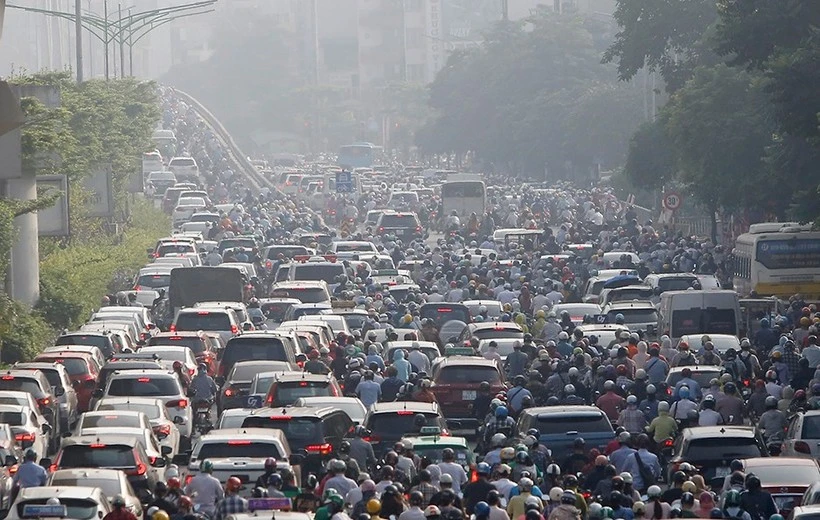
In Hanoi and the Red River Delta, annual average PM2.5 levels have been recorded at approximately double the recommended national standards, indicating a severe deviation from air quality targets essential for sustainable urban living.
2.3 Case Study: Hanoi
The capital city of Hanoi exemplifies the multifaceted challenge to SDG 11. The city’s 7.6 million vehicles are a major pollution source, contributing significantly to fine particulate matter. This localized issue is compounded by cross-regional pollution flows and seasonal meteorological phenomena like temperature inversion, creating prolonged periods of hazardous air quality.
3.0 Proposed Interventions and Technological Solutions
3.1 Strategic Alignment with SDG 9 and SDG 7
Experts advocate for a comprehensive strategy that moves beyond single measures. Achieving Vietnam’s emission-reduction commitments requires a systemic shift, with digital transformation and a transition to clean energy playing decisive roles. These interventions are critical for advancing SDG 9 by fostering sustainable industrialization and SDG 7 (Affordable and Clean Energy) by promoting cleaner energy sources.
3.2 Leveraging Data and Innovation for Air Quality Management
A primary weakness identified is the absence of detailed, source-specific pollution data. To address this, experts recommend adopting innovative approaches inspired by international models, such as Beijing’s use of Artificial Intelligence (AI). The proposed application of technology aims to:
- Develop a comprehensive national emissions inventory.
- Utilize AI to improve data clarity and identify pollution sources accurately.
- Digitize data to enable evidence-based policymaking and early warning systems.
- Tighten industrial and transport emission standards with clear, data-driven roadmaps.
These steps are fundamental to creating the monitoring and management infrastructure required by SDG 11.
4.0 National Action Plan and Regulatory Roadmap
4.1 Aligning Transport Policy with SDG 3 and SDG 13
The National Action Plan on Remediation of Pollution and Management of Air Quality (2026-2030) includes a draft roadmap to tighten vehicle emission standards. This policy is a direct measure to address a major pollution source, contributing to:
- SDG 3: By reducing illnesses and deaths from hazardous chemicals and air pollution.
- SDG 11: By creating safer and more sustainable transport systems.
- SDG 13: By mitigating emissions that contribute to climate change.
4.2 Proposed Emission Standard Implementation Timeline
The roadmap outlines a phased approach to elevate vehicle emission standards from the current Euro 1 and 2 levels, with stricter controls in Hanoi and Ho Chi Minh City.
- From May 2027: Cars manufactured between 2017-2021 must meet Euro 4 standards.
- From May 2028: Cars produced from 2022 onwards must meet Euro 5 standards.
- From 2027: Emission testing for motorbikes will commence.
- From May 2028: All motorbikes in circulation in Hanoi and Ho Chi Minh City must meet at least Euro 2 standards.
Successful implementation of this roadmap is projected to significantly reduce transport-related emissions, marking a crucial step toward achieving Vietnam’s sustainable development and public health objectives.
1. Which SDGs are addressed or connected to the issues highlighted in the article?
-
SDG 3: Good Health and Well-being
The article directly links air pollution to negative health outcomes, stating that it “directly affects children, the elderly and those with underlying health conditions” and that the cost of inaction will be “measured in the health, lives and future of the next generations.” This highlights the connection between environmental quality and public health.
-
SDG 9: Industry, Innovation and Infrastructure
The article identifies key sources of pollution as “industry, transport, the burning of agricultural by-products and waste, construction and traditional craft villages.” It also proposes solutions involving technological upgrades, such as applying artificial intelligence (AI) for data analysis, digital transformation, and tightening emission standards for vehicles, which relates to making infrastructure and industries more sustainable.
-
SDG 11: Sustainable Cities and Communities
The central theme of the article is the severe air pollution in Vietnam’s major cities, particularly Ha Noi. It discusses the rising proportion of “urban residents whose health is affected” and the specific challenges cities face from traffic, industry, and construction dust. The entire discussion is framed around the need to improve urban air quality, making this SDG highly relevant.
-
SDG 13: Climate Action
The article begins by identifying Vietnam as “one of the countries most heavily affected by climate change” and later mentions the difficulty in meeting “the emission-reduction targets Viet Nam has committed to.” The proposed solutions, such as tightening emission standards and transitioning to cleaner technologies, are measures that address both air pollution and climate change mitigation.
2. What specific targets under those SDGs can be identified based on the article’s content?
-
Target 3.9: By 2030, substantially reduce the number of deaths and illnesses from hazardous chemicals and air, water and soil pollution and contamination.
This target is directly relevant as the article emphasizes the health crisis caused by air pollution. It notes the increasing number of urban residents whose health is affected and warns of the long-term accumulation of pollutants impacting vulnerable populations, which aligns with the goal of reducing illnesses and deaths from air pollution.
-
Target 11.6: By 2030, reduce the adverse per capita environmental impact of cities, including by paying special attention to air quality and municipal and other waste management.
The article’s focus on air pollution in Ha Noi and other major cities directly addresses this target. It details the problem of “alarmingly high” fine particulate pollution (PM2.5) and discusses the need for “decisive action” to improve urban air quality, which is the core objective of this target.
-
Target 9.4: By 2030, upgrade infrastructure and retrofit industries to make them sustainable, with all countries taking action in accordance with their respective capabilities.
The call to apply technology like AI to create a “detailed pollution map,” tighten industrial emission standards, and implement a roadmap for stricter vehicle emission standards (Euro 4 and 5) reflects the goal of upgrading infrastructure (transport) and retrofitting industries to be cleaner and more sustainable.
-
Target 13.2: Integrate climate change measures into national policies, strategies and planning.
The article mentions the “National Action Plan on Remediation of Pollution and Management of Air Quality for the 2026-2030 period” and a “draft roadmap” for vehicle emissions submitted to the Prime Minister. These are concrete examples of national-level planning and policy-making aimed at mitigating emissions, which contributes to both air quality improvement and climate action.
3. Are there any indicators mentioned or implied in the article that can be used to measure progress towards the identified targets?
-
Indicator 11.6.2: Annual mean levels of fine particulate matter (e.g. PM2.5 and PM10) in cities.
The article explicitly uses this indicator. It states that “Fine particulate pollution (PM2.5) in Ha Noi and the Red River Delta provinces is alarmingly high” and that “annual average PM2.5 levels exceeding standards by approximately double.” This metric is directly used to quantify the severity of the air pollution problem.
-
Indicator related to Target 3.9 (e.g., 3.9.1 Mortality rate attributed to ambient air pollution).
While the article does not provide a specific mortality rate, it implies this indicator by stating that the “proportion of urban residents whose health is affected… is increasing” and that the price of inaction is “measured in the health, lives” of people. This suggests that tracking health impacts is a key measure of the problem’s scale.
-
Vehicle Emission Standards (Euro levels).
The article details a specific, measurable indicator of progress: the implementation of a roadmap to tighten vehicle emission standards. It specifies that cars will need to meet “Euro 4 standards from May 2027” and “Euro 5 from May 2028,” and motorbikes must meet “at least Euro 2 from May 2028.” These standards serve as a clear benchmark for regulating pollution from the transport sector.
-
Development and implementation of national policies and plans.
The existence and progress of the “National Action Plan on Remediation of Pollution and Management of Air Quality for the 2026-2030 period” and the associated roadmap for vehicle emissions serve as a qualitative indicator. The article’s reference to this plan being submitted to the Prime Minister indicates progress in integrating environmental measures into national policy, relevant to Target 13.2.
4. Table of SDGs, Targets, and Indicators
| SDGs | Targets | Indicators |
|---|---|---|
| SDG 3: Good Health and Well-being | 3.9: Substantially reduce deaths and illnesses from air, water, and soil pollution. | The increasing “proportion of urban residents whose health is affected” by emissions (Implied Indicator 3.9.1). |
| SDG 11: Sustainable Cities and Communities | 11.6: Reduce the adverse per capita environmental impact of cities, paying special attention to air quality. | Annual average PM2.5 levels in cities, which are reported to be “exceeding standards by approximately double” (Indicator 11.6.2). |
| SDG 9: Industry, Innovation and Infrastructure | 9.4: Upgrade infrastructure and retrofit industries to make them sustainable and clean. | The roadmap to tighten vehicle emission standards to Euro 4 and Euro 5 levels by 2027-2028. |
| SDG 13: Climate Action | 13.2: Integrate climate change measures into national policies, strategies, and planning. | The existence and submission of the “National Action Plan on Remediation of Pollution and Management of Air Quality for the 2026-2030 period.” |
Source: en.nhandan.vn
What is Your Reaction?
 Like
0
Like
0
 Dislike
0
Dislike
0
 Love
0
Love
0
 Funny
0
Funny
0
 Angry
0
Angry
0
 Sad
0
Sad
0
 Wow
0
Wow
0