












































Suspect in Michael Vaughan case charged with first-degree murder, kidnapping – KTVB

Report on the Michael Vaughan Case: A Focus on Sustainable Development Goals
Introduction: A Violation of Child Safety and Community Well-being
This report details recent developments in the disappearance of Michael Vaughan, a case that profoundly impacts community safety and highlights the critical importance of achieving United Nations Sustainable Development Goals (SDGs), particularly those concerning justice, child protection, and sustainable communities.
- Victim: Michael Vaughan, age 5 at the time of disappearance.
- Incident Date: July 2021.
- Location: Fruitland, Idaho.
Progress in Legal Accountability and SDG 16: Peace, Justice, and Strong Institutions
The investigation into Michael Vaughan’s disappearance represents a critical effort to uphold the rule of law and provide justice, directly aligning with the objectives of SDG 16.
Chronology of Investigation: Strengthening Institutions for Justice (SDG 16.3, 16.A)
- 2021: Michael Vaughan disappears from his neighborhood, prompting a large-scale investigation.
- 2022: Law enforcement identifies four individuals as suspects or persons of interest: Stacey Wondra, Sarah Wondra, Adrien Lucienne, and Brandon Shurtliff. A search of the Wondra residence is conducted based on credible information, though no remains were recovered at the time.
- 2023: The Fruitland Police Department formally transfers its case findings to the Payette County Prosecutor, demonstrating institutional collaboration in the pursuit of justice.
- 2024: An arrest warrant is issued for Stacey Wondra, marking a significant step towards legal resolution.
Charges Filed: Combating Violence and Ensuring Accountability (SDG 16.1)
The recent charges against Stacey Wondra directly address the need to reduce all forms of violence and related death rates, a core target of SDG 16.1.
- First-Degree Murder
- Second-Degree Kidnapping
- Destruction of Evidence
Stacey Wondra is currently incarcerated in a federal prison in Arizona on an unrelated conviction and awaits extradition to Idaho.
Societal Impact and the Broader SDG Framework
This case extends beyond a criminal investigation, touching upon the fundamental right to safety and well-being as envisioned in the SDGs.
Ending Violence Against Children (SDG 16.2)
The abduction and suspected murder of a child is a direct contravention of SDG 16.2, which calls for an end to abuse, exploitation, and all forms of violence against children. The statement from the victim’s mother, Brandi Neal, underscores the profound personal and societal toll of such violence:
“All we have wanted is for Michael to come home! … We want Justice. Michael will get his Justice! We want Michael home and we’re never going to stop until we have Michael home.”
Building Safe and Sustainable Communities (SDG 11)
A child’s disappearance from their own community highlights a failure to ensure the safe environments promoted by SDG 11. The commitment of local law enforcement is crucial for restoring public trust and safety. Fruitland Police Chief JD Huff affirmed this institutional dedication:
“When I stated that at the beginning of this case, we wouldn’t stop and that we’re working on it daily, I can honestly tell you that that has happened.”
Evidentiary Details and Suspect Status
Key Persons of Interest
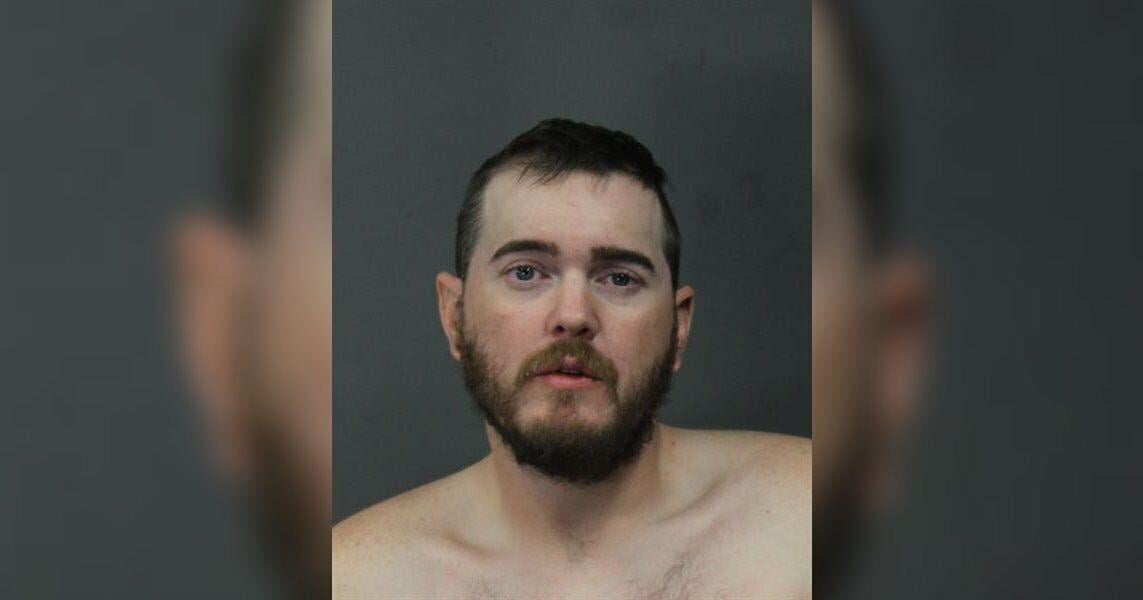
- Stacey Wondra: Now charged with murder. Previously denied involvement but was captured on video guiding detectives to a potential burial site, implicating his then-wife.
- Sarah Wondra: Ex-wife of Stacey Wondra. Previously faced a related charge that was later dropped. She is currently imprisoned on unrelated charges.
- Adrien Lucienne and Brandon Shurtliff: Individuals who lived with the Wondras and were identified as suspects.
Conflicting Accounts and Evidence
A key piece of evidence is a 2022 video in which Stacey Wondra directs law enforcement to a location in his backyard where he claimed Sarah Wondra, with assistance from Adrien Lucienne, buried the victim’s body. In the video, he stated, “He should be wrapped in a garbage bag,” and expressed a desire for the family’s suffering to end. This contrasts with his public denial of any knowledge of the crime in early 2024. These proceedings are fundamental to the process of ensuring access to justice for all, as mandated by SDG 16.3.
Analysis of Sustainable Development Goals in the Article
1. Which SDGs are addressed or connected to the issues highlighted in the article?
-
SDG 16: Peace, Justice and Strong Institutions
This goal is the most relevant as the article focuses entirely on a criminal case involving violence, the pursuit of justice for the victim, and the actions of law enforcement institutions. The narrative revolves around the disappearance and murder of a child, the investigation by the police, and the legal process of charging suspects.
- The article details a violent crime: the disappearance and murder of a 5-year-old boy, Michael Vaughan.
- It describes the role of justice institutions, such as the Fruitland Police Department and the Payette County Prosecutor, in investigating the crime and bringing charges.
- The victim’s mother’s statement, “We want Justice. Michael will get his Justice!”, directly invokes the core theme of this SDG.
2. What specific targets under those SDGs can be identified based on the article’s content?
-
Target 16.1: Significantly reduce all forms of violence and related death rates everywhere.
The article is a direct report on a case of extreme violence resulting in death. The central issue is the murder of a young boy, which is a clear example of the violence this target aims to reduce.
- The article states that a suspect, Stacey Wondra, has been “charged with first-degree murder in the case.” This directly relates to reducing death rates from violence.
-
Target 16.2: End abuse, exploitation, trafficking and all forms of violence against and torture of children.
The victim, Michael Vaughan, was a 5-year-old child. The crimes committed against him—kidnapping and murder—are among the most severe forms of violence against children that this target seeks to eliminate.
- The article specifies the victim’s age: “The then-5-year-old… disappeared from his home in July 2021.”
- The charges filed include “second-degree kidnapping,” a specific form of violence and exploitation against a child.
-
Target 16.3: Promote the rule of law at the national and international levels and ensure equal access to justice for all.
The entire article documents the process of applying the rule of law to a serious crime. It details the investigation, identification of suspects, and the formal legal actions taken by the state to provide justice for the victim and his family.
- The article mentions the issuance of a warrant, the filing of specific charges (“first-degree murder, second-degree kidnapping and destruction of evidence”), and the transfer of the case from the police to the prosecutor (“Fruitland PD turned its case over to the Payette County Prosecutor”). These are all functions of the rule of law.
- The police chief’s statement, “we wouldn’t stop and that we’re working on it daily,” demonstrates the commitment of institutions to see the legal process through.
3. Are there any indicators mentioned or implied in the article that can be used to measure progress towards the identified targets?
-
Indicator 16.1.1: Number of victims of intentional homicide per 100,000 population, by sex and age.
The article provides a specific data point for this indicator: one victim of an alleged intentional homicide (Michael Vaughan), who was a 5-year-old male. While it doesn’t provide a population rate, it documents an instance that would be included in the official statistics for this indicator.
-
Indicator 16.2.1: Proportion of children aged 1–17 years who experienced any physical punishment and/or psychological aggression by caregivers in the past month.
While the article does not provide data on proportions, the crime of “second-degree kidnapping” of a 5-year-old is an extreme and measurable instance of violence against a child that falls under the scope of this indicator’s intent to track and eliminate all forms of violence against children.
-
Indicator 16.3.1: Proportion of victims of violence in the previous 12 months who reported their victimization to competent authorities or other officially recognized conflict resolution mechanisms.
The case itself, initiated by the disappearance of Michael Vaughan from his home in July 2021, implies that the crime was reported to the authorities (Fruitland Police Department), leading to the multi-year investigation described in the article. The family’s engagement and the police response are evidence of this reporting and official action.
4. Summary Table of SDGs, Targets, and Indicators
| SDGs | Targets | Indicators |
|---|---|---|
| SDG 16: Peace, Justice and Strong Institutions | 16.1: Significantly reduce all forms of violence and related death rates everywhere. | 16.1.1: The article identifies one victim of alleged intentional homicide, a 5-year-old boy, which is a data point for the “Number of victims of intentional homicide.” |
| SDG 16: Peace, Justice and Strong Institutions | 16.2: End abuse, exploitation, trafficking and all forms of violence against and torture of children. | 16.2.1: The charge of “second-degree kidnapping” against a child serves as a specific, documented instance of violence against a child, relevant to measuring progress on this goal. |
| SDG 16: Peace, Justice and Strong Institutions | 16.3: Promote the rule of law at the national and international levels and ensure equal access to justice for all. | 16.3.1: The entire investigation detailed in the article stems from the initial reporting of the child’s disappearance to the police, implying the victimization was reported to competent authorities. |
Source: ktvb.com
What is Your Reaction?
 Like
0
Like
0
 Dislike
0
Dislike
0
 Love
0
Love
0
 Funny
0
Funny
0
 Angry
0
Angry
0
 Sad
0
Sad
0
 Wow
0
Wow
0