
















Pakistan says it has killed 145 ‘Indian-backed terrorists’ in Balochistan after deadly attacks – ABC News
Counterterrorism Operations in Balochistan, Pakistan: Emphasis on Sustainable Development Goals
Overview of Recent Security Operations
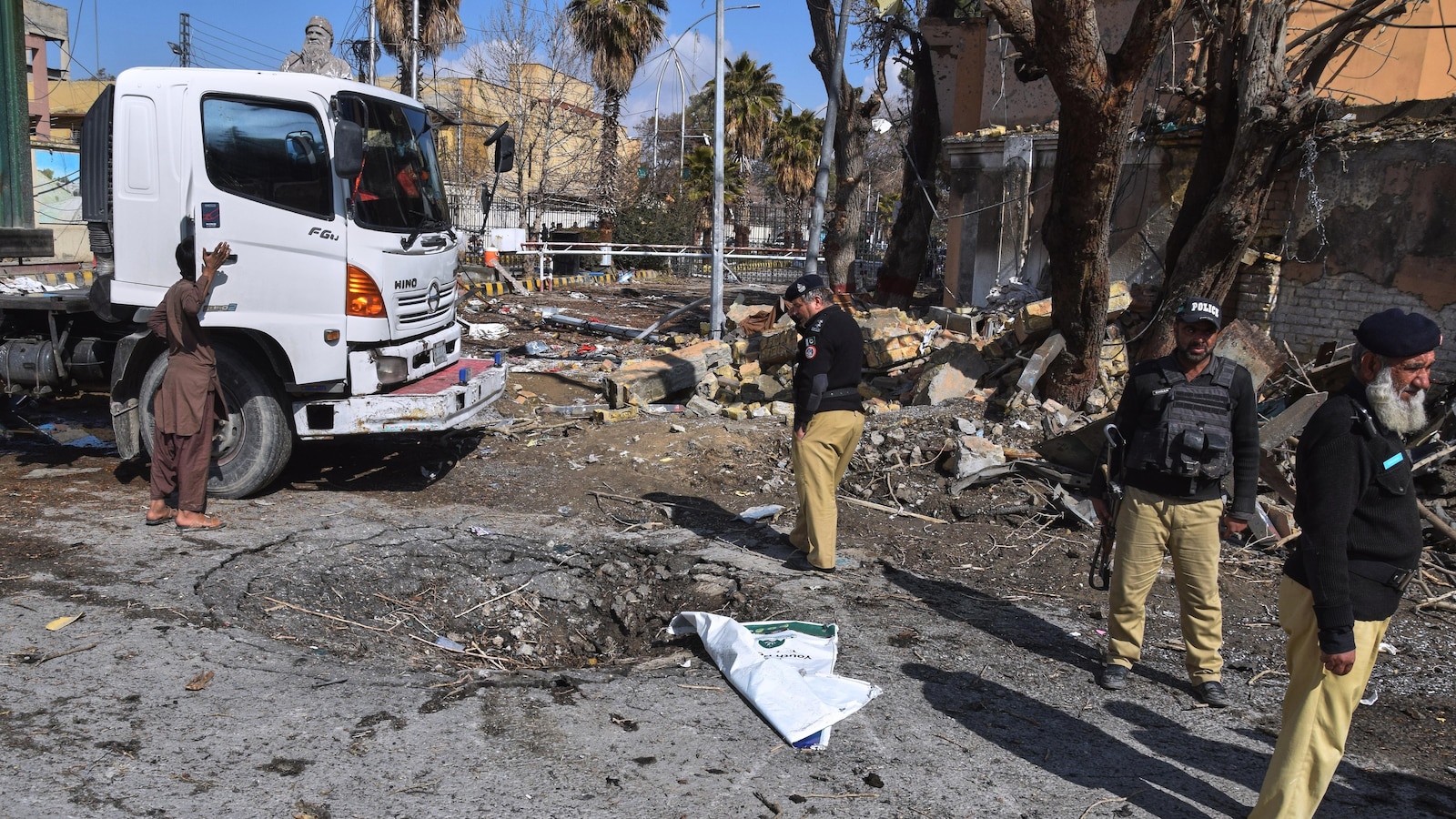
Pakistani police and military forces conducted extensive counterterrorism operations across Balochistan province over a 40-hour period, resulting in the deaths of over 100 militants described as “Indian-backed terrorists,” according to government officials. These operations followed coordinated suicide and gun attacks that claimed 33 lives, predominantly civilians.
Details of the Operations
- Raids commenced early Saturday at multiple locations throughout Balochistan.
- Casualties included 18 civilians (five women and three children) and 15 security personnel.
- Sarfraz Bugti, the provincial chief minister, reported that 145 members of the outlawed Baloch Liberation Army (BLA), referred to as “Fitna al-Hindustan,” were killed during the operations—the highest militant death toll in decades.
- Some of the deceased militants were Afghan nationals.
- The militants had reportedly planned hostage-taking but were prevented from reaching the city center.
Government and Security Forces Response
- Senior officials, including Hamza Shafqat, praised the swift and coordinated response of military, police, and paramilitary forces.
- The operations aimed to restore peace and security in a resource-rich region critical for economic development.
Contextual Background and Economic Implications
Balochistan is a province rich in minerals and natural resources, attracting foreign investment crucial for sustainable economic growth (SDG 8: Decent Work and Economic Growth). In September 2025, a U.S. metals company signed a $500 million investment agreement with Pakistan, underscoring the importance of regional stability for sustainable development.
Impact on Local Communities and Human Security
- Residents experienced panic and insecurity following suicide bombings targeting police officers.
- Local civilian casualties, including women and children, highlight the urgent need for peace and protection of vulnerable populations (SDG 16: Peace, Justice, and Strong Institutions).
- Militants attacked a Baloch laborer’s home in Gwadar, killing five women and three children, an act condemned by provincial leadership.
Geopolitical and Security Challenges
- Provincial leaders accused India and Afghanistan of supporting insurgents, allegations denied by both countries.
- Afghanistan’s Taliban, under the 2020 Doha agreement, pledged not to allow Afghan soil to be used for attacks on other countries; however, concerns remain about cross-border militancy.
- Recent airstrikes by Pakistan on Taliban hideouts in Afghanistan have escalated tensions.
Insurgency and Terrorism in Balochistan
- The Baloch Liberation Army (BLA), banned in Pakistan, has conducted numerous attacks targeting security forces, Chinese interests, and infrastructure projects.
- The BLA reportedly receives support from the Pakistani Taliban (Tehrik-e-Taliban Pakistan, TTP), which is allied with Afghanistan’s Taliban government.
- The ongoing separatist insurgency by ethnic Baloch groups seeks greater autonomy or independence, posing challenges to regional stability (SDG 16).
Alignment with Sustainable Development Goals
- SDG 16: Peace, Justice, and Strong Institutions
- Counterterrorism operations aim to restore peace and security, essential for sustainable development.
- Protecting civilians and upholding human rights remain priorities amid conflict.
- SDG 8: Decent Work and Economic Growth
- Stability in Balochistan is critical to attracting foreign investment and fostering economic growth.
- Mining and mineral resource development projects contribute to economic opportunities.
- SDG 10: Reduced Inequalities
- Addressing grievances of ethnic Baloch groups through dialogue and inclusion can reduce inequalities and promote social cohesion.
- SDG 5: Gender Equality
- Protection of women and children during conflicts is essential to uphold gender equality and human rights.
Conclusion
The recent counterterrorism operations in Balochistan underscore the complex interplay between security, economic development, and human rights. Achieving sustainable peace and development in the region requires continued efforts aligned with the Sustainable Development Goals, particularly those focused on peace, economic growth, and social inclusion.
1. Sustainable Development Goals (SDGs) Addressed or Connected to the Issues Highlighted in the Article
- SDG 16: Peace, Justice and Strong Institutions
- The article discusses counterterrorism operations, insurgency, and violence in Balochistan, Pakistan, highlighting issues of peace, security, and justice.
- It mentions militant attacks, security forces’ response, and efforts to maintain law and order.
- SDG 8: Decent Work and Economic Growth
- The article references foreign investment in mining and minerals in Balochistan, indicating economic development efforts despite security challenges.
- It mentions a $500 million investment agreement by a U.S. metals company, linking economic growth with regional stability.
- SDG 10: Reduced Inequalities
- The separatist insurgency by ethnic Baloch groups seeking greater autonomy or independence reflects underlying issues of inequality and marginalization.
- Addressing such conflicts is relevant to reducing inequalities within and among countries.
- SDG 5: Gender Equality
- The article mentions civilian casualties including women and children, highlighting the impact of conflict on vulnerable groups, especially women.
2. Specific Targets Under Those SDGs Identified Based on the Article’s Content
- SDG 16: Peace, Justice and Strong Institutions
- Target 16.1: Significantly reduce all forms of violence and related death rates everywhere.
- Target 16.3: Promote the rule of law at the national and international levels and ensure equal access to justice for all.
- Target 16.6: Develop effective, accountable and transparent institutions at all levels.
- SDG 8: Decent Work and Economic Growth
- Target 8.3: Promote development-oriented policies that support productive activities, decent job creation, entrepreneurship, creativity and innovation.
- Target 8.10: Strengthen the capacity of domestic financial institutions to encourage and expand access to banking, insurance and financial services for all.
- SDG 10: Reduced Inequalities
- Target 10.2: Empower and promote the social, economic and political inclusion of all, irrespective of age, sex, disability, race, ethnicity, origin, religion or economic or other status.
- SDG 5: Gender Equality
- Target 5.2: Eliminate all forms of violence against all women and girls in the public and private spheres, including trafficking and sexual and other types of exploitation.
3. Indicators Mentioned or Implied in the Article to Measure Progress Towards the Identified Targets
- For SDG 16 (Peace, Justice and Strong Institutions)
- Indicator 16.1.1: Number of victims of intentional homicide per 100,000 population, by sex and age.
- Indicator 16.1.4: Proportion of population that feel safe walking alone around the area they live.
- Indicator 16.3.1: Proportion of victims of violence in the previous 12 months who reported their victimization to competent authorities or other officially recognized conflict resolution mechanisms.
- Indicator 16.6.2: Proportion of the population satisfied with their last experience of public services.
- For SDG 8 (Decent Work and Economic Growth)
- Indicator 8.3.1: Proportion of informal employment in non-agriculture employment, by sex.
- Indicator 8.10.2: Number of commercial bank branches per 100,000 adults.
- For SDG 10 (Reduced Inequalities)
- Indicator 10.2.1: Proportion of people living below 50 per cent of median income, by age, sex and persons with disabilities.
- For SDG 5 (Gender Equality)
- Indicator 5.2.1: Proportion of ever-partnered women and girls aged 15 years and older subjected to physical, sexual or psychological violence by a current or former intimate partner in the previous 12 months, by form of violence and by age.
4. Table: SDGs, Targets and Indicators
| SDGs | Targets | Indicators |
|---|---|---|
| SDG 16: Peace, Justice and Strong Institutions |
|
|
| SDG 8: Decent Work and Economic Growth |
|
|
| SDG 10: Reduced Inequalities |
|
|
| SDG 5: Gender Equality |
|
|
Source: abcnews.go.com
What is Your Reaction?
 Like
0
Like
0
 Dislike
0
Dislike
0
 Love
0
Love
0
 Funny
0
Funny
0
 Angry
0
Angry
0
 Sad
0
Sad
0
 Wow
0
Wow
0