













































Ten government bodies launch joint ecological law-enforcement mechanism to target major environmental crimes – Global Times
Report on China’s New Ecological Law Enforcement Mechanism and its Alignment with Sustainable Development Goals
Introduction: A Multi-Agency Initiative for Environmental Governance
The People’s Republic of China has announced a significant policy initiative to establish a comprehensive ecological law-enforcement mechanism. A coalition of ten government departments, led by the Ministry of Public Security (MPS), will spearhead this effort to strengthen environmental protection and institutional integrity, directly contributing to the achievement of multiple Sustainable Development Goals (SDGs).
Core Objectives and Alignment with Global Goals
Protecting Ecosystems in Line with SDG 14 and SDG 15
The primary objective of the new mechanism is to strictly penalize crimes that degrade natural habitats. This initiative directly supports SDG 14 (Life Below Water) and SDG 15 (Life on Land) by targeting a range of illicit activities:
- Environmental pollution affecting terrestrial and aquatic ecosystems.
- Destruction of wildlife resources and biodiversity.
- Damage to ancient and valuable trees, critical for forest health.
- Illegal fishing, which undermines marine sustainability.
- Illegal mineral extraction and river-sand mining, which destroy landscapes and water systems.
- Unlawful occupation and degradation of farmland.
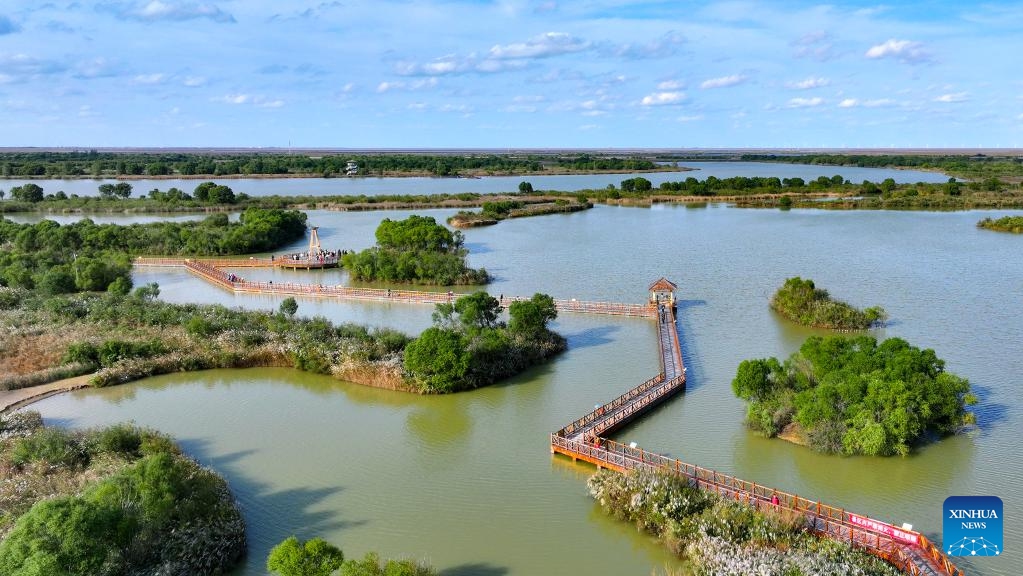
A notable example of progress in this area is Shandong Province’s initiative to create “beautiful bays” through pollution control and marine ecosystem protection, demonstrating a tangible commitment to SDG 14.
Strengthening Institutions for Justice and Sustainability (SDG 16)
The policy document outlines a clear timeline for building strong, effective, and accountable institutions, a core tenet of SDG 16 (Peace, Justice and Strong Institutions). The development will proceed in stages:
- By 2027, the ecological policing mechanism is expected to be largely established and operational.
- By 2035, the system will be fully developed, standardized, and functioning with scientific regulation and high efficiency.
This framework aims to institutionalize environmental law enforcement, ensuring that legal and regulatory systems are robust enough to protect natural resources for future generations.
Implementation Framework and Strategic Measures
Proactive Policing and Grassroots Governance
The strategy emphasizes proactive prevention and integration with local governance structures to enhance effectiveness. Key measures include:
- The establishment of specialized “ecological police” roles, such as river- and lake-patrol chiefs and forest-patrol chiefs.
- The creation of joint policing centers and field stations in ecologically sensitive areas or regions with high incidences of environmental crime.
- The integration of ecological law enforcement into routine public security operations and grassroots governance, contributing to SDG 11 (Sustainable Cities and Communities).
A Restorative Approach for Green Economic Transformation
The initiative adopts a strategy of “cracking down to promote rectification,” which links law enforcement with ecological restoration and sustainable economic development. This approach supports SDG 12 (Responsible Consumption and Production) and SDG 8 (Decent Work and Economic Growth) by:
- Requiring offenders to take responsibility for repairing environmental damage.
- Using enforcement as a catalyst for the green transformation of local industries.
- Enhancing the economic value of ecological products and protecting high-value resources.
- Combating counterfeiting of premium agricultural and geographic-indication products to ensure fair and sustainable commerce.
Collaborative Governance for Enhanced Impact (SDG 17)
Inter-Agency and Cross-Regional Cooperation
The success of the mechanism hinges on robust collaboration, embodying the principles of SDG 17 (Partnerships for the Goals). The framework mandates close cooperation among numerous government bodies:
- Ministry of Public Security
- Ministry of Natural Resources
- Ministry of Ecology and Environment
- Agencies for development planning, justice, transportation, water resources, agriculture, forestry, and maritime law enforcement.
This “police plus administration” model is designed to maximize collective impact through joint operations, inter-agency cooperation, and cross-regional collaboration.
Capacity Building and Modernization
To support these goals, the guidelines call for significant investment in institutional capacity. This includes enhanced personnel training, the development of digital and intelligence-driven enforcement tools, and the improvement of basic infrastructure, ensuring that the institutions are equipped to meet the challenges of modern environmental governance.
Analysis of Sustainable Development Goals in the Article
1. Which SDGs are addressed or connected to the issues highlighted in the article?
-
SDG 14: Life Below Water
- The article explicitly mentions initiatives in Shandong Province to build “beautiful bays” through “nearshore pollution control, marine ecosystem protection, and coastal environment improvement.” It also discusses a crackdown on “illegal fishing,” which directly impacts marine life.
-
SDG 15: Life on Land
- The article details a new law-enforcement mechanism to combat the “destruction of wildlife resources, damage to ancient and valuable trees, illegal mineral extraction, illegal river-sand mining, and the unlawful occupation of farmland.” These actions are central to protecting terrestrial ecosystems.
-
SDG 16: Peace, Justice and Strong Institutions
- The core theme of the article is the establishment of an “ecological law-enforcement mechanism” involving ten government departments. This initiative aims to strengthen institutions, promote the rule of law, and combat environmental crime through coordinated efforts, which is the essence of SDG 16.
-
SDG 6: Clean Water and Sanitation
- The focus on the “Yellow River Estuary,” “nearshore pollution control,” and the creation of “river- and lake-patrol chiefs” directly relates to the protection and restoration of water-related ecosystems and the improvement of water quality.
2. What specific targets under those SDGs can be identified based on the article’s content?
-
Under SDG 14 (Life Below Water):
- Target 14.1: By 2025, prevent and significantly reduce marine pollution of all kinds, in particular from land-based activities. This is addressed by the “nearshore pollution control” initiatives mentioned in the article.
- Target 14.2: By 2020, sustainably manage and protect marine and coastal ecosystems. The article’s focus on “marine ecosystem protection” and the goal to “build beautiful bays” directly aligns with this target.
- Target 14.4: End overfishing, illegal, unreported and unregulated fishing. The crackdown on “illegal fishing” is a direct action towards achieving this target.
-
Under SDG 15 (Life on Land):
- Target 15.1: Ensure the conservation, restoration and sustainable use of terrestrial and inland freshwater ecosystems. This is reflected in the crackdown on “illegal mineral extraction, illegal river-sand mining, and the unlawful occupation of farmland.”
- Target 15.2: Promote the implementation of sustainable management of all types of forests, halt deforestation, and restore degraded forests. The specific mention of cracking down on “damage to ancient and valuable trees” and the use of “forest-patrol chiefs” supports this target.
- Target 15.7: Take urgent action to end poaching and trafficking of protected species of flora and fauna. The crackdown on the “destruction of wildlife resources” is a direct measure related to this target.
-
Under SDG 16 (Peace, Justice and Strong Institutions):
- Target 16.3: Promote the rule of law at the national and international levels and ensure equal access to justice for all. The entire article is about establishing an “ecological law-enforcement mechanism to strictly crack down on prominent crimes,” which is a fundamental step in promoting the rule of law in the environmental sector.
- Target 16.6: Develop effective, accountable and transparent institutions at all levels. The policy document aims to establish a mechanism “led by public security authorities and coordinated across relevant government departments,” creating a more effective and accountable institutional framework for environmental protection.
-
Under SDG 6 (Clean Water and Sanitation):
- Target 6.6: Protect and restore water-related ecosystems. The initiatives concerning the “Yellow River Estuary” and the establishment of “river- and lake-patrol chiefs” are direct actions to protect and restore these specific ecosystems.
3. Are there any indicators mentioned or implied in the article that can be used to measure progress towards the identified targets?
-
Implied Indicators for SDG 14 & 6:
- Improvement in marine/water ecological quality: The article states, “The overall quality of the marine ecology here has continued to improve.” This suggests that changes in ecological quality are being monitored.
- Number of designated “beautiful bays”: The article mentions that “six bays across the province have been recognized as outstanding examples of ‘beautiful bays’.” This number serves as a direct indicator of successful coastal environment improvement.
-
Implied Indicators for SDG 15 & 16:
- Number of enforcement actions against environmental crimes: The call to “strictly crack down on prominent crimes” implies that the number of arrests, prosecutions, and convictions for crimes like illegal fishing, wildlife destruction, and illegal mining would be a key performance indicator.
- Establishment of institutional mechanisms: The article provides a timeline for the new policing mechanism: “by 2027, the ecological policing mechanism is expected to be largely in place; by 2035, a fully developed… system will be fully established.” The progress toward these milestones is a measurable indicator.
- Area of environment restored by offenders: The guideline that investigators should “guide offenders… to shoulder responsibility for repairing environmental damage” implies that the amount of land or ecosystem restored can be tracked as an indicator of successful enforcement and restoration.
4. Table of SDGs, Targets, and Indicators
| SDGs | Targets | Indicators Identified in the Article |
|---|---|---|
| SDG 14: Life Below Water |
|
|
| SDG 15: Life on Land |
|
|
| SDG 16: Peace, Justice and Strong Institutions |
|
|
| SDG 6: Clean Water and Sanitation |
|
|
Source: globaltimes.cn
What is Your Reaction?
 Like
0
Like
0
 Dislike
0
Dislike
0
 Love
0
Love
0
 Funny
0
Funny
0
 Angry
0
Angry
0
 Sad
0
Sad
0
 Wow
0
Wow
0