

















The Best Water Filters of 2025 | Lab Tested – techgearlab.com
Water Filter Evaluation Report with Emphasis on Sustainable Development Goals (SDGs)
Overview of Selected Water Filters
This report presents a comprehensive evaluation of various water filtration systems, focusing on their effectiveness, usability, and sustainability. The analysis aligns with the United Nations Sustainable Development Goals (SDGs), particularly SDG 6: Clean Water and Sanitation, which emphasizes ensuring availability and sustainable management of water for all.
Best Overall Filter
Pur Plus 11-Cup Pitcher
Advantages
- Excellent removal of critical contaminants including lead, arsenic, and uranium, supporting SDG 6 by providing safe drinking water.
- Improves water taste, encouraging increased water consumption and reducing reliance on bottled water (SDG 12: Responsible Consumption and Production).
- Includes a filter change indicator to promote timely maintenance and prolong filter life.
- Effectively removes microplastics, contributing to SDG 14: Life Below Water by reducing plastic pollution.
Limitations
- Narrow fill opening may affect user convenience.
- Higher long-term filter replacement costs compared to some alternatives.
- Slower filtration speed than some pitcher models.
Specifications
| Type | Pitcher |
|---|---|
| Certifications | WQA certified to reduce lead; NSF certified to reduce microplastics |
| Estimated Cost per Year (40 gal/month) | $108 |
| Estimated Cost per Year (160 gal/month) | $432 |
| Waste Water Generated | No |
The Pur Plus 11-Cup Pitcher is a sustainable choice for households seeking high contaminant removal without complex installation, aligning with SDG 6 by improving water quality and accessibility.
Best Reverse Osmosis System
APEC ROES-50 Essence Series
Advantages
- Exceptional removal of critical contaminants, including lead, PFNA, arsenic, and uranium, ensuring safe water access (SDG 6).
- NSF certified across multiple categories, guaranteeing reliable filtration performance.
- Produces excellent tasting water, promoting health and well-being (SDG 3: Good Health and Well-being).
- Cost-effective annual operating expenses, supporting sustainable consumption (SDG 12).
Limitations
- Requires significant under-sink space, which may limit installation options.
- Generates wastewater at a ratio of approximately 1:3, which necessitates responsible water management to align with SDG 6.
- Filter changes are less convenient compared to newer RO systems.
Specifications
| Type | Reverse Osmosis |
|---|---|
| Certifications | WQA |
| Estimated Cost per Year (40 gal/month) | $75 |
| Estimated Cost per Year (160 gal/month) | $75 |
| Waste Water Generated | 1:3 |
This system is recommended for households prioritizing maximum contaminant removal and sustainable water use, contributing to SDG 6 and SDG 12.
Best Pitcher for Contaminant Removal
Culligan with Zerowater 8-Cup Pitcher
Advantages
- Effective filtration of a broad range of contaminants, including heavy metals, supporting SDG 6.
- Simple setup requiring minimal effort.
- Includes a built-in TDS meter for real-time performance verification.
Limitations
- Short filter lifespan leads to higher long-term maintenance costs, impacting affordability (SDG 12).
- Slow filtration speed may affect user convenience.
Specifications
| Type | Pitcher |
|---|---|
| Certifications | NSF/ANSI 42, 53, and 401 |
| Estimated Cost per Year (40 gal/month) | $240 |
| Estimated Cost per Year (160 gal/month) | $960 |
| Waste Water Generated | No |
This pitcher is suitable for users requiring high contaminant removal without complex installation, though cost considerations should be balanced for sustainability.
Best Pitcher Over Time
Amazon Basics 10-Cup Pitcher
Advantages
- Accepts multiple filter brands, enhancing consumer choice and reducing waste (SDG 12).
- Budget-friendly with low operating costs, supporting economic sustainability.
- Includes a spout cover to maintain water cleanliness.
Limitations
- Lacks certification for PFAS and some heavy metals, which may limit effectiveness in certain areas.
- Some leaching of aluminum detected, requiring consideration for health safety (SDG 3).
- No flip-top design, which may affect ease of use.
Specifications
| Type | Pitcher |
|---|---|
| Certifications | WQA certified against NSF Standards 42, 53, and 372 |
| Estimated Cost per Year (40 gal/month) | $44 |
| Estimated Cost per Year (160 gal/month) | $176 |
| Waste Water Generated | No |
This pitcher offers a sustainable option for everyday water filtration with an emphasis on affordability and consumer flexibility.
Best Faucet Filter
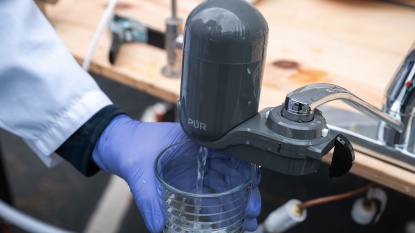
Pur Plus Vertical Faucet
Advantages
- Provides immediate access to filtered water, reducing plastic bottle use (SDG 12).
- Effectively reduces lead and PFNA to undetectable levels, enhancing health safety (SDG 3 and SDG 6).
- Simple installation and filter replacement process.
Limitations
- Slower water flow compared to unfiltered tap water.
- Compatibility issues with some faucet types.
- Bulky design may affect kitchen aesthetics and space.
Specifications
| Type | Faucet |
|---|---|
| Certifications | WQA and NSF certified to reduce 70 contaminants including lead, microplastics, mercury, chlorine taste and odor, DEET, and TTHM |
| Estimated Cost per Year (40 gal/month) | $59 |
| Estimated Cost per Year (160 gal/month) | $90 |
| Waste Water Generated | No |
This faucet filter supports sustainable water consumption by providing clean water on demand without wastewater generation.
Testing Methodology
Water Quality Laboratory Testing
Each water filter was independently tested in a certified water-quality laboratory to assess removal efficiency of contaminants, including PFAS (per- and polyfluoroalkyl substances), critical contaminants (lead, arsenic, uranium), and heavy metals. Two water samples were used: a highly contaminated “super” sample and a standard tap water sample, to evaluate both worst-case and typical performance.
Taste Testing
A panel of judges conducted blind taste tests to evaluate the flavor and odor of filtered water, ensuring that filtration does not negatively impact water palatability, thus encouraging water consumption (SDG 3).
User Experience Evaluation
Filters were assessed for installation ease, maintenance requirements, operating costs, and filtration speed to provide a comprehensive understanding of user convenience and sustainability.
Analysis and Results
Contaminant Removal Performance
- Reverse osmosis systems, especially the APEC ROES-50 Essence Series, demonstrated near-complete removal of PFAS and critical contaminants, supporting SDG 6.
- Pitcher filters varied in effectiveness; high-end models like Pur Plus 11-Cup and Culligan with Zerowater 8-Cup showed strong contaminant removal.
- Faucet filters provided effective reduction of lead and PFAS, with immediate water availability and no wastewater generation.
Operating Costs and Sustainability
- Pitchers generally have lower upfront costs but may incur higher long-term expenses due to frequent filter replacements.
- Reverse osmosis systems have higher initial costs but offer lower annual operating costs for high-volume users, aligning with sustainable consumption practices (SDG 12).
- Wastewater generation by RO systems requires responsible management to minimize environmental impact (SDG 6 and SDG 12).
Maintenance and Usability
- Pitcher and faucet filters offer ease of use with minimal installation and maintenance.
- RO systems require more complex installation and periodic maintenance but provide superior filtration performance.
Guidance for Selecting a Water Filter
- Filtration Needs: Assess the level and types of contaminants in your water supply to determine the appropriate filtration system.
- Household Size and Water Usage: Larger households may benefit from under-sink or RO systems to meet higher water demand sustainably.
- Maintenance Commitment: Consider the frequency and complexity of filter replacements and system upkeep.
- Installation Constraints: Evaluate available space and installation capabilities, especially for renters or those with limited under-sink space.
Conclusion
This evaluation underscores the importance of selecting water filtration systems that not only improve water quality but also support sustainable development goals, particularly SDG 6 (Clean Water and Sanitation) and SDG 12 (Responsible Consumption and Production). By choosing appropriate filtration solutions, users can ensure access to safe drinking water, reduce environmental impact, and promote health and well-being.
For more detailed information and product reviews, users are encouraged to consult the full evaluations and certifications to make informed decisions aligned with sustainability principles.
1. Sustainable Development Goals (SDGs) Addressed or Connected
- SDG 3: Good Health and Well-being
- Ensuring access to safe and clean drinking water reduces health risks from waterborne contaminants.
- The article discusses removal of harmful contaminants such as lead, arsenic, uranium, PFAS, and heavy metals that impact human health.
- SDG 6: Clean Water and Sanitation
- Focus on improving water quality by reducing pollution and minimizing release of hazardous chemicals.
- Water filtration technologies aim to provide safe and affordable drinking water.
- SDG 12: Responsible Consumption and Production
- Consideration of operating costs, filter replacement frequency, and wastewater generation promotes sustainable consumption.
- Encouragement of efficient water use and reduction of waste aligns with sustainable production practices.
- SDG 9: Industry, Innovation and Infrastructure
- Development and testing of advanced water filtration systems and technologies.
- Innovation in filtration methods such as reverse osmosis and multi-stage filters.
2. Specific Targets Under Identified SDGs
- SDG 3: Good Health and Well-being
- Target 3.9: Substantially reduce the number of deaths and illnesses from hazardous chemicals and air, water and soil pollution and contamination.
- SDG 6: Clean Water and Sanitation
- Target 6.1: Achieve universal and equitable access to safe and affordable drinking water for all.
- Target 6.3: Improve water quality by reducing pollution, eliminating dumping and minimizing release of hazardous chemicals and materials.
- SDG 12: Responsible Consumption and Production
- Target 12.2: Achieve sustainable management and efficient use of natural resources.
- Target 12.5: Substantially reduce waste generation through prevention, reduction, recycling and reuse.
- SDG 9: Industry, Innovation and Infrastructure
- Target 9.4: Upgrade infrastructure and retrofit industries to make them sustainable, with increased resource-use efficiency and greater adoption of clean and environmentally sound technologies.
3. Indicators Mentioned or Implied to Measure Progress
- Water Quality Indicators
- Percentage removal of critical contaminants such as lead, arsenic, uranium, PFAS (PFNA, PFBA), and heavy metals (copper, zinc, iron, barium).
- Concentration levels of contaminants before and after filtration (measured in ppm).
- Certification standards met (e.g., NSF, WQA, NSF/ANSI 42, 53, 401).
- Operational Indicators
- Annual operating cost per volume of water filtered (e.g., cost per year at 40 gallons/month and 160 gallons/month).
- Wastewater generated ratio (e.g., 1:3 water waste in reverse osmosis systems).
- Filter lifespan and frequency of replacements.
- User Experience Indicators
- Ease of installation and maintenance (qualitative scores and user feedback).
- Taste test results and consumer satisfaction.
4. Table: SDGs, Targets and Indicators
| SDGs | Targets | Indicators |
|---|---|---|
| SDG 3: Good Health and Well-being | Target 3.9: Reduce deaths and illnesses from hazardous chemicals and pollution. |
|
| SDG 6: Clean Water and Sanitation |
|
|
| SDG 12: Responsible Consumption and Production |
|
|
| SDG 9: Industry, Innovation and Infrastructure | Target 9.4: Upgrade infrastructure and retrofit industries to be sustainable with clean technologies. |
|
Source: techgearlab.com
What is Your Reaction?
 Like
0
Like
0
 Dislike
0
Dislike
0
 Love
0
Love
0
 Funny
0
Funny
0
 Angry
0
Angry
0
 Sad
0
Sad
0
 Wow
0
Wow
0