








































The double burden of poverty and climate crisis is no longer a looming threat; it is an unfolding reality – Down To Earth

Global Multidimensional Poverty Index 2025: An Analysis of Overlapping Crises and SDG Implications
1.0 Introduction: The Convergence of Poverty and Climate Hazards
The 2025 Global Multidimensional Poverty Index (MPI), published by the Oxford Poverty and Human Development Initiative (OPHI) and the United Nations Development Programme (UNDP), presents a critical analysis of the intersection between poverty and climate change. The report, titled “Overlapping Hardships: Poverty and Climate Hazards,” establishes a direct link between multidimensional poverty and exposure to climate risks, highlighting significant challenges to achieving the Sustainable Development Goals (SDGs), particularly SDG 1 (No Poverty) and SDG 13 (Climate Action).
2.0 Principal Findings of the MPI 2025 Report
2.1 The Global Scale of Multidimensional Poverty
- Across 109 developing countries, 1.1 billion people are living in acute multidimensional poverty, which measures deprivations across health, education, and living standards.
- This finding underscores the substantial work remaining to achieve SDG 1, which aims to end poverty in all its forms everywhere.
2.2 The “Double Burden”: Intersecting Poverty and Climate Risk
- The report reveals that 887 million people, representing nearly 80% of the world’s multi-dimensionally poor, reside in regions affected by at least one major climate hazard (extreme heat, drought, floods, or air pollution).
- This convergence creates a self-reinforcing cycle where poverty increases vulnerability to climate shocks, and climate shocks exacerbate deprivation, directly undermining progress on both SDG 1 and SDG 13.
- The data indicates a compounding crisis:
- 651 million poor people are exposed to two or more concurrent climate risks.
- 309 million face three or four simultaneous hazards.
- The incidence of poverty is significantly higher in exposed regions (24.8%) compared to less exposed areas (14.4%), illustrating a clear barrier to achieving SDG 10 (Reduced Inequalities).
2.3 Concentration of Poverty in Middle-Income Nations
- Approximately 740 million people, or nearly two-thirds of the world’s multi-dimensionally poor, live in middle-income countries.
- Lower-middle-income countries bear a significant burden, with 548 million poor people exposed to at least one major climate hazard.
- Specific vulnerabilities that impede SDG progress include:
- Air Pollution: Affects 577 million poor people, impacting SDG 3 (Good Health and Well-being) and SDG 11 (Sustainable Cities and Communities).
- Living Standards: Over 600 million poor people lack access to clean cooking fuel, safe sanitation, and adequate housing, which are central to SDG 6 (Clean Water and Sanitation) and SDG 7 (Affordable and Clean Energy).
2.4 Regional Hotspots: South Asia and Sub-Saharan Africa
- South Asia and Sub-Saharan Africa collectively account for 83.2% of the world’s multi-dimensionally poor.
- In South Asia, 99.1% of the poor are exposed to at least one climate hazard, with 226 million (59%) facing three or four concurrent hazards, threatening to reverse significant poverty reduction gains.
- In Sub-Saharan Africa, home to 565 million people in acute poverty, 193 million are exposed to multiple hazards. The region exhibits the highest deprivation rates across seven of the ten MPI indicators, making it a critical focus for integrated SDG interventions.
3.0 Disproportionate Impact on Vulnerable Populations
3.1 Children and Generational Poverty
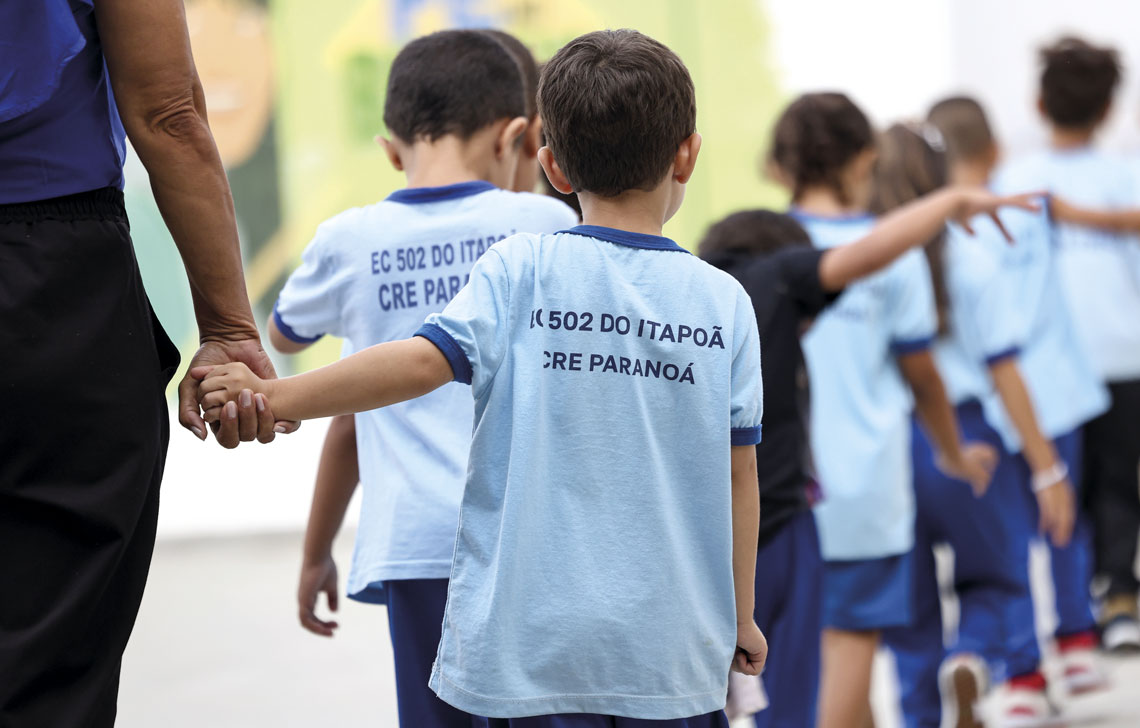
- Children under 18 account for over half of all multi-dimensionally poor individuals (586 million).
- The poverty rate for children (27.8%) is more than double that of adults (13.5%), representing a severe crisis for child rights and future human capital.
- This convergence of poverty and climate risk for children directly obstructs the achievement of SDG 4 (Quality Education) and SDG 3 (Good Health and Well-being), as climate shocks disrupt schooling and increase disease risk.
4.0 Stagnation of Progress and Future Projections
- Global progress on poverty reduction has stalled since 2018, with improvements plateauing or reversing in 83 of 92 subnational regions examined.
- Future climate projections indicate that countries with the highest levels of multidimensional poverty are expected to face the most severe temperature increases, further exacerbating inequalities (SDG 10).
- This disparity highlights a critical issue of climate justice, as the populations least responsible for emissions are bearing the greatest burden, a central theme of SDG 13.
5.0 Recommendations for Integrated Policy Action to Achieve the SDGs
The report’s findings necessitate an urgent shift towards integrated strategies that address poverty and climate action concurrently. The achievement of the 2030 Agenda is contingent on this integrated approach.
- Integrate Climate and Poverty Policies: National development plans must merge poverty reduction efforts (SDG 1) with climate adaptation and mitigation strategies (SDG 13). This includes investing in climate-resilient livelihoods and green infrastructure.
- Strengthen Social Protection Systems: Adaptive social safety nets are required to protect vulnerable populations from climate shocks, supporting SDG 1 and SDG 10.
- Enhance International Cooperation: Scaled-up climate finance, technology transfer, and capacity-building are essential for low- and lower-middle-income countries. This aligns with SDG 17 (Partnerships for the Goals), calling on developed nations to fulfill their commitments.
- Focus on People and Planet: Development thinking must place human well-being and environmental sustainability at its core, recognizing that the goals of ending poverty and protecting the planet are inseparable.
Analysis of the Article in Relation to Sustainable Development Goals
1. Which SDGs are addressed or connected to the issues highlighted in the article?
-
SDG 1: No Poverty
This is the central theme of the article. The text is based on the Global Multidimensional Poverty Index (MPI) 2025 report and explicitly discusses the challenge of eradicating poverty in all its forms. It states, “ending poverty, the first Sustainable Development Goal (SDG 1), is increasingly inseparable from climate action.”
-
SDG 13: Climate Action
This goal is explicitly mentioned and is a core focus of the analysis. The article argues that poverty and climate change are “converging crises” and that “poverty alleviation and climate action can no longer be pursued in isolation.” The entire report discussed in the article, “Overlapping Hardships: Poverty and Climate Hazards,” is about the intersection of these two issues.
-
SDG 10: Reduced Inequalities
The article consistently highlights how the dual crisis of poverty and climate change deepens inequality. It points out disparities between low- and middle-income countries, between different geographical regions (South Asia and Sub-Saharan Africa), and between adults and children, noting that climate change is “actively deepening inequalities between and within countries.”
-
SDG 3: Good Health and Well-being
The article mentions that the MPI measures deprivations in health. It also notes that vulnerabilities like air pollution and lack of sanitation “heighten the health impacts of climate stress,” directly linking environmental factors to health outcomes.
-
SDG 4: Quality Education
Deprivation in education is cited as one of the dimensions of the MPI. The article specifically mentions that for children, climate hazards like floods can disrupt schooling, connecting environmental shocks to educational access and continuity.
-
SDG 6: Clean Water and Sanitation
The article explicitly states that “over 600 million remain deprived of… safe sanitation,” which is a core component of this SDG and a key vulnerability that exacerbates the impacts of climate stress.
-
SDG 7: Affordable and Clean Energy
The text identifies the lack of “clean cooking fuel” as a major deprivation affecting over 600 million poor people. This directly relates to ensuring access to modern and clean energy sources.
-
SDG 11: Sustainable Cities and Communities
The article mentions deprivation in “adequate housing” as a key vulnerability. It also discusses how “rapid urbanisation” in middle-income countries can worsen environmental degradation, linking poverty to the challenges of sustainable urban development.
-
SDG 17: Partnerships for the Goals
The article concludes with a call for “scaled-up international cooperation and climate finance” and urges the global north to provide “tangible commitments in technology transfer, capacity building, and financial assistance” to low-income countries, which is the essence of SDG 17.
2. What specific targets under those SDGs can be identified based on the article’s content?
-
SDG 1: No Poverty
- Target 1.2: By 2030, reduce at least by half the proportion of men, women and children of all ages living in poverty in all its dimensions according to national definitions. The article is entirely focused on the Global Multidimensional Poverty Index (MPI), which measures poverty across dimensions like health, education, and living standards. The statistic that “1.1 billion people… continue to live in acute multidimensional poverty” directly relates to this target.
- Target 1.5: By 2030, build the resilience of the poor and those in vulnerable situations and reduce their exposure and vulnerability to climate-related extreme events and other economic, social and environmental shocks and disasters. The article’s central argument about the “double burden” of poverty and climate hazards, and the finding that “nearly 80 per cent of the world’s poorest people live in regions simultaneously affected by one or more climate hazards,” directly addresses this target.
-
SDG 13: Climate Action
- Target 13.1: Strengthen resilience and adaptive capacity to climate-related hazards and natural disasters in all countries. The article’s call for “climate-resilient livelihoods” and “adaptive social protection systems” is a direct response to the need to build resilience among the 887 million poor people living in areas facing climate hazards.
- Target 13.2: Integrate climate change measures into national policies, strategies and planning. The conclusion that “poverty alleviation and climate action can no longer be pursued in isolation” and the call for an “integrated policy approach” directly supports the integration mentioned in this target.
- Target 13.b: Promote mechanisms for raising capacity for effective climate change-related planning and management in least developed countries and small island developing States. The call for “capacity building, and financial assistance” from the global north to low-income countries aligns with this target.
-
SDG 10: Reduced Inequalities
- Target 10.2: By 2030, empower and promote the social, economic and political inclusion of all, irrespective of age, sex, disability, race, ethnicity, origin, religion or economic or other status. The article highlights the disproportionate impact on children (“poverty rate (27.8 per cent) is more than twice that of adults (13.5 per cent)”) and specific regions (South Asia and Sub-Saharan Africa), underscoring the need for inclusive policies that address these inequalities.
-
Other Relevant Targets
- Target 3.9: By 2030, substantially reduce the number of deaths and illnesses from hazardous chemicals and air, water and soil pollution and contamination. The finding that “Air pollution alone affects 577 million poor people” directly connects to this target.
- Target 6.2: By 2030, achieve access to adequate and equitable sanitation and hygiene for all. The mention of over 600 million people being deprived of “safe sanitation” clearly relates to this target.
- Target 7.1: By 2030, ensure universal access to affordable, reliable and modern energy services. The article identifies that over 600 million poor people are deprived of “clean cooking fuel,” which is a key component of this target.
- Target 11.1: By 2030, ensure access for all to adequate, safe and affordable housing and basic services. The reference to the deprivation of “adequate housing” for over 600 million people links directly to this target.
3. Are there any indicators mentioned or implied in the article that can be used to measure progress towards the identified targets?
-
Indicators for SDG 1 (No Poverty)
- Indicator 1.2.2: Proportion of men, women and children of all ages living in poverty in all its dimensions according to national definitions. The article provides several data points for this:
- The total number of people in acute multidimensional poverty (1.1 billion).
- The number of children under 18 in multidimensional poverty (586 million).
- The poverty rate for children (27.8%) versus adults (13.5%).
- The poverty rate in regions exposed to climate hazards (24.8%) versus less exposed regions (14.4%).
- Indicator 1.5.1: Number of deaths, missing persons and directly affected persons attributed to disasters per 100,000 population. While not giving death tolls, the article provides the number of poor people exposed to climate hazards, which is a measure of the population at risk:
- 887 million poor people exposed to at least one climate hazard.
- 651 million poor people exposed to two or more concurrent hazards.
- 309 million poor people exposed to three or four concurrent hazards.
- Indicator 1.2.2: Proportion of men, women and children of all ages living in poverty in all its dimensions according to national definitions. The article provides several data points for this:
-
Indicators for SDG 13 (Climate Action)
- Indicator 13.1.1: Number of countries with national and local disaster risk reduction strategies. The call for “integrated strategies” and “climate-resilient livelihoods” implies the need for such strategies, and their adoption could be a measure of progress.
- The article also provides a forward-looking indicator: the projected number of additional extreme heat days per year for high-poverty countries (92 days) versus low-poverty countries (62 days).
-
Indicators for Other SDGs
- Indicator for SDG 3 (Health): The number of poor people affected by air pollution (577 million).
- Indicator for SDG 6 (Sanitation): The number of people deprived of safe sanitation (part of the “over 600 million” figure).
- Indicator for SDG 7 (Energy): The number of people deprived of clean cooking fuel (part of the “over 600 million” figure).
- Indicator for SDG 11 (Housing): The number of people deprived of adequate housing (part of the “over 600 million” figure).
4. Table of SDGs, Targets, and Indicators
| SDGs | Targets | Indicators Identified in the Article |
|---|---|---|
| SDG 1: No Poverty |
1.2: Reduce multidimensional poverty. 1.5: Build resilience of the poor to climate-related events. |
– 1.1 billion people in acute multidimensional poverty. – 586 million children in multidimensional poverty (27.8% rate). – 887 million poor people exposed to at least one climate hazard. |
| SDG 13: Climate Action |
13.1: Strengthen resilience and adaptive capacity. 13.2: Integrate climate measures into policies. |
– 651 million poor people exposed to two or more concurrent climate risks. – Projected 92 additional extreme heat days per year in high-poverty countries. – Call for integrated policy approaches. |
| SDG 10: Reduced Inequalities | 10.2: Promote social and economic inclusion. |
– Poverty rate in hazard-exposed areas (24.8%) vs. less exposed areas (14.4%). – 83.2% of multidimensionally poor are in South Asia and Sub-Saharan Africa. – Children’s poverty rate (27.8%) is double that of adults (13.5%). |
| SDG 3: Good Health and Well-being | 3.9: Reduce deaths from pollution. | – 577 million poor people affected by air pollution. |
| SDG 6: Clean Water and Sanitation | 6.2: Achieve access to adequate sanitation. | – Over 600 million people deprived of safe sanitation. |
| SDG 7: Affordable and Clean Energy | 7.1: Ensure universal access to modern energy. | – Over 600 million people deprived of clean cooking fuel. |
| SDG 11: Sustainable Cities and Communities | 11.1: Ensure access to adequate housing. | – Over 600 million people deprived of adequate housing. |
| SDG 17: Partnerships for the Goals | 17.7 & 17.9: Technology transfer and capacity building. | – Implied need for increased international cooperation, climate finance, and technology transfer to low-income countries. |
Source: downtoearth.org.in
What is Your Reaction?
 Like
0
Like
0
 Dislike
0
Dislike
0
 Love
0
Love
0
 Funny
0
Funny
0
 Angry
0
Angry
0
 Sad
0
Sad
0
 Wow
0
Wow
0