















































;Resize=620#)










UN Tourism Presents Ulysses Award for Outstanding Contributions to Sector to Professor Larry Dwyer – Hospitality Net
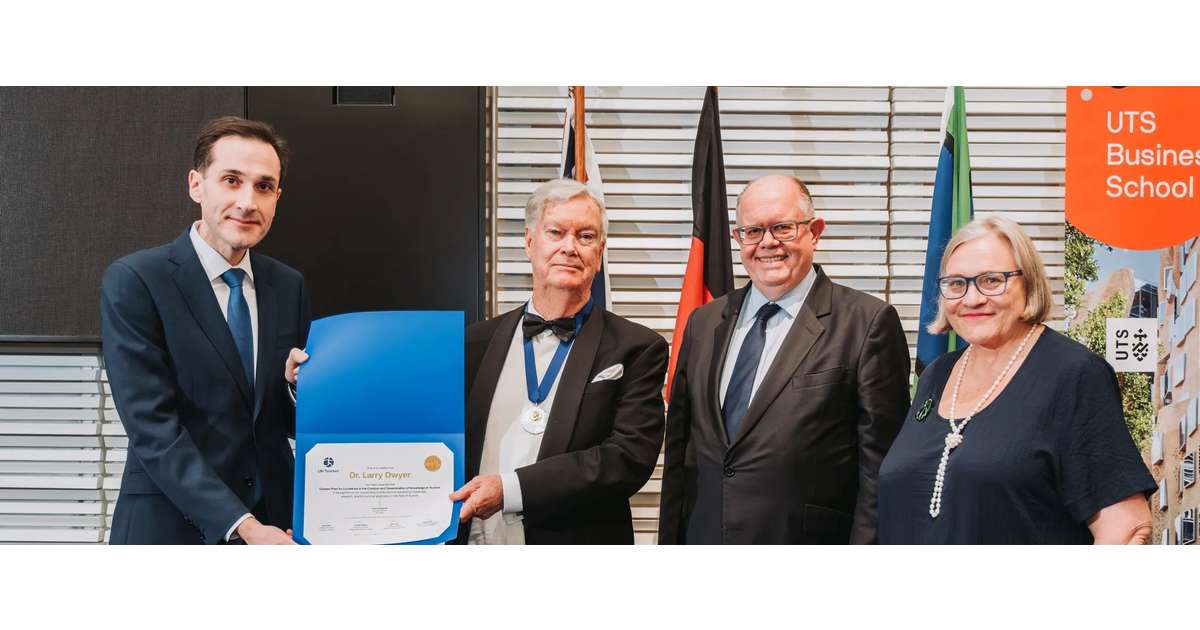
UN Tourism Ulysses Prize Awarded to Professor Larry Dwyer in Recognition of Contributions to Sustainable Development Goals
Executive Summary
UN Tourism has awarded the Ulysses Prize to Professor Larry Dwyer of the University of Technology Sydney. The award recognizes his academic contributions to tourism, with a particular focus on frameworks that support the United Nations Sustainable Development Goals (SDGs). The ceremony highlighted the critical role of academic research in guiding tourism policy towards greater sustainability, resilience, and inclusive growth, directly aligning with the 2030 Agenda for Sustainable Development.
Alignment of Professor Dwyer’s Research with Sustainable Development Goals
Professor Dwyer’s work has been instrumental in advancing knowledge in areas critical to achieving sustainable tourism. His research directly supports several SDGs by focusing on:
- Sustainable Tourism Development (SDG 8, SDG 12): Developing models for tourism that are economically viable, socially equitable, and environmentally responsible.
- Tourism Economics and Policy (SDG 8): Analyzing economic impacts to promote decent work and sustainable economic growth within the tourism sector.
- Destination Competitiveness (SDG 11): Researching how destinations can thrive sustainably without compromising cultural or natural heritage.
A Call for Wellbeing Metrics in Sustainable Tourism Policy
In his acceptance address, Professor Dwyer advocated for a paradigm shift in tourism analysis, urging a move beyond conventional metrics. He emphasized that to truly gauge progress in sustainable development, policies must incorporate broader measures of wellbeing. This approach supports a more holistic implementation of the SDGs.
Key recommendations include:
- Shifting focus from purely economic, social, and environmental impact assessments.
- Employing wellbeing measures to better evaluate the success of sustainable tourism development.
- Ensuring tourism policies contribute to the overall quality of life for host communities, a core tenet of the SDGs.
Institutional Endorsement of an SDG-Driven Approach
The award ceremony featured remarks from academic and UN Tourism leaders who reinforced the connection between Professor Dwyer’s work and the global sustainability agenda.
- Professor Andrew Parfitt, Vice Chancellor of the University of Technology Sydney, noted that Professor Dwyer’s research embodies the spirit of the SDGs by demonstrating how evidence-based analysis can foster inclusive and sustainable growth.
- Beka Jakeli, UN Tourism Director of External Relations, addressed global challenges such as climate change and economic instability. He called for a new Public-Private-Academia partnership model, echoing SDG 17 (Partnerships for the Goals), to facilitate evidence-based decision-making for long-term sector sustainability and resilience.
Conclusion: The Ulysses Prize as a Vehicle for the 2030 Agenda
The UN Ulysses Prize is explicitly aligned with the Sustainable Development Goals and the Global Code of Ethics for Tourism. By honoring scholars like Professor Dwyer, UN Tourism reinforces the sector’s potential to be a significant force for positive global change, promoting responsible, sustainable, and universally accessible tourism as a key contributor to the 2030 Agenda.
Analysis of Sustainable Development Goals in the Article
1. Which SDGs are addressed or connected to the issues highlighted in the article?
-
SDG 8: Decent Work and Economic Growth
- The article directly addresses this goal through its focus on “tourism economics,” “destination competitiveness,” and promoting “inclusive and sustainable growth.” Professor Parfitt’s quote explicitly states that Professor Dwyer’s research shows “how evidence-based research can promote inclusive and sustainable growth,” which is a core tenet of SDG 8.
-
SDG 17: Partnerships for the Goals
- This goal is explicitly referenced through the call to “rethink traditional partnerships and build an effective and innovative Public–Private–Academia partnership model.” This highlights the need for multi-stakeholder collaboration to achieve sustainability and resilience in the tourism sector, which is the essence of SDG 17.
-
SDG 4: Quality Education
- The article is centered around the UN Ulysses Prize, an academic honor awarded for “outstanding contributions to the creation and dissemination of knowledge in tourism.” It emphasizes the role of universities and research in addressing global challenges, aligning with the goal of leveraging education and knowledge for sustainable development.
-
SDG 12: Responsible Consumption and Production
- The core theme of “sustainable tourism development” is directly related to promoting sustainable production and consumption patterns within the tourism industry. Professor Dwyer’s work on this topic and the article’s emphasis on the “long-term sustainability and resilience of the tourism sector” connect to the principles of SDG 12.
2. What specific targets under those SDGs can be identified based on the article’s content?
-
Under SDG 8: Decent Work and Economic Growth
- Target 8.9: “By 2030, devise and implement policies to promote sustainable tourism that creates jobs and promotes local culture and products.” The article’s entire focus on “sustainable tourism development,” “tourism economics and policy,” and achieving “inclusive and sustainable growth” through tourism directly relates to this target.
-
Under SDG 17: Partnerships for the Goals
- Target 17.16: “Enhance the Global Partnership for Sustainable Development, complemented by multi-stakeholder partnerships that mobilize and share knowledge, expertise…” The call from UN Tourism’s Beka Jakeli to “build an effective and innovative Public–Private–Academia partnership model to guide evidence-based decision-making grounded in research findings” is a direct reflection of this target.
-
Under SDG 4: Quality Education
- Target 4.7: “By 2030, ensure that all learners acquire the knowledge and skills needed to promote sustainable development…” Professor Dwyer’s recognition for his “commitment to using knowledge to guide action” and his work in the “creation and dissemination of knowledge” on sustainable tourism contributes to this target by educating policymakers, industry stakeholders, and academics.
-
Under SDG 12: Responsible Consumption and Production
- Target 12.b: “Develop and implement tools to monitor sustainable development impacts for sustainable tourism…” Professor Dwyer’s argument that “tourism policies and programs should look beyond narrow, efficiency-driven economic indicators, to employ wellbeing measures to better gauge progress in tourism sustainable development” directly addresses the need for better monitoring tools and indicators as specified in this target.
3. Are there any indicators mentioned or implied in the article that can be used to measure progress towards the identified targets?
- The article does not mention any specific official UN indicators by their code. However, it strongly implies the need for new and better indicators.
- Implied Indicators for SDG 8 and SDG 12: The most significant point is Professor Dwyer’s explicit call to move beyond existing metrics. He emphasizes that tourism policy should not rely solely on “narrow, efficiency-driven economic indicators.” Instead, he advocates for the use of “wellbeing measures to better gauge progress in tourism sustainable development.” This suggests that progress should be measured by indicators related to social and personal wellbeing, not just economic output (like GDP from tourism).
- Implied Indicators for SDG 17: The article implies that a key indicator of progress would be the successful establishment and functioning of the proposed “Public–Private–Academia partnership model.” The existence and effectiveness of such collaborative platforms for “evidence-based decision-making” would serve as a measure of achievement.
4. Summary Table of SDGs, Targets, and Indicators
| SDGs | Targets | Indicators |
|---|---|---|
| SDG 8: Decent Work and Economic Growth | Target 8.9: Devise and implement policies to promote sustainable tourism that creates jobs and promotes local culture and products. | Implied: The article critiques the use of “narrow, efficiency-driven economic indicators” and suggests a shift towards broader metrics that capture “inclusive and sustainable growth.” |
| SDG 17: Partnerships for the Goals | Target 17.16: Enhance the Global Partnership for Sustainable Development, complemented by multi-stakeholder partnerships that mobilize and share knowledge and expertise. | Implied: The establishment and effectiveness of the proposed “Public–Private–Academia partnership model” for evidence-based decision-making. |
| SDG 4: Quality Education | Target 4.7: Ensure all learners acquire the knowledge and skills needed to promote sustainable development. | Implied: The “creation and dissemination of knowledge” and “evidence-based research” on sustainable tourism by academic institutions and scholars like Professor Dwyer. |
| SDG 12: Responsible Consumption and Production | Target 12.b: Develop and implement tools to monitor sustainable development impacts for sustainable tourism. | Implied: The development and use of “wellbeing measures” as a new type of indicator to “better gauge progress in tourism sustainable development,” moving beyond purely economic or environmental metrics. |
Source: hospitalitynet.org
What is Your Reaction?
 Like
0
Like
0
 Dislike
0
Dislike
0
 Love
0
Love
0
 Funny
0
Funny
0
 Angry
0
Angry
0
 Sad
0
Sad
0
 Wow
0
Wow
0