
















UN’s climate change language ‘eroding’ public trust, warns report – Euronews.com
Report on the Impact of Climate Change Communication on Sustainable Development Goals
Executive Summary
A recent study highlights a critical challenge to achieving the Sustainable Development Goals (SDGs), particularly SDG 13 (Climate Action). Research from the University of Essex indicates that the language employed by the Intergovernmental Panel on Climate Change (IPCC) may inadvertently undermine public understanding and trust, thereby hindering collective action on climate change. This report analyzes the study’s findings and their implications for several SDGs, including SDG 16 (Peace, Justice and Strong Institutions) and SDG 17 (Partnerships for the Goals).
Analysis of Communication Barriers to SDG 13 (Climate Action)
The study, published in Nature Climate Change, identifies specific linguistic issues that create barriers to effective climate action. The core problem lies in the public interpretation of scientific terminology.
- Problematic Phrasing: The IPCC’s use of terms such as “unlikely” or “the likelihood is low” to describe events with a less than 33 per cent probability (e.g., large-scale sea-level rise) is a key concern.
- Public Misinterpretation: The public often associates these negative-framing terms with disagreement or doubt, leading them to perceive a lack of consensus among climate scientists.
- Impact on Climate Action: This perception of scientific division can reduce public awareness of significant risks and diminish support for policies and actions essential for achieving the targets of SDG 13.
Erosion of Institutional Trust and Proliferation of Misinformation
The integrity of global institutions and the quality of public information are central to the 2030 Agenda. The study’s findings suggest that communication strategies can impact these foundational elements.
- Undermining Strong Institutions (SDG 16): By creating an impression of scientific discord, the current language may unintentionally erode public trust in the IPCC, a critical institution for informing global climate policy. Weakened trust in scientific bodies threatens the stability and effectiveness required by SDG 16.
- Fueling Misinformation: The ambiguity perceived by the public creates a fertile ground for the spread of climate misinformation. This directly contravenes the principles of SDG 4 (Quality Education) by obstructing access to accurate and clear scientific knowledge.
Recommendations for Strengthening Partnerships and Communication (SDG 17)
The research proposes actionable changes to communication strategies to foster greater public engagement and build stronger partnerships for the goals.
- Proposed Linguistic Shift: The study found that rephrasing statements from “unlikely” to “there is a small chance” significantly improves public perception.
- Focus on Possibility: This positive framing shifts focus to the potential for an event to occur, increasing public confidence in scientific predictions and their understanding of risk.
- Fostering Collaboration: Clearer communication is a prerequisite for the multi-stakeholder partnerships envisioned in SDG 17. It enables scientists, policymakers, and the public to collaborate effectively on climate solutions.
Conclusion: The Imperative for Clear Communication in Achieving the SDGs
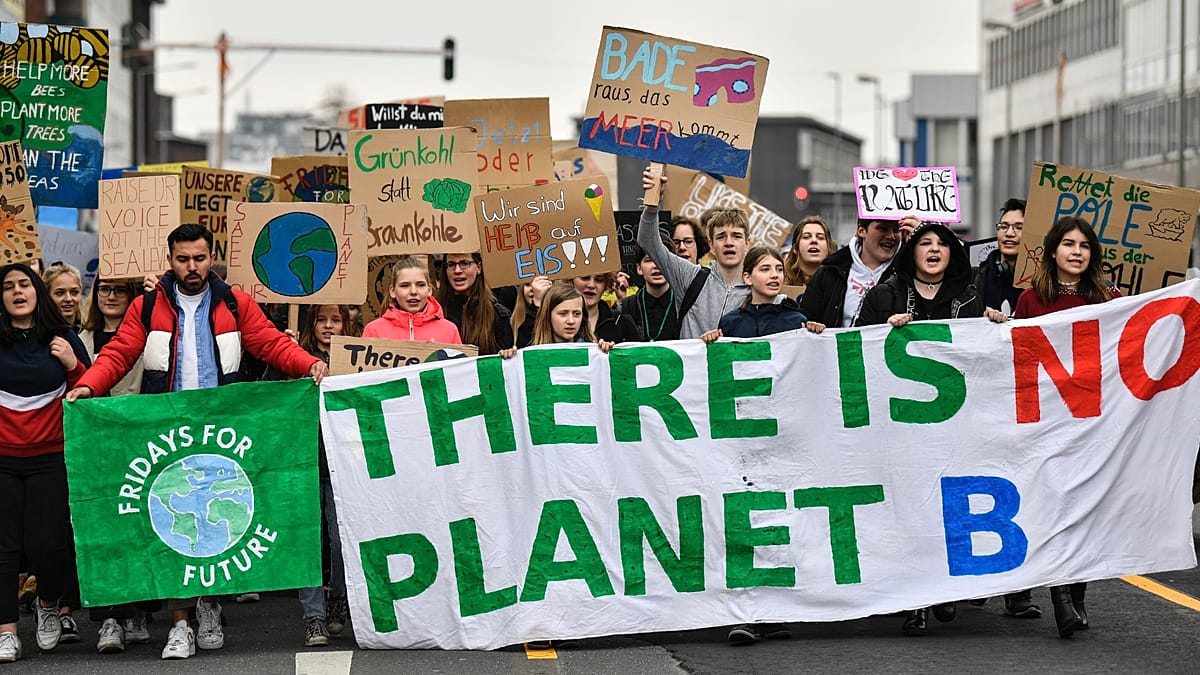
The report concludes that minor adjustments in scientific communication can have a major impact on public perception and willingness to act. Addressing climate change requires a unified global effort, which is contingent on clear, unambiguous communication that builds trust and mobilizes society. Failing to refine this communication risks impeding progress not only on SDG 13 (Climate Action) but also on goals related to sustainable communities (SDG 11), institutional strength (SDG 16), and global partnerships (SDG 17). As the study’s author notes, achieving these goals is paramount, as “There is no planet B.”
Analysis of Sustainable Development Goals in the Article
1. Which SDGs are addressed or connected to the issues highlighted in the article?
-
SDG 13: Climate Action
This is the most central SDG to the article. The text revolves entirely around the communication of climate change risks, the public’s perception of these risks, and how this perception influences the willingness to support climate action. The article discusses specific climate impacts like “sea level rise” and “extreme precipitation events” and emphasizes the need to “come together to address climate change” and support “CO2 reduction efforts.”
-
SDG 4: Quality Education
The article’s core theme is public understanding and education on climate change. It highlights a gap in comprehension, where scientific language used by the IPCC is misinterpreted by the public. The research aims to find better ways to communicate, which is a form of public education to ensure people acquire the knowledge needed to understand and act on sustainable development challenges like climate change.
-
SDG 16: Peace, Justice and Strong Institutions
The article examines the effectiveness of a key international institution, the Intergovernmental Panel on Climate Change (IPCC). It argues that the IPCC’s communication methods may be “unintentionally ‘eroding’ public trust in science.” This directly relates to the goal of having effective, accountable, and transparent institutions. The spread of misinformation, which the article notes is fueled by confusing language, also undermines public access to reliable information.
-
SDG 17: Partnerships for the Goals
The article implicitly calls for a stronger partnership between the scientific community (represented by the IPCC), policymakers, and the public. The final quote, “We need to come together to address climate change, despite political divisions,” underscores the need for multi-stakeholder collaboration to achieve climate goals. Effective communication is presented as a crucial foundation for this partnership.
2. What specific targets under those SDGs can be identified based on the article’s content?
-
Target 13.3: Improve education, awareness-raising and human and institutional capacity on climate change mitigation, adaptation, impact reduction and early warning.
The article directly addresses this target by analyzing how the IPCC’s language affects public awareness and perception of climate change risks. The study’s recommendation to change wording from “unlikely” to “there is a small chance” is a specific proposal to improve awareness-raising and institutional capacity for communication on climate change impact reduction.
-
Target 16.6: Develop effective, accountable and transparent institutions at all levels.
The research critiques the communication strategy of the IPCC, a globally recognized scientific institution. The finding that its language can make the public think scientists are “divided” and may be “eroding public trust” is a direct commentary on the institution’s effectiveness in communicating its findings to the public, a key stakeholder group.
-
Target 4.7: By 2030, ensure that all learners acquire the knowledge and skills needed to promote sustainable development…
The article highlights a failure in knowledge acquisition, where the public misinterprets scientifically precise terms. The study’s purpose is to find ways to bridge this gap, ensuring that the public (learners in a broad sense) can accurately understand the scientific consensus on climate change, which is essential knowledge for promoting sustainable development.
-
Target 16.10: Ensure public access to information…
While the IPCC provides public access to its reports, the article argues that the information is not effectively accessible if the language used is confusing or misleading to a lay audience. The misinterpretation of terms like “unlikely” creates a barrier to genuine understanding and “can make it easier for climate misinformation to spread,” thereby compromising the quality and integrity of public access to information.
3. Are there any indicators mentioned or implied in the article that can be used to measure progress towards the identified targets?
-
Implied Indicator for Target 13.3: Level of public understanding and trust in scientific climate predictions.
The article is based on a study that “surveyed more than 4,000 UK residents” to gauge their perception of IPCC’s language. This survey method itself acts as a way to measure public understanding. An indicator of progress would be a measurable increase in public confidence in scientific predictions and a decrease in the misinterpretation of risk-related terms when communication strategies are changed.
-
Implied Indicator for Target 16.6: Public trust in scientific institutions.
The article explicitly states that the IPCC’s phrasing may be “eroding public trust in science.” A direct indicator, therefore, is the level of public trust in the IPCC and similar scientific bodies. This can be measured through public opinion polls and surveys, similar to the one conducted in the study, tracking trust over time as communication methods evolve.
-
Implied Indicator for Target 4.7: Percentage of the public correctly interpreting scientific communications on climate risk.
The study’s experiments, which tested different phrasings, directly measure the public’s ability to interpret information correctly. The finding that changing “unlikely” to “there is a small chance” can “increase confidence in predictions” implies that progress can be measured by the percentage of the population that understands the intended meaning of scientific statements about climate change probabilities and impacts.
4. Table of SDGs, Targets, and Indicators
| SDGs | Targets | Indicators (Implied from the article) |
|---|---|---|
| SDG 13: Climate Action | 13.3: Improve education, awareness-raising and human and institutional capacity on climate change mitigation, adaptation, impact reduction and early warning. | Level of public awareness and willingness to support actions that reduce or prepare for climate threats, measured through surveys on perception of risk. |
| SDG 16: Peace, Justice and Strong Institutions | 16.6: Develop effective, accountable and transparent institutions at all levels. | Level of public trust in the scientific assessments and communications from institutions like the IPCC. |
| SDG 4: Quality Education | 4.7: Ensure that all learners acquire the knowledge and skills needed to promote sustainable development. | Percentage of the public that can correctly interpret scientific terminology and probabilities related to climate change events. |
| SDG 16: Peace, Justice and Strong Institutions | 16.10: Ensure public access to information. | Reduction in public misinterpretation of scientific reports and reduced susceptibility to climate misinformation. |
Source: euronews.com
What is Your Reaction?
 Like
0
Like
0
 Dislike
0
Dislike
0
 Love
0
Love
0
 Funny
0
Funny
0
 Angry
0
Angry
0
 Sad
0
Sad
0
 Wow
0
Wow
0