
































Updated Gaza data shows famine claims likely inflated by UN-backed monitor – The Times of Israel
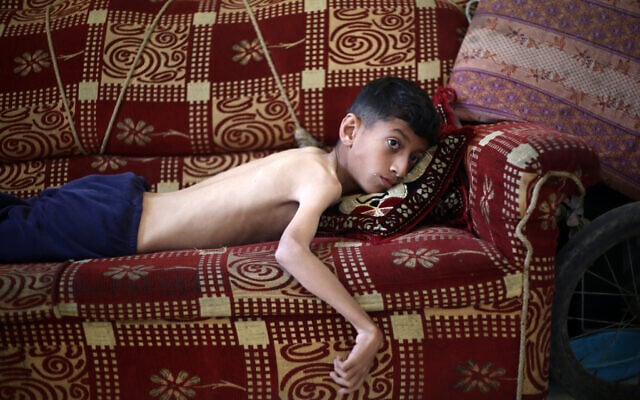
Report on Food Security and Malnutrition Data in Gaza
Analysis in the Context of Sustainable Development Goals (SDGs)
This report analyzes recent data concerning food security and malnutrition in Gaza, focusing on a disputed famine declaration and its implications for achieving the Sustainable Development Goals, particularly SDG 2 (Zero Hunger), SDG 3 (Good Health and Well-being), and SDG 16 (Peace, Justice and Strong Institutions).
Discrepancies in Famine Condition Assessments and SDG 2 (Zero Hunger)
Data from global monitoring bodies presents conflicting assessments of the food security situation in Gaza, directly impacting the evaluation of progress towards SDG 2, which aims to end hunger and ensure access to safe, nutritious food.
Integrated Food Security Phase Classification (IPC) Famine Declaration
- In August, the IPC issued a report determining that famine conditions were present in the Gaza Governorate between July and mid-August.
- The report stated that over 514,000 people experienced famine conditions and projected this number would rise to 640,000.
- The declaration was based on malnutrition rates cited as reaching between 12.7% and 19.9% in July.
Global Nutrition Cluster Contradictory Data
- Subsequent data released by the Global Nutrition Cluster for July and August indicates that malnutrition levels were approximately 23% lower than the figures utilized by the IPC.
- The highest recorded rate of Global Acute Malnutrition (GAM), measured by Mid-Upper Arm Circumference (MUAC), was 11.9% in the Gaza Governorate in July.
- This figure is below the internationally recognized 15% MUAC prevalence threshold required for a famine classification, a key indicator for monitoring SDG 2 targets. The data shows this critical hunger threshold was not breached.
Implications for SDG 3 (Good Health and Well-being)
The assessment of mortality rates is crucial for both famine classification and for monitoring SDG 3, which aims to ensure healthy lives and promote well-being for all at all ages. The available data on mortality in Gaza does not align with expected outcomes during a famine.
Analysis of Mortality Metrics
- Famine Mortality Threshold: A famine declaration requires a Crude Death Rate (CDR) of two deaths per 10,000 people per day from non-traumatic causes.
- Expected vs. Reported Deaths: Based on the IPC’s determination, a minimum of 4,728 deaths would have been expected among the affected population during the 46-day period. However, UN-published figures based on Gaza Ministry of Health records show 170 malnutrition-related deaths from July 1 to August 13.
- Data Gap: While “malnutrition-related deaths” is not a direct equivalent to the CDR, the vast discrepancy raises significant questions about whether the mortality component of the famine definition, a critical indicator of public health collapse under SDG 3, was met.
Humanitarian Health Context
Analysts acknowledge that while the technical parameters for famine may not have been met, the humanitarian situation severely compromised progress on SDG 3. Hundreds of thousands suffered from food deprivation, poor sanitation, and limited healthcare access, representing a significant public health crisis.
Institutional Accountability and SDG 16 (Peace, Justice and Strong Institutions)
The controversy over the famine declaration highlights the critical importance of transparent, accountable, and effective institutions, a cornerstone of SDG 16. The reliability of data from monitoring bodies has profound implications for international justice.
Methodological Scrutiny of the IPC Report
- Critics, including the Israeli government and independent data analysts, have pointed to severe methodological flaws in the IPC’s August report.
- Concerns were raised regarding the use of partial, bi-weekly data sets rather than more comprehensive monthly figures, and the potential use of unweighted data that could skew findings.
- The IPC’s report cited elevated CDRs from unspecified surveys without providing data or citations, undermining the principles of transparency and accountability central to SDG 16.
Impact on International Justice Mechanisms
- The IPC’s famine declaration was cited in international legal proceedings at the International Court of Justice (ICJ) and formed a basis for charges of deliberate starvation by the International Criminal Court (ICC).
- The subsequent data, which challenges the famine declaration, underscores the necessity for rigorous, evidence-based analysis from international institutions to ensure that justice is pursued based on verified facts, in line with the objectives of SDG 16.
Conclusion: Reassessing Progress Towards Zero Hunger in Conflict Zones
The analysis of comprehensive data from the Global Nutrition Cluster suggests that the technical thresholds for famine were not crossed in Gaza during the period in question. This finding necessitates a re-evaluation of the initial declaration and its widespread consequences.
- The discrepancy highlights a critical need for methodologically sound and transparent data collection to accurately monitor progress towards SDGs 2, 3, and 16.
- While a famine may not have occurred by its strict definition, the severe food insecurity and high rates of malnutrition documented still represent a profound failure to achieve SDG 2 targets and demand a robust humanitarian response.
- Ensuring the accountability and accuracy of international monitoring bodies is paramount for upholding justice (SDG 16) and effectively addressing global hunger (SDG 2) and health crises (SDG 3).
Analysis of Sustainable Development Goals in the Article
1. Which SDGs are addressed or connected to the issues highlighted in the article?
- SDG 2: Zero Hunger
- SDG 3: Good Health and Well-being
- SDG 16: Peace, Justice, and Strong Institutions
2. What specific targets under those SDGs can be identified based on the article’s content?
SDG 2: Zero Hunger
- Target 2.1: End hunger and ensure access to safe, nutritious, and sufficient food. The article’s central theme is the humanitarian situation in Gaza, focusing on “deprivation of food,” “dwindling food supplies,” and the debate over whether a “famine” occurred.
- Target 2.2: End all forms of malnutrition. The article extensively discusses “malnutrition levels in Gaza,” specifically “Global Acute Malnutrition” among “babies and toddlers” and “children aged 6 months to 5 years.”
SDG 3: Good Health and Well-being
- Target 3.2: End preventable deaths of newborns and children under 5 years of age. The article highlights concerns over “malnutrition-related deaths” and discusses mortality rates, which are critical for assessing child survival in a crisis.
- Target 3.8: Achieve universal health coverage, including access to quality essential health-care services. The text notes that the population in Gaza suffers from “limited access to healthcare” as part of the difficult humanitarian situation.
SDG 16: Peace, Justice, and Strong Institutions
- Target 16.1: Significantly reduce all forms of violence and related death rates everywhere. The entire crisis described in the article is a direct consequence of a “two-year war,” which is the root cause of the hunger and health issues.
- Target 16.3: Promote the rule of law at the national and international levels and ensure equal access to justice for all. The article details how famine claims are central to “grave allegations made against Israel in international legal forums,” including a “genocide suit filed by South Africa against Israel” at the International Court of Justice (ICJ) and arrest warrants from the International Criminal Court (ICC) for “crimes against humanity.”
3. Are there any indicators mentioned or implied in the article that can be used to measure progress towards the identified targets?
SDG 2: Zero Hunger
- Indicator for Target 2.2: The article explicitly mentions indicators used to measure malnutrition. It refers to the “prevalence among children aged 6 months to 5 years, using the Mid-Upper Arm Circumference, or MUAC, measurement.” Specific data points are provided, such as the rate being “11.9 percent in the Gaza Governorate in the month of July,” and the IPC threshold for famine being “15% prevalence.” This directly corresponds to Indicator 2.2.2 (Prevalence of malnutrition [wasting] among children under 5 years of age).
SDG 3: Good Health and Well-being
- Indicator for Target 3.2: The article discusses mortality metrics used to determine famine, specifically the “crude death rate metric of two out of every 10,000 people dying from all causes other than traumatic injury.” It also references figures on “malnutrition-related deaths” (e.g., “170 malnutrition related deaths from July 1 to August 13”). This relates to Indicator 3.2.1 (Under-5 mortality rate) and Indicator 3.2.2 (Neonatal mortality rate), as malnutrition disproportionately affects children and is a key driver of these rates.
SDG 16: Peace, Justice, and Strong Institutions
- Indicator for Target 16.3: While not a quantitative statistical indicator, the article implies process indicators for access to international justice. The mention of a “genocide suit filed by South Africa against Israel” at the ICJ and the ICC issuing “arrest warrants for Prime Minister Benjamin Netanyahu and former defense minister Yoav Gallant” that include charges of “Starvation of civilians as a method of warfare” serve as qualitative indicators of international legal mechanisms being activated to address alleged violations of international law.
SDGs, Targets, and Indicators Table
| SDGs | Targets | Indicators Identified in the Article |
|---|---|---|
| SDG 2: Zero Hunger | 2.2: End all forms of malnutrition. | Prevalence of Global Acute Malnutrition: Measured by “Mid-Upper Arm Circumference, or MUAC,” with specific figures cited (e.g., “11.9 percent”) and compared against the famine threshold of 15%. |
| SDG 3: Good Health and Well-being | 3.2: End preventable deaths of newborns and children under 5. | Crude Death Rate (CDR): The article specifies the famine metric of “two out of every 10,000 people dying” per day and discusses “malnutrition-related deaths” as a key statistic. |
| SDG 16: Peace, Justice, and Strong Institutions | 16.3: Promote the rule of law and ensure equal access to justice. | Activation of International Legal Mechanisms: The filing of a “genocide suit” at the ICJ and the issuance of “arrest warrants” by the ICC based on charges like “Starvation of civilians as a method of warfare.” |
Source: timesofisrael.com
What is Your Reaction?
 Like
0
Like
0
 Dislike
0
Dislike
0
 Love
0
Love
0
 Funny
0
Funny
0
 Angry
0
Angry
0
 Sad
0
Sad
0
 Wow
0
Wow
0