Vietnam’s business leaders step up to advance responsible supply chains – Vietnam Investment Review – VIR
Report on Vietnam’s Multi-Stakeholder Dialogue on Responsible Supply Chains and Migrant Worker Welfare
1.0 Introduction: Aligning Business Practices with Sustainable Development Goals
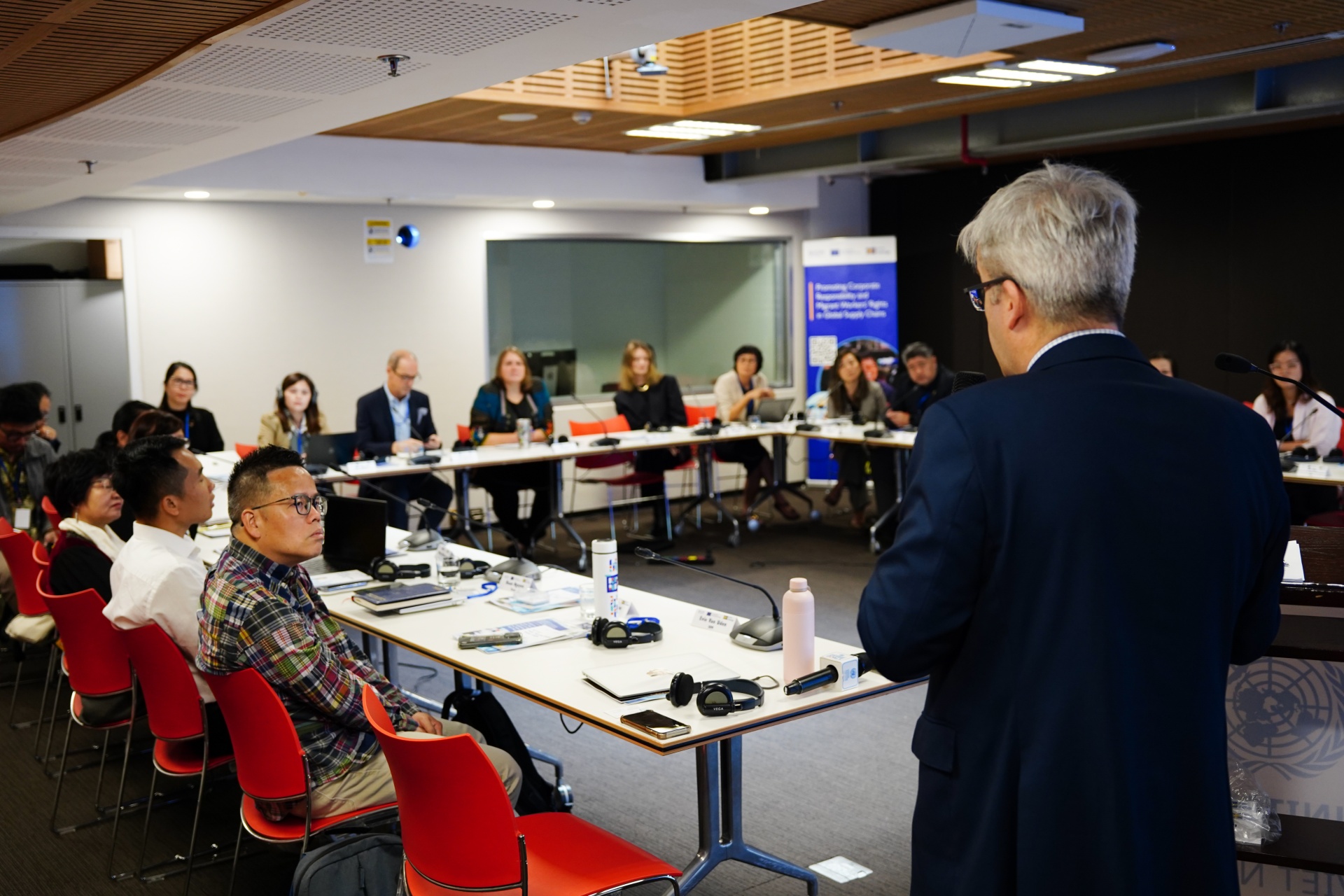
On December 1, a business roundtable was convened by the International Organisation for Migration (IOM) to address the integration of domestic migrant worker welfare into corporate strategies. The meeting brought together business leaders, chambers of commerce, and civil society organizations to prepare for the European Union’s Corporate Sustainability Due Diligence Directive (EU CS3D). The dialogue focused on aligning Vietnam’s key export sectors with global standards for responsible business conduct, directly supporting the achievement of the Sustainable Development Goals (SDGs), particularly SDG 8 (Decent Work and Economic Growth) and SDG 10 (Reduced Inequalities).
2.0 Status of Domestic Migrant Labour in Vietnam
Domestic migrant workers are integral to Vietnam’s economic productivity, yet they represent a vulnerable segment of the population whose needs are often overlooked in corporate due diligence processes. This gap presents challenges to achieving inclusive growth as outlined in the SDGs.
- Workforce Composition: A significant portion of the workforce in key export industries, such as electronics, textiles, and footwear, consists of domestic migrant workers.
- Statistical Overview: According to the General Statistics Office (2023), over 774,500 internal migrants aged 15 and above were recorded, with nearly 74% participating in the labour force.
- Identified Gaps: Kendra Rinas, Chief of Mission at IOM Vietnam, noted that while companies are aware of migrant workers in their supply chains, their specific needs and realities, especially those of ethnic minorities, remain a “blind spot.” This highlights a critical area for improvement in fulfilling the mandate of SDG 10 (Reduced Inequalities).
3.0 The EU CS3D Directive: A Catalyst for Sustainable and Responsible Business (SDG 12)
The forthcoming EU CS3D directive mandates stringent due diligence and sustainability reporting, compelling companies trading with the EU to adopt practices consistent with international standards. This regulation serves as a powerful driver for advancing SDG 12 (Responsible Consumption and Production) by embedding human rights and environmental considerations into corporate value chains.
- Mandatory Requirements: Rafael de Bustamante of the EU delegation to Vietnam confirmed that the directive introduces mandatory due diligence for large Vietnamese companies, ensuring alignment with responsible business conduct.
- Protecting Vulnerable Groups: A key objective of the directive is to protect vulnerable populations, including internal migrant workers, by holding companies accountable for human rights impacts. This directly supports targets within SDG 8 (Decent Work and Economic Growth) and SDG 10 (Reduced Inequalities).
- Global Competitiveness: Swedish Ambassador Johan Ndisi emphasized that preparing for these new standards provides an opportunity for Vietnamese companies to enhance their competitiveness and demonstrate leadership in responsible business, contributing to sustainable economic growth.
4.0 The Business Case for Ethical Practices and SDG Contribution
The roundtable discussions affirmed that proactive engagement with domestic migrant workers and the adoption of ethical employment practices offer tangible business advantages while advancing the SDG agenda.
- Risk Mitigation and Compliance: Adopting fair employment practices helps companies anticipate regulatory requirements like the EU CS3D and reduce compliance risks.
- Enhanced Workforce Stability (SDG 8): Ethical recruitment and fair treatment lead to higher employee retention and lower turnover, fostering a stable and productive workforce in line with the principles of Decent Work.
- Strengthened Reputation: Responsible business conduct enhances brand reputation and builds trust with buyers, investors, and consumers, creating long-term value.
5.0 Multi-Stakeholder Partnerships and Future Actions (SDG 17)
The roundtable exemplified SDG 17 (Partnerships for the Goals) by fostering collaboration between international organizations, the private sector, and civil society. Building on this momentum, concrete steps are being taken to translate dialogue into actionable guidance.
- Timeliness of Discussion: Bui Thi Ninh of VCCI Ho Chi Minh City highlighted the workshop’s importance in addressing national labour shortages by ensuring appropriate policies and support for domestic migrant workers, thereby stabilizing the labour market.
- Development of Practical Guidance: IOM is developing guidance to assist businesses in integrating domestic migrant workers into their due diligence and risk assessment frameworks.
- Informed Outcomes: The final guidance, scheduled for release in 2026, will incorporate recommendations from participating firms and experts to ensure it provides practical, real-world solutions for Vietnam’s business community in its pursuit of sustainable development.
Analysis of the Article in Relation to Sustainable Development Goals (SDGs)
1. Which SDGs are addressed or connected to the issues highlighted in the article?
-
SDG 8: Decent Work and Economic Growth
The article focuses on the working conditions of domestic migrant workers in Vietnam’s key export sectors. It discusses the importance of “ethical recruitment, fair employment,” and improving “workforce stability,” which are central themes of SDG 8. The goal is to promote sustained, inclusive, and sustainable economic growth, full and productive employment, and decent work for all.
-
SDG 10: Reduced Inequalities
The article explicitly highlights the vulnerability of specific groups, stating the EU CS3D directive “seeks to protect vulnerable groups, including internal migrant workers.” It also mentions the need to understand the realities of “workers from ethnic minority backgrounds,” directly addressing the core aim of SDG 10 to reduce inequality within and among countries by empowering and promoting the social and economic inclusion of all.
-
SDG 12: Responsible Consumption and Production
The entire context of the discussion is the European Union’s Corporate Sustainability Due Diligence Directive (EU CS3D). This directive mandates that companies ensure responsible business conduct and sustainability throughout their supply chains. This aligns perfectly with SDG 12, which encourages companies to adopt sustainable practices and integrate sustainability information into their reporting, thereby promoting responsible production patterns.
-
SDG 17: Partnerships for the Goals
The event described in the article is a multi-stakeholder collaboration. It brought together the “International Organisation for Migration (IOM),” “Business leaders, chambers of commerce, and civil society organisations,” along with representatives from the “EU delegation” and the “Swedish Ambassador to Vietnam.” This collaborative approach to solving complex sustainability issues is the essence of SDG 17, which aims to strengthen the means of implementation and revitalize the global partnership for sustainable development.
2. What specific targets under those SDGs can be identified based on the article’s content?
-
Target 8.8: Protect labour rights and promote safe and secure working environments for all workers, including migrant workers, and in particular women migrants, and those in precarious employment.
The article’s emphasis on “ethical recruitment, fair employment,” and the need for due diligence to protect workers in supply chains directly supports this target. The discussion aims to develop strategies to support Vietnam’s domestic migrant workers, who are often in precarious employment situations.
-
Target 10.2: By 2030, empower and promote the social, economic and political inclusion of all, irrespective of age, sex, disability, race, ethnicity, origin, religion or economic or other status.
This target is addressed through the article’s focus on protecting “vulnerable groups, including internal migrant workers” and the specific mention of the need to understand the “lived realities” of “workers from ethnic minority backgrounds,” ensuring they are not left behind in the push for responsible supply chains.
-
Target 10.7: Facilitate orderly, safe, regular and responsible migration and mobility of people, including through the implementation of planned and well-managed migration policies.
The article is centered on “internal labour migration” and the need for “appropriate policies and support for domestic migrant workers” to stabilize the labor market. The IOM’s involvement and the development of guidance for businesses directly contribute to creating a more responsible environment for migrant workers.
-
Target 12.6: Encourage companies, especially large and transnational companies, to adopt sustainable practices and to integrate sustainability information into their reporting cycle.
The EU CS3D is the primary driver of the discussion. The article states that it “introduces mandatory due diligence and sustainability reporting requirements for large Vietnamese companies trading with the EU.” This directly pushes companies to adopt the sustainable practices mentioned in this target.
-
Target 17.17: Encourage and promote effective public, public-private and civil society partnerships, building on the experience and resourcing strategies of partnerships.
The roundtable itself is a clear example of this target in action, convening IOM (an intergovernmental organization), private sector entities (“Business leaders, chambers of commerce”), civil society, and public representatives (EU delegation, Swedish Ambassador) to collaborate on a shared sustainability goal.
3. Are there any indicators mentioned or implied in the article that can be used to measure progress towards the identified targets?
- Statistical Data on Migrant Workers: The article provides a specific statistic that can serve as a baseline indicator: “According to the General Statistics Office, more than 774,500 internal migrants aged 15 and above were recorded in 2023, with nearly 74 per cent participating in the labour force.” This data is relevant for monitoring the scale of internal migration (related to Target 10.7).
- Workforce Stability Metrics: The article implies that progress can be measured by improved “workforce stability through higher retention and lower turnover.” These are quantifiable business metrics that can indicate better working conditions and fairer employment practices (related to Target 8.8).
- Adoption of Due Diligence Processes: A key indicator of progress is the number of companies that “integrate domestic migrant workers into their due diligence and risk assessment processes.” The article notes that the IOM is developing guidance to help businesses achieve this, suggesting that the adoption rate of such practices can be tracked (related to Target 12.6).
- Development of Guidance and Policies: The creation and release of the “practical guidance” by the IOM in 2026 is a tangible output and an indicator of progress in building capacity and providing tools for businesses to act responsibly (related to Targets 8.8 and 17.17).
4. Create a table with three columns titled ‘SDGs, Targets and Indicators” to present the findings from analyzing the article.
| SDGs | Targets | Indicators |
|---|---|---|
| SDG 8: Decent Work and Economic Growth | 8.8: Protect labour rights and promote safe and secure working environments for all workers, including migrant workers. |
|
| SDG 10: Reduced Inequalities |
10.2: Empower and promote the social and economic inclusion of all, irrespective of origin or other status.
10.7: Facilitate orderly, safe, regular and responsible migration and mobility of people. |
|
| SDG 12: Responsible Consumption and Production | 12.6: Encourage companies to adopt sustainable practices and integrate sustainability information into their reporting cycle. |
|
| SDG 17: Partnerships for the Goals | 17.17: Encourage and promote effective public, public-private and civil society partnerships. |
|
Source: vir.com.vn
What is Your Reaction?
 Like
0
Like
0
 Dislike
0
Dislike
0
 Love
0
Love
0
 Funny
0
Funny
0
 Angry
0
Angry
0
 Sad
0
Sad
0
 Wow
0
Wow
0