
























































Anaerobic Digestion Market Forecast to Reach USD 32.88 Billion by 2034 – openPR.com
Anaerobic Digestion Market Overview and Sustainable Development Goals Alignment
Market Forecast and Growth Potential
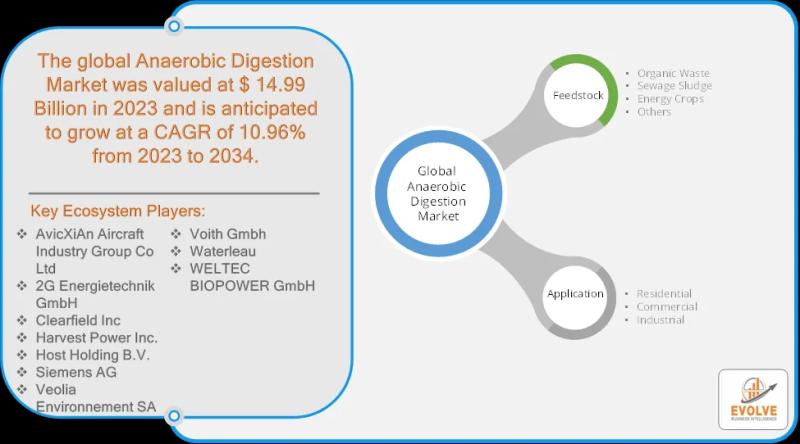
The Anaerobic Digestion (AD) market is poised for significant expansion, driven by the increasing emphasis on sustainable waste management and renewable energy generation. Valued at USD 14.99 billion in 2023, the market is projected to reach USD 32.88 billion by 2034, growing at a robust Compound Annual Growth Rate (CAGR) of 10.96% from 2024 to 2034. This growth supports multiple Sustainable Development Goals (SDGs), including:
- SDG 7: Affordable and Clean Energy
- SDG 11: Sustainable Cities and Communities
- SDG 12: Responsible Consumption and Production
- SDG 13: Climate Action
High Opportunity of Organic Waste Utilization
Organic waste, abundant across various sectors, serves as a prime feedstock for anaerobic digestion. This process converts organic matter into biogas, a renewable energy source, and digestate, a nutrient-rich biofertilizer. The dual benefits of effective waste management and resource production contribute to:
- Reduction of landfill waste and associated greenhouse gas emissions (SDG 13).
- Generation of renewable energy, reducing reliance on fossil fuels (SDG 7).
- Promotion of sustainable agriculture through biofertilizer use (SDG 2: Zero Hunger and SDG 15: Life on Land).
Challenges in the Anaerobic Digestion Market
Key Barriers
- High Initial Capital Investment and Maintenance: The establishment of AD plants requires substantial upfront costs for construction, biogas upgrading systems, and grid integration. This financial barrier particularly affects small and medium-sized enterprises (SMEs) and agricultural producers.
- Skilled Labor Requirement: Operation and maintenance of AD facilities demand a skilled workforce proficient in digester operation, biogas upgrading, and feedstock management.
- Digestate Management: Efficient management and disposal of digestate pose challenges, especially in regions with limited agricultural demand for biofertilizers.
Proposed Solutions and Opportunities
Addressing these challenges can unlock the full potential of the AD market and advance several SDGs:
- Expansion of Renewable Energy and Biogas Markets: Technologies that upgrade biogas to Renewable Natural Gas (RNG) for grid injection or transportation fuel use align with SDG 7 and support the global hydrogen economy through Power-to-Gas (P2G) systems producing green hydrogen.
- Agricultural and Industrial Waste Utilization: Large industries and agricultural operations (e.g., dairy farms, poultry farms, breweries, sugar mills, food processing plants) can convert organic waste into energy, enhancing energy security, reducing costs, and minimizing environmental footprints (SDG 12 and SDG 13).
- Nutrient-Rich Digestate Use: Promoting digestate as a substitute for chemical fertilizers supports sustainable farming and fosters a circular economy model (SDG 2 and SDG 15).
Impact of US Tariffs on the Anaerobic Digestion Market
Tariff Implications
US tariffs significantly affect the AD market, particularly regarding gas separation membranes essential for biogas upgrading. Key impacts include:
- Increased Production Costs: Tariffs on imported raw materials such as polysulfone, polyimide, PTFE, specialized housing materials, and valves raise production expenses for biogas plants.
- Reduced Profit Margins: Manufacturers face margin compression, especially under long-term OEM contracts limiting cost pass-through.
- Slowed Investment: Increased costs and uncertainty may delay investments in manufacturing, pilot plants, and R&D for advanced AD technologies, including CO2 capture solutions.
- Shift Towards Domestic Production: Tariffs encourage domestic membrane production to reduce import reliance, though challenges such as skilled labor shortages and higher compliance costs persist.
- Indirect Infrastructure Cost Increases: Tariffs on steel and aluminum raise infrastructure development costs, affecting large-scale AD project economics.
Strategic Adaptations
To mitigate tariff impacts, the market must focus on:
- Investing in domestic production capabilities.
- Diversifying supply chains.
- Enhancing overall system efficiency to reduce upfront costs.
Conclusion and Further Opportunities
The anaerobic digestion market presents a vital pathway to achieving multiple Sustainable Development Goals by promoting renewable energy, sustainable waste management, and circular economy practices. Overcoming financial, operational, and regulatory challenges through strategic solutions will be critical to unlocking its full potential.
For more detailed insights, market trends, and strategies, the full report is available at: Anaerobic Digestion Market Analysis.
Contact Information
- Evolve Business Intelligence
- C-218, 2nd floor, M-Cube, Gujarat 396191, India
- Email: sales@evolvebi.com
- Website: https://evolvebi.com/
For inquiries or to explore further opportunities in the anaerobic digestion market, please contact: info@evolvebi.com.
1. Sustainable Development Goals (SDGs) Addressed or Connected
- SDG 7: Affordable and Clean Energy
- The article discusses anaerobic digestion as a source of renewable energy (biogas and renewable natural gas), contributing to clean energy generation.
- SDG 12: Responsible Consumption and Production
- Focus on sustainable waste management by converting organic waste into energy and biofertilizers.
- Promotion of circular economy through nutrient-rich digestate use as biofertilizer.
- SDG 13: Climate Action
- Reduction of environmental footprint by utilizing organic waste and producing renewable energy.
- Potential for green hydrogen production aligning with global hydrogen economy goals.
- SDG 9: Industry, Innovation and Infrastructure
- Development of advanced AD technologies, biogas upgrading systems, and infrastructure.
- Challenges related to skilled labor and investment in R&D.
- SDG 2: Zero Hunger
- Use of nutrient-rich digestate as biofertilizer supports sustainable agriculture.
2. Specific Targets Under Those SDGs Identified
- SDG 7: Affordable and Clean Energy
- Target 7.2: Increase substantially the share of renewable energy in the global energy mix.
- Target 7.a: Enhance international cooperation to facilitate access to clean energy research and technology.
- SDG 12: Responsible Consumption and Production
- Target 12.5: Substantially reduce waste generation through prevention, reduction, recycling, and reuse.
- Target 12.4: Achieve environmentally sound management of chemicals and all wastes throughout their life cycle.
- SDG 13: Climate Action
- Target 13.2: Integrate climate change measures into national policies, strategies, and planning.
- SDG 9: Industry, Innovation and Infrastructure
- Target 9.4: Upgrade infrastructure and retrofit industries to make them sustainable, with increased resource-use efficiency.
- Target 9.5: Enhance scientific research and upgrade technological capabilities of industrial sectors.
- SDG 2: Zero Hunger
- Target 2.4: Ensure sustainable food production systems and implement resilient agricultural practices.
3. Indicators Mentioned or Implied to Measure Progress
- SDG 7 Indicators
- Proportion of renewable energy in total final energy consumption (Indicator 7.2.1).
- Investment in clean energy technologies (implied through market growth and R&D investments).
- SDG 12 Indicators
- Amount of organic waste diverted from landfill to anaerobic digestion (implied through waste management efficiency).
- Quantity of nutrient-rich digestate used as biofertilizer (implied through circular economy practices).
- SDG 13 Indicators
- Reduction in greenhouse gas emissions from waste management and energy production (implied through adoption of AD technology).
- SDG 9 Indicators
- Number of AD plants established and operational (implied through market growth data).
- Investment in R&D and technological innovation in AD sector (implied by discussion on advanced technologies and skilled labor).
- SDG 2 Indicators
- Use of biofertilizers in agriculture (implied through promotion of digestate as fertilizer).
4. Table: SDGs, Targets and Indicators
| SDGs | Targets | Indicators |
|---|---|---|
| SDG 7: Affordable and Clean Energy |
|
|
| SDG 12: Responsible Consumption and Production |
|
|
| SDG 13: Climate Action |
|
|
| SDG 9: Industry, Innovation and Infrastructure |
|
|
| SDG 2: Zero Hunger |
|
|
Source: openpr.com
What is Your Reaction?
 Like
1
Like
1
 Dislike
0
Dislike
0
 Love
0
Love
0
 Funny
0
Funny
0
 Angry
0
Angry
0
 Sad
0
Sad
0
 Wow
1
Wow
1