

























West Texas A&M University tackles water scarcity with new desalination project – KVII

West Texas A&M University Initiative to Combat Water Scarcity through Innovative Desalination Technology
Introduction: A Commitment to Sustainable Development
West Texas A&M University (WTAMU) has initiated a significant project through its new Panhandle Institute for Engineering and Research to address regional water scarcity. This initiative directly aligns with multiple United Nations Sustainable Development Goals (SDGs), primarily focusing on ensuring the availability and sustainable management of water, promoting sustainable agriculture, and fostering innovation.
Project Overview and Alignment with SDG 9: Industry, Innovation, and Infrastructure
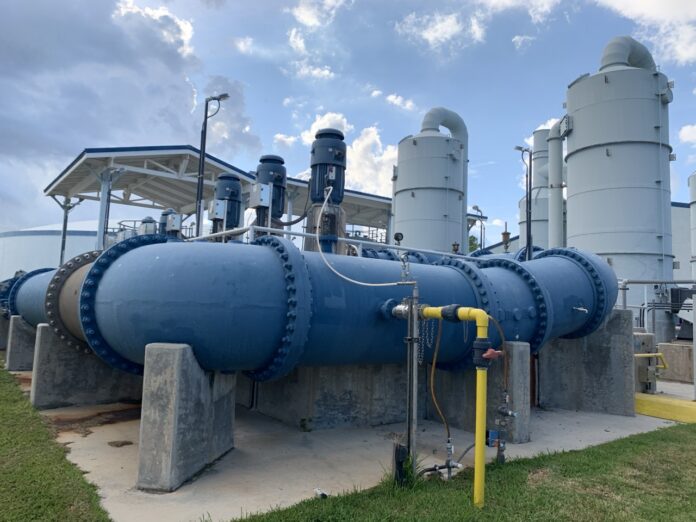
The core of the initiative is the development of a mobile desalination unit, a project bolstered by a $2 million federal appropriation. This technological solution represents a key advancement in local infrastructure and innovation, directly contributing to SDG 9.
- Institution: Panhandle Institute for Engineering and Research at WTAMU.
- Objective: To develop and deploy a mobile unit to desalinate brackish water.
- Funding: $2 million secured through the recent agricultural appropriations bill.
- Innovation Target: The project aims to create a viable technological solution for water treatment that can be applied directly at the point of need, such as local farms and dairies.
Addressing SDG 6 (Clean Water and Sanitation) and SDG 2 (Zero Hunger)
The project’s primary goal is to provide a new, sustainable source of usable water for the Texas Panhandle, a region heavily reliant on the depleting Ogallala aquifer. By targeting the brackish Dockum aquifer, the initiative makes critical strides toward achieving key SDG targets.
- Enhancing Water Security (SDG 6): Dr. Benton Allen, Bell Helicopter professor of engineering, highlighted that the project will “pull the salt and the other dissolved minerals out of the water.” This process directly addresses SDG Target 6.4 by increasing water-use efficiency and alleviating pressure on freshwater sources.
- Supporting Sustainable Agriculture (SDG 2): The desalinated water is intended for agricultural operations, including dairies and animal feeding facilities. As stated by Dr. Emily Hunt, dean of the College of Engineering, this will provide a crucial resource for the region’s food production systems, thereby supporting SDG 2 by promoting sustainable agriculture and enhancing food security.
Fostering Partnerships and Education for Sustainable Goals (SDG 4 & SDG 17)
The initiative is structured as a collaborative effort that also serves as a vital educational platform, embodying the principles of SDG 4 (Quality Education) and SDG 17 (Partnerships for the Goals).
- Educational Opportunities (SDG 4): The project team will be composed of faculty members, graduate students, and undergraduate students, providing invaluable hands-on research and problem-solving experience in a real-world sustainability challenge.
- Collaborative Framework (SDG 17): The project represents a partnership between academia (WTAMU), government (federal funding), and local industry (agricultural operations), creating a model for multi-stakeholder collaboration to achieve sustainable development.
Project Timeline and Future Impact
The project is scheduled to commence in March 2026. Its successful implementation is expected to provide a scalable model for water resource management, contributing to the long-term resilience and sustainability of communities and industries in the Texas Panhandle and other water-stressed regions, in line with SDG 11 (Sustainable Cities and Communities) and SDG 12 (Responsible Consumption and Production).
Analysis of Sustainable Development Goals in the Article
1. Which SDGs are addressed or connected to the issues highlighted in the article?
-
SDG 6: Clean Water and Sanitation
This is the primary SDG addressed, as the article’s central theme is tackling water scarcity in the Texas Panhandle by developing a desalination project to create a new source of usable water.
-
SDG 2: Zero Hunger
The project directly supports agriculture, a key component of food security. The desalinated water is specifically intended for “dairies or local animal feeding operations,” which are part of the food production system.
-
SDG 9: Industry, Innovation, and Infrastructure
The article highlights the creation of the “Panhandle Institute for Engineering and Research” and the development of an innovative technology—a “mobile desalination unit”—funded by a $2 million investment. This represents an advancement in research, technology, and infrastructure to solve a regional problem.
-
SDG 4: Quality Education
The initiative is explicitly framed as a learning opportunity. The article states, “The team will be composed of faculty members, graduate students and undergraduate students,” providing them with practical, hands-on experience in engineering and research.
2. What specific targets under those SDGs can be identified based on the article’s content?
-
SDG 6: Clean Water and Sanitation
- Target 6.4: By 2030, substantially increase water-use efficiency across all sectors and ensure sustainable withdrawals and supply of freshwater to address water scarcity. The project aims to create a new, sustainable supply of freshwater from a brackish source (the Dockum aquifer) to alleviate pressure on existing sources like the Ogallala aquifer, directly addressing water scarcity for the agricultural sector.
- Target 6.a: By 2030, expand international cooperation and capacity-building support…in water- and sanitation-related activities and programmes, including…desalination, water efficiency…and reuse technologies. The project is a direct application of desalination technology, which is a key activity mentioned in this target for achieving sustainable water management.
-
SDG 2: Zero Hunger
- Target 2.4: By 2030, ensure sustainable food production systems and implement resilient agricultural practices. By providing a reliable water source in a water-scarce region, the project helps make local agricultural operations (“dairies or local animal feeding operations”) more resilient to drought and ensures the sustainability of food production.
-
SDG 9: Industry, Innovation, and Infrastructure
- Target 9.5: Enhance scientific research, upgrade the technological capabilities of industrial sectors…encouraging innovation and…increasing…public and private research and development spending. The establishment of the Panhandle Institute and the “$2 million” funding secured for developing a “mobile desalination unit” are direct examples of investment in scientific research and innovation to solve a critical infrastructure challenge.
-
SDG 4: Quality Education
- Target 4.4: By 2030, substantially increase the number of youth and adults who have relevant skills, including technical and vocational skills, for employment. The project provides a “unique learning opportunity for West Texas A&M students,” allowing graduate and undergraduate students to gain technical skills in engineering and water treatment technology, enhancing their future employment prospects.
3. Are there any indicators mentioned or implied in the article that can be used to measure progress towards the identified targets?
-
For SDG 6 (Clean Water and Sanitation):
- An implied indicator for Target 6.4 is the volume of desalinated water produced and supplied to agricultural operations. The project’s success can be measured by how much usable water it can “pull up desalinated, pull the salt and the other dissolved minerals out of the water.”
-
For SDG 2 (Zero Hunger):
- Progress towards Target 2.4 can be measured by the number of agricultural operations supported by the new water source. The article specifies the water is for “dairies or local animal feeding operations,” so tracking the number of farms benefiting would be a direct indicator of impact.
-
For SDG 9 (Industry, Innovation, and Infrastructure):
- A direct indicator for Target 9.5 is the investment in research and development, which is explicitly stated as “$2 million.” Another indicator is the successful development and deployment of the “mobile desalination unit” as a tangible technological innovation.
-
For SDG 4 (Quality Education):
- An indicator for Target 4.4 is the number of students participating in the project. The article mentions the team will include “graduate students and undergraduate students,” so quantifying their involvement would measure the project’s educational contribution.
SDGs, Targets and Indicators Table
| SDGs | Targets | Indicators (Mentioned or Implied in the Article) |
|---|---|---|
| SDG 6: Clean Water and Sanitation | 6.4: Increase water-use efficiency and address water scarcity. 6.a: Expand support for activities like desalination. |
Volume of desalinated water produced from the Dockum aquifer for agricultural use. |
| SDG 2: Zero Hunger | 2.4: Ensure sustainable food production systems and resilient agricultural practices. | Number of “dairies or local animal feeding operations” that receive water from the desalination unit. |
| SDG 9: Industry, Innovation, and Infrastructure | 9.5: Enhance scientific research and encourage innovation. | The “$2 million” secured for the project; the creation of the “mobile desalination unit.” |
| SDG 4: Quality Education | 4.4: Increase the number of youth and adults with relevant technical skills. | The number of “graduate students and undergraduate students” participating in the research and development team. |
Source: abc7amarillo.com
What is Your Reaction?
 Like
0
Like
0
 Dislike
0
Dislike
0
 Love
0
Love
0
 Funny
0
Funny
0
 Angry
0
Angry
0
 Sad
0
Sad
0
 Wow
0
Wow
0