
















































What Is An Artificial Reef? – bgr.com
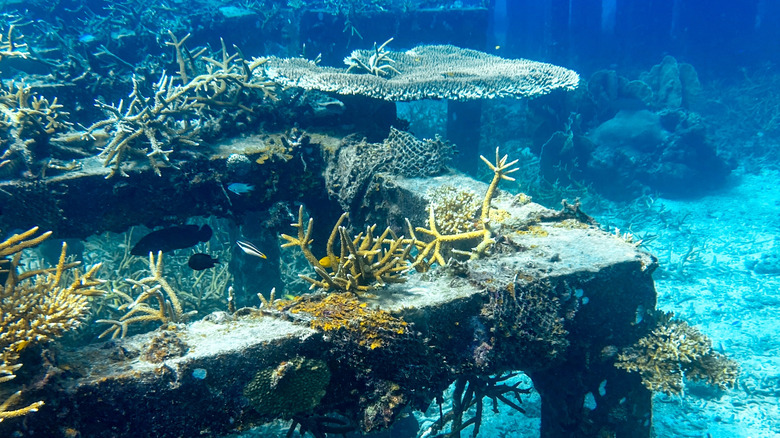
Report on the Implementation of Artificial Reefs for Marine Ecosystem Restoration and Sustainable Development
1.0 Introduction: The Coral Reef Crisis and the Sustainable Development Goals
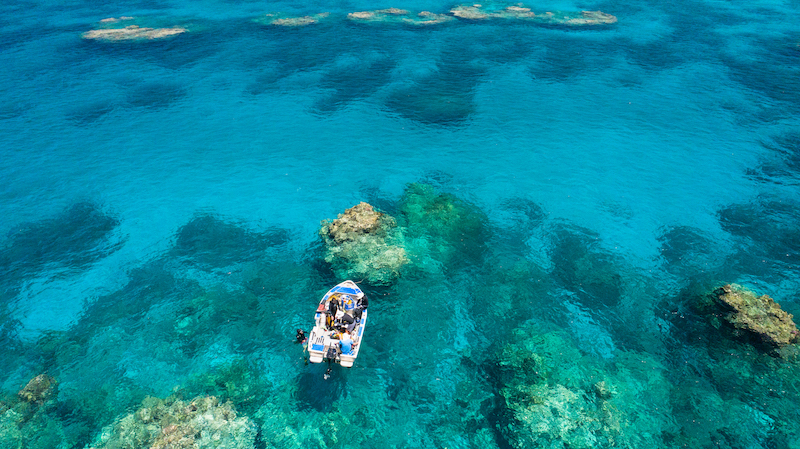
Global marine ecosystems are facing an unprecedented crisis due to pollution and rising sea surface temperatures, directly threatening the achievement of several Sustainable Development Goals (SDGs). The degradation of coral reefs, which support 25% of all marine life, represents a significant setback for SDG 14 (Life Below Water). A 2020 Global Coral Reef Monitoring Network report indicated a 14% loss of global coral between 2009 and 2018, with recent events causing the largest coral bleaching in recorded history. This environmental tipping point has profound socio-economic consequences, impacting coastal communities and economies reliant on marine resources.
- Economic Impact: Healthy reefs contribute nearly $30 billion annually to the global economy through fisheries and tourism, aligning with SDG 8 (Decent Work and Economic Growth).
- Coastal Protection: Reefs provide natural protection against storms, floods, and erosion, a critical ecosystem service for SDG 11 (Sustainable Cities and Communities) and SDG 13 (Climate Action).
In response, the deployment of artificial reefs—man-made structures submerged to encourage marine life—has emerged as a key strategy to mitigate biodiversity loss and support climate adaptation efforts.
2.0 Artificial Reefs as a Tool for Sustainable Development
Artificial reefs provide a stable substrate for coral and other marine organisms to colonize, thereby restoring ecological functions and contributing to multiple SDGs.
2.1 Advancing SDG 14: Life Below Water
The primary function of an artificial reef is to create new habitats for marine species. By providing hard surfaces and vertical relief, these structures can:
- Foster the growth of new coral populations.
- Serve as nurseries and shelters for over 4,000 species of fish and countless invertebrates.
- Increase local biodiversity and restore ecological complexity in degraded areas.
2.2 Supporting SDG 9, 11, and 13: Infrastructure, Resilient Communities, and Climate Action
Artificial reefs represent an innovative approach to infrastructure that enhances climate resilience.
- SDG 9 (Industry, Innovation, and Infrastructure): The repurposing of large-scale structures like decommissioned ships and oil rigs exemplifies innovative and sustainable infrastructure management.
- SDG 11 & 13 (Sustainable Cities and Climate Action): Strategically placed reefs act as submerged breakwaters, dissipating wave energy and protecting coastlines from climate-induced threats like hurricanes and sea-level rise. The use of self-healing concrete reefs by the U.S. Air Force demonstrates a direct application for protecting critical infrastructure.
3.0 Implementation: Materials and Methods
3.1 Suitable Materials and Structures
The efficacy of an artificial reef is dependent on the stability and material composition of the submerged structure. Ideal candidates are large, heavy, and durable enough to withstand marine conditions. Common materials include:
- Decommissioned steel ships and aircraft carriers (e.g., the USS Oriskany).
- Repurposed oil and gas platforms (“Rigs-to-Reefs” programs).
- Engineered concrete structures.
- Mineral accretion devices such as Biorock.
3.2 Adherence to SDG 12: Responsible Consumption and Production
Modern artificial reef programs align with the principles of a circular economy and responsible resource management. Early, unregulated efforts sometimes involved the dumping of unsuitable materials like tires and industrial scrap, which proved environmentally harmful. Contemporary best practices, however, emphasize carefully planned deployments of cleaned and prepared structures. The “Rigs-to-Reefs” initiative, which has converted over 600 oil platforms in the U.S. since the 1980s, is a prime example of SDG 12 in action, turning industrial liabilities into ecological assets.
4.0 Historical Context and Future Outlook
The practice of creating artificial reefs dates back to 18th-century Japan, where fishermen used them to enhance fish stocks. In the United States, formal programs were established in states like Hawai’i and California in the latter half of the 20th century. A significant future project involves the sinking of the historic ocean liner SS United States off the coast of Florida, which is set to become the world’s largest artificial reef. While these initiatives are critical for habitat restoration and climate adaptation, it is acknowledged that they address the symptoms of marine degradation. Long-term success requires that these efforts be paired with global action to combat the root causes of climate change, in line with the overarching goals of the 2030 Agenda for Sustainable Development.
1. Which SDGs are addressed or connected to the issues highlighted in the article?
SDG 14: Life Below Water
- The entire article focuses on marine ecosystems, specifically the degradation of coral reefs due to pollution and rising sea temperatures, and the efforts to restore them using artificial reefs. It discusses the catastrophic loss of biodiversity, as reefs house “25% of all marine life.”
SDG 13: Climate Action
- The article directly attributes the destruction of coral reefs to climate change impacts, stating that “Pollution and rising sea surface temperatures are decimating the world’s coral reef populations” and describes the “largest bleaching event in recorded history” as being “heat-related.” The creation of artificial reefs is presented as an adaptive measure to the consequences of climate change.
SDG 11: Sustainable Cities and Communities
- The article highlights the role of reefs in protecting coastal communities. It states that reefs offer “billions of dollars a year in coastal protection from storms, tsunamis, floods, and erosion.” The example of the U.S. Air Force deploying “self-healing concrete reefs to protect military bases from hurricanes and tidal surges” directly connects to making human settlements more resilient to climate-related disasters.
SDG 9: Industry, Innovation, and Infrastructure
- The article discusses innovative solutions and the repurposing of infrastructure. This includes using “sunken ships, aircraft carriers, and even oil rigs” as artificial reefs. The “Rigs-to-Reefs” program, which has converted “over 600 oil platforms,” is a clear example of retrofitting industrial infrastructure for a sustainable purpose. Innovations like “mineral accretion devices like electrified Biorock” are also mentioned.
SDG 8: Decent Work and Economic Growth
- The economic importance of coral reefs is explicitly mentioned. The article notes that reefs are a “critical economic asset, producing nearly $30 billion in yearly economic benefits” and are “essential for global fisheries.” Efforts to restore reefs, such as the historical practice by Japanese fishermen to “boost fishing populations,” support industries and livelihoods dependent on marine resources.
2. What specific targets under those SDGs can be identified based on the article’s content?
-
SDG 14: Life Below Water
- Target 14.1: By 2025, prevent and significantly reduce marine pollution of all kinds. The article mentions “Pollution” as a cause of reef decimation and criticizes early artificial reef practices that involved “dumping toxic materials, industrial scrap, and construction waste into the ocean,” highlighting the need to avoid such pollution.
- Target 14.2: By 2020, sustainably manage and protect marine and coastal ecosystems… and take action for their restoration. This is the central theme of the article, which details the loss of 14% of coral reefs and describes “reef restoration” through artificial reefs as an “increasingly critical piece of the environmental puzzle.”
- Target 14.a: Increase scientific knowledge, develop research capacity and transfer marine technology. The article describes how “scientists are hunting for new means of repopulating our ocean’s reef populations” and mentions technologies like “self-healing concrete reefs” and “electrified Biorock.”
-
SDG 13: Climate Action
- Target 13.1: Strengthen resilience and adaptive capacity to climate-related hazards and natural disasters. The use of artificial reefs for “coastal protection from storms, tsunamis, floods, and erosion” is a direct example of building resilience and adapting to the impacts of climate change mentioned in the article.
-
SDG 11: Sustainable Cities and Communities
- Target 11.5: By 2030, significantly reduce… direct economic losses relative to global gross domestic product caused by disasters, including water-related disasters. The article’s point that reefs provide “billions of dollars a year in coastal protection” directly relates to this target of mitigating economic losses from natural disasters.
-
SDG 9: Industry, Innovation, and Infrastructure
- Target 9.1: Develop quality, reliable, sustainable and resilient infrastructure. The creation of artificial reefs from “sunken ships,” “concrete structures,” and “steel rebar” is a form of developing resilient marine infrastructure to support ecosystem health.
- Target 9.4: By 2030, upgrade infrastructure and retrofit industries to make them sustainable. The program to convert “decommissioned oil rigs” into artificial reefs is a direct example of retrofitting industrial infrastructure for a sustainable environmental purpose.
3. Are there any indicators mentioned or implied in the article that can be used to measure progress towards the identified targets?
- Percentage of coral reef cover loss/gain: The article provides a baseline metric by stating, “the world’s oceans lost roughly 14% of their coral reefs between 2009 and 2018.” Progress on restoration could be measured by tracking changes in this percentage over time.
- Proportion of reefs affected by bleaching: The article provides data on the severity of bleaching events, noting that the most recent event impacted “roughly 84% of the world’s reefs,” compared to lower percentages in previous years. A reduction in this proportion would indicate progress.
- Economic value of ecosystem services: The article quantifies the economic contribution of reefs at “nearly $30 billion in yearly economic benefits” and “billions of dollars a year in coastal protection.” Monitoring this economic value can serve as an indicator of ecosystem health and its contribution to the economy.
- Biodiversity metrics: The article states that reefs “house 25% of all marine life and over 4,000 species of fish.” Progress on artificial reefs can be measured by monitoring the number and diversity of species that colonize these new habitats.
- Number of repurposed industrial structures: The article provides a specific number for the Rigs-to-Reefs program, which has converted “over 600 oil platforms.” This quantifiable metric can be used to track the progress of retrofitting infrastructure for sustainable purposes.
4. Create a table with three columns titled ‘SDGs, Targets and Indicators” to present the findings from analyzing the article.
| SDGs | Targets | Indicators |
|---|---|---|
| SDG 14: Life Below Water |
|
|
| SDG 13: Climate Action |
|
|
| SDG 11: Sustainable Cities and Communities |
|
|
| SDG 8: Decent Work and Economic Growth |
|
|
| SDG 9: Industry, Innovation, and Infrastructure |
|
|
Source: bgr.com
What is Your Reaction?
 Like
0
Like
0
 Dislike
0
Dislike
0
 Love
0
Love
0
 Funny
0
Funny
0
 Angry
0
Angry
0
 Sad
0
Sad
0
 Wow
0
Wow
0