WORDS project aims to increase student literacy, educator growth – University of Nebraska–Lincoln
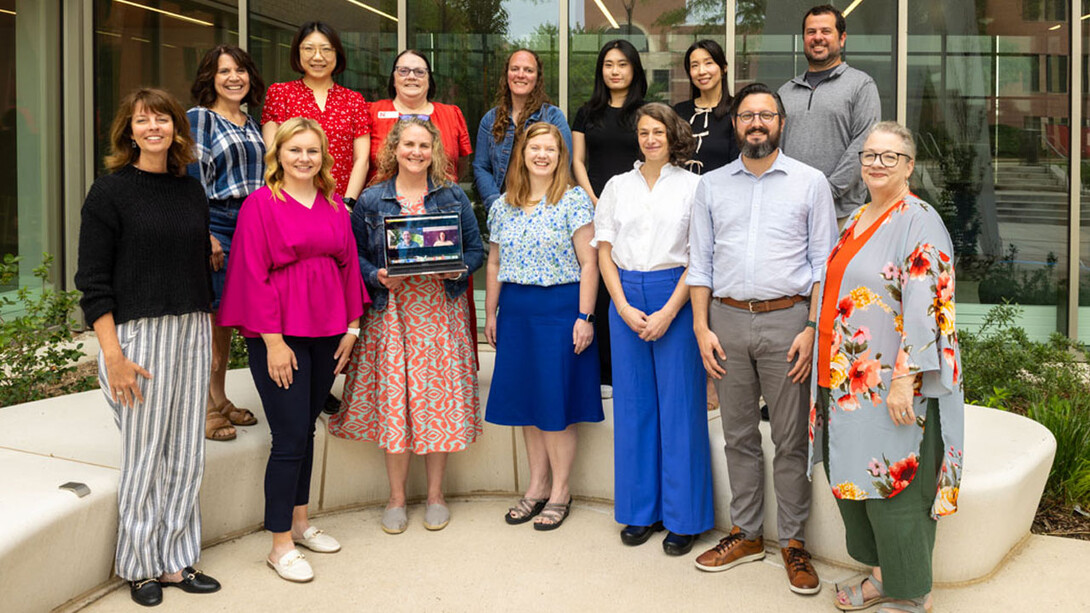
Report on the Nebraska WORDS Initiative and its Contribution to Sustainable Development Goals
Introduction: Addressing Educational Disparities and Advancing SDG 4
A student’s reading ability is a critical determinant of academic achievement and long-term success, directly aligning with the objectives of Sustainable Development Goal 4 (Quality Education). In Nebraska, the COVID-19 pandemic exacerbated existing educational disparities, particularly impacting students with reading difficulties in rural areas. This challenge highlighted the urgent need for targeted interventions to ensure inclusive and equitable education for all learners, a core tenet of SDG 4 and SDG 10 (Reduced Inequalities).
In response, the Nebraska WORDS (Workshops on Reading Development Strategies) project was established as a research-based professional development program. It supports Nebraska’s efforts to enhance early literacy for students in kindergarten through third grade, thereby contributing to the achievement of foundational learning outcomes.
Project Framework and Alignment with SDGs
The WORDS initiative, a collaborative effort involving university researchers and the Nebraska Department of Education, provides a strategic framework for improving literacy instruction. This partnership model exemplifies SDG 17 (Partnerships for the Goals), leveraging academic expertise and public policy to achieve common objectives.
Core Objectives
- To promote effective, research-based strategies for high-quality reading instruction and assessment.
- To increase the instructional capacity of teachers, directly supporting SDG Target 4.c on increasing the supply of qualified teachers.
- To strengthen literacy leadership within schools and districts.
- To ensure equitable access to evidence-based practices and materials for all students, particularly those from vulnerable groups.
Emphasis on Sustainable Development Goals
- SDG 4: Quality Education: The project’s primary focus is to advance literacy proficiency. By targeting K-5 students, it supports Target 4.1 (quality primary education) and Target 4.6 (literacy and numeracy). The initiative’s focus on students with disabilities, multilingual learners, and children from low-income backgrounds directly addresses Target 4.5, which aims to ensure equal access to all levels of education for the vulnerable.
- SDG 10: Reduced Inequalities: By serving over 7,000 students across 43 schools, many of whom are from marginalized backgrounds, the WORDS project actively works to reduce inequalities of outcome in education, in line with Target 10.3.
- SDG 17: Partnerships for the Goals: The project is a consortium led by the University of Nebraska–Lincoln in partnership with the University of California Irvine and the Nebraska Department of Education, demonstrating an effective multi-stakeholder partnership as called for in Target 17.17.
Program Expansion and Implementation
WORDS Plus: Deepening the Impact
An extension of the project, WORDS Plus, has been launched to enhance the tools, resources, and practical support available to educators. This new phase expands the program’s reach to the fifth grade and introduces several key components designed to create a comprehensive support system for schools.
Key Components of WORDS Plus
- Professional Development: Six modules covering the science of reading, phonological awareness, decoding, spelling, and multi-sensory instructional approaches.
- Individualized Literacy Coaching: Tailored support for teachers to address specific classroom needs.
- Administrator Training: Equipping literacy leaders with the skills to foster a culture of continuous improvement.
- Targeted Tutoring: After-school tutoring with web-based support for students requiring additional assistance.
Funding, Scope, and Projected Outcomes
Investment in Educational Equity
The University of Nebraska-Lincoln consortium is funded by a $2.2 million Comprehensive Literacy State Development grant from the Nebraska Department of Education. This five-year grant is designed to advance literacy instruction across 22 schools, with additional support for other consortiums and initiatives.
Monitoring and Evaluation
To ensure effectiveness and facilitate continuous improvement, the project incorporates a robust monitoring framework:
- Measurement of student literacy outcomes.
- Administration of teacher self-efficacy surveys at the beginning and end of each semester.
- Use of collected data to customize professional development and coaching for educators.
Long-Term Impact
The WORDS initiative is a critical component of Nebraska’s statewide goal to achieve 75% proficiency in third-grade reading by 2030. By building teacher capacity and fostering collaboration among literacy leaders, the project is creating a sustainable model for educational improvement that directly contributes to the achievement of the Sustainable Development Goals in the state.
Analysis of Sustainable Development Goals (SDGs) in the Article
1. Which SDGs are addressed or connected to the issues highlighted in the article?
The article primarily addresses issues related to the following Sustainable Development Goals:
- SDG 4: Quality Education – This is the most prominent SDG, as the entire article focuses on improving early literacy, providing professional development for teachers, and ensuring effective learning outcomes for K-5 students in Nebraska. The Nebraska WORDS project is a direct initiative to enhance the quality of education.
- SDG 10: Reduced Inequalities – The article explicitly mentions that the program serves “many with disabilities, multilingual learners and children from low-income backgrounds.” By targeting these vulnerable groups who were hit “especially hard” by the pandemic, the project aims to reduce educational disparities and promote inclusive learning environments.
- SDG 17: Partnerships for the Goals – The initiative is a collaborative effort. The article highlights the partnership between the University of Nebraska-Lincoln, the Nebraska Department of Education, and 43 Nebraska schools. This multi-stakeholder collaboration is essential for the project’s success and aligns with the principles of SDG 17.
2. What specific targets under those SDGs can be identified based on the article’s content?
Based on the article, the following specific SDG targets can be identified:
- Target 4.1: By 2030, ensure that all girls and boys complete free, equitable and quality primary and secondary education leading to relevant and effective learning outcomes.
- The project’s focus on boosting early literacy among K-3 students (and now up to fifth grade) is fundamental to achieving quality primary education and ensuring students have the foundational skills for “lifelong success.”
- Target 4.6: By 2030, ensure that all youth and a substantial proportion of adults, men and women, achieve literacy and numeracy.
- The article’s central theme is advancing literacy instruction to improve reading proficiency. The stated goal of “achieving 75% proficiency in third-grade reading by 2030” directly corresponds to this target.
- Target 4.c: By 2030, substantially increase the supply of qualified teachers… including through… teacher training.
- The Nebraska WORDS project is described as a “research-based professional development program” that includes “individualized literacy coaching” and “administrator training” to increase the “instructional capacity” of teachers. This directly addresses the need for qualified, well-trained educators.
- Target 10.2: By 2030, empower and promote the social, economic and political inclusion of all, irrespective of… disability… or other status.
- The program’s specific support for over 7,000 students, “including many with disabilities, multilingual learners and children from low-income backgrounds,” demonstrates a clear effort to ensure that vulnerable student populations are not left behind and have an equal opportunity to achieve literacy.
- Target 17.17: Encourage and promote effective public, public-private and civil society partnerships.
- The article details a partnership involving a university (University of Nebraska-Lincoln), a government body (Nebraska Department of Education), and local schools. This consortium, funded by a state grant, is a model of the public and civil society partnerships needed to achieve the SDGs.
3. Are there any indicators mentioned or implied in the article that can be used to measure progress towards the identified targets?
Yes, the article mentions or implies several indicators for measuring progress:
- Indicator for Targets 4.1 and 4.6: The article explicitly states a key performance indicator: “Nebraska’s statewide literacy goal of achieving 75% proficiency in third-grade reading by 2030.” This is a direct measure of learning outcomes in reading, aligning with official SDG indicator 4.1.1 (Proportion of children achieving minimum proficiency in reading). The statement that “student outcomes will be measured” further implies the use of standardized assessments.
- Indicator for Target 4.c: The article implies progress can be measured by the number of teachers and administrators receiving training through the program. More specifically, it mentions that “teachers will complete a self-efficacy surveys at the beginning and end of each semester,” which serves as a qualitative indicator to measure the effectiveness of the professional development and its impact on teachers’ confidence and skills.
- Indicator for Target 10.2: The article provides a quantitative indicator of inclusion by stating that the program serves “more than 7,000 students, including many with disabilities, multilingual learners and children from low-income backgrounds.” Tracking the number and proportion of students from these specific groups who participate and show improved outcomes would measure progress toward reducing inequalities.
- Indicator for Target 17.17: The scale of the partnership is indicated by the number of participating institutions (“43 Nebraska schools,” “UNL consortium,” “Nebraska Department of Education”) and the financial commitment (“a $2.2 million Comprehensive Literacy State Development grant”). These figures serve as indicators of the partnership’s scope and resources.
4. Summary Table of SDGs, Targets, and Indicators
| SDGs | Targets | Indicators Identified in the Article |
|---|---|---|
| SDG 4: Quality Education | 4.1: Ensure quality primary education and effective learning outcomes. 4.6: Achieve literacy and numeracy for all youth. 4.c: Increase the supply of qualified teachers through training. |
|
| SDG 10: Reduced Inequalities | 10.2: Empower and promote the inclusion of all, irrespective of disability or economic status. |
|
| SDG 17: Partnerships for the Goals | 17.17: Encourage and promote effective public and civil society partnerships. |
|
Source: news.unl.edu
What is Your Reaction?
 Like
0
Like
0
 Dislike
0
Dislike
0
 Love
0
Love
0
 Funny
0
Funny
0
 Angry
0
Angry
0
 Sad
0
Sad
0
 Wow
0
Wow
0