








































;Resize=620#)










World Bank Group and Global Fund: A strengthened partnership for global health – World Bank Blogs

Report on the World Bank Group and Global Fund Partnership for Sustainable Development Goals
A strategic partnership between the World Bank Group (WBG) and the Global Fund is leveraging joint financing to accelerate progress towards the Sustainable Development Goals (SDGs), particularly SDG 3 (Good Health and Well-being) and SDG 17 (Partnerships for the Goals). This collaboration aims to strengthen health systems, enhance sustainable financing, and improve health outcomes globally, aligning with the 2030 Agenda for Sustainable Development.
Collaborative Framework and Financial Mobilization
In response to global economic pressures, the WBG and the Global Fund have formalized their long-standing collaboration through a Memorandum of Understanding in November 2023. This partnership is a direct implementation of SDG 17, promoting effective public-private and global partnerships to support the achievement of sustainable development.
Key Partnership Objectives and Financial Commitments:
- Joint Investments: Since 2016, the collaboration has mobilized approximately $185 million in grant financing, leveraging over $3 billion in total joint investments across 10 countries.
- Shared 2030 Goals: The partnership supports the WBG’s goal of reaching 1.5 billion people with health services and the Global Fund’s mission to eliminate HIV, tuberculosis (TB), and malaria as public health threats, directly contributing to SDG Target 3.3.
- Integrated Approach: Joint financing integrates disease-specific responses into broader health system reforms, enhancing pandemic preparedness and primary care, which is fundamental to achieving Universal Health Coverage (UHC) as outlined in SDG Target 3.8.
- Economic Co-benefits: These health programs contribute to SDG 8 (Decent Work and Economic Growth) by creating employment opportunities in service delivery and the health value chain.
Country-Level Impact on Health-Related SDGs
Joint investments have yielded significant progress in several countries, demonstrating a tangible impact on SDG 3 targets through tailored, country-owned initiatives.
Case Studies:
-
Laos PDR
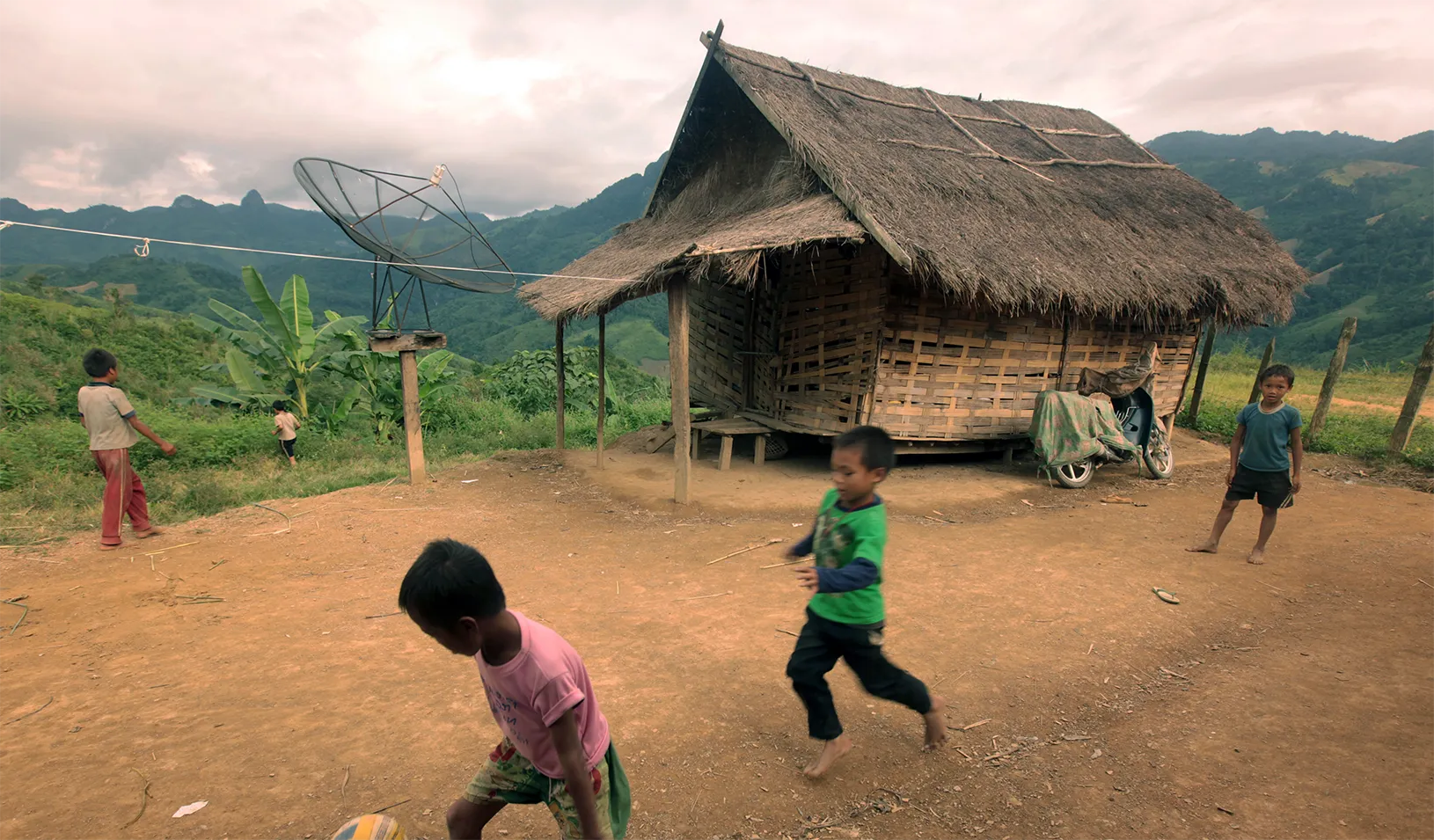
The Health and Nutrition Services Access (HANSA) projects focus on achieving UHC (SDG Target 3.8). HANSA1 improved TB treatment coverage from 58% to 82% and expanded HIV services. The subsequent HANSA2 project aims to reach over 1 million rural residents, furthering progress on SDG 3.
-
India
The Program Towards Elimination of Tuberculosis directly addresses SDG Target 3.3. By engaging the private sector and improving services, the program increased treatment success rates for TB cases notified by private providers to 88.2% in targeted states by 2025.
-
South Sudan
The Health Sector Transformation Project delivers primary health services to remote communities, strengthening systems to combat communicable diseases like malaria. This initiative is crucial for building resilient health infrastructure (SDG 3.d) in a challenging context and increasing programmatic coverage for malaria control.
-
Côte d’Ivoire
The joint investment supports the Health, Nutrition, and Early Childhood Development Program. It integrates community-based malaria case management and scales up the national health insurance scheme for vulnerable people living with HIV, advancing UHC (SDG Target 3.8) and addressing inequalities (SDG 10). The program is expected to benefit 14.1 million women, adolescents, and children, contributing to SDG 5 (Gender Equality).
Future Outlook and Alignment with Global Health Agendas
The WBG–Global Fund partnership is positioned to navigate the evolving global health financing landscape by championing greater alignment and country ownership, in line with the principles of the Lusaka Agenda.
Strategic Initiatives for Achieving the 2030 Agenda:
- Health Works Leaders Coalition: As a founding member, the Global Fund joins this WBG-led coalition to develop country compacts that align financing and enhance mutual accountability, reinforcing SDG 17.
- Advancing Universal Health Coverage: The coalition’s collective action is geared towards mobilizing resources and advancing national health priorities in the lead-up to the UHC Forum in Tokyo in 2025.
- Resource Mobilization: The upcoming Global Fund replenishment is a critical moment that will determine the resource capacity for joint efforts to strengthen health systems and expand UHC, thereby securing continued progress towards SDG 3.
Analysis of SDGs, Targets, and Indicators
1. Which SDGs are addressed or connected to the issues highlighted in the article?
-
SDG 3: Good Health and Well-being
- The article’s central theme is the collaboration between the World Bank Group and the Global Fund to improve health outcomes. It explicitly mentions goals to eliminate HIV, tuberculosis (TB), and malaria, strengthen health systems, improve primary healthcare, and expand universal health coverage (UHC). These are all core components of SDG 3.
-
SDG 17: Partnerships for the Goals
- The article is fundamentally about a partnership. It details the collaboration between the World Bank Group and the Global Fund, and also mentions other partners like the governments of Australia and Gavi. The text emphasizes joint financing, aligning efforts, and mobilizing resources through multi-stakeholder coalitions like the “Health Works Leaders Coalition” to achieve common goals, which directly relates to the principles of SDG 17.
-
SDG 1: No Poverty
- The article connects health to economic well-being by mentioning the provision of health insurance for “socio-economically vulnerable people” in Côte d’Ivoire. By reducing the financial burden of healthcare, this initiative helps prevent people from falling into poverty due to medical expenses, aligning with the goals of SDG 1.
2. What specific targets under those SDGs can be identified based on the article’s content?
-
Target 3.3: End the epidemics of AIDS, tuberculosis, malaria and other communicable diseases
- The article explicitly states that a key goal of the partnership is to “accelerate elimination of HIV, tuberculosis (TB), and malaria as public health threats.” It provides specific country examples of programs targeting these diseases, such as the TB response in India and Indonesia, TB and HIV services in Laos, and malaria case management in South Sudan and Côte d’Ivoire.
-
Target 3.8: Achieve universal health coverage (UHC)
- The text repeatedly highlights the goal of expanding UHC. It mentions supporting countries in their “journey for better access to quality services,” strengthening primary healthcare in Laos, and scaling up the “national health insurance scheme” in Côte d’Ivoire. The WBG’s target of “1.5 billion people reached with health services” is a direct contribution to this target.
-
Target 3.c: Substantially increase health financing
- A primary focus of the article is on financing for health. It describes the partnership’s mechanism of “joint financing” to “strategically pool resources.” The text quantifies this by stating the collaboration has mobilized “approximately 185 million in grant financing and leveraging more than $3 billion in total joint investments.”
-
Target 17.3: Mobilize additional financial resources for developing countries from multiple sources
- This target is demonstrated by the partnership’s success in pooling funds. The article highlights the mobilization of “$185 million in grant financing” and leveraging over “$3 billion in total joint investments” through the collaboration between the World Bank, the Global Fund, and other co-financiers like the Government of Australia and Gavi.
-
Target 17.16: Enhance the Global Partnership for Sustainable Development
- The entire article serves as an example of this target in action. The Memorandum of Understanding between the WBG and the Global Fund, the joint investments in 10 countries, and the creation of the “Health Works Leaders Coalition” bringing together public and private sectors all exemplify a multi-stakeholder partnership to support the achievement of sustainable development goals.
3. Are there any indicators mentioned or implied in the article that can be used to measure progress towards the identified targets?
-
Indicators for Target 3.3 (Communicable Diseases)
- Tuberculosis treatment coverage: The article states that in Laos, the HANSA1 project supported “improvements in TB treatment coverage from 58% to 82%.” This is a direct indicator of progress against TB.
- Tuberculosis treatment success rate: For the program in India, the article mentions that “treatment success rates notified by private providers, which reached 88.2 % in 2025 in targeted states.” This measures the effectiveness of the intervention.
-
Indicators for Target 3.8 (UHC)
- Number of people reached with health services: The article mentions the WBG’s goal of “1.5 billion people reached with health services” and that the HANSA2 project in Laos “will reach over 1 million rural residents.”
- Population coverage of health services: The project in Côte d’Ivoire is “expected to benefit 14.1 million women, adolescents, and children,” indicating the scale of service coverage.
- Population covered by a national health insurance scheme: The joint investment in Côte d’Ivoire supports the “scale up of the national health insurance scheme, by paying for the insurance premiums of socio-economically vulnerable people living with HIV.” The number of people enrolled would be a key indicator.
-
Indicators for Target 17.3 (Finance Mobilization)
- Amount of financial resources mobilized: The article provides precise figures, stating the partnership has mobilized “approximately 185 million in grant financing” and is “leveraging more than $3 billion in total joint investments.” These figures serve as direct indicators of financial mobilization.
SDGs, Targets and Indicators
| SDGs | Targets | Indicators |
|---|---|---|
| SDG 3: Good Health and Well-being | Target 3.3: End the epidemics of AIDS, tuberculosis, malaria and other communicable diseases. |
|
| SDG 3: Good Health and Well-being | Target 3.8: Achieve universal health coverage (UHC). |
|
| SDG 1: No Poverty | Target 1.3: Implement nationally appropriate social protection systems. |
|
| SDG 17: Partnerships for the Goals | Target 17.3: Mobilize additional financial resources for developing countries. |
|
| SDG 17: Partnerships for the Goals | Target 17.16: Enhance the Global Partnership for Sustainable Development. |
|
Source: blogs.worldbank.org
What is Your Reaction?
 Like
0
Like
0
 Dislike
0
Dislike
0
 Love
0
Love
0
 Funny
0
Funny
0
 Angry
0
Angry
0
 Sad
0
Sad
0
 Wow
0
Wow
0