























































40% of Türkiye’s secondary students enter vocational schools | Daily Sabah – Daily Sabah
Report on Türkiye’s Vocational and Technical Education Strategy in Alignment with Sustainable Development Goals
Introduction: Advancing Sustainable Development Through Vocational Education
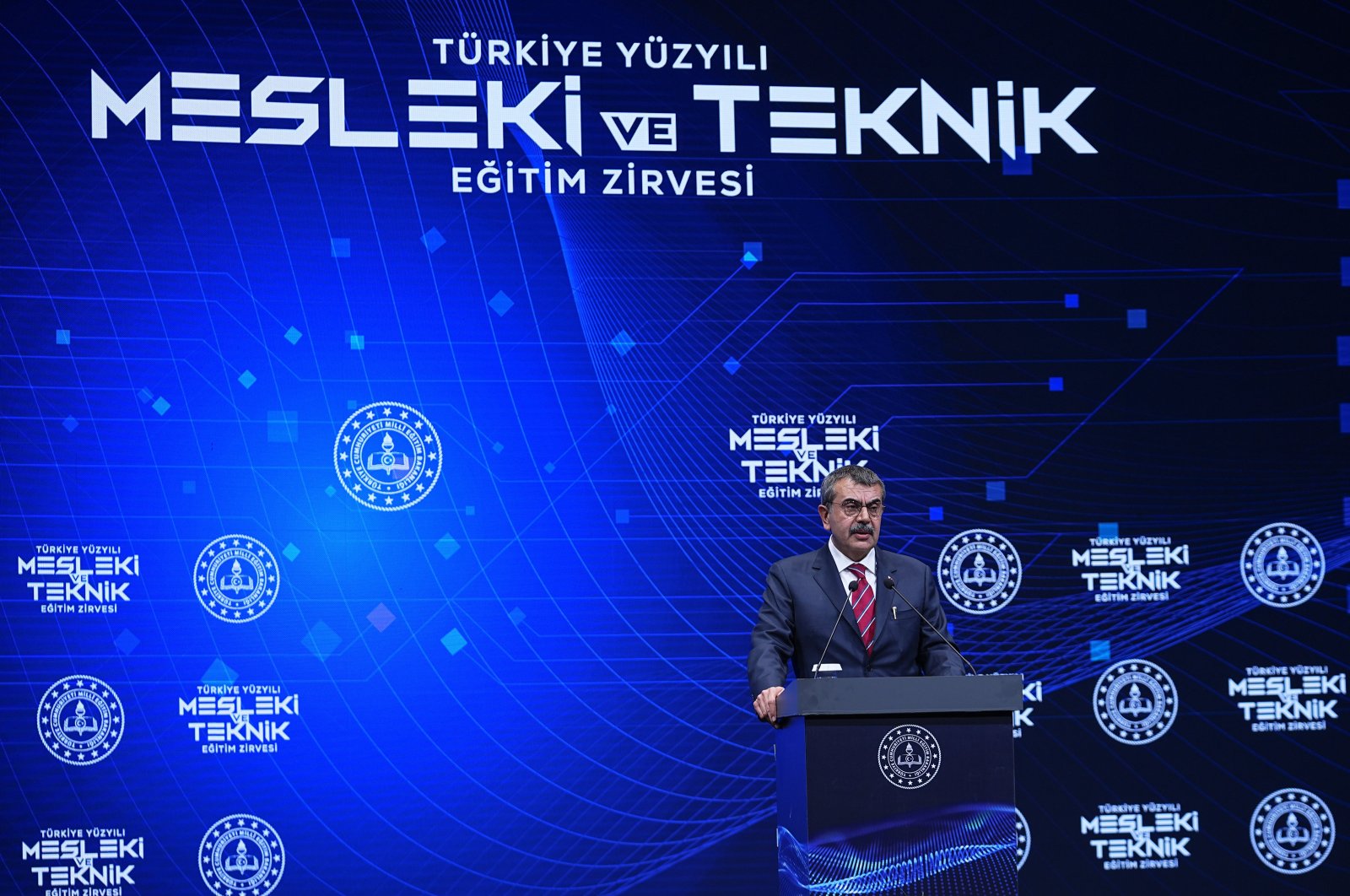
The Republic of Türkiye is strategically enhancing its vocational and technical education system to align with the United Nations Sustainable Development Goals (SDGs), particularly SDG 4 (Quality Education), SDG 8 (Decent Work and Economic Growth), and SDG 9 (Industry, Innovation, and Infrastructure). At the “Türkiye Century Vocational and Technical Education Summit,” the Ministry of National Education outlined a comprehensive framework designed to modernize curricula and meet evolving labor market demands. This report details the key components of this strategy, emphasizing its contribution to sustainable national development.
Commitment to SDG 4: Ensuring Inclusive and Equitable Quality Education
Türkiye’s efforts are centered on expanding access to relevant vocational training, directly supporting SDG 4 targets for inclusive education and lifelong learning. The scale of this commitment is demonstrated by significant enrollment and a robust institutional framework.
- Enrollment Scale: Approximately 40% of all compulsory secondary education students, totaling over 1.9 million, are enrolled in vocational and technical programs. This indicates a substantial national investment in skills-based education.
- Institutional Framework:
- Formal Education: For the 2024-2025 academic year, 3,954 vocational and technical high schools serve over 1.5 million students.
- Apprenticeship and Training: An additional 420,000 students are enrolled in 408 vocational education centers.
- Lifelong Learning: Nearly 1,500 adult vocational courses are operational under the Lifelong Learning General Directorate, promoting continuous skill development.
- Overcoming Barriers to Equality (SDG 10): The system has shown significant recovery from restrictive policies during the Feb. 28 period, when enrollment fell to 17%. Post-2002 reforms have successfully reversed this trend, promoting greater educational equality and opportunity.
- Growing Prestige: For the 2025-2026 academic year, 43% of new high school registrants have chosen vocational tracks, including students from the top 5% of national exam performers, signaling the increasing value placed on this educational path.
Fostering SDG 8: Promoting Decent Work and Sustainable Economic Growth
The national strategy integrates historical principles with modern frameworks to prepare a skilled workforce capable of driving sustainable economic growth, in line with SDG 8.
- Ethical Foundation: The curriculum is rooted in the “Ahi” tradition, which combines technical proficiency with a strong work ethic, integrity, and social responsibility—foundational elements for decent work.
- The “Vocational 5.0” Model: This holistic framework prepares students for the future of work by integrating key pillars of industrial transformation:
- Industrial automation and digital manufacturing
- Artificial intelligence (AI) in decision-making
- Human-centered skill development for a technologically advanced workforce
- Strategic Reforms for Employment: Since 2014, reforms have directly targeted improved employment outcomes:
- Hiring instructors with direct industry experience.
- Collaboratively developing curricula with sector stakeholders to ensure relevance.
- Providing student insurance against occupational hazards and stipends linked to the minimum wage.
Driving SDG 9 and SDG 12: Industry, Innovation, and Responsible Production
Türkiye’s vocational education system is being adapted to lead the nation’s digital and green transformations, contributing directly to SDG 9 (Sustainable Industrialization) and SDG 12 (Responsible Consumption and Production).
- Digital Transformation Skills: The curriculum emphasizes skills critical for modern industry, including:
- Digital literacy and data analytics
- Programming and robotics
- Green Transformation and Sustainability: A core focus is embedding environmentally conscious principles and technologies into vocational training to support a circular economy. Key areas include:
- Energy efficiency and sustainable production methods
- Carbon footprint reduction strategies
- Modern waste management techniques
- Early Skills Development: To foster a pipeline of innovators, “craft workshops” have been introduced for seventh and eighth-grade students in 272 schools, providing early exposure to vocational skills and sustainable practices.
Analysis of the Article in Relation to Sustainable Development Goals
-
Which SDGs are addressed or connected to the issues highlighted in the article?
The article on Türkiye’s vocational and technical education system addresses several Sustainable Development Goals (SDGs) by focusing on education, economic growth, and sustainable industrial practices. The primary SDGs identified are:
- SDG 4: Quality Education: The entire article is centered on improving and expanding vocational and technical education, which is a core component of ensuring inclusive and equitable quality education and promoting lifelong learning opportunities for all.
- SDG 8: Decent Work and Economic Growth: By aligning vocational training with labor market demands, developing skills for emerging professions, and aiming for employment enhancement, the article directly connects to promoting sustained, inclusive, and sustainable economic growth, full and productive employment, and decent work for all.
- SDG 9: Industry, Innovation, and Infrastructure: The emphasis on adapting education to rapid technological shifts like “artificial intelligence and digital manufacturing” and introducing the “Vocational 5.0” model highlights a commitment to building resilient infrastructure, promoting inclusive and sustainable industrialization, and fostering innovation.
- SDG 12: Responsible Consumption and Production: The article explicitly mentions Türkiye’s commitment to “embedding environmentally conscious technologies into vocational education, aligning with green transformation goals such as carbon footprint reduction and waste management,” which directly supports the goal of ensuring sustainable consumption and production patterns.
-
What specific targets under those SDGs can be identified based on the article’s content?
Based on the article’s content, several specific SDG targets can be identified:
-
Under SDG 4 (Quality Education):
- Target 4.3: Ensure equal access for all women and men to affordable and quality technical, vocational and tertiary education, including university. The article highlights efforts to increase enrollment in vocational education, noting that it accounts for “roughly 40% of all students in compulsory secondary education” and that “43% of new high school registrants have opted for vocational and technical schools,” demonstrating a push for wider access.
- Target 4.4: Substantially increase the number of youth and adults who have relevant skills, including technical and vocational skills, for employment, decent jobs and entrepreneurship. The article’s core theme is modernizing curricula to align with “evolving labor market demands” and preparing students with skills in “digital literacy, data analytics, programming, robotics, energy efficiency and sustainable production.”
-
Under SDG 8 (Decent Work and Economic Growth):
- Target 8.6: Substantially reduce the proportion of youth not in employment, education or training (NEET). The initiatives described, such as increasing enrollment from a low of “17% due to restrictive policies” to nearly 40%, and introducing “‘craft workshops’ targeting seventh and eighth-grade students,” are direct strategies to engage youth in education and training pathways that lead to employment.
-
Under SDG 9 (Industry, Innovation, and Infrastructure):
- Target 9.5: Enhance scientific research, upgrade the technological capabilities of industrial sectors… encouraging innovation. The introduction of the “Vocational 5.0” model, which integrates “industrial transformation, automation, AI-driven decision-making,” is a clear effort to upgrade the technological capabilities of the future workforce to foster innovation in industry.
-
Under SDG 12 (Responsible Consumption and Production):
- Target 12.2: Achieve the sustainable management and efficient use of natural resources. The curriculum’s focus on skills related to “energy efficiency and sustainable production” directly contributes to this target by training a workforce capable of implementing sustainable practices.
-
Under SDG 4 (Quality Education):
-
Are there any indicators mentioned or implied in the article that can be used to measure progress towards the identified targets?
Yes, the article mentions several quantitative and qualitative indicators that can be used to measure progress:
-
For SDG 4 Targets (4.3 & 4.4):
- Quantitative Indicators: The article provides specific data points, such as the total number of vocational schools (“3,954 schools”), the number of students enrolled (“over 1.5 million students” plus “420,000 students” in centers), and enrollment rates as a percentage of secondary education students (risen from “17%” to “nearly 40%”). The percentage of top-performing students choosing vocational paths (“students who ranked within the top 5% on the High School Entrance Exam”) is another indicator of the program’s quality and prestige.
- Qualitative Indicators: The issuance of “diplomas, workplace operation permits, journeyman and mastership certificates” serves as an indicator of skill acquisition and qualification.
-
For SDG 8 Target (8.6):
- Quantitative Indicator: The primary indicator is the enrollment rate in vocational education and training programs. The increase from 17% to nearly 40% directly measures the reduction in the proportion of youth who might otherwise be at risk of being NEET.
-
For SDG 9 Target (9.5):
- Qualitative Indicator: The integration of specific, future-oriented subjects into the curriculum is an implied indicator. The article lists these as “digital literacy, data analytics, programming, robotics,” and the adoption of the “Vocational 5.0” model, which shows a qualitative shift towards advanced technological training.
-
For SDG 12 Target (12.2):
- Qualitative Indicator: The inclusion of specific green skills in the curriculum, such as “energy efficiency, sustainable production, carbon footprint reduction and waste management,” serves as an indicator of progress towards embedding sustainability in industrial practices through education.
-
For SDG 4 Targets (4.3 & 4.4):
-
Create a table with three columns titled ‘SDGs, Targets and Indicators” to present the findings from analyzing the article.
SDGs Targets Indicators Identified in the Article SDG 4: Quality Education 4.3: Ensure equal access to affordable and quality technical and vocational education. 4.4: Increase the number of youth and adults with relevant skills for employment.
– Enrollment rate in vocational education (increased from 17% to nearly 40%).
– Number of vocational schools (3,954) and students (over 1.9 million total).
– Percentage of new registrants choosing vocational schools (43%).
– Issuance of journeyman and mastership certificates.SDG 8: Decent Work and Economic Growth 8.6: Reduce the proportion of youth not in employment, education or training (NEET). – Increased enrollment rates in vocational programs.
– Introduction of “craft workshops” for 7th and 8th graders to foster early engagement.SDG 9: Industry, Innovation, and Infrastructure 9.5: Upgrade the technological capabilities of industrial sectors. – Implementation of the “Vocational 5.0” model.
– Inclusion of skills in the curriculum: digital literacy, AI, data analytics, programming, robotics.SDG 12: Responsible Consumption and Production 12.2: Achieve the sustainable management and efficient use of natural resources. – Integration of green transformation goals into the curriculum.
– Inclusion of skills in the curriculum: energy efficiency, sustainable production, carbon footprint reduction, waste management.
Source: dailysabah.com
What is Your Reaction?
 Like
0
Like
0
 Dislike
0
Dislike
0
 Love
0
Love
0
 Funny
0
Funny
0
 Angry
0
Angry
0
 Sad
0
Sad
0
 Wow
0
Wow
0