













































A hidden Antarctic shift unleashed the carbon that warmed the world – ScienceDaily
Report on Southern Ocean Dynamics and Implications for Sustainable Development Goals
Introduction: Paleoclimate Insights for Global Sustainability
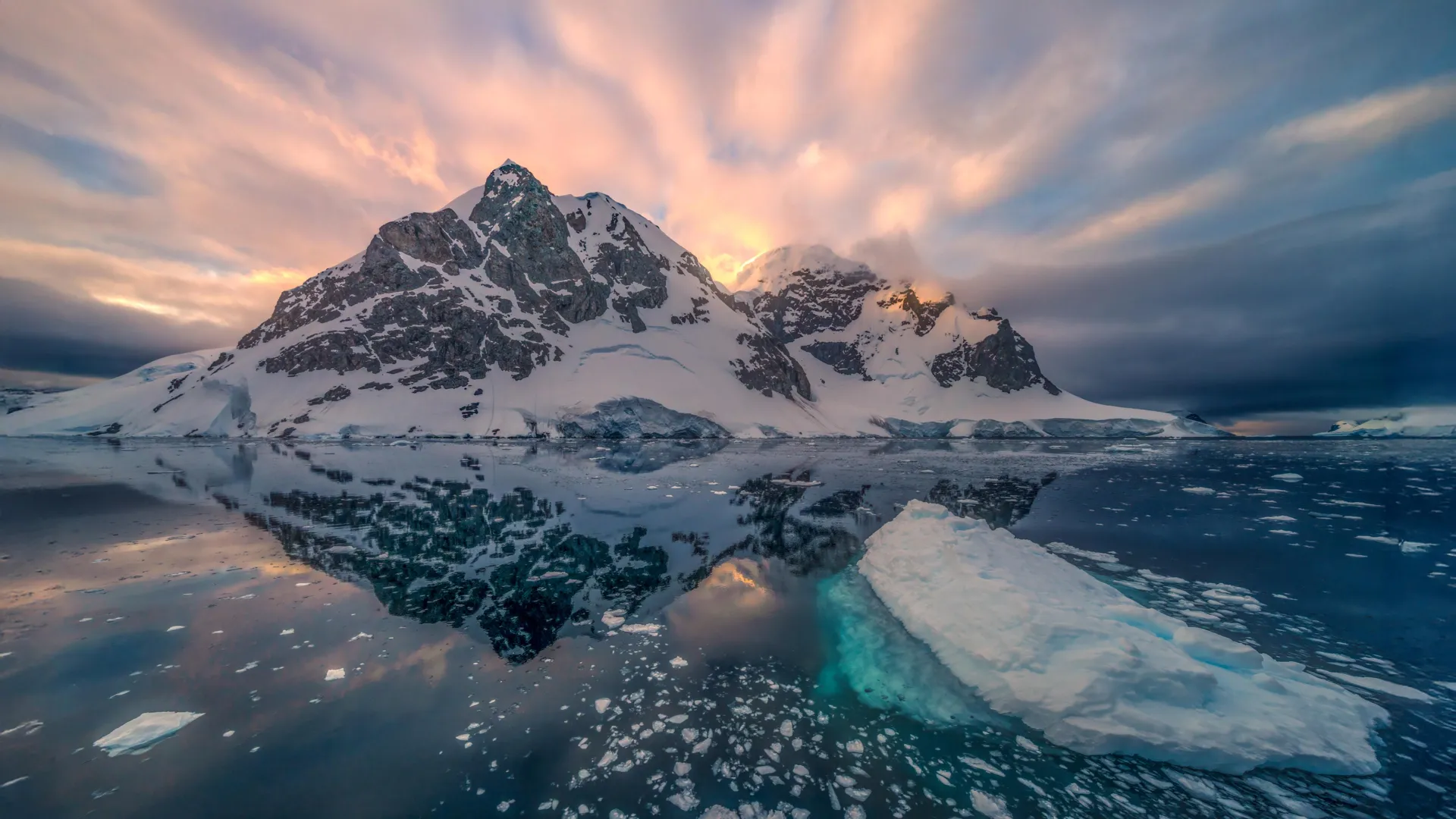
A study published in Nature Geoscience details the pivotal role of the Southern Ocean in the major climate transition at the end of the last Ice Age, approximately 12,000 years ago. This research provides critical data that directly informs several United Nations Sustainable Development Goals (SDGs). By elucidating the mechanisms of past climate change and carbon cycle shifts, the findings significantly contribute to the knowledge base required for SDG 13 (Climate Action) and SDG 14 (Life Below Water).
Research Methodology and Core Findings
An international research team, including scientists from Laoshan Laboratory and GEOMAR, reconstructed the historical extent of Antarctic Bottom Water (AABW) over the past 32,000 years. Their methodology and findings are summarized below.
- Methodology:
- Analysis of nine sediment cores from the Atlantic and Indian sectors of the Southern Ocean.
- Examination of the isotopic composition of the trace metal neodymium, which serves as a chemical fingerprint to trace the origin and movement of deep-water masses.
- Key Findings:
- During the last Ice Age, the deep Southern Ocean was filled with a stagnant, carbon-rich water mass originating from the Pacific. This state allowed the ocean to act as a major carbon sink, keeping atmospheric CO2 levels low.
- The transition out of the Ice Age was marked by a fundamental reorganization of this system, driven by warming in the Antarctic region.
The Deglaciation Process and its Link to SDG 13 (Climate Action)
The study outlines a critical natural feedback loop that has direct relevance to understanding modern anthropogenic climate change. This historical precedent highlights the sensitivity of the climate system to polar warming, a central concern for achieving the targets of SDG 13. The process occurred in distinct phases:
- Global warming between 18,000 and 10,000 years ago caused Antarctic ice sheets to retreat.
- Increased meltwater entered the Southern Ocean, reducing the salinity and density of newly formed AABW.
- This lighter AABW was able to spread further, destabilizing the existing deep-water structure.
- Enhanced vertical mixing brought carbon that had been stored in the deep ocean for long periods to the surface.
- This previously sequestered carbon was released into the atmosphere, contributing to the rise in global CO2 and accelerating the warming trend.
Relevance to Broader Sustainable Development Goals
The study’s implications extend beyond climate science, impacting a range of interconnected SDGs:
- SDG 14 (Life Below Water): The documented historical shifts in ocean circulation, temperature, and carbon content fundamentally altered marine habitats. Understanding these processes is vital for conserving marine biodiversity and managing ocean health amid current rapid warming.
- SDG 11 (Sustainable Cities and Communities): By improving models of how the Antarctic Ice Sheet responds to warming, this research helps refine projections of future sea-level rise. This information is critical for adaptation planning and building resilience in coastal communities worldwide.
- SDG 17 (Partnerships for the Goals): The study itself is a product of successful international scientific collaboration. Such partnerships are essential for generating the comprehensive knowledge needed to address complex global challenges like climate change.
Conclusion: Applying Past Lessons to Future Challenges
The research confirms that Southern Ocean dynamics were a crucial driver of atmospheric CO2 rise at the end of the last Ice Age. This paleoclimate data provides an indispensable long-term perspective on the rapid deep-ocean warming observed today. By understanding how the Earth’s systems responded to past warming, we can more accurately assess future risks and reinforce the urgency of global efforts to mitigate climate change in line with the Sustainable Development Goals.
Analysis of Sustainable Development Goals in the Article
1. Which SDGs are addressed or connected to the issues highlighted in the article?
-
SDG 13: Climate Action
The article is fundamentally about climate science. It investigates a major past climate transition—the end of the last Ice Age—to better understand the mechanisms driving global climate change. It directly discusses rising global temperatures, the role of the ocean in the global carbon cycle, and the increase in atmospheric CO2. The research explicitly aims to “improve projections of future climate change” by understanding how the ocean responded to warming in the past, directly aligning with the goal of taking urgent action to combat climate change and its impacts.
-
SDG 14: Life Below Water
The study focuses entirely on the marine environment, specifically the Southern Ocean. It examines the physical and chemical properties of the ocean, including water masses like Antarctic Bottom Water (AABW), ocean circulation, and deep-sea chemistry (neodymium isotopes). The article highlights the ocean’s critical role in storing carbon (“large amounts of dissolved carbon to remain locked in the deep ocean”) and the impacts of warming on this system (“waters deeper than about 1,000 meters around Antarctica have warmed significantly faster”). This research contributes to the conservation and sustainable use of the oceans and their resources by enhancing our understanding of their function within the global climate system.
2. What specific targets under those SDGs can be identified based on the article’s content?
-
Target 13.3: Improve education, awareness-raising and human and institutional capacity on climate change mitigation, adaptation, impact reduction and early warning.
The scientific study described in the article is a direct contribution to this target. By conducting and publishing this research, the scientists are increasing the “human and institutional capacity” to understand climate change. The stated goal is to “better grasp what is happening today as Antarctic ice shelves continue to melt” and “assess more accurately how rapidly the Antarctic Ice Sheet may continue to lose mass in the future.” This knowledge is essential for improving climate models, which are critical tools for impact reduction and early warning systems.
-
Target 14.3: Minimize and address the impacts of ocean acidification, including through enhanced scientific cooperation at all levels.
While the article does not use the term “ocean acidification,” it extensively discusses the underlying cause: the ocean’s absorption of carbon dioxide. The study investigates how “carbon-rich waters” stored “large amounts of dissolved carbon” and how this carbon was later released into the atmosphere. Understanding these carbon cycle dynamics is crucial for addressing the impacts of increased atmospheric CO2 on ocean chemistry. The research itself is an example of “enhanced scientific cooperation,” involving scientists from the Laoshan Laboratory in China and GEOMAR in Germany.
-
Target 14.a: Increase scientific knowledge, develop research capacity and transfer marine technology… in order to improve ocean health and to enhance the contribution of marine biodiversity to the development of developing countries…
The entire article is a testament to this target. The research uses advanced methods, such as analyzing the “isotopic composition of the trace metal neodymium preserved in the sediments,” to “increase scientific knowledge” about the ocean’s role in the climate system. The collaboration between institutions in Germany and China, where a scientist now works after completing his PhD abroad, also reflects the development of research capacity. The ultimate aim of using this paleoclimate data to “improve projections of future climate change” directly contributes to improving our ability to manage and protect the ocean.
3. Are there any indicators mentioned or implied in the article that can be used to measure progress towards the identified targets?
-
Indicators for SDG 13 (Climate Action)
The article implies indicators related to the improvement of scientific understanding and predictive capabilities:
- Improved accuracy of climate models: The text states that scientists must “incorporate [physical and biogeochemical changes] into climate models” and that paleoclimate data helps “to improve projections of future climate change.” Progress could be measured by the reduction of uncertainty in these models.
- Rate of Antarctic ice sheet mass loss: The research aims to “assess more accurately how rapidly the Antarctic Ice Sheet may continue to lose mass in the future.” Tracking this rate is a key indicator of climate change impacts.
- Atmospheric CO2 levels: The article discusses the historical rise in atmospheric CO2 at the end of the last Ice Age and links it to ocean processes. Monitoring current and future CO2 levels remains a primary indicator of climate change.
-
Indicators for SDG 14 (Life Below Water)
The article mentions or implies several specific oceanographic indicators:
- Rate of deep-ocean warming: A specific indicator is mentioned directly: “Over the past 50 years, waters deeper than about 1,000 meters around Antarctica have warmed significantly faster than much of the rest of the world’s oceans.” Measuring this rate is a direct indicator of climate change’s impact on the marine environment.
- Extent and properties of water masses: The study’s primary goal was to “reconstruct how far Antarctic Bottom Water (AABW) extended.” Monitoring the volume, density, and salinity of key water masses like AABW is an indicator of changes in ocean circulation.
- Ocean carbon storage: The article discusses how the deep ocean was filled with “carbon-rich waters.” Measuring the amount of dissolved carbon in different ocean basins is an indicator of the ocean’s capacity to act as a carbon sink.
4. Summary Table of SDGs, Targets, and Indicators
| SDGs, Targets and Indicators | Corresponding Targets | Specific Indicators Identified in the Article |
|---|---|---|
| SDG 13: Climate Action | 13.3: Improve education, awareness-raising and human and institutional capacity on climate change. |
|
| SDG 14: Life Below Water | 14.3: Minimize and address the impacts of ocean acidification. |
|
| 14.a: Increase scientific knowledge, develop research capacity. |
|
Source: sciencedaily.com
What is Your Reaction?
 Like
0
Like
0
 Dislike
0
Dislike
0
 Love
0
Love
0
 Funny
0
Funny
0
 Angry
0
Angry
0
 Sad
0
Sad
0
 Wow
0
Wow
0