Advancements in Photovoltaic Technology: Key Insights from EU PVSEC – Innovation News Network
Report on the 2025 European Photovoltaic Solar Energy Conference (EU PVSEC) and its Alignment with Sustainable Development Goals
Introduction
The 2025 European Photovoltaic Solar Energy Conference (EU PVSEC), held from September 22 to 26, served as a critical platform for assessing the solar sector’s progress towards the Sustainable Development Goals (SDGs). The conference convened researchers, industry leaders, and policymakers to discuss technological advancements and market dynamics, with a pronounced focus on translating innovation into commercially viable and sustainable energy solutions that support global climate and development targets.
Advancing SDG 7: Affordable and Clean Energy
The conference proceedings demonstrated a significant strategic shift within the photovoltaic (PV) sector, directly contributing to the objectives of SDG 7. The focus has evolved from theoretical viability to practical implementation and integration, ensuring solar energy becomes more accessible, reliable, and affordable.
From Research Feasibility to Commercial Deployment
- There is a clear transition from proving the viability of new technologies to developing commercially scalable products designed for long-term, reliable electricity generation.
- Emerging technologies, such as perovskite solar cells, require increased funding to facilitate mass production and fully realize their potential contribution to clean energy targets.
- The sector is concentrating on integrating PV technologies into diverse business models to accelerate market penetration and growth.
Enhancing Grid Integration and Energy Infrastructure
- A primary focus is the effective integration of PV systems into the electrical grid, a critical step for ensuring energy stability and reliability.
- Hybridisation with flexible resources, particularly battery storage, was identified as essential. A key objective is to multiply battery capacity in Europe tenfold to support the expanding solar infrastructure, as advocated by the Battery Storage Europe Platform.
Fostering SDG 9 and SDG 8: Industry, Innovation, and Economic Growth
Discussions at EU PVSEC highlighted the importance of building resilient infrastructure, promoting inclusive and sustainable industrialization, and fostering innovation, in line with SDG 9. These efforts also support SDG 8 by enhancing economic competitiveness and creating decent work.
Strengthening European Solar Manufacturing Capacity
- The “Reshoring Solar Manufacturing to Europe” study, launched at the conference, provides a model for making European-manufactured solar systems competitive with imports.
- A strategic goal for the European Union is to establish at least 30 GW of domestic solar manufacturing capacity at each stage of the value chain by 2030.
- The #MakeSolarEU campaign advocates for policy and financial mechanisms to support European manufacturers, thereby enhancing supply chain resilience and contributing to the continent’s economic growth.
Driving Innovation through Strategic Partnerships (SDG 17)
- Collaboration is central to translating research into market-ready solutions. The European Partnership for Innovation in Solar PV (EUPI-PV) facilitates cooperation between the European Commission, industry, and research communities.
- A dedicated workshop focused on optimizing funding schemes and enhancing collaboration to scale up innovation effectively, ensuring private sector efforts align with European research priorities.
Promoting SDG 12: Responsible Consumption and Production
The conference underscored the sector’s commitment to sustainable practices, focusing on product quality, longevity, and circularity to ensure responsible consumption and production patterns.
Emphasis on Quality, Reliability, and Longevity
- Following a period of rapid deployment, the market is stabilizing with a heightened focus on the quality and reliability of installed PV systems.
- Research is increasingly directed at understanding the long-term performance of PV components, such as cell behavior under prolonged UV exposure, to guarantee system durability and profitability.
Implementing Circular Economy Principles
- Circularity was a key theme, with discussions on designing products for recyclability from the manufacturing stage.
- The industry is moving from theoretical discussions to practical implementation of end-of-life processes, including optimizing material recovery both commercially and technically.
Addressing Social and Global Dimensions of Sustainability
SDG 5: Promoting Gender Equality in the Solar Sector
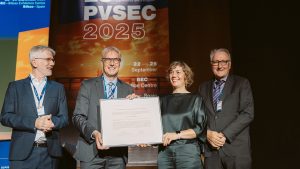
- The conference highlighted the importance of inclusive leadership, exemplified by SolarPower Europe CEO Walburga Hemetsberger receiving the 2025 Becquerel Prize for her contributions to the PV sector.
- Despite progress, significant work remains to achieve gender equality. Women constitute 32% of the renewable energy workforce, a figure unchanged since 2019, with many in non-technical roles.
- The industry acknowledges these disparities and is actively working to create a more inclusive and accessible environment for all.
Identified Challenges and Strategic Priorities for 2026
The conference identified several challenges that require strategic action to ensure continued progress towards the SDGs.
- Maintain Deployment Momentum: Continue the rapid deployment of PV systems to achieve the European Commission’s goal of 750 GW, requiring grid expansion and accelerated permitting processes.
- Address Funding Gaps: Secure adequate funding for research and innovation, particularly through programs like Horizon Europe, to maintain global competitiveness and drive the next generation of clean energy technology.
- Strengthen Global Collaboration (SDG 17): Counter the trend of reduced international participation seen at the conference by reinforcing global partnerships to facilitate knowledge sharing and prevent fragmentation of research efforts.
- Overcome Market Bottlenecks: Proactively address challenges in market integration and grid flexibility, for which the sector is developing effective solutions and observing an increasing market willingness to adopt them.
Analysis of Sustainable Development Goals in the Article
1. Which SDGs are addressed or connected to the issues highlighted in the article?
-
SDG 7: Affordable and Clean Energy
- The entire article is centered on solar photovoltaic (PV) energy, a key renewable source. It discusses technological advancements, market dynamics, grid integration, and deployment goals, all of which are fundamental to achieving affordable and clean energy for all.
-
SDG 9: Industry, Innovation and Infrastructure
- The article heavily emphasizes research and innovation in PV technology, such as perovskite solar cells. It also addresses industrial strategy, including the goal to reshore solar manufacturing to Europe, and the need for infrastructure development like grid expansion to support the energy transition.
-
SDG 12: Responsible Consumption and Production
- The theme of “circularity” is explicitly mentioned as an important talking point at the conference. This includes discussions on designing products that can be recycled, end-of-life considerations, and material recovery, which are core components of sustainable consumption and production patterns.
-
SDG 5: Gender Equality
- A specific section titled “Women in PV” highlights the issue of gender diversity and inclusion in the solar sector. It notes the achievements of women in leadership while also pointing out the disparity in representation, particularly in technical roles, and the industry’s efforts to create a more inclusive environment.
-
SDG 17: Partnerships for the Goals
- The article underscores the importance of collaboration among researchers, industry leaders, and policymakers. It mentions specific partnerships like the European Partnership for Innovation in Solar PV (EUPI-PV) and laments the challenges posed by a decrease in international collaboration, stressing that the PV sector is “inherently global.”
2. What specific targets under those SDGs can be identified based on the article’s content?
-
Under SDG 7 (Affordable and Clean Energy):
- Target 7.2: “By 2030, increase substantially the share of renewable energy in the global energy mix.” The article directly supports this by discussing the need to “continue to deploy PV systems at the current pace” and mentioning the European Commission’s goal of “750 gigawatts of direct current PV connected to the grid.”
- Target 7.a: “By 2030, enhance international cooperation to facilitate access to clean energy research and technology… and promote investment in energy infrastructure and clean energy technology.” This is reflected in the discussion about the need for funding for PV innovation, collaboration through platforms like EUPI-PV, and the strategic priority of expanding the grid infrastructure.
-
Under SDG 9 (Industry, Innovation and Infrastructure):
- Target 9.4: “By 2030, upgrade infrastructure and retrofit industries to make them sustainable… with greater adoption of clean and environmentally sound technologies and industrial processes.” The focus on circularity in manufacturing, creating recyclable products, and improving the quality and reliability of PV installations aligns with this target.
- Target 9.5: “Enhance scientific research, upgrade the technological capabilities of industrial sectors… encouraging innovation.” The article highlights the shift from proving technological viability to commercializing innovations, the need for more funding to facilitate mass production of new technologies like perovskite cells, and the role of partnerships in bringing innovations from the lab to the market.
-
Under SDG 12 (Responsible Consumption and Production):
- Target 12.5: “By 2030, substantially reduce waste generation through prevention, reduction, recycling and reuse.” The article’s discussion on “circularity at the manufacturing stage,” creating products that “can be recycled,” and moving “end-of-life considerations and material recovery” from theory to practical processes directly addresses this target.
-
Under SDG 5 (Gender Equality):
- Target 5.5: “Ensure women’s full and effective participation and equal opportunities for leadership at all levels of decision-making.” The article addresses this by celebrating a female CEO receiving a leadership award while also citing the statistic that women represent only 32% of the workforce, with many in non-technical roles, indicating a need for improvement in participation and leadership opportunities.
-
Under SDG 17 (Partnerships for the Goals):
- Target 17.6: “Enhance… international cooperation on and access to science, technology and innovation.” The article expresses concern that the conference felt “less international,” which poses a challenge because “international collaboration has facilitated extensive global knowledge sharing.” This highlights the importance of this target.
- Target 17.16: “Enhance the Global Partnership for Sustainable Development, complemented by multi-stakeholder partnerships.” The article provides a clear example of this through the collaboration between “the European Commission, PV industry and research communities, primarily through the European Partnership for Innovation in Solar PV (EUPI-PV).”
3. Are there any indicators mentioned or implied in the article that can be used to measure progress towards the identified targets?
-
For SDG 7:
- Indicator for Target 7.2: Installed renewable energy capacity. The article provides a specific metric: the goal to reach “750 gigawatts of direct current PV connected to the grid” in Europe. Progress can be measured by tracking the gigawatts installed against this target.
-
For SDG 9:
- Indicator for Target 9.5: Investment in research and innovation. While no specific number is given, the article implies this is a key metric by repeatedly mentioning the need for “more funding to facilitate mass production” and the “crunch in research and innovation budgets.” The amount of funding allocated through programs like Horizon Europe would be a direct indicator.
- Indicator for industrial capacity: The article mentions a specific manufacturing goal set by the European Union: “at least 30 GW of European solar manufacturing at each stage of the value chain by 2030.” This serves as a clear, measurable indicator of industrial scale-up.
-
For SDG 12:
- Indicator for Target 12.5: Development of circular economy processes. The article implies a qualitative indicator by stating that “end-of-life considerations and material recovery are now transitioning from purely theoretical discussions to practical processes.” Progress can be measured by the establishment and commercial optimization of these recycling and recovery systems.
-
For SDG 5:
- Indicator for Target 5.5: Proportion of women in the workforce. The article provides a direct statistic that can be used as a baseline indicator: “women represent 32% of the full-time equivalent workforce in the renewable energy sector.” It also implies a more nuanced indicator by noting that many women work in “administrative or support roles rather than in deployment or technical functions,” suggesting that tracking the proportion of women in technical and leadership roles is also crucial.
-
For SDG 17:
- Indicator for Target 17.6: Level of international participation in knowledge-sharing events. The article implies this indicator through the observation that the conference felt “less international,” which is seen as a challenge to global progress. The diversity of nationalities and institutions at such events can be a measure of international collaboration.
4. Table of SDGs, Targets, and Indicators
| SDGs | Targets | Indicators |
|---|---|---|
| SDG 7: Affordable and Clean Energy | 7.2: Increase the share of renewable energy. | Installed PV capacity, measured against the goal of “750 gigawatts of direct current PV connected to the grid.” |
| SDG 9: Industry, Innovation and Infrastructure | 9.5: Enhance scientific research and encourage innovation. | Amount of funding for R&I; progress towards the goal of “at least 30 GW of European solar manufacturing.” |
| SDG 12: Responsible Consumption and Production | 12.5: Substantially reduce waste generation through recycling and reuse. | Transition of material recovery and recycling from “theoretical discussions to practical processes.” |
| SDG 5: Gender Equality | 5.5: Ensure women’s full participation and equal opportunities for leadership. | Proportion of women in the renewable energy workforce (currently “32%”); proportion of women in technical and leadership roles. |
| SDG 17: Partnerships for the Goals | 17.6 & 17.16: Enhance international cooperation and multi-stakeholder partnerships. | Level of international participation in conferences; number and effectiveness of multi-stakeholder collaborations like the EUPI-PV. |
Source: innovationnewsnetwork.com
What is Your Reaction?
 Like
0
Like
0
 Dislike
0
Dislike
0
 Love
0
Love
0
 Funny
0
Funny
0
 Angry
0
Angry
0
 Sad
0
Sad
0
 Wow
0
Wow
0