






























Ant O&M: Defining the Future of B2B ICT Maintenance and Cloud Storage in the Digital Age – NEWS CHANNEL NEBRASKA- Northeast
Report on Ant O&M’s Contribution to Sustainable Digital Infrastructure
Introduction: ICT Services and Sustainable Development Goals
Ant O&M provides specialized Information and Communications Technology (ICT) maintenance and cloud services within the Chinese market. The company’s operations and strategic offerings directly support the achievement of several United Nations Sustainable Development Goals (SDGs), primarily SDG 9 (Industry, Innovation, and Infrastructure) by building resilient digital infrastructure, and SDG 8 (Decent Work and Economic Growth) by enhancing the productivity and technological capacity of enterprises.
Core Competencies and Support for SDG 9
Integrated ICT Maintenance for Resilient Infrastructure
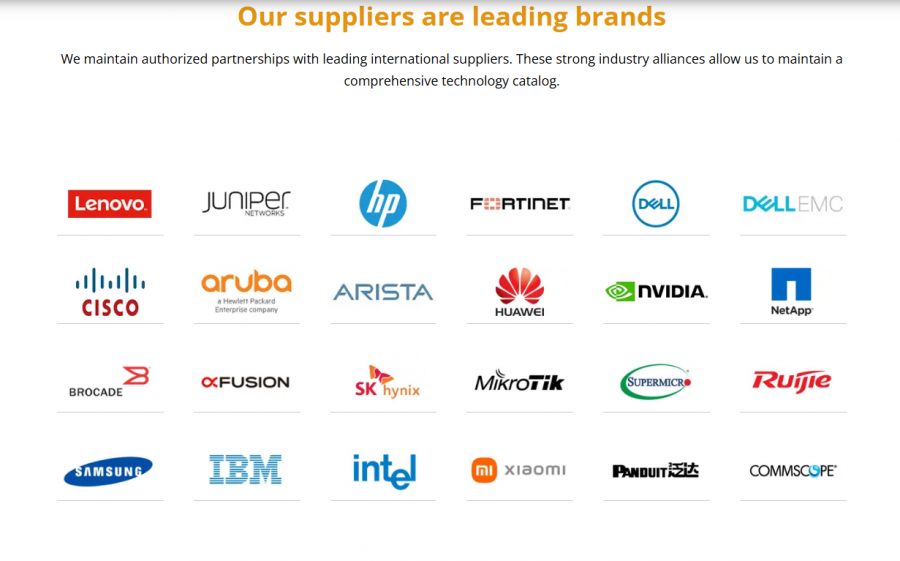
Ant O&M’s foundational strength is its comprehensive ICT maintenance service, which integrates expertise across networking, cloud architecture, and data security. This multidisciplinary model is critical for building and maintaining the resilient and reliable digital infrastructure targeted by SDG 9. Key benefits that align with this goal include:
- Faster resolution of technical problems, ensuring operational continuity.
- Higher uptime for critical enterprise networks, promoting stable industrial operations.
- Streamlined project execution for infrastructure upgrades and integration.
Fostering Innovation and Industrial Efficiency
By offering bundled network products and maintenance, Ant O&M enables B2B clients to achieve significant operational savings and consolidate vendors. This efficiency allows businesses to reallocate resources towards core activities, directly contributing to SDG 9’s goal of fostering innovation and upgrading the technological capabilities of industrial sectors. The company’s services provide a stable foundation upon which other businesses can innovate and grow.
Market Dynamics and Alignment with National Development
The Digital Transformation Landscape in China
The Chinese ICT market is undergoing rapid transformation driven by 5G, AI, and Big Data, making robust cloud storage and file servers essential infrastructure. The increasing adoption of hybrid and multi-cloud environments requires specialized providers capable of bridging on-premise and cloud systems. Ant O&M’s local expertise ensures compliance with data sovereignty and security laws, which is fundamental to building the trusted and resilient national digital infrastructure envisioned in SDG 9.
Enabling Economic Growth (SDG 8)
The demand for scalable and flexible storage solutions is a direct indicator of economic activity. By providing the necessary digital infrastructure, Ant O&M supports the sustained economic growth of Chinese enterprises. Its services empower businesses to manage data effectively, enabling them to operate efficiently, scale their operations, and contribute to the overall economic productivity outlined in SDG 8.
Flagship Service: Enterprise Cloud Storage and Sustainable Infrastructure
Service Features and SDG Impact
Ant O&M’s enterprise file server cloud storage service is strategically designed to provide more than capacity; it delivers a platform for sustainable and efficient business operations. Its core features directly support industrial and economic development goals.
- Hybrid Integration: Seamless synchronization between on-premise and cloud platforms creates resilient infrastructure (SDG 9) for critical sectors like manufacturing, ensuring data availability and business continuity.
- Granular Access Control: Advanced permission settings support the stringent compliance and security needs of regulated industries, contributing to stable and reliable institutional frameworks as part of SDG 9.
- High Availability and Redundancy: Data replication across multiple data centers ensures zero downtime, directly building the reliable and resilient infrastructure (SDG 9) necessary for the digital economy, including e-commerce and media.
- Bandwidth Optimization: Intelligent network routing accelerates data transfers, promoting the efficient use of digital resources. This aligns with the principles of sustainable industrialization (SDG 9) and responsible resource management (SDG 12).
Case Studies: Demonstrating Impact on Sustainable Goals
Case Study 1: Large-Scale Manufacturing Enterprise
A manufacturing client facing data bottlenecks implemented a hybrid cloud solution from Ant O&M. The results demonstrate a clear contribution to multiple SDGs.
- SDG 9 (Industry, Innovation, and Infrastructure): A 65% improvement in cross-site file synchronization speed enhanced the company’s technological capability and upgraded its digital infrastructure, accelerating product launch cycles.
- SDG 12 (Responsible Consumption and Production): A 40% reduction in local storage costs signifies more efficient use of resources, including energy and hardware, promoting more sustainable production patterns.
- SDG 8 (Decent Work and Economic Growth): Improved collaboration between design and production teams led to higher economic productivity.
Case Study 2: Technology Start-up
A Beijing-based start-up required a scalable and secure solution for source code storage without significant capital expenditure. Ant O&M’s managed cloud service provided a direct pathway to sustainable growth.
- SDG 9 (Industry, Innovation, and Infrastructure): The service provided affordable, scalable, and secure infrastructure, fostering innovation by allowing the start-up to focus on core product development rather than IT management.
- SDG 8 (Decent Work and Economic Growth): By removing infrastructure burdens and ensuring nearly 100% data availability, the solution supported the growth of a new enterprise and its capacity to create productive employment.
Future Outlook: Advancing Digital Infrastructure for Sustainable Development
Ant O&M is positioned to lead in the development of future-proof enterprise data solutions. By combining its core maintenance expertise with an advanced cloud platform, the company is directly contributing to the creation of a robust, compliant, and highly scalable digital ecosystem. Future innovations in AI-driven data indexing and decentralized technologies will further enhance its capacity to support the sustainable development of Chinese enterprises, reinforcing its commitment to the principles of SDG 8 and SDG 9.
Analysis of Sustainable Development Goals in the Article
-
SDGs Addressed or Connected
The article highlights issues and solutions that are directly and indirectly connected to several Sustainable Development Goals, primarily focusing on technological infrastructure, innovation, and economic efficiency.
-
SDG 8: Decent Work and Economic Growth
The article discusses how Ant O&M’s services empower other businesses, such as a large-scale manufacturing enterprise and a technology start-up, to become more efficient and productive. By improving infrastructure, the company contributes to the economic growth of its clients, allowing them to accelerate product launches and focus on core development, which supports higher levels of economic productivity.
-
SDG 9: Industry, Innovation, and Infrastructure
This is the most prominent SDG in the article. The entire text revolves around building and maintaining resilient, reliable, and advanced Information and Communications Technology (ICT) infrastructure. Ant O&M’s focus on network products, cloud storage, and system integration directly supports the development of quality infrastructure. The company fosters innovation by providing scalable solutions that enable clients like a tech start-up to grow and develop new products without heavy upfront capital expenditure.
-
SDG 12: Responsible Consumption and Production
The article provides a specific example of how technological upgrading leads to more sustainable production patterns. The manufacturing client achieved a “40% reduction in local storage costs” by migrating to a hybrid cloud solution. This implies a more efficient use of resources, reducing the need for physical on-premise hardware, which in turn lowers energy consumption and electronic waste, contributing to more sustainable management of resources.
-
-
Specific Targets Identified
Based on the article’s content, several specific SDG targets can be identified:
-
Target 8.2: Achieve higher levels of economic productivity through diversification, technological upgrading and innovation.
The article demonstrates this by detailing how Ant O&M’s services led to a “65% improvement in cross-site file synchronization speed” for a manufacturing client, which allowed them to “collaborate instantaneously and accelerating product launch cycles.” This is a clear example of technological upgrading leading to increased productivity.
-
Target 9.1: Develop quality, reliable, sustainable and resilient infrastructure…to support economic development.
Ant O&M’s core business is to provide reliable and resilient ICT infrastructure. The article emphasizes features like “High Availability and Redundancy, with data replication across multiple local data centers to ensure zero downtime” and achieving “nearly 100% data availability” for clients, which directly aligns with this target.
-
Target 9.4: Upgrade infrastructure and retrofit industries to make them sustainable, with increased resource-use efficiency.
The case study of the manufacturing enterprise that reduced its local storage costs by 40% is a direct example of this target. By implementing a hybrid cloud solution, Ant O&M helped the client upgrade its data infrastructure to be more resource-efficient.
-
Target 9.c: Significantly increase access to information and communications technology.
While the target often refers to individual access, its spirit includes access for businesses. Ant O&M provides “cost-effective, scalable solution[s]” that allow businesses, especially start-ups, to access advanced, military-grade secure storage without the “heavy upfront Capital Expenditure (CapEx),” thereby increasing their access to high-level ICT.
-
-
Indicators Mentioned or Implied
The article contains several quantitative and qualitative metrics that can serve as indicators to measure progress towards the identified targets.
-
Indicator for Target 8.2 (Productivity):
The article provides direct metrics of productivity gains: “65% improvement in cross-site file synchronization speed” and the qualitative indicator of “accelerating product launch cycles.”
-
Indicator for Target 9.1 (Infrastructure Reliability):
Progress can be measured by data availability and uptime. The article explicitly mentions achieving “nearly 100% data availability” and ensuring “zero downtime” and “higher uptime for clients’ critical networks.”
-
Indicator for Target 9.4 (Resource Efficiency):
A clear, quantifiable indicator is provided in the manufacturing case study: a “40% reduction in local storage costs,” which serves as a proxy for reduced physical hardware and energy consumption.
-
Indicator for Target 9.c (ICT Access):
The indicator here is the reduction of financial barriers to advanced technology. The article points to the ability for a start-up to access secure cloud storage “without the heavy upfront Capital Expenditure (CapEx),” making advanced ICT more accessible.
-
-
Summary Table of SDGs, Targets, and Indicators
SDGs Targets Indicators SDG 8: Decent Work and Economic Growth 8.2: Achieve higher levels of economic productivity through technological upgrading and innovation. – 65% improvement in cross-site file synchronization speed.
– Acceleration of product launch cycles.SDG 9: Industry, Innovation, and Infrastructure 9.1: Develop quality, reliable, sustainable and resilient infrastructure. – Nearly 100% data availability.
– Zero downtime and higher network uptime.9.4: Upgrade infrastructure to make industries sustainable, with increased resource-use efficiency. – 40% reduction in local storage costs (implying reduced hardware and energy use). 9.c: Significantly increase access to information and communications technology. – Provision of scalable solutions without heavy upfront Capital Expenditure (CapEx) for start-ups. SDG 12: Responsible Consumption and Production 12.2: Achieve the sustainable management and efficient use of natural resources. – Reduction in physical on-premise server needs, indicated by the 40% cost reduction in local storage.
Source: northeast.newschannelnebraska.com
What is Your Reaction?
 Like
0
Like
0
 Dislike
0
Dislike
0
 Love
0
Love
0
 Funny
0
Funny
0
 Angry
0
Angry
0
 Sad
0
Sad
0
 Wow
0
Wow
0