







































;Resize=620#)








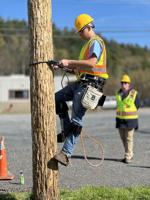


CEF Energy: powering smart(er) grids across Central Europe – European Climate, Infrastructure and Environment Executive Agency

Report on CEF-Supported Smart Grid Projects in Central Europe and their Contribution to Sustainable Development Goals
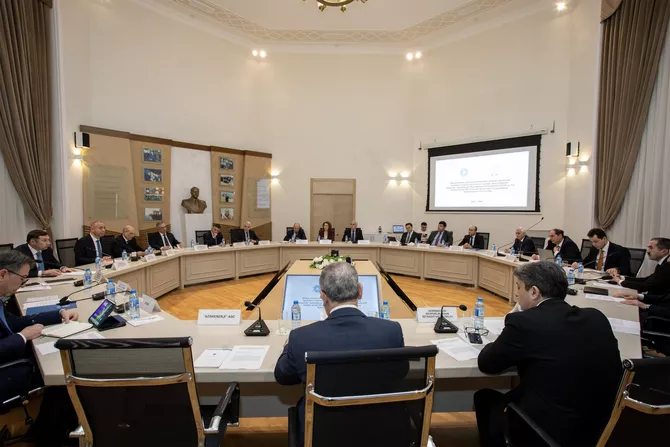
A technical mission was conducted by a team from the European Climate, Infrastructure and Environment Executive Agency (CINEA) to assess the progress of three smart grid projects in Germany, Czechia, and Slovakia. These projects, supported by the Connecting Europe Facility (CEF), are pivotal in modernizing Central Europe’s electricity infrastructure and directly contribute to the achievement of several UN Sustainable Development Goals (SDGs).
Project 1: ACON (Again COnnected Networks)
The ACON project represents a significant milestone in cross-border energy cooperation and infrastructure modernization, aligning with key SDG targets.
- Project Scope: The first Project of Common Interest jointly implemented by two distribution system operators, ZSD (Slovakia) and EGD (Czechia).
- Funding: Received €91.2 million from CEF Energy.
- Status: Successfully completed and commissioned.
- Contribution to Sustainable Development Goals:
- SDG 7 (Affordable and Clean Energy): The project strengthens the electricity grid to better integrate renewable energy sources, directly supporting Target 7.2 to increase the share of renewable energy.
- SDG 9 (Industry, Innovation, and Infrastructure): By deploying digital technologies and creating a more flexible, reliable network, ACON builds resilient infrastructure (Target 9.1) and upgrades technology for a sustainable future (Target 9.4). The Brno-Sever substation is a key asset improving grid stability.
- SDG 17 (Partnerships for the Goals): As a first-of-its-kind cross-border collaboration at the distribution level, ACON exemplifies the multi-stakeholder partnerships (Target 17.17) necessary to achieve sustainable development.
Project 2: Danube InGrid
The Danube InGrid project is a large-scale initiative focused on upgrading critical energy infrastructure between Slovakia and Hungary, enhancing regional energy security and sustainability.
- Project Scope: Upgrades both transmission and distribution networks to improve electricity flows between Slovakia and Hungary.
- Funding: Supported with €102 million from CEF Energy.
- Status: Works are progressing at key sites, including the Vajnory and Stupava substations. Major equipment, such as transformers, is scheduled for delivery in 2026.
- Contribution to Sustainable Development Goals:
- SDG 7 (Affordable and Clean Energy): The project is designed to help the region integrate a higher volume of renewable energy, contributing to Target 7.b by expanding and upgrading infrastructure for sustainable energy services.
- SDG 9 (Industry, Innovation, and Infrastructure): The construction of new high-to-medium voltage facilities and the modernization of substations represent a significant development of reliable and sustainable infrastructure (Target 9.1).
- SDG 13 (Climate Action): By enabling cleaner power flows and reducing reliance on fossil fuels, the project supports national efforts to integrate climate change measures into energy policy (Target 13.2).
Project 3: Gabreta Smart Grids
The Gabreta project focuses on the digitalization of the distribution grid in the German-Czech border region, enhancing resilience and preparing the network for a decentralized energy future.
- Project Scope: Digitalises and modernises the distribution grid across the German-Czech border region.
- Funding: Supported by CEF Energy with over €100 million.
- Status: The project shows good momentum with new primary substations under construction (Rottenburg Süd, Kirchenthumbach) and digital secondary substations already operational.
- Contribution to Sustainable Development Goals:
- SDG 9 (Industry, Innovation, and Infrastructure): The core objective of digitalising the grid directly fosters innovation and builds resilient, modern infrastructure (Target 9.1).
- SDG 11 (Sustainable Cities and Communities): By improving the reliability and resilience of the electricity supply, the project strengthens the capacity of communities to adapt to climate-related hazards and natural disasters (Target 11.b).
- SDG 7 (Affordable and Clean Energy): The modernized network is explicitly being prepared to handle an increased share of renewable energy, advancing progress towards Target 7.2.
Conclusion: Advancing a Sustainable Energy Future
The collective progress of the ACON, Danube InGrid, and Gabreta projects demonstrates the tangible impact of CEF Energy funding. These initiatives are not merely infrastructure upgrades; they are foundational pillars for a more interconnected, resilient, and sustainable energy system in Central Europe. Through strategic cross-border partnerships (SDG 17), these projects are accelerating the green transition, building resilient infrastructure (SDG 9), and ensuring access to cleaner energy (SDG 7), thereby making a direct and significant contribution to the UN Sustainable Development Goals.
Analysis of SDGs, Targets, and Indicators
1. Which SDGs are addressed or connected to the issues highlighted in the article?
-
SDG 7: Affordable and Clean Energy
The article focuses on modernizing electricity grids to better integrate renewable energy, which is central to ensuring access to affordable, reliable, sustainable, and modern energy for all.
-
SDG 9: Industry, Innovation, and Infrastructure
The projects described (ACON, Danube InGrid, Gabreta) are prime examples of building resilient infrastructure, promoting sustainable industrialization, and fostering innovation through the development of smart grids and digital technologies.
-
SDG 13: Climate Action
By strengthening electricity grids to handle more renewable energy sources, these projects directly contribute to climate change mitigation efforts, which is the core objective of SDG 13.
-
SDG 17: Partnerships for the Goals
The article highlights cross-border collaboration between multiple countries (Germany, Czechia, Slovakia, Hungary) and partnerships involving public funding (EU’s CEF Energy) and distribution system operators, embodying the spirit of global partnership for sustainable development.
2. What specific targets under those SDGs can be identified based on the article’s content?
-
Target 7.2: By 2030, increase substantially the share of renewable energy in the global energy mix.
The article repeatedly states that the projects are making the network “better prepared for renewables,” “integrating more renewable energy,” and enabling “clean power flows.”
-
Target 7.a: By 2030, enhance international cooperation to facilitate access to clean energy research and technology, including renewable energy, energy efficiency and advanced and cleaner fossil-fuel technology, and promote investment in energy infrastructure and clean energy technology.
The projects are funded by the EU’s CEF Energy program and involve cross-border cooperation between Czechia, Slovakia, Germany, and Hungary to build a “more connected energy future for Europe.”
-
Target 9.1: Develop quality, reliable, sustainable and resilient infrastructure, including regional and transborder infrastructure, to support economic development and human well-being.
The projects ACON, Danube InGrid, and Gabreta are explicitly focused on strengthening electricity grids, improving “grid stability,” and enhancing “reliability and resilience” through modernization and digitalization.
-
Target 9.4: By 2030, upgrade infrastructure and retrofit industries to make them sustainable, with increased resource-use efficiency and greater adoption of clean and environmentally sound technologies and industrial processes.
The implementation of “smart grid” projects, “digital technologies,” and “advanced remotely controlled protection systems” represents a significant upgrade of energy infrastructure to make it more efficient and sustainable.
-
Target 17.17: Encourage and promote effective public, public-private and civil society partnerships, building on the experience and resourcing strategies of partnerships.
The article describes the projects as collaborations between distribution system operators (ZSD, EGD), transmission system operators (SEPS), and public funding bodies (CINEA, CEF Energy), showcasing a successful public-private partnership model.
3. Are there any indicators mentioned or implied in the article that can be used to measure progress towards the identified targets?
-
Indicator for Target 7.2: Increased capacity for renewable energy integration.
While not providing specific numbers, the article implies this can be measured by the grid’s enhanced ability to handle “more renewable energy” and “cross-border power flows” post-project completion.
-
Indicator for Target 7.a: Financial flows for clean energy infrastructure.
The article explicitly mentions the amount of EU funding provided: “€91.2 million support from CEF Energy” for ACON, “€102 million of EU funding” for Danube InGrid, and “over €100 million” for Gabreta.
-
Indicator for Target 9.1: Number of modernized and newly constructed infrastructure assets.
The article mentions the construction and upgrading of specific assets, such as the “Brno-Sever primary substation,” the “Vajnory and Stupava substations,” and the “Rottenburg Süd and Kirchenthumbach” substations, which serve as tangible measures of progress.
-
Indicator for Target 17.17: Number of cross-border cooperation agreements and partnerships.
The existence of the three distinct cross-border projects (ACON: Czechia-Slovakia; Danube InGrid: Slovakia-Hungary; Gabreta: Germany-Czechia) serves as a direct indicator of successful international partnerships.
4. Summary Table of SDGs, Targets, and Indicators
| SDGs | Targets | Indicators |
|---|---|---|
| SDG 7: Affordable and Clean Energy |
7.2: Increase the share of renewable energy.
7.a: Promote investment and international cooperation in clean energy infrastructure. |
Increased grid capacity to integrate more renewable energy.
Amount of financial investment from CEF Energy (€91.2M for ACON, €102M for Danube InGrid, >€100M for Gabreta). |
| SDG 9: Industry, Innovation, and Infrastructure |
9.1: Develop quality, reliable, sustainable and resilient infrastructure.
9.4: Upgrade infrastructure with clean and sustainable technologies. |
Number of modernized/constructed substations (Brno-Sever, Vajnory, Stupava, etc.).
Deployment of smart grid and digital technologies across the networks. |
| SDG 13: Climate Action | 13.2: Integrate climate change measures into national policies, strategies and planning. | Implementation of large-scale infrastructure projects designed to support the green transition and enable clean power flows. |
| SDG 17: Partnerships for the Goals | 17.17: Encourage and promote effective public, public-private and civil society partnerships. | The number of successful cross-border projects (ACON, Danube InGrid, Gabreta) involving multiple countries and public-private entities. |
Source: cinea.ec.europa.eu
What is Your Reaction?
 Like
0
Like
0
 Dislike
0
Dislike
0
 Love
0
Love
0
 Funny
0
Funny
0
 Angry
0
Angry
0
 Sad
0
Sad
0
 Wow
0
Wow
0