CIMMYT hosts H.E. Noel Grealish, Irish Minister of State for Agriculture, Food, Fisheries and the Marine, reaffirming a strengthened partnership for climate action and food security – CIMMYT
Report on Ireland-CIMMYT Strategic Partnership to Advance Sustainable Development Goals
High-Level Delegation Visit to Strengthen Global Partnerships (SDG 17)
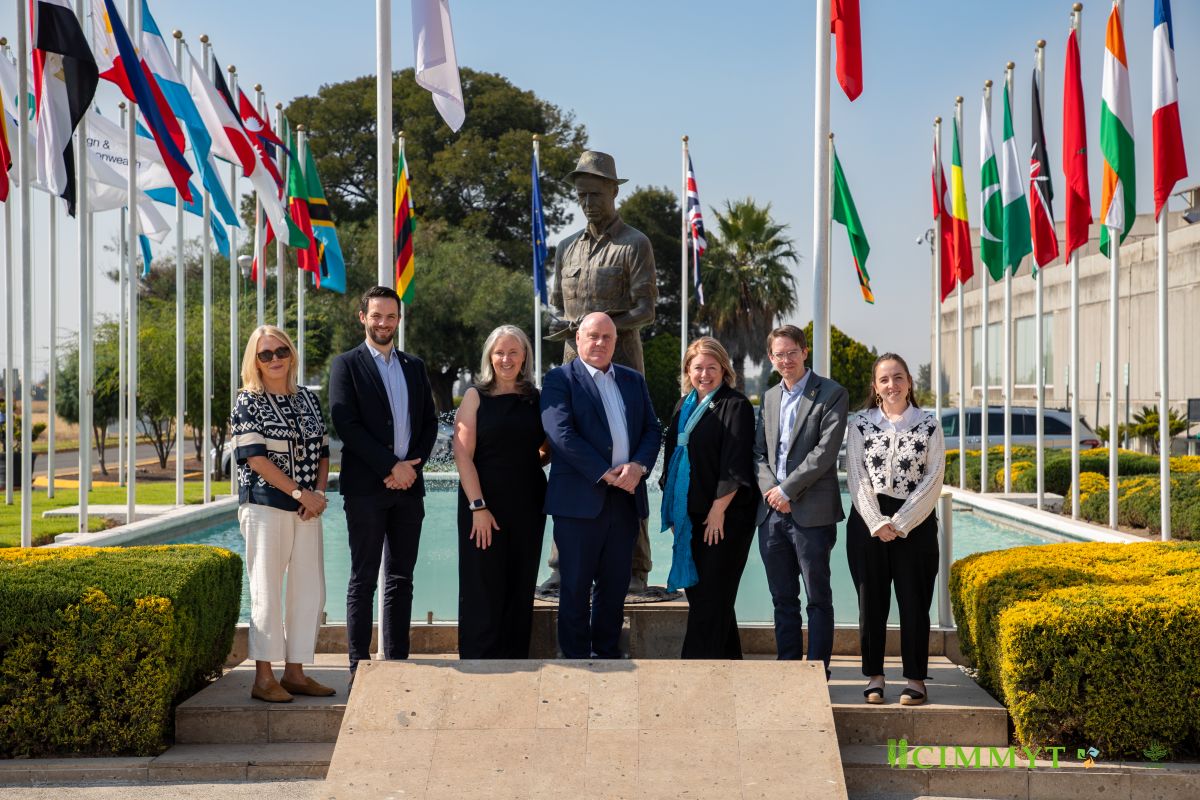
On November 20, 2025, a high-level delegation from Ireland visited the global headquarters of the International Maize and Wheat Improvement Center (CIMMYT) in Texcoco, Mexico. The visit aimed to reinforce bilateral cooperation in areas critical to achieving the Sustainable Development Goals (SDGs), particularly those concerning food security, climate action, and sustainable agriculture.
The Irish delegation included:
- H.E. Noel Grealish, Minister of State at the Department of Agriculture, Food, Fisheries and the Marine (DAFM)
- Fiona Geoghegan, Special Adviser
- Eoghan Glynn, Principal Officer for UK and International Trade at DAFM
- Anthony Cawley, Agricultural Attaché
- Andrea Cisneros, Agriculture Market Access Officer
The delegation was received by CIMMYT Director General Bram Govaerts and senior program leaders, who facilitated a tour of advanced research facilities supporting global food systems.
Alignment with Key Sustainable Development Goals
The strengthened collaboration between Ireland and CIMMYT represents a strategic opportunity to integrate cutting-edge agricultural research with development priorities, directly contributing to several SDGs:
- SDG 2 (Zero Hunger): The core focus of the partnership is on creating climate-resilient food systems and deploying farmer-centered innovations to enhance food security and promote sustainable agriculture.
- SDG 13 (Climate Action): A primary objective is to advance climate adaptation strategies within agriculture, developing resilient crop varieties and farming systems to mitigate the impacts of climate change.
- SDG 1 (No Poverty): By improving agricultural productivity and market access for smallholder farmers, the collaboration aims to enhance livelihoods and reduce poverty in resource-poor communities.
- SDG 5 (Gender Equality): Joint initiatives explicitly incorporate gender inclusion to ensure equitable participation and benefits for women in agri-food systems.
Review of Collaborative Initiatives and Impact
A notable example of the existing partnership is the Transforming Agri-Food Systems in Niassa Province (TSAN) project in Mozambique, supported by Irish Aid. This project demonstrates a multi-faceted approach to achieving the SDGs:
- Contributing to SDG 2 (Zero Hunger): The project enhances food security by improving seed systems and climate adaptation techniques.
- Advancing SDG 8 (Decent Work and Economic Growth): It has improved market access for over 3,000 farmers and 113 farmer organizations.
- Promoting SDG 5 (Gender Equality): A specific focus on gender inclusion is integrated into all project activities.
Strategic Opportunities and Future Outlook
The visit included a tour of CIMMYT’s key research facilities, which are foundational to achieving global development targets.
- Global Maize and Wheat Gene Banks: These facilities are crucial for preserving genetic diversity, a key target under SDG 2, ensuring the availability of genetic resources for future crop improvement.
- Biotechnology Laboratories and Digital Agriculture Platforms: These represent the innovative tools needed to accelerate progress towards a more productive, inclusive, and resilient agrifood system, as targeted by SDG 2 and SDG 9 (Industry, Innovation, and Infrastructure).
Minister Grealish acknowledged CIMMYT’s transformative global impact. Director General Bram Govaerts highlighted the deep-rooted collaboration, noting that “63% of Europe’s wheat derived from CIMMYT lines,” and emphasized the mutual goal of building a more sustainable and food-secure world in line with the 2030 Agenda for Sustainable Development.
Sustainable Development Goals (SDGs) Analysis
1. Which SDGs are addressed or connected to the issues highlighted in the article?
- SDG 2: Zero Hunger: The article’s core focus is on agricultural research, food security, and sustainable food systems. It discusses CIMMYT’s work on improving basic cereals like maize and wheat, enhancing the livelihoods of resource-poor farmers, and developing a “more productive, inclusive, and resilient agrifood system.” The TSAN project in Mozambique specifically targets food security.
- SDG 5: Gender Equality: The article explicitly mentions “gender inclusion” as a key component of the Transforming Agri-Food Systems in Niassa Province (TSAN) project. This indicates a direct effort to empower women within agricultural systems.
- SDG 13: Climate Action: The collaboration emphasizes “climate-resilient food systems,” “climate action,” and “climate adaptation.” This shows a clear connection to addressing the impacts of climate change on agriculture and strengthening resilience.
- SDG 17: Partnerships for the Goals: The entire article is about the partnership between a national government (Ireland) and an international research organization (CIMMYT). It highlights “bilateral cooperation,” “strengthened collaboration,” and “global engagement” to achieve shared goals in sustainable development.
2. What specific targets under those SDGs can be identified based on the article’s content?
-
Under SDG 2 (Zero Hunger):
- Target 2.3: By 2030, double the agricultural productivity and incomes of small-scale food producers. The article mentions enhancing the “livelihood trajectories and resilience of millions of resource-poor farmers” and the TSAN project’s focus on “market access” for over 3,000 farmers.
- Target 2.4: By 2030, ensure sustainable food production systems and implement resilient agricultural practices. The focus on “climate-resilient food systems,” “sustainable agricultural development,” and creating a “resilient agrifood system within planetary boundaries” directly aligns with this target.
- Target 2.5: By 2020, maintain the genetic diversity of seeds and cultivated plants. The mention of CIMMYT’s “global maize and wheat gene banks” is a direct contribution to this target.
-
Under SDG 5 (Gender Equality):
- Target 5.5: Ensure women’s full and effective participation and equal opportunities for leadership. The focus on “gender inclusion” in the TSAN project, which involves farmer organizations, implies efforts to increase women’s participation and role in agricultural decision-making.
-
Under SDG 13 (Climate Action):
- Target 13.1: Strengthen resilience and adaptive capacity to climate-related hazards. The collaboration’s emphasis on “climate-resilient food systems” and “climate adaptation” directly addresses the need to build capacity against climate challenges in agriculture.
-
Under SDG 17 (Partnerships for the Goals):
- Target 17.16: Enhance the Global Partnership for Sustainable Development, complemented by multi-stakeholder partnerships. The article is a clear example of this target in action, detailing the partnership between the Government of Ireland (through DAFM and Irish Aid) and CIMMYT to advance food security and sustainable agriculture.
3. Are there any indicators mentioned or implied in the article that can be used to measure progress towards the identified targets?
- For Target 2.3: The article provides a direct quantitative indicator: the TSAN project “has mobilized over 3,000 farmers and 113 farmer organizations to date.” This measures the scale of engagement with small-scale producers.
- For Target 2.4: An implied indicator is the adoption of improved crop varieties. The statement that “63% of Europe’s wheat derived from CIMMYT lines” serves as a powerful indicator of the widespread impact and adoption of the organization’s research on productive and resilient agriculture.
- For Target 2.5: The existence and maintenance of CIMMYT’s “global maize and wheat gene banks” serves as a direct indicator of efforts to conserve genetic diversity for food and agriculture.
- For Target 5.5: While no number is given, the implementation of “gender inclusion” as a core component of the TSAN project is an implied indicator. Progress could be measured by the number or percentage of women participating in the mobilized farmer groups.
- For Target 13.1: An implied indicator is the development and deployment of climate-adapted agricultural technologies and practices. The work on “climate-resilient food systems” and “climate adaptation” suggests progress would be measured by the number of farmers or hectares utilizing these innovations.
- For Target 17.16: The formal partnership between Ireland and CIMMYT, including the specific TSAN project, serves as a qualitative indicator of a functioning multi-stakeholder partnership for sustainable development.
4. Summary Table of SDGs, Targets, and Indicators
| SDGs | Targets | Indicators |
|---|---|---|
| SDG 2: Zero Hunger |
2.3: Double productivity and incomes of small-scale food producers. 2.4: Ensure sustainable and resilient food production systems. 2.5: Maintain genetic diversity of seeds. |
– Number of farmers and farmer organizations mobilized (explicit: 3,000 farmers, 113 organizations). – Percentage of wheat varieties derived from CIMMYT research (explicit: 63% in Europe). – Maintenance of global gene banks (explicit: maize and wheat gene banks). |
| SDG 5: Gender Equality | 5.5: Ensure women’s full participation and equal opportunities. | – Implementation of “gender inclusion” as a focus in agricultural projects (implied). |
| SDG 13: Climate Action | 13.1: Strengthen resilience and adaptive capacity to climate-related hazards. | – Development and implementation of “climate-resilient food systems” and “climate adaptation” strategies (implied). |
| SDG 17: Partnerships for the Goals | 17.16: Enhance the Global Partnership for Sustainable Development. | – Existence of a formal partnership between a government (Ireland) and an international organization (CIMMYT) (explicit). |
Source: cimmyt.org
What is Your Reaction?
 Like
0
Like
0
 Dislike
0
Dislike
0
 Love
0
Love
0
 Funny
0
Funny
0
 Angry
0
Angry
0
 Sad
0
Sad
0
 Wow
0
Wow
0