
















Connecticut’s Pioneering Model For Publicly Owned, Small-Scale Solar – CT News Junkie

Report on the Connecticut Green Bank’s Public Developer Model and its Contribution to Sustainable Development Goals
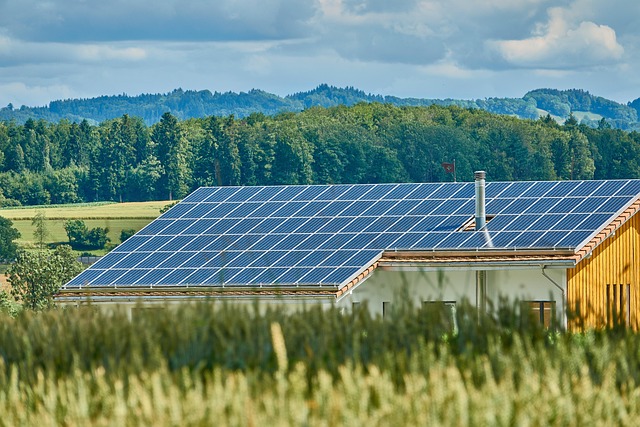
This report analyzes the innovative “public developer” model employed by the Connecticut Green Bank, the first green bank in the United States. The bank’s Solar Marketplace Assistance Program Plus (Solar MAP+) actively originates, develops, and owns solar projects, demonstrating a significant contribution to several United Nations Sustainable Development Goals (SDGs), particularly in the areas of energy, inequality, and sustainable communities.
Alignment with Sustainable Development Goals (SDGs)
SDG 7: Affordable and Clean Energy
The core mission of the Solar MAP+ program directly supports SDG 7 by increasing the share of renewable energy in the state’s energy mix. The program’s success is quantifiable:
- Deployment of $145 million in capital.
- Installation of nearly 54 megawatts of solar capacity.
- Projected collective energy cost savings of $57 million, enhancing energy affordability for public and low-income entities.
SDG 10: Reduced Inequalities & SDG 11: Sustainable Cities and Communities
The program strategically targets sectors often overlooked by private developers due to perceived credit risks, thereby advancing goals for equity and community sustainability.
- Focus on Underserved Sectors: The model prioritizes projects for schools, municipalities, and low-income housing.
- Environmental Justice: Over half of the school solar installations developed by the bank between 2015 and 2023 are located in low-income and disadvantaged communities, ensuring an equitable distribution of clean energy benefits.
SDG 4: Quality Education
By focusing on K-12 schools, the program provides indirect but substantial support for SDG 4. Connecticut ranks fifth in the U.S. for total solar capacity on K-12 schools and second in the percentage of schools with solar. The financial benefits include:
- Significant energy cost savings, which can be reallocated to educational resources and programs.
- The Connecticut Green Bank developed 27% of all school solar installations in the state from 2015 to 2023.
Operational Framework and Replicability
Program Mechanics
The Solar MAP+ program evolved to address gaps in the state’s solar market where incentives alone were insufficient. Its success is built on a comprehensive approach that extends beyond financing.
- Wraparound Services: The bank provides technical assistance with documentation, procurement processes, and project labor agreements.
- Economies of Scale: By bundling smaller projects, such as a 67-kilowatt system at an intermediate school, the bank makes them more attractive to developers and financially feasible.
- Revenue Recycling: Revenues generated from projects are reinvested to expand the capital pool for future initiatives aligned with Connecticut’s clean energy and environmental justice goals.
A Model for Partnership and Climate Action (SDG 13 & SDG 17)
The “public developer” model serves as a powerful example of public-private partnership (SDG 17) to accelerate climate action (SDG 13). Rather than competing with the private sector, the model expands the market for private installation businesses by creating a pipeline of viable projects. This approach is a replicable framework for the 16 other states with green banks and can be expanded to include other clean technologies like heat pumps, energy storage, and microgrids, further advancing national and global sustainability targets.
1. Which SDGs are addressed or connected to the issues highlighted in the article?
SDG 7: Affordable and Clean Energy
- The article’s central theme is the development and financing of solar energy projects by the Connecticut Green Bank. This directly supports the goal of ensuring access to affordable, reliable, sustainable, and modern energy for all. The text explicitly mentions the deployment of “nearly 54 megawatts’ worth of solar projects” and the promotion of “clean energy.”
SDG 11: Sustainable Cities and Communities
- The program targets public and community infrastructure such as “schools, cities, and low-income housing.” By installing solar panels on these buildings, the initiative contributes to making cities and human settlements more sustainable and resilient, reducing their environmental impact and energy costs.
SDG 13: Climate Action
- The promotion of solar power is a key strategy for mitigating climate change. The article discusses achieving Connecticut’s “clean energy and environmental justice goals,” which are integral to taking urgent action to combat climate change and its impacts.
SDG 4: Quality Education
- A significant focus of the Solar MAP+ program is on K–12 schools. The article notes that Connecticut “ranks fifth in the country for total solar capacity installed on K–12 schools.” The resulting energy cost savings, “projected to save schools tens of millions of dollars,” can be redirected to educational resources, thereby supporting the provision of quality education.
SDG 10: Reduced Inequalities
- The program specifically aims to address gaps in the solar market by targeting “low-income housing” and ensuring that “more than half [of school installations] are in low-income and disadvantaged communities.” This focus on underserved areas helps reduce inequalities by providing them with access to clean energy and its financial benefits.
SDG 17: Partnerships for the Goals
- The Connecticut Green Bank’s model exemplifies a multi-stakeholder partnership. It is a public entity that works with private-sector installers, municipalities, schools, and civil society organizations like “Generation180” and the “Climate Reality Project” to achieve its goals. This collaborative approach is central to SDG 17.
2. What specific targets under those SDGs can be identified based on the article’s content?
SDG 7: Affordable and Clean Energy
- Target 7.2: By 2030, increase substantially the share of renewable energy in the global energy mix. The article details the deployment of “nearly 54 megawatts’ worth of solar projects,” directly contributing to increasing the share of renewable energy in Connecticut.
- Target 7.a: By 2030, enhance international cooperation to facilitate access to clean energy research and technology… and promote investment in energy infrastructure and clean energy technology. The Green Bank’s model, which has deployed “$145 million in capital,” is a mechanism for promoting investment in clean energy infrastructure.
SDG 11: Sustainable Cities and Communities
- Target 11.6: By 2030, reduce the adverse per capita environmental impact of cities. Installing solar power on public buildings like schools and municipal facilities reduces the carbon footprint and environmental impact of these communities.
SDG 4: Quality Education
- Target 4.a: Build and upgrade education facilities that are child, disability and gender sensitive and provide safe, non-violent, inclusive and effective learning environments for all. The cost savings from solar installations allow schools to reinvest funds into facility upgrades and educational programs, contributing to better learning environments.
SDG 10: Reduced Inequalities
- Target 10.2: By 2030, empower and promote the social, economic and political inclusion of all… irrespective of… economic or other status. The program’s deliberate focus on “low-income and disadvantaged communities” ensures that the benefits of clean energy, such as cost savings and environmental improvements, are distributed more equitably.
SDG 17: Partnerships for the Goals
- Target 17.17: Encourage and promote effective public, public-private and civil society partnerships. The article describes the Green Bank (a public entity) acting as a “public developer” that works with private installers and collaborates with advocacy groups, which is a direct application of this target.
3. Are there any indicators mentioned or implied in the article that can be used to measure progress towards the identified targets?
SDG 7: Affordable and Clean Energy
- Indicator 7.b.1 (related): Installed renewable energy-generating capacity. The article provides a precise figure: “nearly 54 megawatts’ worth of solar projects” have been deployed.
- Implied Indicator: Investment in clean energy. The article states that the program has deployed “$145 million in capital.”
SDG 4: Quality Education
- Implied Indicator: Percentage of schools with renewable energy. The article provides a ranking: Connecticut is “second (behind Hawaii) in the percentage of K–12 schools with solar.”
SDG 10: Reduced Inequalities
- Implied Indicator: Proportion of benefits directed to disadvantaged communities. The article specifies that “more than half [of school installations] are in low-income and disadvantaged communities.”
Other Key Performance Indicators
- Economic Savings: A direct measure of the program’s financial impact is the “$57 million in energy costs” that the projects are expected to save.
- Market Share/Contribution: The bank’s impact on the school sector is quantified: “The Connecticut Green Bank developed 27% of school solar installations in the state from 2015 to 2023.”
4. SDGs, Targets, and Indicators Analysis
| SDGs | Targets | Indicators |
|---|---|---|
| SDG 7: Affordable and Clean Energy | 7.2: Increase the share of renewable energy. 7.a: Promote investment in clean energy infrastructure. |
– Installed renewable energy capacity: “nearly 54 megawatts’ worth of solar projects.” – Capital deployed for clean energy: “$145 million.” |
| SDG 11: Sustainable Cities and Communities | 11.6: Reduce the adverse per capita environmental impact of cities. | – Implementation of solar projects in public infrastructure (“schools, cities, and low-income housing”). |
| SDG 4: Quality Education | 4.a: Build and upgrade education facilities. | – Percentage of schools with solar: Connecticut ranks “second… in the percentage of K–12 schools with solar.” – Financial savings for schools: “projected to save schools tens of millions of dollars.” |
| SDG 10: Reduced Inequalities | 10.2: Promote social and economic inclusion. | – Proportion of projects in disadvantaged areas: “more than half are in low-income and disadvantaged communities.” |
| SDG 17: Partnerships for the Goals | 17.17: Encourage effective public, public-private and civil society partnerships. | – The operational model of the Connecticut Green Bank as a “public developer” collaborating with private installers and advocacy groups. |
Source: ctnewsjunkie.com
What is Your Reaction?
 Like
0
Like
0
 Dislike
0
Dislike
0
 Love
0
Love
0
 Funny
0
Funny
0
 Angry
0
Angry
0
 Sad
0
Sad
0
 Wow
0
Wow
0