











































;Resize=620#)








Did Feminism ‘Fail’ Women? Misogyny In The Trump Regime — And The New York Times – National Memo

Report on Gender Equality and Sustainable Development Goals Amidst Shifting Political Landscapes
Introduction: A Review of Current Discourse on Feminism and Workplace Dynamics
Recent public discourse, notably initiated by a podcast and an opinion column, has questioned the impact of feminism on workplace culture. This debate occurs against a backdrop of significant legislative and policy changes affecting women’s rights. This report analyzes these developments through the lens of the United Nations Sustainable Development Goals (SDGs), with a particular focus on SDG 5 (Gender Equality) and its interconnectedness with other goals concerning health, education, and economic justice.
Historical Advancement Towards Gender Equality (SDG 5, SDG 8, SDG 4)
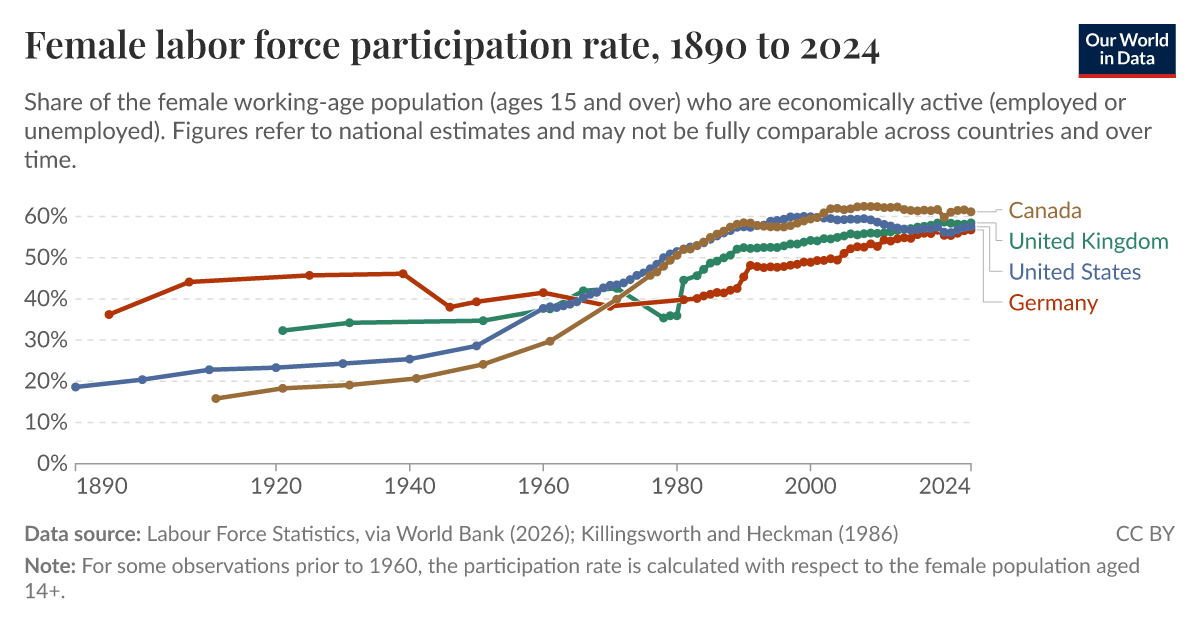
Significant progress towards gender equality was made in the latter half of the 20th century, aligning with the principles of several SDGs. The 1974 Equal Credit Act was a landmark achievement for women’s economic inclusion, a key target of SDG 5 (Gender Equality) and SDG 8 (Decent Work and Economic Growth). Prior to this era, systemic barriers severely limited women’s participation in public and economic life.
- Economic Rights: Before 1974, women could not obtain credit cards or mortgages without a male co-signer, a major impediment to economic independence (violating principles of SDG 5 and SDG 8).
- Professional and Educational Access: Before 1970, women constituted less than 4% of lawyers and 7% of doctors. This has shifted dramatically, with women now representing the majority in U.S. law schools (since 2016) and medical schools (since 2019), reflecting progress towards SDG 4 (Quality Education) and SDG 5.
- Higher Education: Previously, women earned only one-third of all college degrees and one in ten Ph.D.s. The increase in female graduates in fields like veterinary science (80%) and psychology (75% of PhDs) marks a significant achievement in educational equality under SDG 4.
Regression in Health and Well-being (SDG 3, SDG 5)
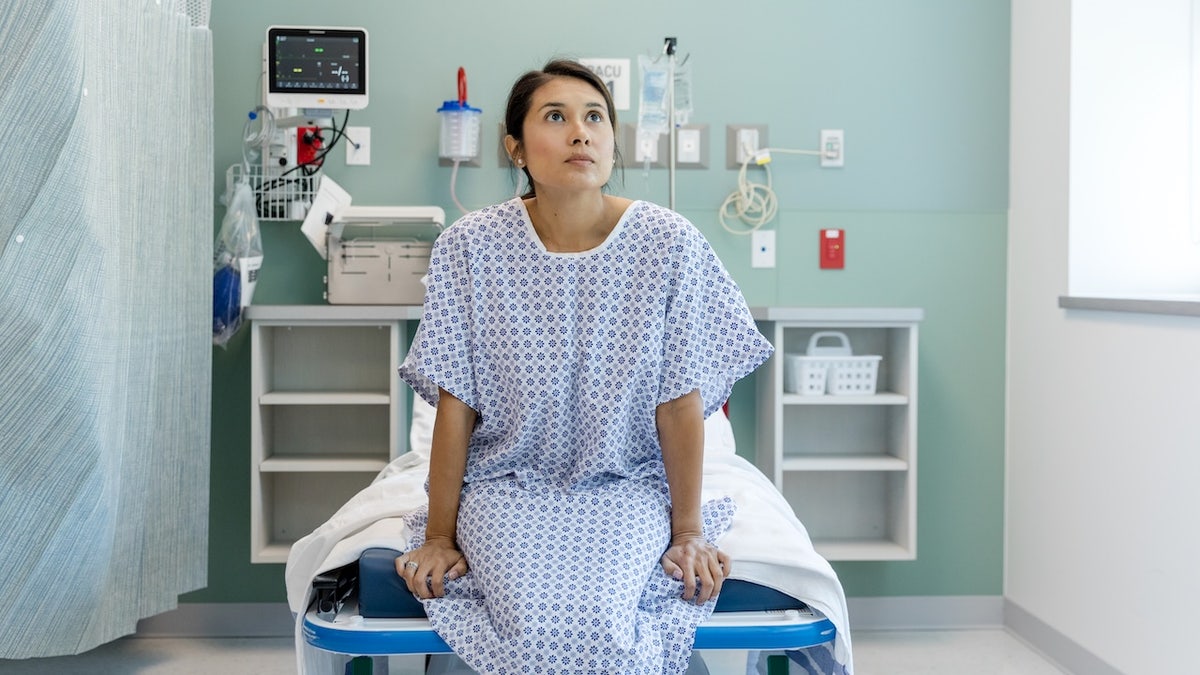
Recent policy and judicial decisions represent a substantial reversal of progress in women’s health, directly undermining SDG 3 (Good Health and Well-being) and SDG 5 (Gender Equality). The 2022 Dobbs decision, which overturned constitutional protections for abortion, has had widespread consequences for reproductive healthcare access, a critical component of SDG 3.7 and SDG 5.6.
- Restricted Access: 41% of American women of childbearing age now reside in states with abortion bans, creating “reproductive health care deserts.”
- Maternal Health Risks: These bans impact comprehensive reproductive care, including the management of miscarriages, leading to increased risks of sepsis, infertility, and mortality. This directly contravenes SDG 3.1, which aims to reduce the global maternal mortality ratio.
- Healthcare Infrastructure Decline: States with bans are experiencing an exodus of medical professionals. Idaho has lost 20% of its obstetrician/gynecologists, and medical residency applications have declined by 20% in several southern universities, threatening the stability of healthcare systems as outlined in SDG 3.
- Funding Cuts: The administration has reportedly cut funding for women’s healthcare, contraceptive care (Title X), and medical research, further impeding progress on SDG 3 and SDG 5.
Challenges to Economic Empowerment and Institutional Integrity (SDG 8, SDG 10, SDG 16)
A range of administrative actions has been implemented that challenge women’s economic security and the integrity of legal and civil institutions. These policies threaten to widen gender disparities, in direct opposition to SDG 10 (Reduced Inequalities) and SDG 16 (Peace, Justice and Strong Institutions).
- Erosion of Civil Rights: The elimination of civil rights protections for women in education and employment constitutes a direct setback for SDG 5.
- Impact on Economic Security: Reductions in funding for childcare, SNAP, and Medicaid disproportionately affect women, creating barriers to workforce participation and undermining efforts to achieve SDG 8 (Decent Work and Economic Growth).
- Undermining Rule of Law: The pardoning of individuals convicted of violence and harassment at health clinics weakens the rule of law, a cornerstone of SDG 16.
- Workforce Exclusion: The reported dismissal of numerous women from the federal workforce reverses progress on gender equality in public institutions.
Broader Implications for Education and Civil Liberties (SDG 4, SDG 16)
The current political climate also presents challenges to academic freedom and civil liberties, impacting the foundations of quality education and just societies.
- Threats to Academic Freedom: The termination of over $7 billion in federal research grants, particularly those related to “diversity, equity, or inclusion,” curtails academic inquiry and compromises the goals of SDG 4 (Quality Education).
- Institutional Control: Administrative efforts to control university curricula, admissions, and hiring practices politicize educational institutions.
- Suppression of Free Expression: The banning of books and deportation of foreign students for expressing political beliefs are in conflict with the promotion of fundamental freedoms as outlined in SDG 16.10.
Conclusion
While historical data demonstrates significant progress toward gender equality in the United States, recent policy shifts and judicial rulings present a substantial threat to these gains. These developments directly contravene the objectives of multiple Sustainable Development Goals, including SDG 3 (Good Health and Well-being), SDG 4 (Quality Education), SDG 5 (Gender Equality), SDG 8 (Decent Work and Economic Growth), SDG 10 (Reduced Inequalities), and SDG 16 (Peace, Justice and Strong Institutions). The challenges to women’s rights are embedded in systemic policy changes that impact health, economic security, education, and justice, indicating a regression from established international development targets.
Analysis of the Article in Relation to Sustainable Development Goals
1. Which SDGs are addressed or connected to the issues highlighted in the article?
-
SDG 5: Gender Equality
- The entire article is centered on this goal, discussing the historical fight for women’s rights, the backlash against feminism, and the ongoing struggle for equality in the workplace, finance, and public life. It explicitly mentions the Equal Credit Act, sex discrimination lawsuits, and the rollback of policies protecting women.
-
SDG 3: Good Health and Well-being
- The article extensively covers women’s health, particularly reproductive health. It details the impact of the Dobbs decision, abortion bans in 16 states, cuts to funding for contraceptive care (Title X), and the resulting health crises, such as women dying from untreated miscarriages and the creation of “reproductive health care deserts.”
-
SDG 8: Decent Work and Economic Growth
- The article addresses women’s economic empowerment and participation in the workforce. It contrasts the historical limitations on women’s careers (“domestic work, secretary, teacher, nurse, or stewardess”) with their recent ascendency in professions like law and medicine. It also touches on economic rights through the discussion of the 1974 Equal Credit Act, which allowed women to get credit cards and mortgages independently.
-
SDG 4: Quality Education
- The article highlights the progress and threats related to women’s education. It provides statistics on how women’s access to higher education has grown, noting they were less than one-third of college degree earners and one in ten PhDs 50 years ago, but are now the majority in law and medical schools. It also mentions threats to education through the cancellation of federal research grants and curriculum control.
-
SDG 16: Peace, Justice and Strong Institutions
- This goal is relevant through the discussion of laws, policies, and the justice system. The article refers to landmark legislation (Equal Credit Act), Supreme Court decisions (Roe v. Wade, Dobbs), class-action lawsuits for sex discrimination, and the actions of the Trump administration in “eviscerating laws, departments, and funding that promoted and protected women’s rights.” This demonstrates the critical role of strong, just institutions in upholding or dismantling human rights.
2. What specific targets under those SDGs can be identified based on the article’s content?
-
SDG 5: Gender Equality
- Target 5.1: End all forms of discrimination against all women and girls everywhere. The article discusses historical discrimination (e.g., needing a husband’s consent for a credit card) and current forms, such as the backlash against women in the workplace and the implementation of discriminatory health policies.
- Target 5.5: Ensure women’s full and effective participation and equal opportunities for leadership. The article directly addresses this by citing statistics on women’s increasing presence in law, medicine, and journalism, which is framed by some as a “malign feminization” rather than progress.
- Target 5.6: Ensure universal access to sexual and reproductive health and reproductive rights. This is a central theme, with the article detailing how the overturning of Roe v. Wade and subsequent state-level abortion bans directly undermine this target.
-
SDG 3: Good Health and Well-being
- Target 3.7: Ensure universal access to sexual and reproductive health-care services. The article provides clear examples of how this target is being reversed, citing the freezing of federal funding for contraceptive care (Title X), the closure of Planned Parenthood clinics, and the fact that “41-percent of American women of childbearing age… live in states with abortion bans.”
- Target 3.8: Achieve universal health coverage, including… access to quality essential health-care services. The article illustrates a decline in quality health coverage for women, noting that in states with abortion bans, women with miscarriages may not get needed medical attention, and that states like Idaho are losing essential specialists like obstetrician/gynecologists.
-
SDG 8: Decent Work and Economic Growth
- Target 8.5: Achieve full and productive employment and decent work for all women and men… and equal pay for work of equal value. The article tracks the journey towards this target by describing the limited job options for women 50 years ago and their subsequent entry into a wide range of professions, representing progress in achieving productive employment.
-
SDG 4: Quality Education
- Target 4.3: Ensure equal access for all women and men to… quality… tertiary education, including university. The article provides historical and current data showing the dramatic increase in women’s access to higher education, noting that law schools became majority female in 2016 and medical schools in 2019.
-
SDG 16: Peace, Justice and Strong Institutions
- Target 16.b: Promote and enforce non-discriminatory laws and policies for sustainable development. The article contrasts the establishment of non-discriminatory laws like the Equal Credit Act with the current administration’s actions to “eviscerate laws, departments, and funding that promoted and protected women’s rights,” showing a direct conflict with this target.
3. Are there any indicators mentioned or implied in the article that can be used to measure progress towards the identified targets?
-
For SDG 5 (Gender Equality) & SDG 8 (Decent Work)
- Indicator: Proportion of women in specific professions and higher education. The article provides specific data points:
- Historically: “women were less than four percent of all lawyers, seven percent of doctors, and one percent of engineers and scientists.”
- Currently: “law schools became majority female in 2016, followed by medical schools in 2019,” and “80 percent of veterinary students and 75 percent of psychology PhD students are women.”
- Indicator: Proportion of women in specific professions and higher education. The article provides specific data points:
-
For SDG 3 (Good Health) & SDG 5 (Gender Equality)
- Indicator: Legal frameworks and access to reproductive healthcare. The article provides several measures:
- Number of states with abortion bans: “16 states in the American South, Midwest, and West.”
- Proportion of women affected: “41-percent of American women of childbearing age (15 to 45) live in states with abortion bans.”
- Maternal mortality: Implied by reports of “two women who have died in Georgia and three in Texas because their miscarriages weren’t treated.”
- Density of health professionals: “Idaho has lost 20 percent of its obstetrician/gynecologists.”
- Indicator: Legal frameworks and access to reproductive healthcare. The article provides several measures:
-
For SDG 4 (Quality Education)
- Indicator: Participation rate of women in tertiary education. The article provides historical and recent statistics:
- Historically: “Women earned only one third of all college degrees, and one in 10 Ph.D.’s.”
- Currently: The article notes the “tipping point” when women became the majority in law (2016) and medical (2019) schools.
- Indicator: Participation rate of women in tertiary education. The article provides historical and recent statistics:
-
For SDG 16 (Peace, Justice and Strong Institutions)
- Indicator: Existence and enforcement of non-discriminatory laws. The article uses the 1974 Equal Credit Act and the 1973 Roe v. Wade decision as positive historical indicators, while the 2022 Dobbs decision and the policies of the Trump administration described under “Project 2025” serve as negative indicators of institutional support for women’s rights.
4. Summary Table of SDGs, Targets, and Indicators
| SDGs | Targets | Indicators Identified in the Article |
|---|---|---|
| SDG 5: Gender Equality |
5.1: End discrimination against women. 5.5: Ensure women’s full participation and equal opportunities for leadership. 5.6: Ensure universal access to sexual and reproductive health and rights. |
– Percentage of women in professions (e.g., lawyers, doctors). – Existence of discriminatory laws (e.g., needing a husband’s consent for credit pre-1974) vs. non-discriminatory laws (Equal Credit Act). – Number of states (16) with abortion bans (“Jane Crow” laws). – Percentage of women of childbearing age (41%) living in states with abortion bans. |
| SDG 3: Good Health and Well-being |
3.7: Ensure universal access to sexual and reproductive health-care services. 3.8: Achieve universal health coverage and access to quality essential health-care services. |
– Freezing of federal funding for contraceptive care (Title X). – Number of women who have died from untreated miscarriages (2 in Georgia, 3 in Texas). – Percentage decrease in OB/GYNs in a state (Idaho lost 20%). – Decrease in medical residency applications in states with bans (down 20%). |
| SDG 8: Decent Work and Economic Growth | 8.5: Achieve full and productive employment and decent work for all women and men. |
– Historical data on women’s limited job roles (secretary, nurse, etc.). – Statistics on women’s increased representation in white-collar professions (law, medicine). – Mention of the Equal Credit Act enabling women’s financial independence. |
| SDG 4: Quality Education | 4.3: Ensure equal access for all women and men to quality tertiary education. |
– Historical share of degrees earned by women (1/3 of college, 1/10 of PhDs). – Year women became the majority in law schools (2016) and medical schools (2019). – Cancellation of federal research grants to universities. |
| SDG 16: Peace, Justice and Strong Institutions | 16.b: Promote and enforce non-discriminatory laws and policies. |
– Enactment of protective laws (Equal Credit Act, Roe v. Wade). – Overturning of protective laws (Dobbs decision). – Administration’s actions to “eviscerate laws, departments, and funding that promoted and protected women’s rights.” |
Source: nationalmemo.com
What is Your Reaction?
 Like
0
Like
0
 Dislike
0
Dislike
0
 Love
0
Love
0
 Funny
0
Funny
0
 Angry
0
Angry
0
 Sad
0
Sad
0
 Wow
0
Wow
0