













































;Resize=620#)











Editorial: Collusive Election-Corruption Office Deal More Problematic Than Violence – 조선일보
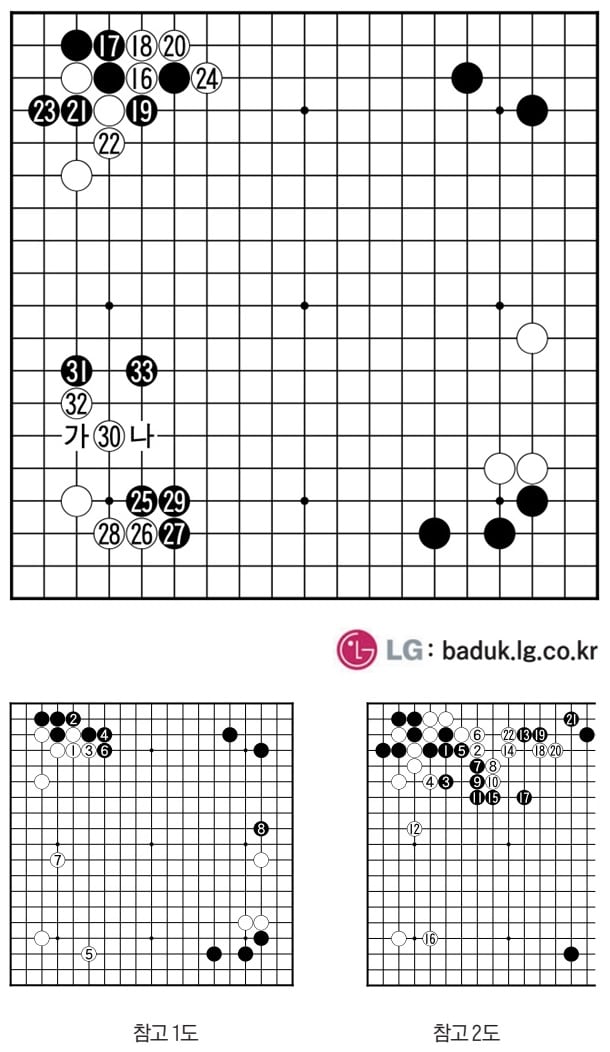
Strategic Tournament Analysis: Aligning Go Mastery with Sustainable Development Goals
Tournament Context and SDG Relevance
This report analyzes a pivotal match, contextualizing the strategic decisions within the framework of the United Nations Sustainable Development Goals (SDGs). The tournament features key players whose participation reflects different aspects of sustainable progress.
- Byun Sang-il: As the defending champion, his journey represents the challenge of maintaining and building upon past successes, a principle central to SDG 11 (Sustainable Cities and Communities), which focuses on making human settlements inclusive, safe, resilient, and sustainable.
- Park Jung-hwan: Entering as a high-ranking seed, he symbolizes the role of established and robust systems in fostering equitable competition, aligning with SDG 16 (Peace, Justice and Strong Institutions).
Both competitors advanced past the first round with byes, proceeding directly to the round of 16, where their paths showcased strategic resilience and innovation.
Player Progress and Strategic Implications for Global Goals
The round of 16 produced results with significant implications when viewed through the lens of global development strategies.
- Park Jung-hwan secured a landmark victory over Shin Jin-seo. This outcome, which ended a 17-game losing streak against his opponent, serves as a powerful metaphor for the disruptive innovation and paradigm shifts required to achieve SDG 9 (Industry, Innovation, and Infrastructure). It demonstrates that entrenched challenges can be overcome through new approaches.
- Byun Sang-il defeated Zhou Junxun, displaying the consistent and reliable performance necessary for the long-term implementation of sustainable policies.
In-Depth Game Analysis through the SDG Framework (Moves 16-33)
The sequence from move 16 to 33 offers a compelling model for integrated and strategic policy-making as envisioned by the 2030 Agenda for Sustainable Development.
- Move 18: This move represents a critical decision point, analogous to a national policy choice between competing development pathways. The player’s selection eschews a standard alternative, indicating a deliberate strategy aimed at long-term value over conventional outcomes, reflecting the principles of SDG 12 (Responsible Consumption and Production).
- Moves 18-24: This sequence unfolds as a direct and efficient implementation of the chosen strategy, demonstrating the importance of clear execution following a decisive policy commitment.
- Move 25: Characterized as a moment of consolidation, this move is analogous to the monitoring and review phases of the SDG cycle. It ensures that progress is stable and resources are managed effectively before advancing, a key component of SDG 17 (Partnerships for the Goals).
- Move 30: This move, placed higher than conventional wisdom would suggest, represents the setting of ambitious targets. It is akin to nations raising their commitments to climate action under SDG 13 (Climate Action).
- Move 31: The immediate response to the previous move highlights the need for adaptive and responsive governance. It shows how systems must react to new pressures to maintain equilibrium and ensure no one is left behind, a core tenet of SDG 10 (Reduced Inequalities).
- Move 32: A necessary defensive action, this move underscores the importance of building resilience. It is parallel to investing in robust infrastructure and institutions (SDG 9, SDG 16) to safeguard developmental gains against shocks and setbacks.
- Move 33: A highly effective, multi-purpose move that simultaneously defends a key area while preparing future offensive actions. This exemplifies the concept of policy coherence, where a single intervention can generate co-benefits across multiple SDGs, such as advancing both economic prosperity (SDG 8: Decent Work and Economic Growth) and social well-being (SDG 3: Good Health and Well-being).
1. Relevant Sustainable Development Goals (SDGs)
- Based on the content of the provided article, which is a report on a Go (Baduk) tournament, there are no Sustainable Development Goals (SDGs) that are directly or indirectly addressed. The article focuses exclusively on the competition, players, and specific game analysis, without touching upon social, economic, or environmental issues covered by the SDGs.
2. Specific SDG Targets
- As no SDGs were identified in the article, no specific targets can be linked to its content. The text does not contain any information related to poverty reduction, health, education, environmental protection, or any other area covered by the SDG targets.
3. Indicators for Measuring Progress
- The article does not mention or imply any indicators that could be used to measure progress towards SDG targets. The only data points mentioned (player rankings, win/loss records, game moves) are specific to the sports context and have no relevance to the official SDG indicators.
4. Summary Table: SDGs, Targets, and Indicators
| SDGs | Targets | Indicators |
|---|---|---|
| No relevant SDGs were identified in the article. | No relevant targets were identified in the article. | No relevant indicators were identified in the article. |
Source: v.daum.net
What is Your Reaction?
 Like
0
Like
0
 Dislike
0
Dislike
0
 Love
0
Love
0
 Funny
0
Funny
0
 Angry
0
Angry
0
 Sad
0
Sad
0
 Wow
0
Wow
0