















































Four Morang local levels join hands for landfill project – The Rising Nepal
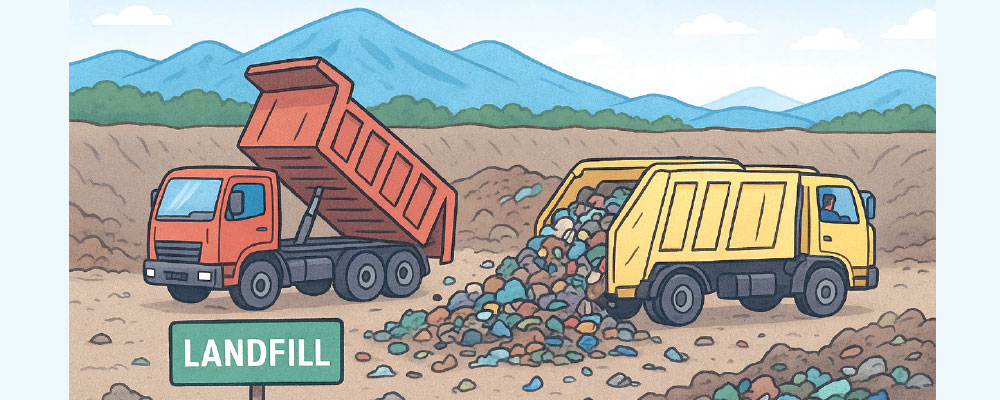
Integrated Solid Waste Management Initiative in Morang District
Background and Participating Local Levels
Four local levels in Morang district—Rangeli and Sunbarsi municipalities, along with Kanepokhari and Dhanpalthan rural municipalities—are collaborating to launch a joint integrated solid waste management programme. This initiative aligns with the Sustainable Development Goals (SDGs), particularly SDG 11 (Sustainable Cities and Communities), SDG 12 (Responsible Consumption and Production), and SDG 13 (Climate Action).
Previous Initiatives and Site Visit
These local levels had previously initiated the concept of an Integrated Disaster Management Centre. To enhance their waste management capabilities, a delegation including mayors, chairpersons, senior administrative officers, and the deputy mayor of Rangeli visited Ahmedabad, Gujarat, India, to study the city’s waste management centre.
Land Allocation and Joint Investment
- Rangeli Municipality has allocated one bigha of land free of charge for the waste management facility.
- The four local levels have agreed to jointly invest in constructing the integrated solid waste management centre.
Current Waste Management Challenges
- None of the 17 local governments in Morang have established modern dumping sites.
- Kanepokhari has been disposing of waste in a community forest area, leading to environmental and social conflicts.
- Other municipalities have been dumping waste along riverbanks, causing health and ecological risks.
- Following the death of 13 goats near the Kanepokhari dumping site on November 11, 2025, locals prohibited further waste disposal there, halting waste collection.
Community Response and Environmental Impact
- Locals have taken measures such as digging pits to bury waste and fencing the dumping site entrance with wire mesh to prevent further contamination.
- This community action highlights the importance of sustainable waste management practices to protect biodiversity and public health, supporting SDG 15 (Life on Land).
Funding and Financial Contributions
The integrated waste management project has secured funding commitments as follows:
- Koshi Province Government: NPR 50 million
- Swiss Government: NPR 20 million
- Habitat: NPR 10 million
The total funding amounts to NPR 80 million, with the four local units agreeing to contribute the remaining NPR 50 million based on usage and consumption. This financial collaboration exemplifies partnerships for the goals, in line with SDG 17 (Partnerships for the Goals).
Ongoing Studies and Project Objectives
- A comprehensive study on waste generation, volume in major market areas, and household demographics is underway across the four local levels.
- The project aims to provide a sustainable and health-conscious solution to waste disposal challenges, reducing environmental pollution and associated health risks.
- It also supports SDG 3 (Good Health and Well-being) by addressing sanitation and public health concerns.
Additional Disaster Management Coordination
In addition to waste management, the four local levels are constructing an Integrated Disaster Management Centre in Ward No. 8, Rangeli Municipality. This centre will coordinate disaster-related functions from a single location, enhancing resilience and disaster preparedness, contributing to SDG 11 (Sustainable Cities and Communities) and SDG 13 (Climate Action).
Conclusion
The collaborative integrated solid waste management programme in Morang district represents a significant step toward achieving multiple Sustainable Development Goals by promoting sustainable urban development, responsible waste management, environmental protection, and community health. The partnership among local governments and international donors underscores the importance of collective action in addressing complex environmental challenges.
1. Sustainable Development Goals (SDGs) Addressed or Connected
- SDG 11: Sustainable Cities and Communities
- The article discusses integrated solid waste management and the construction of modern waste management facilities, which contribute to making cities and human settlements inclusive, safe, resilient, and sustainable.
- SDG 3: Good Health and Well-being
- Addressing health risks caused by improper waste disposal, such as dumping waste along riverbanks and the death of goats due to waste contamination, relates to ensuring healthy lives and promoting well-being.
- SDG 6: Clean Water and Sanitation
- Improper waste disposal along riverbanks affects water quality, making clean water and sanitation a relevant goal.
- SDG 17: Partnerships for the Goals
- The joint investment and cooperation among four local levels, as well as funding from the Koshi Province Government, Swiss Government, and Habitat, exemplify partnerships to achieve sustainable development.
2. Specific Targets Under Those SDGs Identified
- SDG 11 – Target 11.6: Reduce the adverse per capita environmental impact of cities, including by paying special attention to air quality and municipal and other waste management.
- SDG 3 – Target 3.9: Reduce the number of deaths and illnesses from hazardous chemicals and air, water, and soil pollution and contamination.
- SDG 6 – Target 6.3: Improve water quality by reducing pollution, eliminating dumping, and minimizing release of hazardous chemicals and materials.
- SDG 17 – Target 17.16: Enhance the global partnership for sustainable development, complemented by multi-stakeholder partnerships that mobilize and share knowledge, expertise, technology, and financial resources.
3. Indicators Mentioned or Implied to Measure Progress
- Indicator for SDG 11.6: Proportion of municipal solid waste collected and managed in controlled facilities.
- The article mentions the absence of modern dumping sites and the plan to build an integrated waste management facility, implying measurement of waste collection and management effectiveness.
- Indicator for SDG 3.9: Mortality rate attributed to unsafe water, unsafe sanitation, and lack of hygiene.
- The death of goats due to waste contamination highlights health risks, implying monitoring of health impacts related to pollution.
- Indicator for SDG 6.3: Proportion of bodies of water with good ambient water quality.
- Dumping waste along riverbanks affects water quality, suggesting the need to monitor water pollution levels.
- Indicator for SDG 17.16: Number of multi-stakeholder partnerships for sustainable development.
- The collaboration among local governments and international donors implies tracking partnerships formed and their effectiveness.
4. Table of SDGs, Targets, and Indicators
| SDGs | Targets | Indicators |
|---|---|---|
| SDG 11: Sustainable Cities and Communities | Target 11.6: Reduce the adverse per capita environmental impact of cities, including waste management. | Proportion of municipal solid waste collected and managed in controlled facilities. |
| SDG 3: Good Health and Well-being | Target 3.9: Reduce deaths and illnesses from pollution and contamination. | Mortality rate attributed to unsafe water, unsafe sanitation, and lack of hygiene. |
| SDG 6: Clean Water and Sanitation | Target 6.3: Improve water quality by reducing pollution and eliminating dumping. | Proportion of bodies of water with good ambient water quality. |
| SDG 17: Partnerships for the Goals | Target 17.16: Enhance global partnerships for sustainable development. | Number of multi-stakeholder partnerships for sustainable development. |
Source: risingnepaldaily.com
What is Your Reaction?
 Like
0
Like
0
 Dislike
0
Dislike
0
 Love
0
Love
0
 Funny
0
Funny
0
 Angry
0
Angry
0
 Sad
0
Sad
0
 Wow
0
Wow
0