
























































Growing Greenery: The Rise of Urban Green Space – TriplePundit
Urban Green Spaces and Sustainable Development Goals: A 20-Year Progress Report
As the global sustainability landscape evolves, urban green spaces have become pivotal in advancing multiple Sustainable Development Goals (SDGs). This report examines the transformation of urban green spaces over the past two decades, emphasizing their role in climate resilience, biodiversity, social equity, and sustainable urban development.
1. Historical Context and Evolution of Urban Green Spaces
Originally established in 1634 for utilitarian purposes such as livestock grazing and public punishments, urban parks like Boston Common have evolved into multifunctional green spaces offering recreational and ecological benefits. These changes align with SDG 11 (Sustainable Cities and Communities) and SDG 3 (Good Health and Well-being), as green spaces contribute to reduced stress, pollution mitigation, and enhanced physical activity.
2. Public Climate Refuges and Climate Action (SDG 13)
- Urban Heat Island Mitigation: Urban areas experience temperatures up to 7°F higher than surrounding regions due to heat-absorbing infrastructure. Green spaces, including urban forests, reduce temperatures by up to 3°F, providing critical cooling effects that extend beyond park boundaries.
- Floodwater Absorption: Green spaces absorb floodwater from extreme rainfall events, which are increasing due to climate change, supporting SDG 13 by enhancing urban climate resilience.
- Adaptation Strategies: A 2022 survey revealed that 85% of the 100 most populous U.S. cities are adapting parks to serve as climate refuges by improving surfaces, adding water-retention basins, and planting trees to absorb carbon and reduce wildfire risks.
- Global Initiatives: International projects like London’s Grosvenor Square transformation incorporate wetlands, shaded gardens, and biodiversity-supporting features, advancing SDG 15 (Life on Land).
Challenges: Funding limitations constrain many cities from adequately maintaining and upgrading green spaces to serve as climate refuges.
3. Green Infrastructure: Integrating Nature into Urban Planning (SDG 9, SDG 11, SDG 15)
- Concept and Scope: Green infrastructure encompasses a network of natural and semi-natural spaces such as parks, private gardens, green roofs, and street trees designed to provide ecological and social benefits.
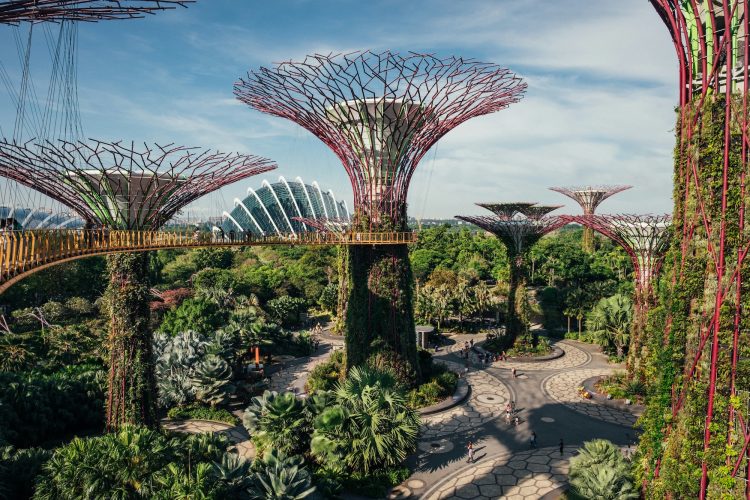
- Case Study – Singapore: The City in Nature plan aims for a sustainable urban environment by 2030, having planted over half a million trees and reclaimed nearly half the city as green space. Ecological corridors facilitate wildlife movement, and over two-thirds of urban surfaces are engineered to capture rainwater, supporting SDG 6 (Clean Water and Sanitation).
- Global Trends: Green infrastructure coverage is projected to increase by over 20% by 2030 worldwide, enhancing urban cooling, stormwater management, energy efficiency, and biodiversity conservation.
- Implementation Barriers: Limited awareness of green infrastructure benefits and risk aversion hinder broader adoption, with many cities focusing narrowly on stormwater management.
4. Reimagining Lawns for Biodiversity and Water Conservation (SDG 6, SDG 15)
- Environmental Impact of Traditional Lawns: Predominantly composed of non-native grasses, traditional lawns require intensive water and maintenance, supporting limited biodiversity.
- Anti-Lawn Movement: Increasingly, lawns are being converted into native grasslands, prairies, and gardens to promote biodiversity and reduce water consumption. In 2023, 12% of American adults transformed parts of their lawns into natural landscapes.
- International Examples: Berlin actively replaces lawns with semi-natural grasslands and community gardens, fostering habitats for insects and small vertebrates.
- Challenges: Homeowner association regulations, higher costs, and conversion efforts pose obstacles to widespread adoption.
5. Equitable Access to Green Spaces (SDG 10, SDG 11)
- Over half the global population resides in urban areas, expected to rise to 70% by 2050, underscoring the importance of accessible green spaces.
- Despite global increases in green space, disparities persist, especially in the Global South where declines have been observed.
- In the United States, communities of color are three times more likely to have limited access to nature, highlighting social inequities that must be addressed to fulfill SDG 10 (Reduced Inequalities).
- Ensuring equitable access to green spaces is essential for delivering the health, social, and environmental benefits of nature to all urban residents.
Conclusion
Urban green spaces have significantly advanced sustainable development over the past 20 years by contributing to climate action, biodiversity conservation, water management, and social equity. Continued investment, innovative planning, and inclusive policies are critical to maximizing their potential in achieving the United Nations Sustainable Development Goals.
1. Sustainable Development Goals (SDGs) Addressed or Connected
- SDG 11: Sustainable Cities and Communities
- The article discusses urban green spaces, climate refuges, and green infrastructure aimed at making cities more sustainable and resilient.
- SDG 13: Climate Action
- It highlights efforts to mitigate urban heat islands, manage flooding, and adapt parks for climate change impacts.
- SDG 15: Life on Land
- Focus on biodiversity through native plants, urban forests, and ecological corridors to support wildlife and genetic diversity.
- SDG 3: Good Health and Well-being
- Green spaces provide health benefits such as reducing stress, pollution, and promoting physical activity.
- SDG 6: Clean Water and Sanitation
- Green infrastructure includes rain gardens and water retention systems that improve water quality and manage stormwater.
- SDG 10: Reduced Inequalities
- The article mentions unequal access to green spaces, especially in communities of color and the Global South, highlighting social equity issues.
2. Specific Targets Under Those SDGs Identified
- SDG 11: Sustainable Cities and Communities
- Target 11.7: Provide universal access to safe, inclusive and accessible green and public spaces, particularly for vulnerable populations.
- Target 11.b: Increase the number of cities adopting and implementing integrated policies and plans towards inclusion, resource efficiency, and climate mitigation.
- SDG 13: Climate Action
- Target 13.1: Strengthen resilience and adaptive capacity to climate-related hazards and natural disasters in all countries.
- Target 13.2: Integrate climate change measures into national policies, strategies, and planning.
- SDG 15: Life on Land
- Target 15.1: Ensure conservation, restoration and sustainable use of terrestrial and inland freshwater ecosystems and their services.
- Target 15.5: Take urgent action to reduce the degradation of natural habitats and halt biodiversity loss.
- SDG 3: Good Health and Well-being
- Target 3.9: Reduce the number of deaths and illnesses from hazardous chemicals and air, water and soil pollution and contamination.
- SDG 6: Clean Water and Sanitation
- Target 6.6: Protect and restore water-related ecosystems, including mountains, forests, wetlands, rivers, aquifers and lakes.
- SDG 10: Reduced Inequalities
- Target 10.2: Empower and promote the social, economic and political inclusion of all, irrespective of age, sex, disability, race, ethnicity, origin, religion or economic or other status.
3. Indicators Mentioned or Implied to Measure Progress
- Urban Green Space Coverage
- Increase in green space globally since 2000 and predicted growth by 2030 (e.g., percentage increase in green infrastructure coverage).
- Temperature Reduction
- Measurement of urban heat island effect mitigation, such as temperature differences between green and non-green areas (e.g., urban forests being up to 3°F cooler).
- Access to Green Spaces
- Proportion of population with access to parks and green spaces, with attention to disparities in communities of color and Global South cities.
- Adoption of Climate Adaptation Measures
- Percentage of cities adapting parks and recreation facilities for climate change (e.g., 85% of 100 most populous U.S. cities).
- Biodiversity Indicators
- Presence and maintenance of native plants, ecological corridors, and biodiversity-supporting features like wildflowers and bug hotels.
- Water Management
- Implementation of rain gardens, water-retention basins, and green infrastructure to absorb floodwater and improve water quality.
- Community Engagement
- Percentage of residents converting lawns to native landscapes (e.g., 12% of American adults in 2023).
4. Table of SDGs, Targets and Indicators
| SDGs | Targets | Indicators |
|---|---|---|
| SDG 11: Sustainable Cities and Communities |
|
|
| SDG 13: Climate Action |
|
|
| SDG 15: Life on Land |
|
|
| SDG 3: Good Health and Well-being |
|
|
| SDG 6: Clean Water and Sanitation |
|
|
| SDG 10: Reduced Inequalities |
|
|
Source: triplepundit.com
What is Your Reaction?
 Like
0
Like
0
 Dislike
0
Dislike
0
 Love
0
Love
0
 Funny
0
Funny
0
 Angry
0
Angry
0
 Sad
0
Sad
0
 Wow
0
Wow
0