
















Household air pollution – World Health Organization (WHO)
Household Air Pollution and Clean Cooking: A Report on Global Health and Sustainable Development Goals
Key Facts
- Approximately 2.1 billion people worldwide, constituting about a quarter of the global population, cook using open fires or inefficient stoves fueled by kerosene, biomass (wood, animal dung, crop waste), and coal, resulting in harmful household air pollution.
- At current progress rates, only 78% of the global population is projected to have access to clean cooking by 2030, leaving nearly 1.8 billion people without clean cooking solutions.
- Household air pollution caused an estimated 2.9 million deaths annually in 2021, including over 309,000 deaths among children under five years old.
- In 2021, around 95 million disability-adjusted life years (DALYs) were attributable to household air pollution exposure.
- The combined effects of ambient and household air pollution contribute to 6.7 million premature deaths each year.
- Exposure to household air pollution is linked to noncommunicable diseases such as stroke, ischemic heart disease, chronic obstructive pulmonary disease (COPD), and lung cancer.
- Women and children, who are primarily responsible for cooking and collecting firewood, bear the greatest health burden from polluting fuels and technologies.
- Expansion of clean fuels and technologies—including solar, electricity, biogas, liquefied petroleum gas (LPG), natural gas, alcohol fuels, and WHO-compliant biomass stoves—is essential to reduce household air pollution and protect health.
Overview
Globally, around 2.1 billion people continue to use solid fuels such as wood, crop waste, charcoal, coal, and dung, as well as kerosene, in open fires and inefficient stoves. The majority reside in low- and middle-income countries. There is a significant disparity between urban and rural areas: in 2021, only 14% of urban populations relied on polluting fuels, compared to 49% in rural areas.
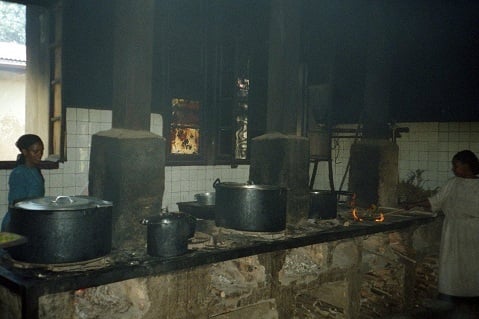
Household air pollution arises from inefficient and polluting fuels and technologies used indoors, releasing harmful pollutants including fine particulate matter that penetrates deep into the lungs and bloodstream. Indoor smoke levels in poorly ventilated homes can exceed safe limits by 100 times. Women and children face higher exposure due to their proximity to cooking areas. Additionally, reliance on polluting fuels demands considerable time for cooking and fuel collection, impacting education and productivity.
Guidance and Policy Recommendations
In response to the widespread use of polluting cooking fuels, the World Health Organization (WHO) has issued the Guidelines for Indoor Air Quality: Household Fuel Combustion. These guidelines provide evidence-based recommendations on clean fuels and technologies, discourage the use of kerosene and unprocessed coal, and specify emission rate targets to protect health. They emphasize addressing all household energy uses—cooking, heating, and lighting—to maximize health and environmental benefits.
WHO defines clean fuels and technologies as solar, electricity, biogas, LPG, natural gas, alcohol fuels, and biomass stoves meeting WHO emission targets.
Without robust policy interventions, an estimated 1.8 billion people will still lack access to clean cooking by 2030. Sub-Saharan Africa faces a critical challenge, with 923 million people lacking access in 2022. Strategies to accelerate adoption of clean household energy include:
- Financial support policies for purchasing clean technologies and fuels
- Improved ventilation and housing design
- Communication campaigns promoting clean energy use
Health Impacts
Household air pollution causes approximately 2.9 million premature deaths annually, with 95 million DALYs lost in 2021. Pollutants inflame airways, impair immune responses, and reduce blood oxygen capacity.
Deaths attributable to household air pollution include:
- Ischemic heart disease: 32% of deaths; over 1 million premature deaths annually (12% of all ischemic heart disease deaths)
- Stroke: 23% of deaths; approximately 12% of all stroke deaths
- Lower respiratory infection (LRI): 21% of deaths; doubles childhood LRI risk and causes 44% of pneumonia deaths in children under 5; contributes to 22% of adult pneumonia deaths
- Chronic obstructive pulmonary disease (COPD): 19% of deaths; 23% of COPD deaths in adults in low- and middle-income countries
- Lung cancer: 6% of deaths; about 11% of adult lung cancer deaths linked to household air pollution
Women in low- and middle-income countries bear the largest burden of healthy life years lost. Nearly half of all under-five LRI deaths are caused by particulate matter inhalation from household air pollution. Additional health risks include low birth weight, tuberculosis, cataracts, and certain cancers.
Impacts on Health Equity, Sustainable Development, and Climate Change
Addressing household air pollution is critical to achieving the Sustainable Development Goals (SDGs), particularly SDG 3 (Good Health and Well-being), SDG 5 (Gender Equality), SDG 7 (Affordable and Clean Energy), and SDG 13 (Climate Action). Key equity and development considerations include:
- Women and children disproportionately suffer health impacts due to their roles in cooking and fuel collection.
- Fuel gathering exposes women and children to musculoskeletal injuries, limits education and productivity, and increases risk of injury and violence in insecure environments.
- Many household fuels and technologies pose safety risks, including kerosene ingestion and burns.
- Lack of electricity access for over 750 million people forces reliance on polluting devices like kerosene lamps, increasing exposure to fine particulate matter.
- Time spent on inefficient fuel use restricts opportunities for health, education, and economic activities.
- Emissions of black carbon and methane from inefficient stoves contribute to climate change as powerful short-lived climate pollutants (SLCPs).
- Household air pollution significantly contributes to ambient (outdoor) air pollution.
WHO Response and Support
The World Health Organization actively supports countries to reduce household air pollution and promote clean energy access aligned with the SDGs through:
- Developing indoor air quality guidelines and recommendations on clean fuels and technologies.
- Building capacity via consultations and workshops focused on household energy and health.
- Maintaining the Global Household Energy Database to monitor progress on SDG indicator 7.1.2, which tracks the proportion of populations relying on clean fuels and technologies.
- Providing tools such as the Clean Household Energy Solutions Toolkit (CHEST) to assist countries in policy design and implementation.
- Supporting governments to estimate costs and health benefits of household energy interventions.
- Convening the Health and Energy Platform of Action (HEPA) to strengthen cooperation between health and energy sectors.
- Collaborating with partners to harmonize assessment methods and enhance national surveys on household energy use and health impacts, including gender-differentiated effects.
- Developing guidance for integrating clean household energy into global health and climate initiatives.
References
- IEA, IRENA, UNSD, World Bank, WHO. 2025. Tracking SDG 7: The Energy Progress Report. World Bank, Washington DC. Available from: https://trackingsdg7.esmap.org/downloads
- WHO, 2021. Household Air Pollution Data. Available: https://www.who.int/data/gho/data/themes/air-pollution?lang=en
- Puthumana JS et al. Risk factors for cooking-related burn injuries in children, WHO Global Burn Registry. Bull World Health Organ. 2021;99(6):439-445. https://doi.org/10.2471/BLT.20.279786
1. Sustainable Development Goals (SDGs) Addressed or Connected
- SDG 3: Good Health and Well-being – The article discusses health impacts of household air pollution, including premature deaths, noncommunicable diseases, and child mortality.
- SDG 7: Affordable and Clean Energy – Focus on access to clean cooking fuels and technologies, clean household energy solutions, and transition from polluting fuels.
- SDG 5: Gender Equality – Highlights disproportionate health burden on women and children due to household energy use and fuel collection.
- SDG 13: Climate Action – Addresses emissions from inefficient stoves contributing to climate pollutants like black carbon and methane.
- SDG 10: Reduced Inequalities – Emphasizes health inequities affecting poor populations in low- and middle-income countries and rural areas.
2. Specific Targets Under Identified SDGs
- SDG 3 Targets:
- 3.9: Reduce deaths and illnesses from hazardous chemicals and air, water and soil pollution and contamination.
- 3.4: Reduce premature mortality from noncommunicable diseases through prevention and treatment.
- 3.2: End preventable deaths of newborns and children under 5 years of age.
- SDG 7 Targets:
- 7.1: Ensure universal access to affordable, reliable and modern energy services.
- 7.1.2: Increase the proportion of the population with primary reliance on clean fuels and technologies.
- SDG 5 Targets:
- 5.4: Recognize and value unpaid care and domestic work through provision of public services and infrastructure.
- SDG 13 Targets:
- 13.2: Integrate climate change measures into national policies, strategies and planning.
- SDG 10 Targets:
- 10.2: Empower and promote social, economic and political inclusion of all.
3. Indicators Mentioned or Implied to Measure Progress
- SDG Indicator 7.1.2: Proportion of population with primary reliance on clean fuels and technologies for cooking. The article explicitly states WHO as custodian agency for this indicator and mentions monitoring progress via the global household energy database.
- Health-related indicators:
- Number of deaths attributable to household air pollution (2.9 million deaths annually).
- Disability-adjusted life years (DALYs) attributable to household air pollution (95 million DALYs in 2021).
- Mortality rates from specific diseases linked to household air pollution such as ischemic heart disease, stroke, lower respiratory infections, COPD, and lung cancer.
- Percentage of children under 5 dying from pneumonia linked to household air pollution.
- Access to electricity and clean cooking fuels: Percentage of urban vs rural populations relying on polluting fuels (14% urban, 49% rural in 2021), and projections of clean cooking access by 2030.
- Environmental indicators: Emissions of short-lived climate pollutants (black carbon, methane) from inefficient stove combustion.
4. Table: SDGs, Targets and Indicators
| SDGs | Targets | Indicators |
|---|---|---|
| SDG 3: Good Health and Well-being |
|
|
| SDG 7: Affordable and Clean Energy |
|
|
| SDG 5: Gender Equality |
|
|
| SDG 13: Climate Action |
|
|
| SDG 10: Reduced Inequalities |
|
|
Source: who.int
What is Your Reaction?
 Like
0
Like
0
 Dislike
0
Dislike
0
 Love
0
Love
0
 Funny
0
Funny
0
 Angry
0
Angry
0
 Sad
0
Sad
0
 Wow
0
Wow
0