












































How Indexed Insurance Could Build US Climate Resilience – Fair Observer
Report on Indexed Insurance as a Tool for Climate Resilience and Sustainable Development in the United States
Introduction: The Climate Insurance Crisis and Its Impact on Sustainable Development Goals
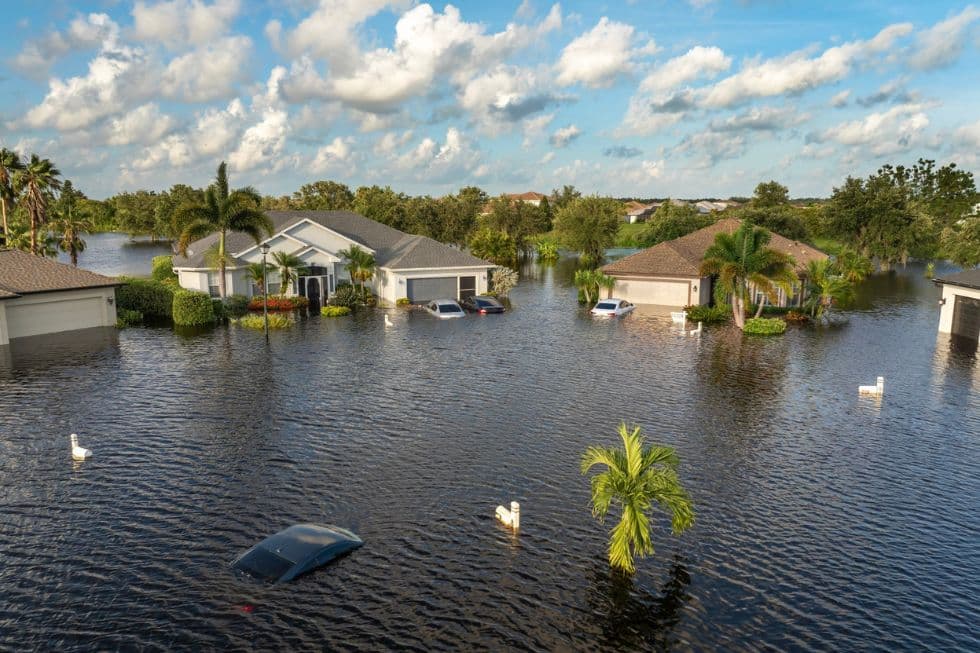
The increasing frequency and intensity of climate-related disasters in the United States are creating a systemic insurance crisis, undermining progress toward several key Sustainable Development Goals (SDGs). Events such as Hurricane Ian, which caused over $110 billion in damages, exemplify a trend where traditional insurance models are failing. Insurers are withdrawing from high-risk areas, leaving millions of homeowners and businesses underinsured and financially vulnerable. This situation directly threatens the resilience of communities and economies, placing a greater burden on federal disaster aid and hindering long-term sustainable development.
This report analyzes the potential of indexed (parametric) insurance to address this crisis, framing it as a strategic instrument for achieving critical SDGs, particularly those related to climate action, economic stability, and social equity.
The Intersection of the Insurance Crisis and Core SDGs
The current crisis directly impacts the achievement of multiple SDGs. A failure to adapt financial and social safety nets to the new climate reality risks reversing developmental gains.
- SDG 13 (Climate Action): The insurance crisis is a direct consequence of escalating climate change impacts. Inaction leads to greater economic and social disruption, making adaptation more difficult and costly.
- SDG 11 (Sustainable Cities and Communities): As insurers retreat, communities become less resilient to shocks. The goal of making human settlements inclusive, safe, resilient, and sustainable is jeopardized when a primary mechanism for risk transfer is removed.
- SDG 1 (No Poverty) & SDG 10 (Reduced Inequalities): The crisis disproportionately affects low-income and rural households. These communities often lack the resources to afford soaring premiums or to recover from uninsured losses, deepening poverty and exacerbating existing inequalities.
- SDG 8 (Decent Work and Economic Growth): Economic instability caused by climate disasters and insurance market failure threatens small businesses, local economies, and livelihoods, undermining sustainable economic growth.
Indexed Insurance: An Innovative Approach Aligned with the SDGs
Indexed insurance offers a data-driven alternative to traditional models. Payouts are triggered automatically by predefined environmental metrics (e.g., wind speed, rainfall levels) rather than by slow, contested damage assessments. This approach presents a significant opportunity to advance the 2030 Agenda.
Fostering Innovation and Resilience (SDG 9 & SDG 11)
The indexed insurance model represents a critical financial innovation capable of building more resilient infrastructure and communities.
- Rapid Financial Relief: Automatic payouts enable faster recovery for households, businesses, and local governments, minimizing economic disruption and supporting the rapid restoration of essential services.
- Budgetary Stability for Governments: Community-level parametric coverage can provide local governments with immediate liquidity post-disaster, ensuring continuity of operations and stabilizing municipal budgets.
- Economic Internalization of Climate Risk: By linking financial payouts directly to environmental indicators, indexed insurance makes the economic cost of climate volatility visible and quantifiable. This aligns market incentives with the physical reality of climate change, encouraging investment in adaptation and mitigation as outlined in SDG 13.
Global Cooperation and Partnerships (SDG 17)
The successful implementation of indexed insurance in the US can serve as a scalable model for global climate finance and international cooperation. By exporting this framework, particularly to developing nations and small island states facing similar risks, the US can contribute to global resilience efforts and strengthen partnerships for sustainable development.
Challenges to Equitable Implementation: Ensuring No One Is Left Behind
While promising, the widespread adoption of indexed insurance must address significant challenges related to equity and governance to fully align with the principles of the SDGs.
Basis Risk and Data Inequality (SDG 10)
A primary challenge is “basis risk”—a mismatch between the measured index (e.g., county-wide rainfall) and the actual damage experienced on the ground. This issue is compounded by data inequality:
- Wealthier regions typically possess dense sensor networks and detailed climate models, whereas rural and low-income areas often do not.
- Without equitable investment in high-resolution, open-access climate data from agencies like NOAA and NASA, indexed insurance could fail to protect the most vulnerable, thereby deepening inequality in direct opposition to SDG 10.
The Need for Public Oversight and Social Equity (SDG 16)
A purely market-driven approach risks creating a two-tiered system where only the affluent can afford coverage. To ensure indexed insurance serves as a tool for public good and supports strong, just institutions, it must be embedded within a robust social contract.
- Governance and Transparency: Public oversight is essential to ensure that triggers are calculated transparently and that models are based on publicly accessible data. This builds trust and accountability, cornerstones of SDG 16.
- Equitable Access: Publicly subsidized premiums for low-income households and small businesses are necessary to prevent the exclusion of vulnerable populations.
- Integration with Recovery Systems: The system should be integrated with FEMA and state-level disaster recovery frameworks to ensure a coordinated and transparent response.
Recommendations for an SDG-Aligned Path Forward
To leverage indexed insurance as an effective tool for building climate resilience and advancing the SDGs, the following actions are recommended:
- Launch Federal and State Pilot Programs: Initiate targeted pilot programs in high-risk areas for floods, droughts, and wildfires to test and refine parametric models for public use.
- Invest in Open-Access Climate Data: Increase public investment in granular, high-resolution hazard and climate data infrastructure to reduce basis risk and ensure fairness across all communities, directly supporting SDG 10 and SDG 11.
- Establish Subsidies for Vulnerable Groups: Design and fund programs to subsidize premiums for low-income households and small businesses, ensuring equitable access and contributing to SDG 1 and SDG 10.
- Link Insurance to Adaptation Actions: Create a national strategy, similar to the Community Rating System for flood insurance, that links the affordability of coverage to proactive resilience measures, such as wetland restoration or creating defensible space, thereby advancing SDG 13.
By adopting these measures, indexed insurance can be transformed from a niche financial product into a foundational pillar of a just, resilient, and sustainable climate adaptation strategy for the United States.
Sustainable Development Goals (SDGs) Analysis
1. Which SDGs are addressed or connected to the issues highlighted in the article?
The article on indexed insurance and climate resilience in the US connects to several Sustainable Development Goals (SDGs). The analysis identifies the following primary and related SDGs:
- SDG 1: No Poverty: The article emphasizes the disproportionate impact of climate disasters on low-income and vulnerable households, who are often underinsured or lose coverage entirely. It proposes subsidized insurance premiums to protect these populations, directly addressing the goal of reducing poverty and vulnerability.
- SDG 9: Industry, Innovation and Infrastructure: The text discusses the failure of traditional insurance models (an industry) and proposes an innovative financial product (indexed insurance). It also highlights the need for resilient infrastructure, referencing the suspension of funding for the “Building Resilient Infrastructure and Communities (BRIC) program,” which is central to this goal.
- SDG 10: Reduced Inequalities: The article explicitly warns that if left to private markets, “parametric insurance risks deepening inequality.” It advocates for public oversight, equitable access, and subsidies to ensure that lower-income households are not left uninsured, thereby aiming to reduce economic inequalities in disaster recovery.
- SDG 11: Sustainable Cities and Communities: The core theme is making communities more resilient to climate shocks. The article discusses the massive economic losses in cities and states (e.g., Florida, California, Vermont) and proposes solutions like “community-level parametric coverage to stabilize budgets” and linking insurance to local resilience efforts like wetland restoration.
- SDG 13: Climate Action: This is the most central SDG. The entire article is a discussion on adapting to the impacts of climate change. It focuses on strengthening resilience and adaptive capacity to climate-related hazards like hurricanes, wildfires, and floods by reforming insurance and disaster aid systems.
- SDG 17: Partnerships for the Goals: The article suggests that the US could export its modernized insurance framework to help “small island states and low-income countries” and channel funding into “global risk pools,” which speaks to global partnerships for sustainable development and climate finance.
2. What specific targets under those SDGs can be identified based on the article’s content?
Based on the article’s discussion, the following specific SDG targets can be identified:
- Target 1.5: By 2030, build the resilience of the poor and those in vulnerable situations and reduce their exposure and vulnerability to climate-related extreme events and other economic, social and environmental shocks and disasters.
- Explanation: The article directly addresses this by highlighting how the “climate insurance crisis” leaves millions of homes, particularly those of lower-income households, “unprotected.” It proposes solutions like “Publicly subsidized premiums for low-income or high-risk households” to build their financial resilience against climate shocks.
- Target 9.1: Develop quality, reliable, sustainable and resilient infrastructure… to support economic development and human well-being, with a focus on affordable and equitable access for all.
- Explanation: The article discusses the federal government’s retreat from “long-term climate adaptation and pre-disaster mitigation” and the suspension of the “Building Resilient Infrastructure and Communities (BRIC) program.” This directly relates to the challenge of developing resilient infrastructure to withstand climate events.
- Target 11.5: By 2030, significantly reduce the number of deaths and the number of people affected and substantially decrease the direct economic losses relative to global gross domestic product caused by disasters, including water-related disasters, with a focus on protecting the poor and people in vulnerable situations.
- Explanation: The article quantifies the economic impact of disasters, stating Hurricane Ian “caused over $110 billion in damage.” The proposed indexed insurance is a mechanism designed to provide rapid payouts to reduce the financial devastation and economic losses for households, businesses, and local governments.
- Target 11.b: By 2020, substantially increase the number of cities and human settlements adopting and implementing integrated policies and plans towards inclusion, resource efficiency, mitigation and adaptation to climate change, resilience to disasters…
- Explanation: The article suggests a “national strategy — modeled on the Community Rating System used in flood insurance — could link coverage affordability to local resilience efforts like wetland restoration or defensible space around homes.” This is a clear example of an integrated policy plan to build disaster resilience at the community level.
- Target 13.1: Strengthen resilience and adaptive capacity to climate-related hazards and natural disasters in all countries.
- Explanation: This is the article’s central theme. The entire argument for adopting indexed insurance is presented as a strategy to “Build US Climate Resilience” in the face of increasing “billion-dollar disasters.” It describes how this tool can help communities adapt to the new reality of climate change.
- Target 17.16: Enhance the global partnership for sustainable development, complemented by multi-stakeholder partnerships that mobilize and share knowledge, expertise, technology and financial resources…
- Explanation: The article concludes by suggesting a global role for the US, stating it could “export that framework worldwide — especially to small island states and low-income countries facing similar climate risks” and channel funding into “global risk pools,” which directly aligns with the goal of international partnership and knowledge sharing.
3. Are there any indicators mentioned or implied in the article that can be used to measure progress towards the identified targets?
Yes, the article mentions or implies several indicators that could measure progress:
- Direct economic loss from disasters (Indicator 11.5.2): The article explicitly uses this indicator by citing the “$110 billion in damage” from Hurricane Ian and the “360% rise” in climate losses since 1980. Tracking this metric over time would measure the success of resilience efforts.
- Adoption of national and local disaster risk reduction strategies (Indicators 11.b.1, 11.b.2, 13.1.2): The article proposes a “national strategy” for insurance and mentions “federal and state pilot programs for parametric insurance.” The number of states or communities adopting such strategies and the amount of funding allocated to programs like BRIC and FMA are implied indicators of progress.
- Proportion of vulnerable populations benefiting from risk reduction strategies: While not naming a formal indicator, the article’s proposal to “Subsidize premiums for vulnerable households and small businesses” implies a key metric: the number or percentage of low-income households covered by these subsidized insurance schemes. This would directly measure progress towards Target 1.5.
- Investment in climate data and observation systems: The article stresses the need to reduce “basis risk” by investing in “high-resolution, open-access climate data” and expanding sensor networks and mapping tools from agencies like NOAA and NASA. The level of investment in and public accessibility of this data infrastructure serves as an implied indicator for building adaptive capacity (Target 13.1).
- Financial flows to developing countries for climate adaptation (related to Target 17.16): The suggestion to channel “funding into global risk pools” implies an indicator related to the amount of financial resources the US contributes to international climate finance and risk-sharing mechanisms.
4. Summary Table of SDGs, Targets, and Indicators
| SDGs | Targets | Indicators (Mentioned or Implied in the Article) |
|---|---|---|
| SDG 1: No Poverty | 1.5: Build resilience of the poor and reduce their vulnerability to climate-related extreme events. | Number/proportion of low-income households and small businesses covered by publicly subsidized insurance programs. |
| SDG 9: Industry, Innovation and Infrastructure | 9.1: Develop quality, reliable, sustainable and resilient infrastructure. | Amount of funding allocated to resilience programs like the Building Resilient Infrastructure and Communities (BRIC) program. |
| SDG 11: Sustainable Cities and Communities | 11.5: Substantially decrease direct economic losses caused by disasters.
11.b: Increase the number of cities implementing policies for resilience to disasters. |
Direct economic loss from disasters (e.g., “$110 billion in damage”).
Number of states/cities adopting integrated resilience plans and parametric insurance pilot programs. |
| SDG 13: Climate Action | 13.1: Strengthen resilience and adaptive capacity to climate-related hazards and natural disasters. | Implementation of a national strategy for climate adaptation through insurance. Investment in open-access climate and hazard data (e.g., from NOAA) to reduce risk. |
| SDG 17: Partnerships for the Goals | 17.16: Enhance the global partnership for sustainable development. | Amount of funding channeled into global risk pools; number of countries adopting frameworks exported from the US. |
Source: fairobserver.com
What is Your Reaction?
 Like
0
Like
0
 Dislike
0
Dislike
0
 Love
0
Love
0
 Funny
0
Funny
0
 Angry
0
Angry
0
 Sad
0
Sad
0
 Wow
0
Wow
0