










































;Resize=620#)








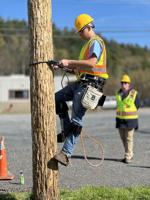


In reversal, Watsonville reinstates labor pact with unions, adds exemptions for some projects – Lookout Santa Cruz

Report on Watsonville’s Revised Project Labor Agreement and Alignment with Sustainable Development Goals
The Watsonville City Council has reinstated a modified Project Labor Agreement (PLA) with local trade unions, reversing a prior decision to terminate the arrangement. This report analyzes the policy shift and its implications for the United Nations Sustainable Development Goals (SDGs), particularly concerning infrastructure, clean water, decent work, and sustainable communities.
Policy Reversal and Key Modifications
Chronology of Council Decisions
The council’s actions represent a significant policy adjustment regarding municipal construction projects and labor relations.
- Initial Decision: The council first voted to scrap its longstanding PLA, citing challenges in securing competitive bids for city projects, which impeded progress on key infrastructure goals.
- Reversal and Reinstatement: In a subsequent special meeting, the council voted 4-3 to reinstate the PLA, incorporating several key amendments negotiated with the Monterey/Santa Cruz Building and Construction Trades Council.
Substantive Changes to the Project Labor Agreement
The reinstated agreement includes updated terms designed to balance labor standards with municipal project feasibility, directly impacting several SDGs.
- Project Threshold: The agreement now applies to projects costing $1.5 million or more, an increase from the previous $600,000 threshold.
- Trade Requirement: It covers projects employing workers from three or more distinct trades.
- Duration: The agreement is set with a new expiration date of December 31, 2028.
- Exemption Clause: A compromise was reached allowing the city to exempt projects from the PLA if they fail to receive any bids from contractors, ensuring critical infrastructure work can proceed.
Analysis of Sustainable Development Goal (SDG) Implications
SDG 8: Decent Work and Economic Growth
The PLA is fundamentally aligned with the principles of SDG 8 by establishing fair conditions for labor.
- The agreement codifies standards for pay, benefits, and work hours, promoting decent work for skilled laborers who build and maintain city infrastructure.
- The negotiation process reflects the inherent challenge of balancing the promotion of full and productive employment (Target 8.5) with the need for cost-effective economic development.
- The final compromise seeks to foster economic growth through infrastructure development while upholding protections for workers.
SDG 6: Clean Water and Sanitation & SDG 9: Industry, Innovation, and Infrastructure
The debate over the PLA was heavily influenced by its impact on essential public works, which are central to SDG 6 and SDG 9.
- City officials noted that the previous PLA discouraged bids on critical projects, including improvements to the drinking water treatment plant for removing chromium-6 and other wastewater initiatives.
- These delays directly impact the city’s ability to ensure the availability and sustainable management of water and sanitation for all (SDG 6).
- The revised agreement’s exemption clause is a direct mechanism to prevent indefinite delays, allowing the city to build and upgrade resilient infrastructure (SDG 9) essential for public health and safety.
SDG 11: Sustainable Cities and Communities & SDG 17: Partnerships for the Goals
The resolution of this issue is vital for the long-term sustainability of Watsonville and underscores the importance of collaborative partnerships.
- The ability to complete municipal construction projects safely and on time is crucial for making cities inclusive, safe, resilient, and sustainable (SDG 11).
- The initial conflict threatened the partnership between the city and labor unions. Reinstating the agreement restores a collaborative framework (SDG 17) necessary for achieving shared development objectives.
- This public-labor partnership is essential for ensuring that taxpayer-funded projects contribute effectively to community well-being.
Conclusion
The Watsonville City Council’s decision to reinstate and amend the Project Labor Agreement represents a significant step in balancing multiple Sustainable Development Goals. The revised framework aims to protect decent work and fair wages (SDG 8) while creating the flexibility needed to advance critical projects related to clean water (SDG 6), resilient infrastructure (SDG 9), and the overall sustainability of the community (SDG 11). The ongoing negotiation and agreement to provide regular updates demonstrate a commitment to strengthening partnerships (SDG 17) for sustainable development.
Analysis of Sustainable Development Goals in the Article
1. Which SDGs are addressed or connected to the issues highlighted in the article?
- SDG 6: Clean Water and Sanitation: The article explicitly discusses infrastructure projects related to water management, including “water and sewer projects,” “wastewater projects,” and “improvements to the city’s plant that treats drinking water for the cancer-causing chemical chromium-6.” These are central to ensuring the availability and sustainable management of water and sanitation.
- SDG 8: Decent Work and Economic Growth: The core of the article is the debate over a Project Labor Agreement (PLA), which is an agreement that “sets the pay, benefits and work hours for certain unionized city construction jobs.” This directly relates to promoting sustained, inclusive economic growth, full and productive employment, and decent work for all, particularly the protection of labor rights.
- SDG 9: Industry, Innovation, and Infrastructure: The article focuses on “city construction jobs” and the implementation of public works projects. The discussion about the cost thresholds for projects (rising from $600,000 to $1.5 million), bidding processes, and the completion of critical infrastructure like water treatment plants all fall under the goal of building resilient infrastructure and fostering sustainable industrialization.
- SDG 16: Peace, Justice, and Strong Institutions: The entire narrative describes a local governance process. It details the Watsonville City Council’s decision-making, including voting, reversing a decision, and negotiating with a civil society organization (the trades council). This highlights the challenges and processes involved in creating effective, accountable, and inclusive institutions at the local level, as demonstrated by the efforts to “restore trust and stability between the city and the trade unions.”
2. What specific targets under those SDGs can be identified based on the article’s content?
-
Under SDG 6:
- Target 6.1: “By 2030, achieve universal and equitable access to safe and affordable drinking water for all.” The article’s mention of critical improvements to the plant that treats drinking water for the “cancer-causing chemical chromium-6” directly supports this target by aiming to improve water safety for the community.
- Target 6.3: “By 2030, improve water quality by reducing pollution… and treating wastewater.” The focus on “wastewater projects” and ensuring they can proceed without delay aligns with the goal of improving water quality through proper wastewater management.
-
Under SDG 8:
- Target 8.8: “Protect labour rights and promote safe and secure working environments for all workers…” The Project Labor Agreement (PLA) is a direct mechanism for achieving this target, as it formally “sets the pay, benefits and work hours” for construction workers on city projects, ensuring their rights are protected.
-
Under SDG 9:
- Target 9.1: “Develop quality, reliable, sustainable and resilient infrastructure… to support economic development and human well-being.” The article’s focus on completing city construction projects, particularly for water and sewage systems, is a clear example of efforts to develop essential public infrastructure.
-
Under SDG 16:
- Target 16.7: “Ensure responsive, inclusive, participatory and representative decision-making at all levels.” The article details the dynamic between the city council and the trades council, including tense public meetings, negotiations, and eventual compromise. The process of scrapping, then reinstating the PLA with modifications based on feedback from both city staff and union representatives, exemplifies this target in action.
3. Are there any indicators mentioned or implied in the article that can be used to measure progress towards the identified targets?
- For Target 6.1: An implied indicator is the successful completion of the “improvements to the city’s plant that treats drinking water.” Progress could be measured by the reduction of chromium-6 levels in the municipal water supply.
- For Target 8.8: A direct indicator is the existence and enforcement of the Project Labor Agreement. The terms of the agreement, such as set pay scales and benefits for union workers, are measurable standards for protecting labor rights.
-
For Target 9.1: The article implies several indicators for infrastructure development:
- The number of competitive bids received for city projects. The article notes that the previous arrangement “discouraged competitive bids.”
- The completion rate of city construction projects. Councilmembers expressed a desire to “see city construction projects completed.”
- The cost of projects. The PLA now applies to projects costing at least $1.5 million, a specific monetary threshold.
- For Target 16.7: An indicator of inclusive decision-making is the established process in the new agreement where “the city will have to notify the trades council if a project does not receive any bids.” This formalizes communication and participation between the government institution and the labor organization.
4. Summary Table of SDGs, Targets, and Indicators
| SDGs | Targets | Indicators Identified in the Article |
|---|---|---|
| SDG 6: Clean Water and Sanitation | 6.1: Achieve access to safe and affordable drinking water. 6.3: Improve water quality and wastewater treatment. |
|
| SDG 8: Decent Work and Economic Growth | 8.8: Protect labour rights and promote safe and secure working environments. |
|
| SDG 9: Industry, Innovation and Infrastructure | 9.1: Develop quality, reliable, sustainable and resilient infrastructure. |
|
| SDG 16: Peace, Justice and Strong Institutions | 16.7: Ensure responsive, inclusive, participatory and representative decision-making. |
|
Source: lookout.co
What is Your Reaction?
 Like
0
Like
0
 Dislike
0
Dislike
0
 Love
0
Love
0
 Funny
0
Funny
0
 Angry
0
Angry
0
 Sad
0
Sad
0
 Wow
0
Wow
0