

























Interstellar soil science: Aggie researcher explores farming on Mars – AgriLife Today

Report on Extraterrestrial Agriculture Research and Alignment with Sustainable Development Goals
1.0 Introduction: Advancing Food Security Through Space-Based Innovation
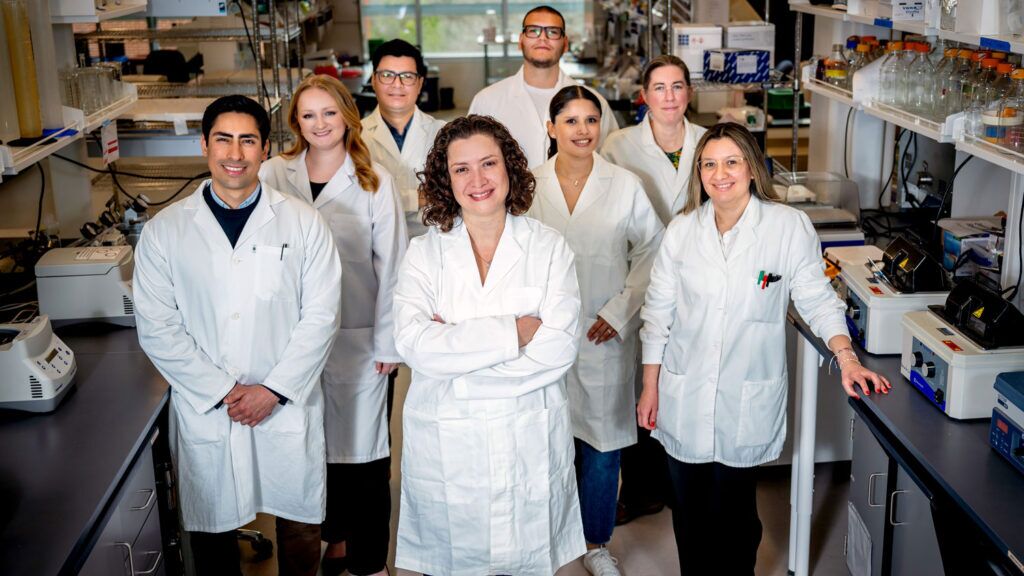
Research led by Harrison Coker, a doctoral student at Texas A&M College of Agriculture and Life Sciences, is exploring the viability of regolith-based agriculture to support long-term human missions on other planets. This initiative directly addresses the challenges of creating sustainable food systems in extreme environments, providing critical insights that align with several United Nations Sustainable Development Goals (SDGs), most notably SDG 2 (Zero Hunger) by pioneering new methods for food production.
Under the guidance of Dr. Julie Howe and Dr. Peyton Smith, the project investigates the use of extraterrestrial soils, or regolith, for plant cultivation, laying the groundwork for sustainable off-world colonies.
2.0 Strategic Collaboration and Partnerships for the Goals (SDG 17)
The project’s success is built upon a multi-sectoral collaboration, a core tenet of SDG 17 (Partnerships for the Goals). This partnership model combines academic rigor with governmental support and private industry innovation to advance scientific frontiers.
- Academia: Texas A&M Department of Soil and Crop Sciences provides the foundational soil science expertise.
- Government: A NASA fellowship (Space Technology Graduate Research Opportunity) provides critical funding and institutional support.
- Private Industry: Starbase Brewing and Jaguar Space contribute payload opportunities, resources, and a commercial application focus, driving progress in line with SDG 9 (Industry, Innovation, and Infrastructure).
3.0 Methodology: Circular Economy Principles and Responsible Production (SDG 12)
A key innovation of this research is the application of circular economy principles, directly supporting SDG 12 (Responsible Consumption and Production). The methodology focuses on transforming a waste stream into a valuable resource for agricultural production.
- Problem Identification: Lunar and Martian regolith lacks the organic matter necessary to support plant life, functioning essentially as crushed rock.
- Innovative Solution: The research team proposed amending the regolith simulant with Brewer’s Spent Grain (BSG), a nutrient-rich byproduct of the beer brewing process.
- Results: Trials demonstrated that the addition of BSG significantly improved crop growth in both lunar and Martian simulant soils by introducing vital organic matter and creating a more arable medium.
4.0 The OASIS Mission: Testing Sustainable Agriculture in Microgravity
The research culminated in the Optimizing Agriculture in Simulated Interplanetary Soils (OASIS) experiment, which was launched to the International Space Station (ISS). This mission represents a critical step in understanding the variables affecting extraterrestrial agriculture and contributes to the knowledge base for SDG 2 (Zero Hunger) and SDG 9 (Industry, Innovation, and Infrastructure).
4.1 Mission Highlights
- Experiment: Optimizing Agriculture in Simulated Interplanetary Soils (OASIS)
- Objective: To study plant-microbe communication and barley growth in Martian regolith simulant under microgravity and increased radiation.
- Location: International Space Station
- Launch: Part of the Jaguar Space One payload on NASA’s Crew-11 mission.
4.2 Research Goals
Upon return, the samples are undergoing a multi-omic analysis to compare against a ground-based control. The primary goals are to assess:
- Changes in greenhouse gas emissions from the plant-microbe system.
- The nutritional status and overall productivity of the plants.
- Alterations in plant-microbe interactions due to the space environment.
5.0 Conclusion: Implications for Global and Interstellar Sustainability
The OASIS project is a pioneering effort in soil-based agriculture in microgravity. Its findings are imperative for developing the closed-loop life support systems needed for future space colonies. By focusing on sustainable inputs and nutrient cycling, this research not only paves the way for human exploration but also reinforces sustainable agricultural principles applicable on Earth. The project serves as an exemplary model of how advanced scientific inquiry can be fundamentally aligned with achieving the Sustainable Development Goals, particularly in creating resilient and innovative food systems for humanity’s future, wherever that may be.
Analysis of the Article in Relation to Sustainable Development Goals
1. Which SDGs are addressed or connected to the issues highlighted in the article?
SDG 2: Zero Hunger
- The article focuses on “regolith-based agriculture” and “sustainable food production beyond Earth.” This research into growing plants like barley in extraterrestrial soils is fundamentally about ensuring food security for future human outposts, which aligns with the core principles of ending hunger and promoting sustainable agriculture.
SDG 9: Industry, Innovation, and Infrastructure
- The research is described as “groundbreaking” and an “out-of-this-world innovation.” The entire project is a result of a partnership between academia (Texas A&M), a government agency (NASA), and private industry (Starbase Brewing, Jaguar Space). This collaboration to advance scientific research and technology for space exploration directly reflects the goals of fostering innovation.
SDG 12: Responsible Consumption and Production
- The research utilizes “brewer’s spent grain, BSG,” which is explicitly called a “byproduct of brewing beer,” to enhance the soil. This is a direct application of circular economy principles, where a waste product from one industry (brewing) is repurposed as a valuable input (organic matter for soil) in another (agriculture), thus promoting sustainable production patterns.
SDG 15: Life on Land
- Although the application is for space, the core science is about soil health and land productivity. The article explains that regolith is “basically rocks and undeveloped parent material” and that adding organic matter “gives soil its life and speeds the development of rocks into an arable soil.” This fundamental research on creating fertile soil from inert material has direct relevance to restoring degraded land and improving soil quality on Earth.
SDG 17: Partnerships for the Goals
- The project is a clear example of a multi-stakeholder partnership. The article details the collaboration between Harrison Coker’s academic research at Texas A&M, a fellowship from NASA, and crucial support and payload space from private companies like Starbase Brewing and Jaguar Space. This synergy between public, public-private, and academic sectors is the essence of SDG 17.
2. What specific targets under those SDGs can be identified based on the article’s content?
SDG 2: Zero Hunger
- Target 2.4: “By 2030, ensure sustainable food production systems and implement resilient agricultural practices that increase productivity and production… and that progressively improve land and soil quality.” The research aims to develop a sustainable system for growing plants in low-quality extraterrestrial soils by improving their quality with organic matter, directly aligning with this target.
SDG 9: Industry, Innovation, and Infrastructure
- Target 9.5: “Enhance scientific research, upgrade the technological capabilities of industrial sectors… encouraging innovation and substantially increasing the number of research and development workers… and public and private research and development spending.” The article showcases enhanced scientific research (the OASIS experiment), innovation (regolith-based agriculture), and a public-private partnership between NASA and Starbase Brewing funding and supporting a doctoral student’s research.
SDG 12: Responsible Consumption and Production
- Target 12.5: “By 2030, substantially reduce waste generation through prevention, reduction, recycling and reuse.” The project’s use of brewer’s spent grain (BSG), a brewing byproduct, as a soil amendment is a direct example of recycling and reusing industrial waste to create value and reduce overall waste generation.
SDG 15: Life on Land
- Target 15.3: “By 2030, combat desertification, restore degraded land and soil… and strive to achieve a land degradation-neutral world.” The research on transforming “undeveloped parent material” (regolith) into “arable soil” provides fundamental knowledge applicable to restoring severely degraded soils on Earth.
SDG 17: Partnerships for the Goals
- Target 17.17: “Encourage and promote effective public, public-private and civil society partnerships…” The collaboration between Texas A&M (academia), NASA (public), and Starbase Brewing/Jaguar Space (private) is a textbook example of the effective public-private partnerships this target aims to promote.
3. Are there any indicators mentioned or implied in the article that can be used to measure progress towards the identified targets?
For SDG 2, Target 2.4
- Implied Indicator: Plant productivity and crop growth. The article states that trials with BSG “led to significant improvements in crop growth” and that a goal is to “determine how increased radiation and microgravity alter plant productivity.”
- Mentioned Indicator: Nutritional status of plants. The research team explicitly plans to assess the “nutritional status of plants” grown in the experiment.
For SDG 9, Target 9.5
- Mentioned Indicator: Number of public-private research collaborations. The article details the partnership between Texas A&M, NASA, Starbase Brewing, and Jaguar Space for the OASIS and MicroBrew-1 experiments.
- Mentioned Indicator: Investment in research and development. The project is supported by a “NASA fellowship and private industry support,” which represents R&D spending.
For SDG 12, Target 12.5
- Implied Indicator: Amount of industrial byproduct reused. The article identifies “brewer’s spent grain, BSG” as the specific byproduct being repurposed as an “organic matter source” for soil, implying a measurable quantity is being diverted from waste streams.
For SDG 15, Target 15.3
- Implied Indicator: Rate of soil formation/improvement. The research focuses on how organic matter “speeds the development of rocks into an arable soil,” which is a measurable process of soil quality improvement.
For SDG 17, Target 17.17
- Mentioned Indicator: Number of multi-stakeholder partnerships for sustainable development. The article names the specific partners involved: one academic institution (Texas A&M), one government agency (NASA), and two private companies (Starbase Brewing, Jaguar Space).
4. SDGs, Targets, and Indicators Table
| SDGs | Targets | Indicators |
|---|---|---|
| SDG 2: Zero Hunger | 2.4: Ensure sustainable food production systems and resilient agricultural practices that improve land and soil quality. |
|
| SDG 9: Industry, Innovation, and Infrastructure | 9.5: Enhance scientific research and encourage innovation through public-private partnerships. |
|
| SDG 12: Responsible Consumption and Production | 12.5: Substantially reduce waste generation through recycling and reuse. |
|
| SDG 15: Life on Land | 15.3: Restore degraded land and soil. |
|
| SDG 17: Partnerships for the Goals | 17.17: Encourage and promote effective public, public-private and civil society partnerships. |
|
Source: agrilifetoday.tamu.edu
What is Your Reaction?
 Like
0
Like
0
 Dislike
0
Dislike
0
 Love
0
Love
0
 Funny
0
Funny
0
 Angry
0
Angry
0
 Sad
0
Sad
0
 Wow
0
Wow
0