
















Millions have fled weather disasters, but they had few champions at COP30 – Yale Climate Connections

Report on Climate-Induced Displacement and its Intersection with Sustainable Development Goals
1.0 Introduction: The Nexus of Climate Action and Human Mobility
The increasing frequency of extreme weather events, a direct consequence of climate change, is a significant driver of human displacement globally. This phenomenon presents a critical challenge to the achievement of the 2030 Agenda for Sustainable Development. At the recent COP30 climate negotiations in Belém, Brazil, advocates highlighted a substantial gap in international policy, where the plight of climate-displaced persons, immigrants, and refugees receives minimal attention. This report analyzes the issue of climate mobility through the lens of the Sustainable Development Goals (SDGs), focusing on the disconnect between climate policy and the imperative to uphold human rights and reduce inequality.
2.0 The Scale of Displacement and its Impact on Core SDGs
The failure to adequately address climate-induced migration directly undermines progress on several key Sustainable Development Goals. The scale of the crisis is a stark indicator of the urgent need for integrated policy solutions.
2.1 Statistical Overview
- A recent United Nations report estimates that weather-related disasters have internally displaced approximately 250 million people over the past decade.
- This equates to an average of 70,000 people forced from their homes each day.
- These figures do not account for individuals who cross international borders, suggesting the true number is significantly higher.
2.2 Setbacks to Sustainable Development
- SDG 1 (No Poverty) & SDG 8 (Decent Work and Economic Growth): Prolonged droughts and other climate disasters destroy agricultural livelihoods, as seen with Central American farmers, pushing families into poverty and forcing them to seek economic alternatives through migration.
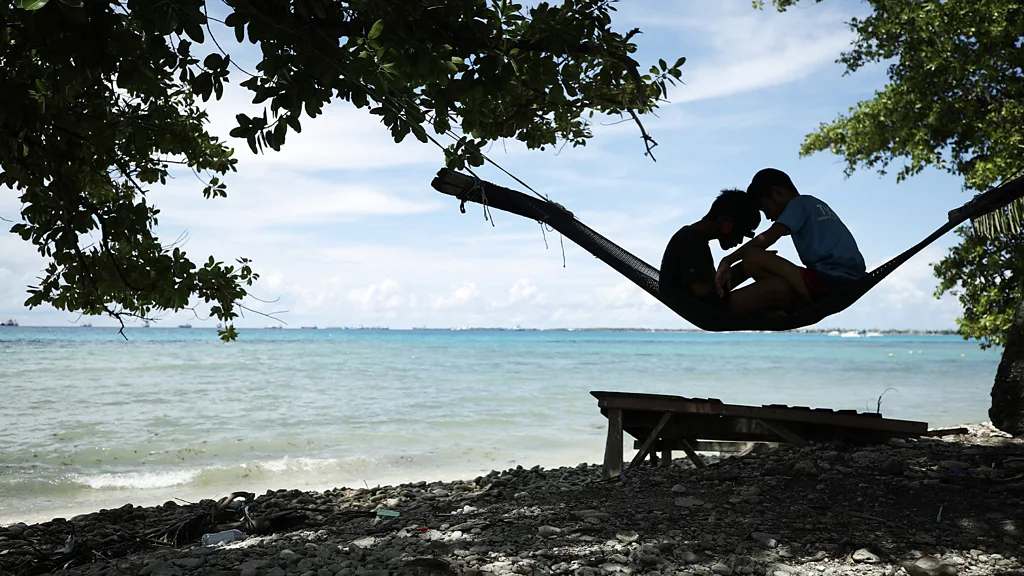
- SDG 11 (Sustainable Cities and Communities): The existence of entire nations, such as the archipelago of Tuvalu, is threatened by rising sea levels. The predicted submergence of these islands by 2100 represents a total loss of community and national infrastructure, directly contravening the goal of sustainable human settlements.
- SDG 10 (Reduced Inequalities): Climate-displaced populations are among the most vulnerable groups, yet they are systematically excluded from key policy discussions. This exclusion exacerbates existing inequalities within and among countries.
3.0 Global Policy Failures and Institutional Barriers
Despite the clear link between climate change and migration, international climate negotiations have been reluctant to address the issue comprehensively. This reluctance is compounded by a global rise in anti-immigrant sentiment, which creates significant barriers to achieving justice for displaced populations.
3.1 Gaps in International Climate Negotiations
- The official list of key groups invited to participate in U.N. climate talks includes Indigenous peoples, youth, and women, but not refugees or climate-displaced people.
- Discussions at COP events have historically prioritized emissions reduction and adaptation finance, largely ignoring the human mobility dimension of the climate crisis.
- A 2015 proposal to establish a “climate change displacement coordination facility” was removed from draft texts before the Paris Agreement, representing a significant missed opportunity.
3.2 Challenges to SDG 16 (Peace, Justice and Strong Institutions)
The global political climate poses a direct threat to the development of just and inclusive institutions for migrants.
- Rising xenophobia has made it difficult to find government champions for the inclusion of migrants in climate policy.
- Restrictive border and asylum policies in nations such as the United States, the United Kingdom, and South Africa demonstrate a trend toward exclusion rather than protection, undermining the principles of SDG 16.
4.0 Advocacy Efforts and Pathways Forward
Civil society organizations and advocates are playing a crucial role in pushing for the inclusion of climate mobility in international frameworks, aligning with SDG 17 (Partnerships for the Goals). While progress is slow, recent negotiations have yielded some positive developments.
4.1 Key Achievements at COP30
- Inclusion in Key Texts: Advocates successfully secured explicit mentions of migrants and displacement in several key COP30 documents, establishing a foothold for future policy development.
- The Global Goal on Adaptation: Negotiators included migrants in the text for the Global Goal on Adaptation. This encourages nations to study and understand the specific vulnerabilities of displaced groups, enabling the creation of more equitable adaptation policies in line with SDG 10.
- Access to Climate Finance: There is a continued push to ensure that community-based organizations, not just national governments, can directly access resources from the climate reparations fund (Loss and Damage Fund). This would facilitate a more direct and effective distribution of aid to impacted communities, supporting localized implementation of SDG 13 (Climate Action).
4.2 A New Paradigm: Climate Mobility as a Solution
Advocates propose reframing migration not as a failure, but as a potential adaptation strategy. This involves a focus on preventative action and protecting the rights of all individuals, whether they move or stay.
- Protecting the Right to Stay: Efforts must be made to support local adaptation solutions, such as rebuilding housing and replacing lost economic assets (e.g., fishing boats), to allow communities to remain safely in their homes. This aligns with building resilience under SDG 11.
- Preventative Research and Planning: Initiatives like the Global Centre for Climate Mobility’s research in Colombia aim to help local governments understand displacement patterns and develop preventative strategies, which is more effective and just than reactive responses.
- Empowering Displaced Leaders: Organizations are training refugees and climate migrants to advocate for themselves, ensuring that solutions are designed with and by the people most affected, a core principle of inclusive institutions under SDG 16.
Sustainable Development Goals (SDGs) Addressed in the Article
The article highlights several interconnected issues, primarily focusing on climate-induced migration and the lack of international policy to address the needs of climate-displaced people. Based on this, the following SDGs are addressed:
- SDG 1: No Poverty – The article discusses how extreme weather events push people into vulnerable situations, forcing them from their homes and livelihoods, which is directly linked to increasing poverty and vulnerability.
- SDG 10: Reduced Inequalities – The core theme of the article is the marginalization of immigrants, refugees, and climate-displaced people in global climate negotiations. It points out their specific vulnerabilities and the rising xenophobia and anti-migrant sentiment, which are matters of inequality.
- SDG 11: Sustainable Cities and Communities – The article mentions people being forced to move to new locations, including cities, due to climate disasters. It also touches upon the need for local governments to plan for and manage displacement patterns to keep people safe.
- SDG 13: Climate Action – This is the central SDG, as the article revolves around the consequences of climate change, such as extreme weather disasters, and the international policy response (or lack thereof) at climate negotiations like COP30. It discusses adaptation, loss and damage, and the need to integrate migration into climate policy.
- SDG 16: Peace, Justice and Strong Institutions – The article critiques the exclusion of climate migrants and refugees from formal participation in U.N. climate talks. The advocacy efforts to include their voices in key policy documents and decision-making processes relate directly to building more inclusive and representative institutions.
Specific SDG Targets Identified
Based on the article’s content, several specific targets under the identified SDGs can be pinpointed:
-
SDG 1: No Poverty
- Target 1.5: By 2030, build the resilience of the poor and those in vulnerable situations and reduce their exposure and vulnerability to climate-related extreme events and other economic, social and environmental shocks and disasters. The article directly addresses this by highlighting that “Over the past decade, weather disasters have forced about 250 million people to search for new homes,” pushing them into vulnerable situations.
-
SDG 10: Reduced Inequalities
- Target 10.7: Facilitate orderly, safe, regular and responsible migration and mobility of people, including through the implementation of planned and well-managed migration policies. The article’s discussion of “climate mobility,” the proposal for a “climate change displacement coordination facility,” and the criticism of “restrictionist border policies” all point to the need for better-managed migration policies in the face of climate change.
-
SDG 11: Sustainable Cities and Communities
- Target 11.5: By 2030, significantly reduce the number of deaths and the number of people affected…caused by disasters…with a focus on protecting the poor and people in vulnerable situations. The article’s focus on people displaced by “extreme weather disasters” and the need to keep them safe directly aligns with this target.
- Target 11.b: By 2020, substantially increase the number of cities and human settlements adopting and implementing integrated policies and plans towards inclusion…adaptation to climate change, resilience to disasters. The mention of a research project to help a Colombian city “understand its unique displacement patterns” and prepare for climate impacts is a direct example of implementing such integrated plans.
-
SDG 13: Climate Action
- Target 13.1: Strengthen resilience and adaptive capacity to climate-related hazards and natural disasters in all countries. The article extensively discusses “adaptation” and the need to understand the forces affecting migrants’ ability to adapt. The inclusion of migrants in the “Global Goal on Adaptation” is a key point supporting this target.
- Target 13.2: Integrate climate change measures into national policies, strategies and planning. The entire premise of the advocates’ work at COP30 is to get climate mobility and the rights of displaced people integrated into international climate agreements and national policies.
- Target 13.b: Promote mechanisms for raising capacity for effective climate change-related planning and management…including focusing on…local and marginalized communities. The push to ensure community groups and local organizations have direct access to the climate reparations fund to help those most impacted reflects this target.
-
SDG 16: Peace, Justice and Strong Institutions
- Target 16.7: Ensure responsive, inclusive, participatory and representative decision-making at all levels. The article laments that the U.N. space “doesn’t include refugees, climate migrants, or climate-displaced people” in its formal list of key groups. The efforts of advocates to get “explicit mentions of migrants and displacement” in key texts are a push towards more inclusive decision-making.
Indicators for Measuring Progress
The article mentions or implies several indicators that can be used to measure progress towards the identified targets:
- Number of people displaced by weather-related disasters: The article provides a direct statistic: “Over the past decade, weather disasters have forced about 250 million people to search for new homes within their countries.” This serves as a key indicator for Targets 1.5 and 11.5.
- Inclusion of migrant and displaced person considerations in climate policy documents: The article cites the “explicit mentions of migrants and displacement” in key COP30 texts, such as the “Global Goal on Adaptation,” as a “win” for advocates. This serves as a qualitative indicator for progress on Targets 13.2 and 16.7.
- Comparative analysis of adaptation success rates: The article suggests a specific measurement: “knowing whether or not someone living in displacement is adapting with the same success rate as someone who’s not displaced in the same region.” This is a proposed indicator to measure the equity and effectiveness of adaptation measures under Target 13.1.
- Establishment of dedicated international mechanisms: The discussion of a proposed “climate change displacement coordination facility” implies that the creation and funding of such a body would be a significant indicator of progress towards Target 10.7.
- Development of local-level disaster risk and displacement plans: The example of the research project in a Colombian city to “understand its unique displacement patterns” suggests that the number of municipalities developing such analytical plans is an indicator for Target 11.b.
Summary of SDGs, Targets, and Indicators
| SDGs | Targets | Indicators |
|---|---|---|
| SDG 1: No Poverty | 1.5: Build resilience of the poor and reduce their vulnerability to climate-related extreme events. | Number of people displaced internally by weather disasters (mentioned as 250 million over the past decade). |
| SDG 10: Reduced Inequalities | 10.7: Facilitate orderly, safe, regular and responsible migration and mobility of people. | Establishment of policies and mechanisms like a “climate change displacement coordination facility” to manage climate mobility. |
| SDG 11: Sustainable Cities and Communities | 11.5: Significantly reduce the number of people affected by disasters, with a focus on protecting the vulnerable.
11.b: Increase the number of cities implementing integrated policies for inclusion and resilience to disasters. |
Number of people affected and displaced by climate disasters.
Number of local governments developing research and plans to understand and manage their specific displacement patterns. |
| SDG 13: Climate Action | 13.1: Strengthen resilience and adaptive capacity to climate-related hazards.
13.2: Integrate climate change measures into national policies and planning. |
Comparative data on the adaptation success rate of displaced vs. non-displaced populations.
Inclusion of language on migrants and displacement in key international climate agreements (e.g., Global Goal on Adaptation). |
| SDG 16: Peace, Justice and Strong Institutions | 16.7: Ensure responsive, inclusive, participatory and representative decision-making. | Formal inclusion of refugees, climate migrants, and displaced people as a recognized constituency in U.N. climate negotiations. |
Source: yaleclimateconnections.org
What is Your Reaction?
 Like
0
Like
0
 Dislike
0
Dislike
0
 Love
0
Love
0
 Funny
0
Funny
0
 Angry
0
Angry
0
 Sad
0
Sad
0
 Wow
0
Wow
0