










































Minnesota View: Clean-energy jobs show Minnesota leading through uncertainty – West Central Tribune

Report on Minnesota’s Clean Energy Sector and its Contribution to Sustainable Development Goals
Executive Summary
- Minnesota’s clean energy sector now employs nearly 64,000 individuals, demonstrating significant progress towards SDG 8 (Decent Work and Economic Growth).
- The sector’s growth rate is double that of the state’s overall economy, fueled by state-level policies aligned with SDG 7 (Affordable and Clean Energy) and SDG 13 (Climate Action).
- State policy stability provides a resilient framework against federal policy volatility, ensuring continued investment in SDG 9 (Industry, Innovation, and Infrastructure).
Analysis of Clean Energy Sector Growth
Contribution to SDG 8: Decent Work and Economic Growth
According to the 2025 Clean Jobs Midwest-Minnesota report, the state’s clean energy industry has achieved record employment levels, directly supporting SDG 8.
- Employment: The sector provides nearly 64,000 family-supporting jobs across all regions of Minnesota.
- Economic Growth: Job creation in clean energy is expanding at twice the rate of the overall state economy.
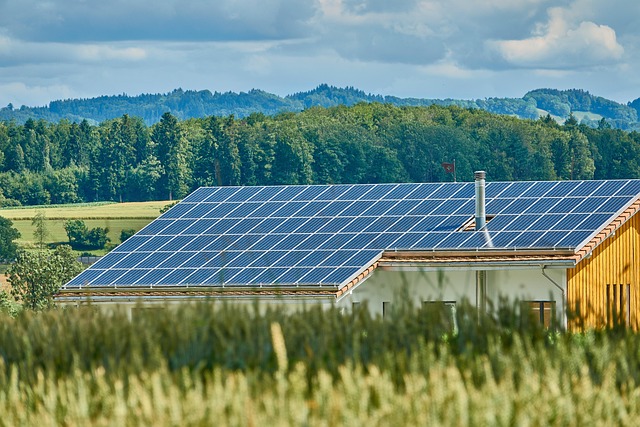
- Key Fields: Employment is concentrated in energy efficiency, renewable energy development (wind and solar), electric vehicles, and grid modernization.
Alignment with SDG 7 (Affordable and Clean Energy) and SDG 13 (Climate Action)
Minnesota’s strategic investments and policy decisions are advancing goals for affordable, clean energy and climate action.
- Policy Commitment: Minnesota has established a legislative goal to achieve 100% carbon-free electricity by 2040, a direct measure for SDG 13.
- Energy Affordability: Federal data analysis confirms that states with significant investments in wind and solar energy experience lower electricity costs, supporting the affordability target of SDG 7.
- System Resilience: Investments in a diverse portfolio of clean energy technologies, including storage, enhance the reliability and resilience of the energy system for all citizens.
The Role of Policy in Achieving Sustainable Development
State Policy as a Foundation for SDG Advancement
Consistent, forward-looking state energy policy has been a critical driver of sustainable development in Minnesota.
- Minnesota’s clear, long-term energy goals have created the market confidence necessary for business investment.
- This stability encourages private sector growth, which is essential for building the resilient infrastructure required for SDG 9 and creating the decent work outlined in SDG 8.
Challenges Posed by Federal Policy Instability
Progress towards SDGs is threatened by instability at the federal level.
- The federal “One Big Beautiful Bill Act” has abruptly terminated tax incentives for clean energy technologies, including energy efficiency, electric vehicles, wind, and solar.
- This policy shift reverses the decade-long certainty provided by the 2022 Inflation Reduction Act, creating market whiplash.
- Such instability hampers corporate planning, investment in capital-intensive projects, and hiring, thereby impeding national progress on SDGs 7, 8, 9, and 13.
Future Projections and Conclusion
The Growing Importance of the Clean Energy Workforce
The role of clean energy workers is set to become more critical in the coming years.
- Energy demand is projected to increase significantly due to the growth of artificial intelligence, data centers, and widespread electrification.
- The skills of the clean energy workforce will be vital to build and maintain the innovative infrastructure needed to meet this demand sustainably, directly supporting SDG 9.
Conclusion: A Framework for Sustainable Prosperity
Minnesota’s experience provides a replicable model for aligning economic and environmental objectives.
- The state’s record-setting job growth in the clean energy sector demonstrates that clear policy direction can successfully drive progress toward multiple Sustainable Development Goals.
- Minnesota’s commitment serves as a framework for achieving economic prosperity, energy independence, and environmental sustainability in tandem.
Analysis of Sustainable Development Goals in the Article
1. Which SDGs are addressed or connected to the issues highlighted in the article?
-
SDG 7: Affordable and Clean Energy
The article is centered on the clean energy industry. It explicitly discusses Minnesota’s policy for “100% carbon-free electricity by 2040” and the growth of sectors like “energy efficiency, wind and solar development.” This directly aligns with the goal of ensuring access to affordable, reliable, sustainable, and modern energy for all.
-
SDG 8: Decent Work and Economic Growth
A primary focus of the article is job creation within the clean energy sector. It states that “nearly 64,000 Minnesotans now work” in the industry, describing them as “family-supporting jobs.” It also highlights that these jobs “continue to grow twice as fast as the overall economy,” linking the clean energy transition directly to sustainable economic growth and productive employment.
-
SDG 9: Industry, Innovation, and Infrastructure
The article discusses significant investments in energy infrastructure, including “grid modernization” and “storage technologies.” It emphasizes the importance of building a “low-cost, flexible, and resilient energy system” and highlights how “American energy innovation” is hampered by unstable federal policy. This connects to the goal of building resilient infrastructure and fostering innovation.
-
SDG 13: Climate Action
The entire premise of transitioning to clean energy is a fundamental climate action strategy. The article’s mention of Minnesota’s goal for “100% carbon-free electricity” is a direct policy measure to combat climate change by reducing greenhouse gas emissions from the power sector.
2. What specific targets under those SDGs can be identified based on the article’s content?
-
SDG 7: Affordable and Clean Energy
- Target 7.2: By 2030, increase substantially the share of renewable energy in the global energy mix. The article directly supports this target by highlighting Minnesota’s progress and policy towards “100% carbon-free electricity by 2040,” driven by investments in “wind and solar development.”
- Target 7.3: By 2030, double the global rate of improvement in energy efficiency. The article identifies “energy efficiency” as a key component of the clean energy industry and a source of job growth.
- Target 7.a: By 2030, enhance international cooperation to facilitate access to clean energy research and technology… and promote investment in energy infrastructure and clean energy technology. The article discusses investments in “grid modernization,” “storage,” and a “portfolio of other clean-energy technologies.”
-
SDG 8: Decent Work and Economic Growth
- Target 8.2: Achieve higher levels of economic productivity through diversification, technological upgrading and innovation. The article points to the clean energy sector as a high-growth area, expanding “twice as fast as the overall economy” through “innovative clean-energy technologies.”
- Target 8.5: By 2030, achieve full and productive employment and decent work for all. The article quantifies job creation (“nearly 64,000 Minnesotans”) and qualifies these as “family-supporting jobs,” which implies decent work.
-
SDG 9: Industry, Innovation, and Infrastructure
- Target 9.1: Develop quality, reliable, sustainable and resilient infrastructure. The article’s focus on creating a “low-cost, flexible, and resilient energy system” through “grid modernization” directly aligns with this target.
- Target 9.4: By 2030, upgrade infrastructure and retrofit industries to make them sustainable… with greater adoption of clean and environmentally sound technologies. The state’s goal of “100% carbon-free electricity” is a clear example of upgrading infrastructure with clean technologies like wind and solar.
-
SDG 13: Climate Action
- Target 13.2: Integrate climate change measures into national policies, strategies and planning. The article showcases this at a sub-national level, describing Minnesota’s “consistent, forward-looking energy policy” and its “clear path to 100% carbon-free electricity by 2040” as a critical strategy.
3. Are there any indicators mentioned or implied in the article that can be used to measure progress towards the identified targets?
Yes, the article mentions several quantitative and qualitative indicators:
- Number of jobs in the clean energy sector: The article provides a specific figure of “nearly 64,000 Minnesotans” working in the industry. This is a direct indicator for SDG 8 (Decent Work and Economic Growth).
- Job growth rate: The statement that clean energy jobs “continue to grow twice as fast as the overall economy” is a key performance indicator of the sector’s economic impact, relevant to SDG 8.
- Share of carbon-free electricity: The policy goal of “100% carbon-free electricity by 2040” serves as a clear, measurable indicator for progress towards SDG 7 (Affordable and Clean Energy) and SDG 13 (Climate Action).
- Electricity costs: The article implies an economic indicator by citing a Politico analysis that found “states investing most heavily in wind and solar have lower electricity costs.” This measures the affordability aspect of SDG 7.
- Investment in clean energy technologies: The article mentions investment in specific areas like “energy efficiency, wind and solar development, electric vehicles, and grid modernization,” which can be tracked as indicators of progress for SDG 7 and SDG 9.
4. Table of SDGs, Targets, and Indicators
| SDGs | Targets | Indicators |
|---|---|---|
| SDG 7: Affordable and Clean Energy |
|
|
| SDG 8: Decent Work and Economic Growth |
|
|
| SDG 9: Industry, Innovation, and Infrastructure |
|
|
| SDG 13: Climate Action |
|
|
Source: wctrib.com
What is Your Reaction?
 Like
0
Like
0
 Dislike
0
Dislike
0
 Love
0
Love
0
 Funny
0
Funny
0
 Angry
0
Angry
0
 Sad
0
Sad
0
 Wow
0
Wow
0