
















MIT spin-out 247Solar grabs $25 million to store thermal energy for electricity generation and heat via CSP – ess-news.com
Report on 247Solar’s Contribution to Sustainable Development Goals through Series B Funding
Introduction: Advancing Global Sustainability Targets
247Solar, a company originating from the Massachusetts Institute of Technology (MIT), has initiated a $25 million Series B funding round to scale its concentrated solar power (CSP) technology. This initiative is critically aligned with the United Nations Sustainable Development Goals (SDGs), particularly in the pursuit of clean energy, sustainable industry, and climate action. The company has secured initial investments of $3.5 million, signaling strong support for its mission to provide continuous, zero-carbon energy solutions.
Technological Innovation for SDG 7: Affordable and Clean Energy
247Solar’s technology directly addresses the core targets of SDG 7 by ensuring access to affordable, reliable, and modern energy. The system’s operational model is designed to provide uninterrupted power, a key challenge for renewable energy sources.
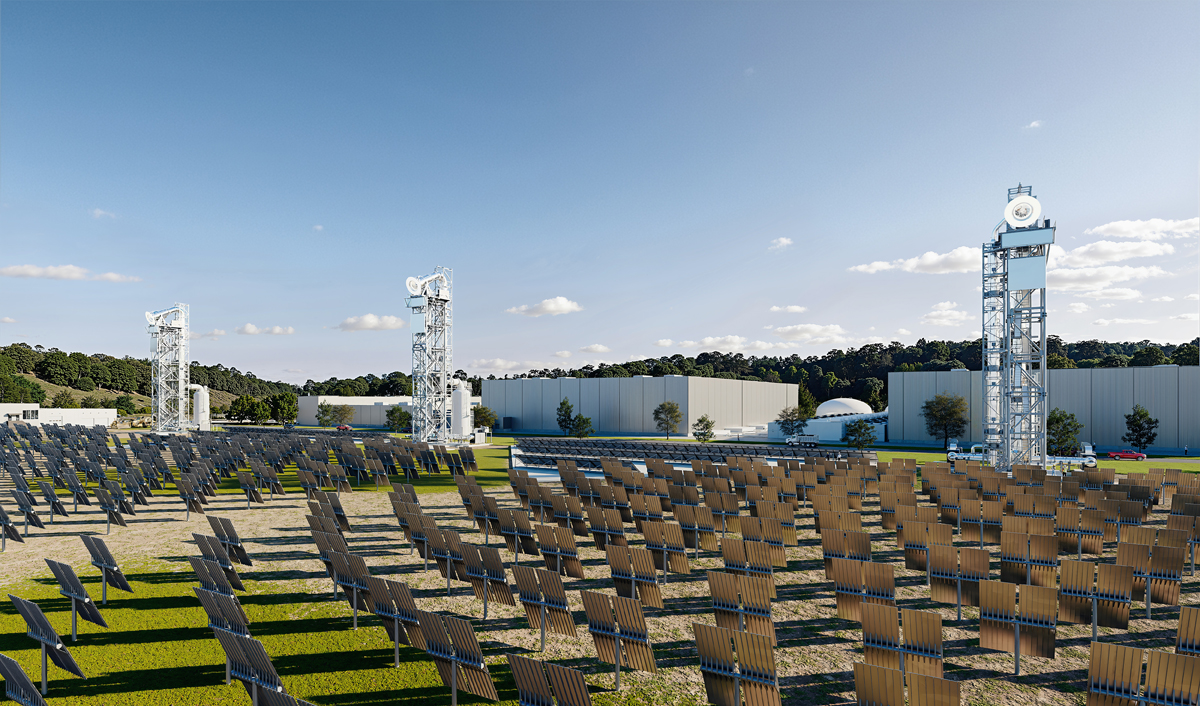
- Continuous Power Generation: The CSP technology utilizes sun-tracking mirrors to heat air to approximately 1,000°C, driving turbines for electricity and heat production.
- Thermal Energy Storage: By storing energy in ceramic pellets or sand, the system provides 24/7 baseload power, overcoming the intermittency of traditional solar and wind, thereby enhancing energy reliability (SDG Target 7.1).
- Hybrid System Integration: The solution is designed for integration with solar photovoltaics (PV) in microgrids. This hybrid approach combines low-cost daytime PV electricity with 247Solar’s dispatchable baseload power, creating a robust and sustainable energy infrastructure (SDG Target 7.B).
Driving SDG 9 and SDG 13: Sustainable Industrialization and Climate Action
The technology offers a transformative solution for decarbonizing industrial processes, a significant contributor to global emissions. This directly supports SDG 9 (Industry, Innovation, and Infrastructure) and SDG 13 (Climate Action).
- Decarbonizing Industrial Heat: A Yale University study highlights that industrial heat accounts for 20% of global energy demand. 247Solar’s ability to provide high-temperature clean heat presents a viable pathway for industries to transition to sustainable production patterns (SDG Target 9.4).
- Significant Emissions Reduction: The company reports that its integrated power and heat solutions can reduce carbon emissions by up to 95%, making a substantial contribution to global climate change mitigation efforts (SDG Target 13.2).
- Global Project Pipeline: With an active project pipeline of $250 million across six continents, including applications for utilities and off-grid mining, the company is scaling its impact on sustainable infrastructure globally.
Strategic Objectives of Series B Funding Aligned with SDGs
The capital raised will be allocated to strategic initiatives aimed at accelerating the adoption of clean energy technology and expanding its contribution to the SDGs.
- Scale Energy-as-a-Service Model: To de-risk projects and improve access to clean energy for customers through build-own-operate agreements, advancing SDG 7.
- Drive Mass Production and Cost Reduction: To enhance the affordability and accessibility of clean energy technology, in line with SDG 7.
- Market a New Industrial Thermal Battery: To further innovation in energy storage, supporting the integration of variable renewables like PV and wind into the grid (SDG 9).
- Develop a Larger 3.5 MW Solution: To scale the technology’s impact for larger industrial and utility applications, amplifying contributions to SDG 9 and SDG 13.
- Expand Commercial Team: To enter new markets and accelerate the global transition to sustainable energy systems.
Analysis of Sustainable Development Goals in the Article
1. Which SDGs are addressed or connected to the issues highlighted in the article?
- SDG 7: Affordable and Clean Energy: The article’s central theme is 247Solar’s technology that “generates continuous clean energy” and provides “emissions-free power.” It directly addresses the need for renewable energy sources to decarbonize the global energy sector. The mention of cutting “energy bills by 25% or more” also connects to the affordability aspect of this goal.
- SDG 9: Industry, Innovation, and Infrastructure: The article highlights innovation, describing 247Solar as a “Massachusetts Institute of Technology (MIT) spin-out” developing advanced technology. The core mission to “decarbonize high-temperature industrial heat” and the plan for “mass production of core technologies” directly relate to upgrading industries and building sustainable infrastructure.
- SDG 12: Responsible Consumption and Production: By providing a clean energy alternative for industrial processes, the technology promotes sustainable production patterns. The article notes that “heating for industrial use accounts for 20% of global energy demand,” and 247Solar’s solution enables industries to significantly reduce their environmental footprint.
- SDG 13: Climate Action: This goal is explicitly addressed through the technology’s primary benefit, which is climate change mitigation. The article states that the solution can “reduce carbon emissions by as much as 95%,” directly contributing to the global effort to combat climate change by decarbonizing both industrial heat and electricity generation.
2. What specific targets under those SDGs can be identified based on the article’s content?
- Target 7.2: By 2030, increase substantially the share of renewable energy in the global energy mix. The entire article focuses on a concentrated solar power (CSP) technology, a renewable energy source designed to provide “round-the-clock” power, thus directly contributing to increasing the share of renewables.
- Target 9.4: By 2030, upgrade infrastructure and retrofit industries to make them sustainable… with greater adoption of clean and environmentally sound technologies. The article states that 247Solar “addresses one of the biggest challenges of all in industrial decarbonization” by providing clean technology for high-temperature industrial heat, which is a direct application of this target.
- Target 9.5: Enhance scientific research, upgrade the technological capabilities of industrial sectors… and encourage innovation. The company’s origin as an “MIT spin-out” and its plans for “advanced development of a new, larger 3.5 MW solution” exemplify the push for innovation and upgrading technological capabilities described in this target.
- Target 13.2: Integrate climate change measures into national policies, strategies and planning. The deployment of technologies like 247Solar’s is a key climate change measure. The company’s “active pipeline of $250 million on six continents” shows that its solution is being integrated into energy and industrial planning globally.
3. Are there any indicators mentioned or implied in the article that can be used to measure progress towards the identified targets?
- Renewable energy capacity: The article mentions the company’s “current 400 kW module” and plans for a “new, larger 3.5 MW solution.” The total installed capacity (in MW) of this technology would be a direct indicator of its contribution to renewable energy goals.
- Investment in clean technology: The article explicitly states that the company has opened a “$25 million Series B funding round” and has an “active pipeline of $250 million.” These financial figures serve as indicators of investment flows into clean energy infrastructure and technology.
- Reduction in CO2 emissions: A key performance indicator mentioned is the ability to “reduce carbon emissions by as much as 95%.” This percentage reduction is a quantifiable measure of the technology’s impact on climate action and sustainable industrialization.
- Energy cost savings: The claim that customers can “cut their energy bills by 25% or more” is a measurable indicator of the technology’s affordability and economic efficiency, relevant to SDG 7.
4. Create a table with three columns titled ‘SDGs, Targets and Indicators” to present the findings from analyzing the article.
| SDGs | Targets | Indicators |
|---|---|---|
| SDG 7: Affordable and Clean Energy | 7.2: Increase the share of renewable energy in the global energy mix. | – Installed capacity of new power modules (e.g., 400 kW and 3.5 MW units). – Percentage reduction in energy bills for customers (stated as “25% or more”). |
| SDG 9: Industry, Innovation, and Infrastructure | 9.4: Upgrade infrastructure and retrofit industries to make them sustainable with clean technologies. | – Number of industrial operations (e.g., “off-grid mining operations”) adopting the technology. – Size of project pipeline targeting industrial decarbonization (“$250 million on six continents”). |
| SDG 12: Responsible Consumption and Production | 12.4: Achieve the environmentally sound management of chemicals and all wastes…and significantly reduce their release to air. | – Percentage of industrial heating demand met by emissions-free power (article notes industrial heat is “20% of global energy demand”). |
| SDG 13: Climate Action | 13.2: Integrate climate change measures into policies, strategies and planning. | – Percentage reduction in carbon emissions for customers (stated as “as much as 95%”). – Amount of private investment mobilized for climate mitigation technology (“$25 million Series B funding”). |
Source: ess-news.com
What is Your Reaction?
 Like
0
Like
0
 Dislike
0
Dislike
0
 Love
0
Love
0
 Funny
0
Funny
0
 Angry
0
Angry
0
 Sad
0
Sad
0
 Wow
0
Wow
0