

















































;Resize=620#)











Mutual need, mutual gain: Academic health systems work to support rural hospitals – AAMC
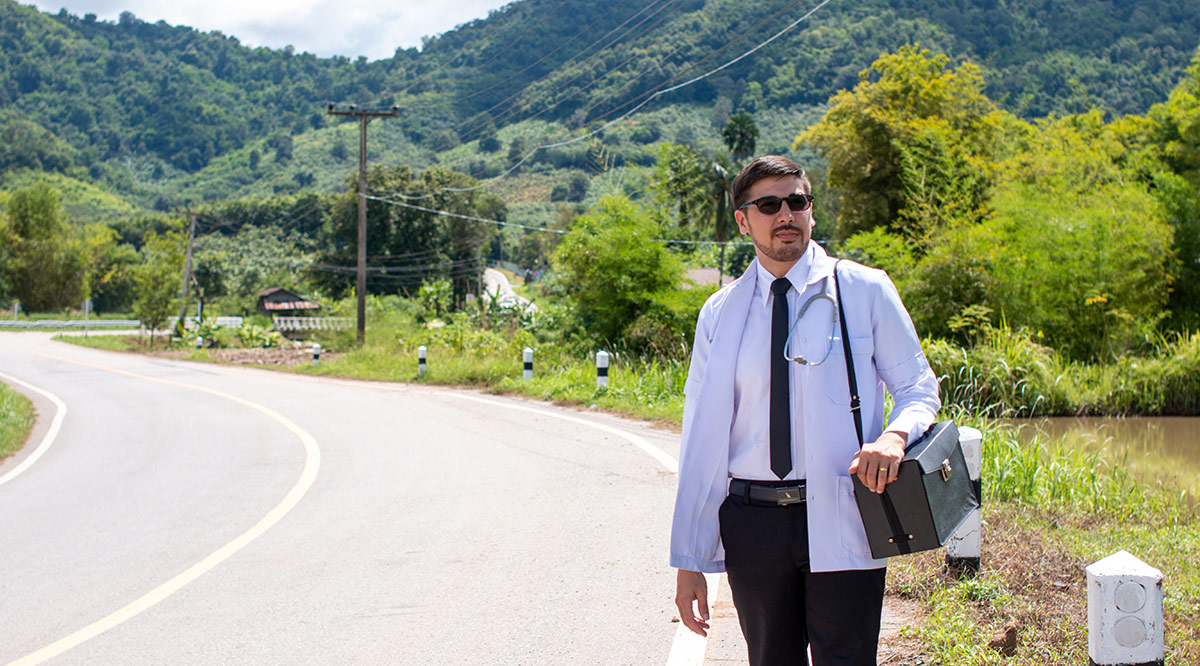
Report on Academic and Rural Health Partnerships Advancing Sustainable Development Goals
Introduction: Addressing Healthcare Disparities through Strategic Alliances
This report examines the collaborative efforts between Academic Health Systems (AHSs) and rural healthcare providers. These partnerships are critical for strengthening local healthcare infrastructure, reducing inequalities, and advancing several United Nations Sustainable Development Goals (SDGs), primarily SDG 3 (Good Health and Well-being), SDG 10 (Reduced Inequalities), and SDG 17 (Partnerships for the Goals). The financial instability of rural hospitals, with 146 closures between 2005 and 2023, underscores the urgency of these alliances.
Enhancing Clinical Capacity and Education (SDG 3, SDG 4)
Maternal Health and Emergency Preparedness
To address high-risk maternal health scenarios and contribute to the reduction of maternal mortality (SDG Target 3.1), AHSs provide specialized training to rural hospital staff, enhancing local capacity to manage obstetric emergencies.
- Dartmouth Health & Androscoggin Valley Hospital (AVH): Dartmouth Health conducts regular simulations on obstetric complications for AVH staff. This training empowers local providers to manage emergencies, ensuring quality care is available locally and reducing the need for patient transfers over long distances.
- ECU Health: ECU Health supports obstetrics staff across more than two dozen rural counties with training in electronic fetal monitoring, advanced life support, and emergency delivery protocols. This partnership allows lower-risk deliveries to remain in the community, supporting local families and alleviating capacity pressure on the AHS.
Graduate Medical Education and Workforce Development
Placing medical residents in rural settings is a key strategy for addressing physician shortages and promoting equitable health workforce distribution, aligning with SDG 3 and SDG 4 (Quality Education).
- Creighton University School of Medicine: The Internal Medicine Rural Track Program places residents at CHI Health Good Samaritan hospital to acclimate new physicians to rural practice and encourage long-term retention in underserved communities.
- University of New Mexico (UNM) School of Medicine: The Family Medicine residency program sends residents to the Northern Navajo Medical Center, directly serving indigenous populations and fostering a workforce committed to rural health.
Leveraging Innovation for Equitable Access (SDG 9, SDG 10)
Telehealth and Electronic Collaboration
The use of digital infrastructure (SDG 9) is pivotal in overcoming geographical barriers and reducing inequalities (SDG 10) in healthcare access.
- Remote ICU Monitoring: Dartmouth Health provides continuous remote monitoring for the ICU at Littleton Region Health Care, enabling the rural hospital to manage a higher level of patient care locally.
- Emergency Tele-consultation: The University of Mississippi Medical Center (UMMC) offers telehealth connections to rural emergency departments for critical care consultations and utilizes a shared electronic medical records system to enhance continuity of care.
- School-Based Pediatric Consultations: Atrium Health provides virtual pediatric physical and behavioral health consultations in rural schools, removing access barriers for children and parents related to travel and appointment availability.
Strengthening Health Systems through Partnership (SDG 17)
Expanding Access to Advanced Care
Partnerships are essential for the operational viability of rural hospitals and for extending advanced medical services to underserved populations, directly supporting SDG 17 (Partnerships for the Goals).
- Clinical Trials: Atrium Health has expanded its clinical trials to rural areas, including cancer trials at Wake Forest Baptist Wilkes Medical Center. This initiative improves access to innovative treatments for rural populations, enhances diversity in research, and reduces the travel burden on patients.
Mergers and System Integration
Formal integration provides a lifeline for financially vulnerable rural facilities, ensuring continued access to care for communities and preventing the economic and social disruption caused by hospital closures.
- Atrium Health and Cherokee Medical Center: A merger stabilized a 60-bed Alabama hospital at risk of closing, securing healthcare access for a rural county of 25,000 people.
- Dartmouth Health and Cheshire Medical Center: This long-term partnership, culminating in a full merger, has ensured the continuation of critical services, including women’s health, in rural New Hampshire.
Conclusion: A Model for Sustainable Healthcare Delivery
The collaborations between AHSs and rural hospitals exemplify a powerful application of SDG 17. By sharing knowledge, technology, and resources, these partnerships directly contribute to:
- SDG 3 (Good Health and Well-being): By improving maternal health outcomes, enhancing emergency care, and increasing the number of skilled health workers in rural areas.
- SDG 10 (Reduced Inequalities): By closing the gap in healthcare quality and access between urban and rural populations.
- Sustainable Local Economies (SDG 8): By stabilizing rural hospitals, which are often major local employers.
These models demonstrate a scalable and effective strategy for building resilient, equitable, and sustainable health systems that leave no one behind.
Analysis of Sustainable Development Goals in the Article
1. Which SDGs are addressed or connected to the issues highlighted in the article?
-
SDG 3: Good Health and Well-being
This is the most prominent SDG in the article. The entire text focuses on ensuring access to quality healthcare services, particularly in underserved rural areas. It discusses challenges like hospital closures, physician shortages, and the need for specialized care like obstetrics. The collaborations between academic health systems (AHSs) and rural hospitals are direct efforts to improve health outcomes and strengthen healthcare systems, which is the core of SDG 3.
-
SDG 10: Reduced Inequalities
The article highlights the significant disparity in healthcare access and quality between urban centers (where AHSs are typically located) and rural communities. The closure of 146 rural hospitals and the long travel times for patients (“an hour to three hours”) exemplify this inequality. The initiatives described, such as bringing specialist care, training, and clinical trials to rural areas, are aimed at reducing this geographical inequality and ensuring that people in rural communities have access to the same quality of care as their urban counterparts.
-
SDG 17: Partnerships for the Goals
The central theme of the article is the power of partnerships. It explicitly details various forms of collaboration between different institutions—AHSs, rural hospitals, and medical schools—to achieve common health goals. The article states, “the academic health system (AHS) and the rural hospital need each other.” These partnerships involve sharing knowledge (training simulations), resources (financial support for training), technology (telehealth and electronic medical records), and expertise to strengthen local healthcare capacity, directly reflecting the principles of SDG 17.
2. What specific targets under those SDGs can be identified based on the article’s content?
-
SDG 3: Good Health and Well-being
- Target 3.1: By 2030, reduce the global maternal mortality ratio to less than 70 per 100,000 live births. The article places a strong emphasis on maternity care, noting that “Obstetrics in rural environments are under threat.” The collaborations, which include training rural staff on obstetric emergencies (postpartum hemorrhage, etc.) and supporting local delivery services, are direct actions to ensure safe childbirth and reduce maternal health risks, aligning with this target.
- Target 3.8: Achieve universal health coverage, including financial risk protection, access to quality essential health-care services and access to safe, effective, quality and affordable essential medicines and vaccines for all. The article addresses the threat to universal health coverage in rural areas due to hospital closures (“146 rural hospitals closed or stopped providing inpatient services”). The partnerships aim to maintain access to essential services locally, preventing patients from having to travel “two-and-a-half hours away” for care.
- Target 3.c: Substantially increase health financing and the recruitment, training, development and retention of the health workforce in developing countries, especially in least developed countries and small island developing States. Although the context is the US, the principle applies to underserved areas. The article describes resident placement programs like Creighton’s Rural Track Program, which are designed to “alleviate the physician shortage in those underserved areas” by training and retaining doctors in rural communities.
-
SDG 10: Reduced Inequalities
- Target 10.2: By 2030, empower and promote the social, economic and political inclusion of all, irrespective of age, sex, disability, race, ethnicity, origin, religion or economic or other status. The article focuses on reducing inequality based on geographic location. By enabling rural hospitals to “handle more high-risk pregnancies… close to home” and bringing clinical trials to rural patients, the initiatives ensure that rural populations are not excluded from accessing high-quality, advanced healthcare.
-
SDG 17: Partnerships for the Goals
- Target 17.17: Encourage and promote effective public, public-private and civil society partnerships, building on the experience and resourcing strategies of partnerships. The entire article is a case study for this target. It details multi-stakeholder partnerships between AHSs (like Dartmouth Health, UNM, ECU Health) and rural hospitals (like AVH, Cheshire Medical Center) that leverage shared knowledge, technology (telehealth), and resources to achieve sustainable health outcomes in rural communities.
3. Are there any indicators mentioned or implied in the article that can be used to measure progress towards the identified targets?
-
For Target 3.1 (Maternal Health)
- Implied Indicator: Availability of skilled personnel for obstetric emergencies in rural facilities. The article describes how AHSs conduct simulations and training for rural staff on complications like “postpartum hemorrhage, placental abruption, and shoulder dystocia.” Progress could be measured by the number of rural staff trained and their proficiency levels.
- Implied Indicator: Number of obstetric services maintained or opened in rural areas. The article notes that obstetrical services in rural hospitals are at a “high risk of closing.” A key measure of success would be the number of these vital services that remain operational due to AHS partnerships.
-
For Target 3.8 (Universal Health Coverage)
- Direct Indicator: Number of rural hospital closures. The article provides a baseline figure: “From 2005 through 2023, 146 rural hospitals closed or stopped providing inpatient services.” A reduction in this trend would indicate progress.
- Implied Indicator: Patient travel time for specialized care. The article mentions travel times of “two-and-a-half hours” or more. The success of these programs could be measured by a reduction in the need for long-distance travel for services that can be provided locally.
-
For Target 3.c (Health Workforce)
- Direct Indicator: Number of medical residents in rural training programs. The article specifies numbers, such as “four residents into its internal medicine Rural Track Program” and “two new residents to the 65-bed Northern Navajo Medical Center.” Tracking these numbers would measure progress in building a rural health workforce.
- Implied Indicator: Retention rate of physicians in rural areas post-residency. The article states the hope is that new doctors “will continue working in the community.” Measuring how many residents, like Rutvij Patel, MD, stay to practice in rural areas would be a key indicator of success.
-
For Target 10.2 (Reduced Inequalities)
- Direct Indicator: Number of rural patients enrolled in clinical trials. The article mentions that “more than 20 patients are in that trial” at a rural medical center. This provides a quantifiable measure of increased access to cutting-edge care for rural populations.
-
For Target 17.17 (Partnerships)
- Implied Indicator: Number and scope of partnerships between AHSs and rural facilities. The article describes various types of collaborations: resident placement, electronic collaboration (telehealth), maternity care support, clinical trials, and mergers. Progress can be measured by tracking the growth and effectiveness of these partnerships.
4. Table of SDGs, Targets, and Indicators
| SDGs | Targets | Indicators Identified in the Article |
|---|---|---|
| SDG 3: Good Health and Well-being |
3.1: Reduce maternal mortality.
3.8: Achieve universal health coverage and access to quality essential health-care services. 3.c: Increase recruitment, training, and retention of the health workforce in underserved areas. |
– Number of rural staff trained in obstetric emergencies. – Number of rural hospitals maintaining obstetric services. – Rate of rural hospital closures (Baseline: 146 closed from 2005-2023). – Number of medical residents placed in rural track programs (e.g., “four residents” in one program). |
| SDG 10: Reduced Inequalities | 10.2: Empower and promote the inclusion of all, irrespective of status (including geographic location). |
– Number of patients in rural areas enrolled in clinical trials (e.g., “more than 20 patients”). – Proportion of high-risk care handled locally in rural hospitals versus transferred to urban centers. |
| SDG 17: Partnerships for the Goals | 17.17: Encourage and promote effective public, public-private and civil society partnerships. | – Number and type of active partnerships between academic health systems and rural health providers (e.g., telehealth, training, mergers). |
Source: aamc.org
What is Your Reaction?
 Like
0
Like
0
 Dislike
0
Dislike
0
 Love
0
Love
0
 Funny
0
Funny
0
 Angry
0
Angry
0
 Sad
0
Sad
0
 Wow
0
Wow
0