























































National Pollution Control Day: A reminder that environmental safety is health safety – Times of India
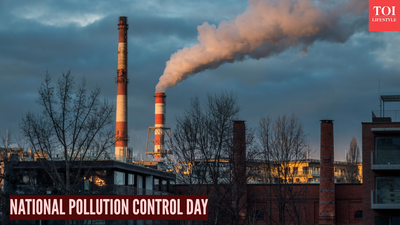
Report on National Pollution Control Day: Aligning Environmental Safety with Sustainable Development Goals
National Pollution Control Day, observed annually on December 2, serves as a critical reminder of the intrinsic link between environmental management and public health. Commemorating the victims of the 1984 Bhopal Gas Tragedy, the day underscores the urgent need for robust pollution control measures to achieve global health and sustainability targets, particularly the United Nations’ Sustainable Development Goals (SDGs).
The Bhopal Gas Tragedy: A Case Study in Unsustainable Industrial Practices
The industrial disaster in Bhopal, Madhya Pradesh, where a leak of methyl isocyanate gas from a pesticide plant resulted in thousands of immediate fatalities and long-term health consequences for hundreds of thousands, represents a catastrophic failure to uphold principles now central to the SDGs.
Immediate and Long-Term Health Impacts
- Immediate Effects: Exposure led to severe respiratory distress, eye irritation, and death.
- Chronic Conditions: Survivors have since suffered from respiratory diseases, neurological disorders, impaired vision, and organ damage, affecting subsequent generations.
This event highlights the devastating human cost of inadequate industrial safety and environmental oversight, directly contravening the objectives of SDG 3 (Good Health and Well-being) and SDG 8 (Decent Work and Economic Growth), which includes safe working environments.
The Global Health Burden of Pollution: A Challenge to SDG 3
Pollution remains a primary global public health threat, directly impeding progress on SDG 3, which aims to ensure healthy lives and promote well-being for all at all ages.
Key Statistics and Health Complications
- Premature Mortality: Air pollution is linked to approximately 7 million premature deaths annually worldwide. A 2021 UNICEF report noted that air pollution contributed to 8.1 million deaths, making it the second-leading risk factor for death globally.
- Disease Burden: Exposure to pollutants is a major cause of non-communicable diseases, including chronic obstructive pulmonary disease, ischemic heart disease, stroke, and lung cancer. This directly challenges SDG Target 3.4, which seeks to reduce premature mortality from such diseases.
- Vulnerable Populations: The impacts are disproportionately severe for children, the elderly, and individuals with pre-existing health conditions, undermining the SDG principle of “leaving no one behind.”
Integrating Pollution Control with the Sustainable Development Agenda
National Pollution Control Day advocates for a multi-faceted approach that aligns with several interconnected SDGs.
Core SDG Linkages
- SDG 3 (Good Health and Well-being): Reducing pollution is not merely an environmental issue but a fundamental public health imperative to lower disease rates and improve life expectancy.
- SDG 6 (Clean Water and Sanitation): Protecting water sources from chemical pollutants is essential for preventing waterborne diseases and ensuring access to safe drinking water.
- SDG 11 (Sustainable Cities and Communities): Effective pollution control requires better urban planning, sustainable transport systems (public and non-motorized travel), and ensuring universal access to clean air.
- SDG 12 (Responsible Consumption and Production): The day calls for industries to adopt cleaner technologies and sustainable practices to minimize waste and pollution, directly contributing to this goal.
- SDG 13 (Climate Action): Many actions to reduce air pollution, such as reducing fossil fuel consumption, also mitigate climate change, creating a co-beneficial relationship between these goals.
Strategic Recommendations for a Healthier and Sustainable Future
Achieving a pollution-free environment requires collective action from governments, industries, and individuals, guided by the SDG framework.
Actionable Measures
- Policy and Regulation: Governments must strengthen and enforce environmental laws and health surveillance systems, aligning national policies with global sustainability commitments.
- Sustainable Industrialization: Industries should invest in cleaner production technologies and circular economy models to minimize their environmental footprint, in line with SDG 9 (Industry, Innovation and Infrastructure).
- Community and Individual Action: Promoting sustainable lifestyles is crucial. Key actions include:
- Reducing reliance on fossil fuels by utilizing public transport.
- Conserving energy and managing waste through recycling.
- Participating in community-level environmental initiatives like tree planting.
Conclusion: A Collective Commitment to Health and Sustainability
The legacy of the Bhopal tragedy and the ongoing global health crisis caused by pollution reinforce that environmental protection and public health are inseparable. National Pollution Control Day is a call to action, urging a unified commitment to the Sustainable Development Goals. Through responsible policy-making, sustainable industrial practices, and conscious individual choices, it is possible to mitigate the deadly toll of pollution and build a healthier, more sustainable planet for future generations.
1. Which SDGs are addressed or connected to the issues highlighted in the article?
The article on National Pollution Control Day highlights issues that are directly and indirectly connected to several Sustainable Development Goals (SDGs). The primary focus on health impacts from pollution, industrial disasters, air and water quality, and sustainable practices links the text to the following SDGs:
- SDG 3: Good Health and Well-being: The article’s central theme is the link between pollution and severe health risks, including premature death and chronic diseases.
- SDG 6: Clean Water and Sanitation: The text briefly touches upon the importance of protecting water sources from chemical pollutants to prevent waterborne diseases.
- SDG 11: Sustainable Cities and Communities: The discussion on air pollution, the Air Quality Index (AQI), the need for better urban planning, and the promotion of public transport directly relates to creating sustainable urban environments.
- SDG 12: Responsible Consumption and Production: The Bhopal Gas Tragedy, a disaster at a pesticide manufacturing plant, serves as a stark example of the failure of responsible management of chemicals and industrial processes. The call for cleaner technologies and waste recycling also aligns with this goal.
2. What specific targets under those SDGs can be identified based on the article’s content?
Based on the issues discussed, several specific SDG targets can be identified:
SDG 3: Good Health and Well-being
- Target 3.9: “By 2030, substantially reduce the number of deaths and illnesses from hazardous chemicals and air, water and soil pollution and contamination.” This is the most relevant target. The article is built around this issue, citing the Bhopal Gas Tragedy (hazardous chemicals) and providing extensive data on deaths from air pollution (“No less than 7 million premature deaths annually result from air pollution across the globe”).
- Target 3.4: “By 2030, reduce by one-third premature mortality from non-communicable diseases through prevention and treatment and promote mental and physical health and well-being.” The article directly links air pollution to premature deaths from non-communicable diseases such as “chronic obstructive pulmonary disease, ischemic heart disease, stroke, lung cancer,” and notes it “worsens conditions of mental illness.”
SDG 6: Clean Water and Sanitation
- Target 6.3: “By 2030, improve water quality by reducing pollution, eliminating dumping and minimizing release of hazardous chemicals and materials…” The article supports this target by stating, “Protecting the sources of water and reducing chemical pollutants aids in preventing waterborne diseases.”
SDG 11: Sustainable Cities and Communities
- Target 11.6: “By 2030, reduce the adverse per capita environmental impact of cities, including by paying special attention to air quality and municipal and other waste management.” The article explicitly mentions the need to “Stop Ignoring The AQI Index,” promotes waste recycling, and advocates for “better urban planning where hotspots of pollution can be reduced and access to clean air and water increased.”
SDG 12: Responsible Consumption and Production
- Target 12.4: “By 2020, achieve the environmentally sound management of chemicals and all wastes throughout their life cycle… and significantly reduce their release to air, water and soil in order to minimize their adverse impacts on human health and the environment.” The Bhopal tragedy, caused by a “highly toxic gas” escaping from a pesticide plant, is a direct example of the failure to meet this target. The article’s call for “enforcement of environmental laws” and adopting “cleaner technologies” reinforces this connection.
3. Are there any indicators mentioned or implied in the article that can be used to measure progress towards the identified targets?
Yes, the article mentions and implies several indicators that are used to measure progress towards the identified targets:
Indicators for SDG 3 (Good Health and Well-being)
- Indicator 3.9.1: Mortality rate attributed to household and ambient air pollution. The article provides explicit data points for this indicator. It states, “No less than 7 million premature deaths annually result from air pollution across the globe,” “1.67 million deaths in 2019 could be attributed to air pollution, accounting for nearly 18% of all deaths,” and “Air pollution accounted for 8.1 million deaths globally in 2021.” These statistics are direct measures of this indicator.
- Indicator 3.4.1: Mortality rate attributed to cardiovascular disease, cancer, diabetes or chronic respiratory disease. The article links pollution directly to these diseases, mentioning “chronic obstructive pulmonary disease, ischemic heart disease, stroke, lung cancer,” and an increased risk for “diabetes.” The death tolls cited in the article are largely composed of mortality from these specific non-communicable diseases caused by pollution.
Indicators for SDG 11 (Sustainable Cities and Communities)
- Indicator 11.6.2: Annual mean levels of fine particulate matter (e.g. PM2.5 and PM10) in cities (population weighted). The article implies this indicator by referencing the need to monitor the “AQI Index” and discussing the health effects of “exposure to fine particulate matter.” It also mentions the “State of Global Air 2025 report,” which “examines air quality and health outcomes using the latest PM2.5 and ozone exposure data,” directly referencing the key component of this indicator.
4. Table of SDGs, Targets, and Indicators
| SDGs | Targets | Indicators |
|---|---|---|
| SDG 3: Good Health and Well-being |
Target 3.9: Substantially reduce the number of deaths and illnesses from hazardous chemicals and air, water and soil pollution and contamination.
Target 3.4: Reduce by one-third premature mortality from non-communicable diseases. |
Indicator 3.9.1: Mortality rate attributed to household and ambient air pollution (Mentioned via statistics: “7 million premature deaths annually,” “1.67 million deaths in 2019,” “8.1 million deaths globally in 2021”).
Indicator 3.4.1: Mortality rate attributed to cardiovascular disease, cancer, diabetes or chronic respiratory disease (Implied through the listing of these specific diseases as consequences of pollution). |
| SDG 6: Clean Water and Sanitation | Target 6.3: Improve water quality by reducing pollution and minimizing release of hazardous chemicals. | (No specific quantitative indicator mentioned, but the issue is raised: “Protecting the sources of water and reducing chemical pollutants aids in preventing waterborne diseases.”) |
| SDG 11: Sustainable Cities and Communities | Target 11.6: Reduce the adverse per capita environmental impact of cities, paying special attention to air quality. | Indicator 11.6.2: Annual mean levels of fine particulate matter (e.g. PM2.5) in cities (Implied by references to the “AQI Index,” “fine particulate matter,” and the “State of Global Air 2025 report” which uses “PM2.5… data”). |
| SDG 12: Responsible Consumption and Production | Target 12.4: Achieve the environmentally sound management of chemicals and all wastes to minimize their adverse impacts on human health and the environment. | (No specific quantitative indicator mentioned, but the Bhopal Gas Tragedy is presented as a case study of the failure to meet this target). |
Source: timesofindia.indiatimes.com
What is Your Reaction?
 Like
0
Like
0
 Dislike
0
Dislike
0
 Love
0
Love
0
 Funny
0
Funny
0
 Angry
0
Angry
0
 Sad
0
Sad
0
 Wow
0
Wow
0










