









































;Resize=620#)










New plan for residential development at 9220 Santa Monica Blvd. in Beverly Hills – Urbanize LA
Report on the Proposed Residential Development in Beverly Hills and its Alignment with Sustainable Development Goals (SDGs)
Project Overview
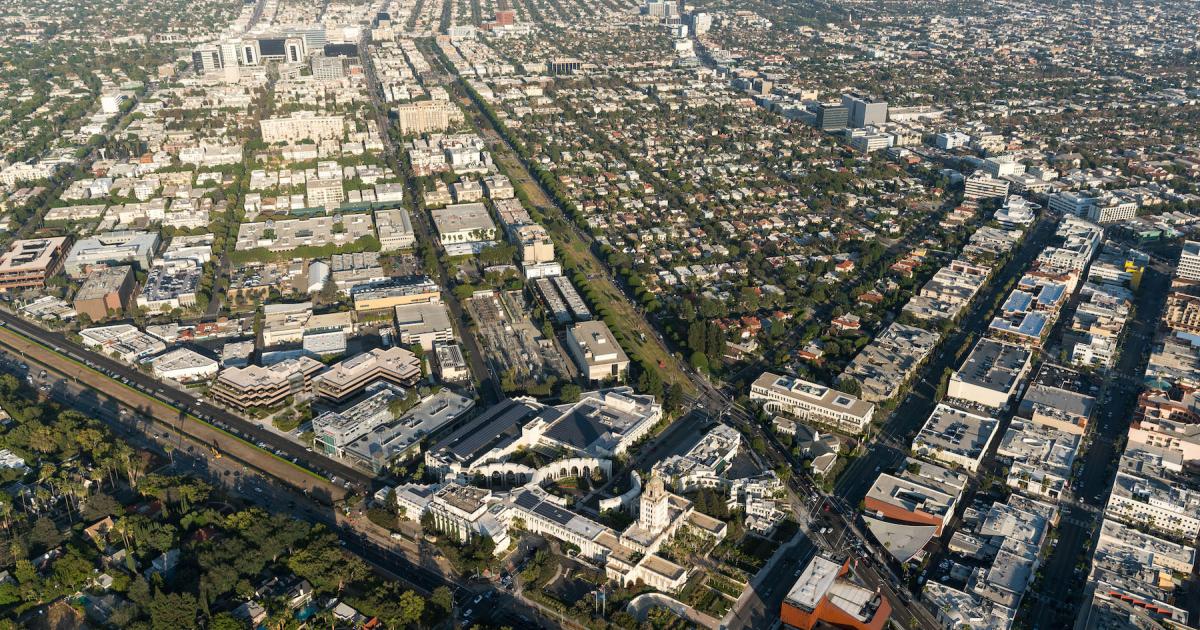
A revised development proposal has been submitted by BH Gateway, LLC for a former railroad right-of-way in Beverly Hills. The project focuses on constructing a multifamily residential complex, marking a significant shift from previous commercial development plans for the site. The updated plan demonstrates considerations for several United Nations Sustainable Development Goals (SDGs), particularly those related to urban development, housing, and environmental management.
- Developer: BH Gateway, LLC (Lyn Konheim)
- Location: Former railroad right-of-way, Beverly Hills
- Proposed Development: Four condominium buildings, ranging from seven to 13 stories in height.
- Total Units: Approximately 224 residential homes.
- Total Size: 503,000 square feet over a single level of subterranean parking.
- Key Feature: A portion of the units will be designated as affordable housing, utilizing density bonus incentives.
Alignment with SDG 11: Sustainable Cities and Communities
The project directly engages with the objectives of SDG 11, which aims to make cities and human settlements inclusive, safe, resilient, and sustainable.
- Target 11.1 (Affordable Housing): By setting aside a portion of the 224 units as affordable housing, the development contributes directly to ensuring access to adequate and affordable housing. This is a critical step toward reducing housing inequality (SDG 10) within an affluent urban area.
- Target 11.3 (Sustainable Urbanization): The proposal for a high-density, multi-story residential complex on repurposed urban land represents an efficient model of land use. This approach to development helps prevent urban sprawl and promotes sustainable settlement planning.
- Target 11.7 (Green and Public Spaces): The revised plan dedicates one of the two lots to recreational amenity space and surface parking. This allocation supports the goal of providing residents with access to green spaces, which is essential for community health and well-being (SDG 3).
Environmental and Social Considerations (SDG 15 & SDG 3)
The project’s history and future plans have significant implications for local environmental health and social well-being.
- SDG 15 (Life on Land): A past controversy involving the removal of 200 trees from the site between 2015 and 2016 presents a challenge to the principles of SDG 15, which seeks to protect terrestrial ecosystems. The development of the new recreational amenity space offers a crucial opportunity to mitigate this past damage through ecological restoration, such as the planting of native flora.
- SDG 8 (Decent Work and Economic Growth): The construction and subsequent management of a large-scale residential complex will contribute to local economic growth by creating jobs and stimulating related industries, aligning with the goal of promoting sustained and inclusive economic growth.
Summary of Key Project Revisions
The current proposal reflects a significant evolution from prior plans for the site.
- The primary land use has shifted from a commercial plan (114,000 square feet of office space) to a residential one.
- The total number of proposed residential units has been adjusted from approximately 250 to 224.
- The architectural plan now features taller structures (seven to 13 stories) while concentrating the development on one of the two available lots.
- A dedicated lot is now planned for recreational amenities and surface parking, enhancing the project’s contribution to community well-being.
1. Which SDGs are addressed or connected to the issues highlighted in the article?
SDG 11: Sustainable Cities and Communities
- The article is centered on a new urban residential development project in Beverly Hills. It discusses the creation of housing, the allocation of land for different uses (residential, parking, recreation), and the environmental impact within a city, all of which are core components of SDG 11. The project aims to transform a former railroad right-of-way into a residential area, directly addressing urban land use and development.
2. What specific targets under those SDGs can be identified based on the article’s content?
Target 11.1: By 2030, ensure access for all to adequate, safe and affordable housing and basic services and upgrade slums.
- The article explicitly states that the proposed 503,000-square-foot development would include 224 homes, with “a portion to be set aside as affordable housing in exchange for density bonus incentives.” This directly aligns with the goal of increasing access to affordable housing within the community.
Target 11.7: By 2030, provide universal access to safe, inclusive and accessible, green and public spaces…
- This target is addressed through multiple points in the article. The current plan includes retaining a lot as a “mixture of surface parking and recreational amenity space.” Furthermore, a previous plan for the site involved transferring “a separate strip of land to the City of Beverly Hills for conversion to park space.” The past controversy over the “removal of 200 trees” also highlights the community’s concern for and the project’s impact on green spaces in the urban environment.
3. Are there any indicators mentioned or implied in the article that can be used to measure progress towards the identified targets?
Indicator for Target 11.1
- The article implies a direct indicator for measuring progress. The statement that “a portion [of the 224 homes] to be set aside as affordable housing” provides a clear, quantifiable metric. The specific indicator is the number or percentage of new residential units designated as affordable housing within the development.
Indicator for Target 11.7
- The article implies two indicators. First, the creation of “recreational amenity space” and the previous plan for “park space” suggest an indicator of the total area of land designated for public recreational use. Second, the historical context of the “removal of 200 trees” provides a quantifiable negative indicator, implying that the number of trees removed or planted can be used to measure the change in urban green space.
4. SDGs, Targets and Indicators Table
| SDGs | Targets | Indicators |
|---|---|---|
| SDG 11: Sustainable Cities and Communities | 11.1: Ensure access for all to adequate, safe and affordable housing. | The number and percentage of the 224 new homes that will be designated as affordable housing. |
| SDG 11: Sustainable Cities and Communities | 11.7: Provide universal access to safe, inclusive and accessible, green and public spaces. | The area of land to be used as “recreational amenity space” or “park space.” The number of trees removed from the site (200). |
Source: la.urbanize.city
What is Your Reaction?
 Like
0
Like
0
 Dislike
0
Dislike
0
 Love
0
Love
0
 Funny
0
Funny
0
 Angry
0
Angry
0
 Sad
0
Sad
0
 Wow
0
Wow
0