








































Norway forgets about wind turbines — A flying kite producing 600 kW rewrites clean energy – ECOticias.com El Periódico Verde
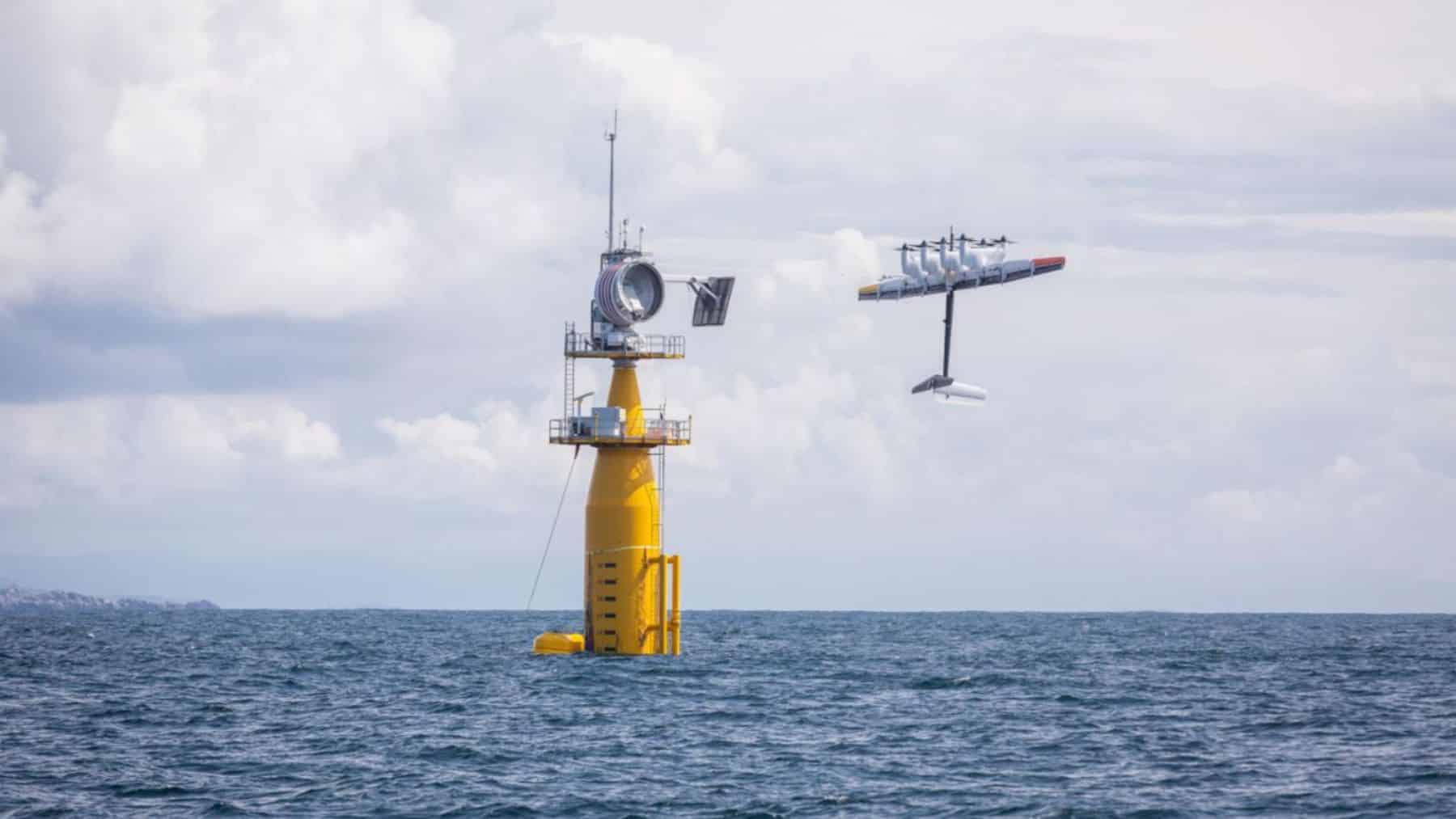
Report on the Makani Airborne Wind Energy Project and its Alignment with Sustainable Development Goals (SDGs)
1.0 Project Overview
The Makani project was an innovative airborne wind energy initiative designed to capture wind power using a large, autonomous kite. With origins in California in 2006 and later development under Alphabet (Google), the project aimed to generate 600 kW of electricity, presenting a novel approach to renewable energy. Despite its discontinuation in 2020, the project’s principles and technological advancements provide a significant case study for achieving key Sustainable Development Goals (SDGs), particularly SDG 7 (Affordable and Clean Energy).
2.0 Technological Framework and Contribution to SDG 9 (Industry, Innovation, and Infrastructure)
2.1 System Design and Operation
The core of the project was the M600 model, an energy kite engineered to function as an airborne wind turbine. Its operational cycle was managed by advanced software and sensors, representing a significant innovation in resilient and sustainable infrastructure.
- Launch: The M600 launched vertically from a ground station, propelled by its rotors.
- Generation: Upon reaching an altitude of approximately 1,000 feet, it transitioned into a crosswind flight path. The rotors then acted as turbines, capturing kinetic energy from the wind.
- Transmission: Electricity generated onboard was transmitted down a conductive tether to the ground station for grid integration.
2.2 Fostering Global Innovation
Upon its closure, the Makani team open-sourced its findings in “The Energy Kite Collection,” which includes flight data, technical reports, and design blueprints. This action directly supports SDG 9 by promoting inclusive and sustainable industrialization and fostering innovation for other researchers and engineers worldwide.
3.0 Advancing SDG 7 (Affordable and Clean Energy) and SDG 13 (Climate Action)
3.1 Unlocking New Wind Resources
A primary objective of the Makani project was to access stronger and more consistent winds at higher altitudes, which are inaccessible to conventional turbines. Successful tests, including a deployment off the coast of Norway in partnership with Shell, demonstrated the system’s capacity to operate in new environments, such as deep offshore waters. This capability is crucial for expanding global access to clean energy.
3.2 Key Benefits for Sustainable Energy Goals
The project’s design offered several advantages that align directly with the targets of SDG 7 and SDG 13.
- Enhanced Energy Access: The system’s potential for deployment in remote or geographically challenging locations where traditional turbines are impractical supports the goal of ensuring universal access to affordable and modern energy services.
- Increased Renewable Energy Share: By tapping into high-altitude wind, the technology promised to significantly increase the potential for wind power generation, contributing to the global share of renewable energy.
- Climate Change Mitigation: As a zero-emission energy source, the Makani kite was conceived as a direct tool to combat climate change and its impacts, a central tenet of SDG 13.
4.0 Resource Efficiency and Alignment with SDG 12 (Responsible Consumption and Production)
The Makani project was engineered with resource efficiency as a core principle. The kite system required substantially fewer materials than a conventional wind turbine of comparable power output. This minimalist design reduces the environmental footprint associated with manufacturing and installation, directly contributing to the sustainable management and efficient use of natural resources as outlined in SDG 12.
5.0 Project Discontinuation and Legacy
5.1 Rationale for Closure
Alphabet discontinued the project on the basis that the path to commercialization was longer and more resource-intensive than initially projected. The decision was presented not as a technological failure but as a strategic reallocation of resources.
5.2 Enduring Impact on Sustainable Development
Despite its termination, the Makani project remains a landmark initiative in the pursuit of sustainable energy. Its legacy is a powerful demonstration of the potential for radical innovation to address global challenges.
- It provided a proof-of-concept for a new class of clean energy technology (SDG 7).
- It advanced engineering knowledge through its open-source data release (SDG 9).
- It highlighted a model for resource-efficient energy infrastructure (SDG 12).
- The collaboration between technology firms and energy corporations exemplified the cross-sector partnerships needed to achieve the SDGs (SDG 17).
Analysis of Sustainable Development Goals in the Article
1. Which SDGs are addressed or connected to the issues highlighted in the article?
-
SDG 7: Affordable and Clean Energy
The article’s central theme is the Makani Project, an innovative technology designed to generate clean, renewable energy. It explicitly discusses the project’s goal of “producing 600 kW of clean energy” and presenting a new way to “rewrite the clean energy game.” This directly aligns with the core objective of SDG 7, which is to ensure access to affordable, reliable, sustainable, and modern energy for all.
-
SDG 9: Industry, Innovation, and Infrastructure
The Makani Project is portrayed as a significant technological innovation. The article highlights its unique design—a flying kite with rotors—and its advanced guidance system using “sensors and advanced software.” The project represents an effort to create a new type of energy infrastructure that could be “deployed in areas where traditional wind turbines could not.” This focus on research, technological advancement, and creating resilient infrastructure connects directly to SDG 9.
-
SDG 12: Responsible Consumption and Production
The article mentions a key advantage of the Makani kite: “few materials and minimal maintenance were required.” This points towards a more sustainable production model compared to traditional wind turbines, which are resource-intensive. This principle of achieving more with fewer resources is a cornerstone of SDG 12, which promotes sustainable management and efficient use of natural resources.
-
SDG 13: Climate Action
By focusing on a novel method for generating clean wind power, the article implicitly addresses SDG 13. Renewable energy projects like Makani are fundamental to combating climate change by reducing reliance on fossil fuels and lowering greenhouse gas emissions. The project’s aim to “capture wind power” more effectively contributes to climate change mitigation efforts.
2. What specific targets under those SDGs can be identified based on the article’s content?
-
Target 7.2: Increase the share of renewable energy
The article’s entire focus is on the Makani Project’s potential to generate “600 kW of clean energy” from wind. This is a direct contribution to increasing the proportion of renewable energy in the global energy mix, which is the objective of Target 7.2.
-
Target 9.4: Upgrade infrastructure and industries for sustainability
The Makani kite is presented as a cleaner, more resource-efficient technology. The article notes that “few materials and minimal maintenance were required,” suggesting a more sustainable industrial process compared to traditional turbines. This aligns with Target 9.4’s goal of adopting cleaner and more environmentally sound technologies.
-
Target 9.5: Enhance scientific research and upgrade technology
The project is a clear example of advanced scientific research and technological development in the renewable energy sector. Even in its closure, the project contributed to this target by releasing its findings in “The Energy Kite Collection, which contains flight data as well as design blueprints for engineers,” thereby encouraging further innovation.
-
Target 12.2: Achieve the sustainable management and efficient use of natural resources
The statement that the kite required “few materials” directly relates to the efficient use of natural resources. This design principle aims to generate energy with a smaller material footprint, which is the central aim of Target 12.2.
3. Are there any indicators mentioned or implied in the article that can be used to measure progress towards the identified targets?
-
Indicator for Target 7.2 (Renewable energy share)
The article provides a specific quantitative measure of the technology’s output: “a flying kite producing 600 kW.” This figure serves as a direct indicator of the renewable energy generation capacity of a single unit, which can be used to calculate its potential contribution to the overall energy supply.
-
Indicator for Target 9.5 (Research and development)
The article implies an indicator related to knowledge sharing and R&D investment. The release of “The Energy Kite Collection” containing flight data and blueprints is a qualitative indicator of the project’s contribution to the body of scientific knowledge, fostering further research and development in the field.
-
Indicator for Target 12.2 (Natural resource use)
The phrase “few materials and minimal maintenance were required” is a qualitative indicator of resource efficiency. While no specific numbers are given, it implies a lower material footprint (Indicator 12.2.1) compared to conventional wind turbines, suggesting progress towards more sustainable production and consumption patterns.
4. Summary Table of SDGs, Targets, and Indicators
| SDGs | Targets | Indicators |
|---|---|---|
| SDG 7: Affordable and Clean Energy | Target 7.2: By 2030, increase substantially the share of renewable energy in the global energy mix. | The specific energy output mentioned: “producing 600 kW” of clean energy, which measures renewable energy capacity. |
| SDG 9: Industry, Innovation, and Infrastructure | Target 9.5: Enhance scientific research, upgrade the technological capabilities of industrial sectors… encouraging innovation. | The release of “The Energy Kite Collection” with flight data and blueprints, serving as a contribution to public R&D knowledge. |
| SDG 12: Responsible Consumption and Production | Target 12.2: By 2030, achieve the sustainable management and efficient use of natural resources. | The qualitative description that “few materials and minimal maintenance were required,” implying a lower material footprint (Indicator 12.2.1). |
Source: ecoticias.com
What is Your Reaction?
 Like
0
Like
0
 Dislike
0
Dislike
0
 Love
0
Love
0
 Funny
0
Funny
0
 Angry
0
Angry
0
 Sad
0
Sad
0
 Wow
0
Wow
0