




























;Resize=620#)












Plan to store CO2 deep under Lake Maurepas draws wide-ranging opposition at latest hearing – The Advocate

Report on the Proposed Ascension Parish Clean Energy Project and its Alignment with Sustainable Development Goals
1.0 Project Overview and Stakeholder Engagement
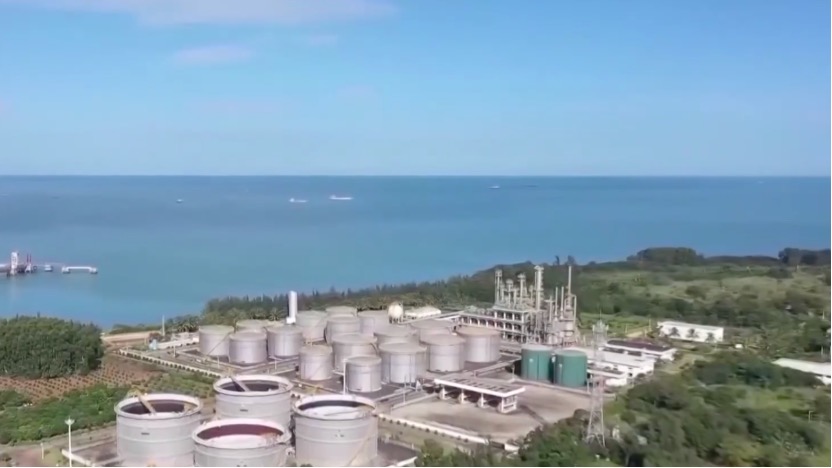
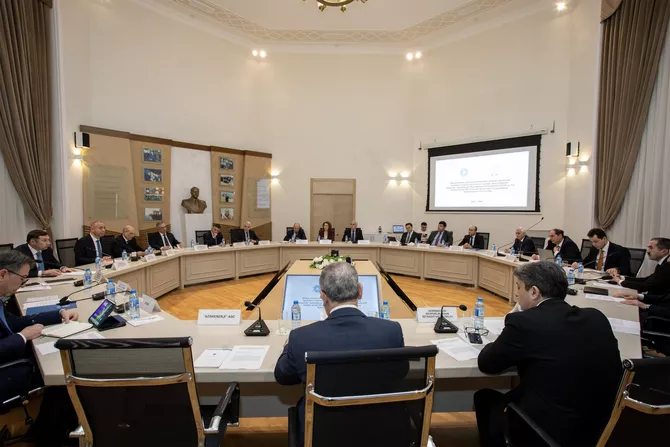
A public hearing was conducted concerning a proposed $4.5 billion blue hydrogen and ammonia plant in Ascension Parish, Louisiana. The project, developed by Air Products, incorporates carbon capture and storage (CCS) technology to sequester CO2 emissions deep beneath Lake Maurepas. A diverse coalition of stakeholders, including local residents, environmental advocates, and elected officials, voiced significant opposition during the hearing, citing conflicts with multiple Sustainable Development Goals (SDGs).
2.0 Economic and Industrial Implications (SDGs 8 & 9)
The project is presented as a significant investment in sustainable industrial infrastructure, aligning with SDG 9 (Industry, Innovation, and Infrastructure) and SDG 8 (Decent Work and Economic Growth).
- Economic Projections:
- Creation of 2,000 construction jobs and up to 200 permanent positions.
- Generation of an estimated $1.3 billion in local tax revenue over the project’s lifespan.
- Up to $160 million in injection payments to be shared among state and local parishes.
- Industrial Innovation:
- The facility aims to establish Louisiana as a leader in low-carbon hydrogen production.
- The proposed carbon storage site under Lake Maurepas would be the largest in the world, designed to sequester up to 138 million tons of CO2 over 25 years.
3.0 Climate and Energy Objectives (SDGs 7 & 13)
The project’s primary objective is to contribute to climate mitigation and clean energy production, directly addressing SDG 13 (Climate Action) and SDG 7 (Affordable and Clean Energy).
- Climate Action (SDG 13): Air Products states the CCS technology will capture 95% of the facility’s CO2 emissions, preventing climate-warming gases from entering the atmosphere. This is framed as a key contribution to creating a lower carbon-emitting industrial base.
- Clean Energy (SDG 7): The production of low-carbon “blue” hydrogen is intended to provide a cleaner industrial feedstock and energy source, supporting the transition to more sustainable energy systems.
4.0 Environmental and Community Concerns (SDGs 11, 14, & 15)
Opponents of the project raised substantial concerns regarding its negative impacts on local ecosystems and communities, highlighting a direct conflict with several SDGs.
- Life Below Water (SDG 14):
- Fears of damage to marine life and the overall ecological health of Lake Maurepas from construction, dredging, and potential CO2 leaks.
- Concerns from local crabbers about the impact on their livelihoods, which depend on a healthy aquatic ecosystem.
- Life on Land (SDG 15):
- The project requires the destruction of 362 acres of wetlands, nearly 90% of which are high-value cypress and tupelo swamps.
- This destruction contradicts ongoing state and local efforts to protect and restore these vital coastal ecosystems.
- Air Products has proposed mitigation efforts, including rehabilitating over 800 acres of wetlands and planting thousands of cypress trees.
- Sustainable Cities and Communities (SDG 11):
- Public safety risks are a major concern, as the 38-mile CO2 pipeline would run past a public elementary school and residential neighborhoods.
- Environmental justice advocates argue that local communities are being asked to bear a disproportionate environmental burden for the sake of economic development.
5.0 Governance and Institutional Response (SDG 16)
The permitting and review process involves multiple government agencies and has become a focal point for exercising SDG 16 (Peace, Justice, and Strong Institutions), as citizens demand transparent and accountable governance.
- Regulatory Oversight: The U.S. Army Corps of Engineers and the Louisiana Department of Conservation and Energy are considering the necessary permits for the project’s pipeline and infrastructure.
- Calls for Accountability: A coalition of opponents, including local legislators, has formally requested that the Corps conduct a full Environmental Impact Statement (EIS) rather than a less detailed Environmental Assessment to fully evaluate the cumulative impacts.
- State-Level Action: In response to growing public opposition to CCS projects, the Governor of Louisiana has called for a moratorium on new carbon injection permits, although the Air Products project was not among the six fast-tracked proposals prior to this announcement.
Analysis of Sustainable Development Goals in the Article
1. Which SDGs are addressed or connected to the issues highlighted in the article?
The article discusses a complex industrial project with significant economic, environmental, and social implications. Based on the content, the following Sustainable Development Goals (SDGs) are addressed:
- SDG 7: Affordable and Clean Energy – The project’s goal is to produce “low-carbon hydrogen and ammonia,” positioning it within the clean energy sector.
- SDG 8: Decent Work and Economic Growth – The project is presented as an “important economic development project” promising job creation and substantial tax revenue.
- SDG 9: Industry, Innovation, and Infrastructure – The article details a $4.5 billion investment in advanced industrial infrastructure, specifically utilizing “carbon capture technology.”
- SDG 11: Sustainable Cities and Communities – Concerns are raised about the project’s impact on local communities, including safety risks from pipelines near schools and neighborhoods, and issues of environmental justice.
- SDG 13: Climate Action – The core technology of the project is designed to “safely remove climate-warming carbon dioxide from the atmosphere” to mitigate climate change.
- SDG 14: Life Below Water – The plan to store CO2 under Lake Maurepas raises concerns from crabbers about “damaged marine life” and the overall health of the lake’s ecosystem.
- SDG 15: Life on Land – The project’s construction will lead to the “destruction of 362 acres of wetlands,” including high-value swamps, and will impact the Maurepas Wildlife Management Area.
- SDG 16: Peace, Justice, and Strong Institutions – The article highlights the public hearing process, the role of government agencies in permitting, and citizens’ calls for transparent and comprehensive environmental reviews, reflecting themes of institutional accountability and participatory decision-making.
2. What specific targets under those SDGs can be identified based on the article’s content?
Several specific SDG targets are relevant to the details provided in the article:
- Target 7.a: Promote investment in clean energy technology. The article focuses on a “$4.5 billion project” centered on carbon capture and low-carbon hydrogen production, which is a direct investment in clean energy infrastructure and technology.
- Target 8.2: Achieve higher levels of economic productivity through technological upgrading and innovation. The project represents a technological upgrade for the state’s industrial base by introducing a large-scale carbon capture operation.
- Target 9.4: Upgrade infrastructure and retrofit industries to make them sustainable… with greater adoption of clean and environmentally sound technologies. The project’s purpose is to make hydrogen and ammonia production more sustainable by capturing “95% of its CO2 emissions,” directly aligning with this target.
- Target 11.6: Reduce the adverse per capita environmental impact of cities. The opposition from “environmental justice advocates who see residents again bearing the brunt of the impacts” and concerns about a pipeline running “past a public elementary school and neighborhood” relate to minimizing negative environmental effects on human settlements.
- Target 13.2: Integrate climate change measures into national policies, strategies and planning. The entire project is a climate change mitigation strategy. The debate and permitting process involving state and federal agencies is an example of integrating such measures into planning.
- Target 14.2: Sustainably manage and protect marine and coastal ecosystems. The central conflict involves the potential impact on Lake Maurepas, with opponents seeking to protect the lake’s ecosystem from the risks of the CO2 storage project.
- Target 15.5: Take urgent and significant action to reduce the degradation of natural habitats. The article explicitly states the project will cause the “destruction of 362 acres of wetlands,” including “high-value, coastal cypress and tupelo swamps,” which is a direct degradation of natural habitats.
- Target 16.7: Ensure responsive, inclusive, participatory and representative decision-making at all levels. The public hearing where “More than 250 people showed up” and “54 speakers” aired their concerns is a direct example of participatory decision-making in action.
3. Are there any indicators mentioned or implied in the article that can be used to measure progress towards the identified targets?
Yes, the article contains several quantitative and qualitative indicators that can be used to measure progress or impact:
- CO2 Emissions Reduction: The article states the project will “capture 95% of its CO2 emissions” and store “as much as 138 million tons of CO2” over 25 years. This is a direct indicator for SDG 13.
- Investment in Clean Technology: The project’s cost of “$4.5 billion” serves as an indicator for investment in clean energy infrastructure (Target 7.a).
- Job Creation: The project is expected to create “2,000 construction jobs” and “up to 200 permanent jobs,” which are indicators for economic growth under SDG 8.
- Public Revenue: The generation of “$1.3 billion in local tax revenue” and “up to $160 million in injection payments” are financial indicators of the project’s economic impact (SDG 8).
- Habitat Destruction and Restoration: The “destruction of 362 acres of wetlands” is a clear indicator of negative environmental impact (SDG 15). Conversely, the plan to “rehabilitate more than 800 acres of wetlands” and having “planted 6,000 cypress trees” are indicators of mitigation efforts.
- Public Participation in Governance: The attendance of “more than 250 people” and “54 speakers” at a public hearing is an indicator of public engagement in decision-making processes (SDG 16).
- Ecosystem Monitoring: The deployment of “four buoys in Lake Maurepas… for independent, scientific monitoring” provides a direct mechanism and indicator for tracking the health of the aquatic ecosystem (SDG 14).
4. Table of SDGs, Targets, and Indicators
| SDGs | Targets | Indicators |
|---|---|---|
| SDG 7: Affordable and Clean Energy | 7.a: Promote investment in clean energy technology. | Investment of $4.5 billion in a low-carbon hydrogen and carbon capture project. |
| SDG 8: Decent Work and Economic Growth | 8.2: Achieve higher levels of economic productivity through technological upgrading. | Creation of 2,000 construction jobs and 200 permanent jobs; Generation of $1.3 billion in local tax revenue. |
| SDG 9: Industry, Innovation, and Infrastructure | 9.4: Upgrade infrastructure and industries for sustainability. | Development of a large-scale carbon capture facility to make industrial processes more sustainable. |
| SDG 11: Sustainable Cities and Communities | 11.6: Reduce the adverse per capita environmental impact of cities. | Concerns raised about pipeline proximity to a public elementary school and neighborhood; Calls for a full environmental impact statement to assess risks to communities. |
| SDG 13: Climate Action | 13.2: Integrate climate change measures into policies and planning. | Plan to capture 95% of CO2 emissions; Storage of 138 million tons of CO2 over 25 years. |
| SDG 14: Life Below Water | 14.2: Sustainably manage and protect marine and coastal ecosystems. | Deployment of four scientific monitoring buoys in Lake Maurepas to monitor the ecosystem; Concerns from crabbers about potential damage to marine life. |
| SDG 15: Life on Land | 15.5: Reduce the degradation of natural habitats. | Destruction of 362 acres of wetlands; Mitigation plan to rehabilitate 800+ acres of wetlands and plant 6,000+ cypress trees. |
| SDG 16: Peace, Justice, and Strong Institutions | 16.7: Ensure responsive, inclusive, and participatory decision-making. | Public hearing attended by over 250 people with 54 speakers; Formal permit review process by the U.S. Army Corps of Engineers and state agencies. |
Source: theadvocate.com
What is Your Reaction?
 Like
0
Like
0
 Dislike
0
Dislike
0
 Love
0
Love
0
 Funny
0
Funny
0
 Angry
0
Angry
0
 Sad
0
Sad
0
 Wow
0
Wow
0