






































;Resize=620#)








QIC and Future Fund acquire 19.9% stake in Tilt Renewables – Infrastructure Investor
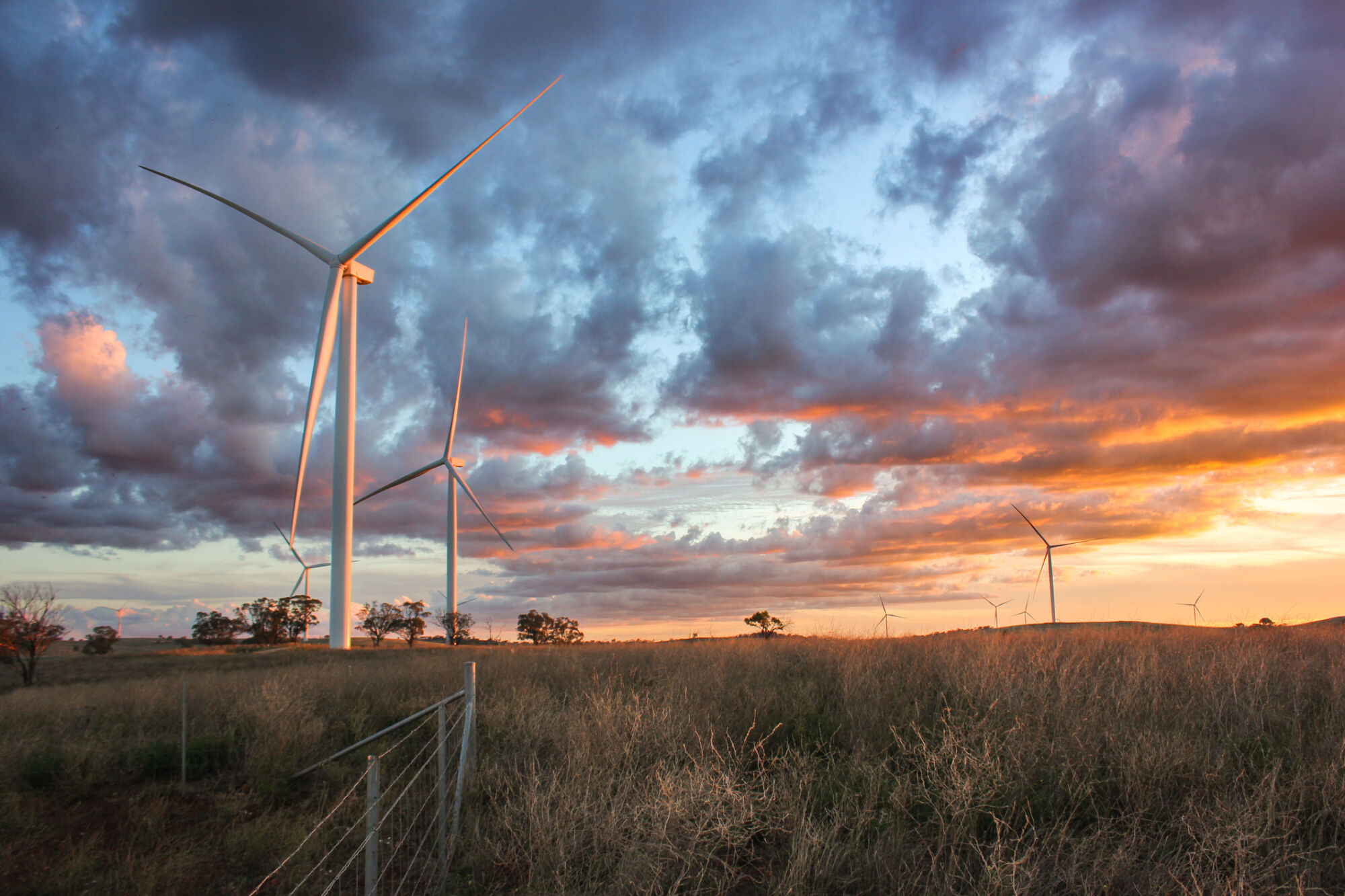
QIC Investment in Tilt Renewables: A Catalyst for Sustainable Development Goals
1.0 Executive Summary
Australian investment manager QIC has finalized the acquisition of an additional 19.9 percent stake in renewable energy developer Tilt Renewables from AGL Energy for A$750 million. This transaction increases QIC’s ownership to 99.9 percent, consolidating its control over a key platform for advancing Australia’s energy transition. The investment, made on behalf of QIC’s second Global Infrastructure Fund and the Future Fund, directly supports several United Nations Sustainable Development Goals (SDGs), particularly SDG 7 (Affordable and Clean Energy), SDG 13 (Climate Action), and SDG 17 (Partnerships for the Goals).
2.0 Transaction Details and Stakeholder Involvement
The acquisition underscores a strategic partnership aimed at accelerating renewable energy deployment, aligning with SDG 17 (Partnerships for the Goals).
- Acquirer: QIC, a Queensland government-owned investment manager.
- Seller: AGL Energy, divesting most of its 20 percent stake.
- Asset: Tilt Renewables, a large-scale renewable energy developer.
- Transaction Value: A$750 million ($489 million; €423 million).
- Resulting Ownership: QIC holds 99.9 percent, including a stake managed for Australia’s sovereign wealth fund, the Future Fund.
- Funding Source: The acquisition is funded by QIC’s second Global Infrastructure Fund and the Future Fund.
3.0 Advancing SDG 7: Affordable and Clean Energy
The investment significantly enhances infrastructure for clean energy, a primary target of SDG 7. Tilt Renewables’ portfolio is central to increasing the share of renewable energy in the national grid.
- Operational Capacity: Tilt’s portfolio includes 1.9GW of operational assets across 12 sites, comprising wind, solar, and battery energy storage systems.
- Development Pipeline: A further 1.6GW of projects are expected to reach final investment decisions within 12 months, promising a substantial increase in clean energy generation.
- Key Projects: The Palmer Wind Farm (288MW) and Waddi Wind Farm (108MW) are expected to reach final investment decisions by the end of the year, directly contributing to renewable energy targets.
4.0 Contribution to SDG 13: Climate Action
By backing a leading renewable energy platform, QIC is taking direct action to combat climate change and its impacts, in line with SDG 13. The investment supports Australia’s decarbonization efforts and energy transition.
- Supporting National Targets: The transaction is bolstered by strong federal and state government support for renewable energy, creating a stable environment for climate-focused investments.
- Dominance of Wind Power: The Australian Energy Market Operator (AEMO) forecasts that wind will constitute 70 percent of new utility-scale variable generation by 2030, highlighting the critical role of platforms like Tilt in climate mitigation.
- Energy Transition: The expansion of Tilt’s portfolio is crucial for shifting Australia’s National Electricity Market away from fossil fuels and towards a sustainable, low-carbon future.
5.0 Fostering Partnerships and Sustainable Infrastructure (SDG 9 & SDG 17)
The deal exemplifies a multi-stakeholder partnership (SDG 17) to build resilient and sustainable infrastructure (SDG 9).
- Collaborative History: QIC, AGL, and the Future Fund have been partners in the Powering Australian Renewables fund since 2016, demonstrating a long-term commitment to joint investment in sustainable infrastructure.
- Long-Term Offtake Agreements: AGL will remain a key partner through 15-year offtake agreements, ensuring financial viability for new projects and a stable supply of clean energy to the market.
- Diversified Partnerships: Tilt’s strategy includes securing offtake agreements with a diverse set of partners, including corporations and governments, strengthening the ecosystem for renewable energy development.
Analysis of Sustainable Development Goals (SDGs) in the Article
1. Which SDGs are addressed or connected to the issues highlighted in the article?
-
SDG 7: Affordable and Clean Energy
- The article’s central theme is the investment in and development of renewable energy sources. It discusses the acquisition of Tilt Renewables, a company focused on wind projects, solar farms, and battery energy storage systems, which are all crucial for providing clean energy.
-
SDG 9: Industry, Innovation and Infrastructure
- The text highlights the development of large-scale, sustainable energy infrastructure. This includes an “operational portfolio of 1.9GW across 12 assets” and a “development pipeline of more than 1.6GW,” which contributes to building resilient and sustainable infrastructure.
-
SDG 13: Climate Action
- By investing in and expanding renewable energy capacity, the entities involved are taking direct action to combat climate change. The article notes that “wind in particular is a significant portion of the renewable energy targets going forward,” framing these developments as part of Australia’s broader “energy transition” to mitigate climate impacts.
-
SDG 17: Partnerships for the Goals
- The article details a multi-stakeholder partnership involving a government-owned manager (QIC), a sovereign wealth fund (Future Fund), and a private energy company (AGL). Their collaboration through the “Powering Australian Renewables fund” to acquire and develop renewable assets exemplifies a public-private partnership aimed at achieving sustainable development.
2. What specific targets under those SDGs can be identified based on the article’s content?
-
Target 7.2: By 2030, increase substantially the share of renewable energy in the global energy mix.
- The article focuses on expanding renewable energy generation through Tilt Renewables, which has a portfolio of wind, solar, and battery storage projects. The forecast from the Australian Energy Market Operator that “wind would account for 70 percent of new utility-scale variable generation through to the end of the decade” directly aligns with this target.
-
Target 7.a: By 2030, enhance international cooperation to facilitate access to clean energy research and technology… and promote investment in energy infrastructure and clean energy technology.
- The article is centered on a major financial transaction—QIC’s “acquisition of a 19.9 percent stake in renewable energy developer Tilt Renewables… for A$750 million.” It also mentions QIC’s second Global Infrastructure Fund is “in market with a fundraising target of $3.5 billion,” demonstrating significant investment being mobilized for clean energy infrastructure.
-
Target 9.1: Develop quality, reliable, sustainable and resilient infrastructure… to support economic development and human well-being.
- The development of wind farms (Palmer Wind Farm, Waddi Wind Farm), solar farms, and battery energy storage systems are all examples of building sustainable and resilient energy infrastructure, which is the core focus of this target.
-
Target 13.2: Integrate climate change measures into national policies, strategies and planning.
- The article references government support for renewable energy, noting the “Labor government able to continue its push for more renewable energy” and the existence of “renewable energy targets.” It also mentions the “2024 Integrated System Plan for the National Electricity Market,” which is a form of national planning that integrates climate action.
-
Target 17.17: Encourage and promote effective public, public-private and civil society partnerships…
- The collaboration between QIC (a Queensland government-owned manager), Future Fund (Australia’s sovereign wealth fund), and AGL (a private company) through their joint fund “Powering Australian Renewables” is a clear example of a public-private partnership to advance sustainable development goals.
3. Are there any indicators mentioned or implied in the article that can be used to measure progress towards the identified targets?
-
Indicator for Target 7.2: Renewable energy capacity and generation share.
- The article provides specific quantitative data: an “operational portfolio of 1.9GW,” a “development pipeline of more than 1.6GW,” the capacity of specific projects like the “288MW Palmer Wind Farm,” and the forecast that wind will constitute “70 percent of new utility-scale variable generation.” These figures can be used to measure the increase in the share of renewable energy.
-
Indicator for Target 7.a: Financial flows for clean energy.
- The article explicitly states the investment amounts, which serve as direct indicators. These include the “A$750 million ($489 million; €423 million)” acquisition cost and the “$3.5 billion” fundraising target for the QIC Global Infrastructure Fund II, which is investing in these assets.
-
Indicator for Target 9.1: Investment in and scale of sustainable infrastructure.
- The number and type of infrastructure assets are mentioned: “12 assets” that include “wind projects,” “solar farms and battery energy storage systems.” The total capacity in gigawatts (1.9GW operational, 1.6GW pipeline) also serves as a measure of the scale of this infrastructure development.
-
Indicator for Target 13.2: Adoption and implementation of national strategies.
- The article implies progress through its reference to supportive government policies, such as the “push for more renewable energy” and the existence of the “2024 Integrated System Plan,” which guides the energy transition.
-
Indicator for Target 17.17: Number and value of public-private partnerships.
- The article describes the partnership between QIC, Future Fund, and AGL. The value of the partnership’s recent transaction (A$750 million) and the establishment of their joint “Powering Australian Renewables fund” in 2016 with initial funding of A$1 billion (A$800 million from QIC and A$200 million from AGL) are concrete indicators of this collaboration.
Summary Table of SDGs, Targets, and Indicators
| SDGs | Targets | Indicators |
|---|---|---|
| SDG 7: Affordable and Clean Energy | 7.2: Increase substantially the share of renewable energy in the global energy mix.
7.a: Promote investment in energy infrastructure and clean energy technology. |
– Operational renewable energy portfolio of 1.9GW. – Development pipeline of over 1.6GW. – Forecast that wind will account for 70% of new utility-scale generation. – A$750 million investment for acquisition. – $3.5 billion fundraising target for a global infrastructure fund investing in renewables. |
| SDG 9: Industry, Innovation and Infrastructure | 9.1: Develop quality, reliable, sustainable and resilient infrastructure. | – Development of 12 assets including wind farms, solar farms, and battery energy storage systems. – Specific projects mentioned: 288MW Palmer Wind Farm and 108MW Waddi Wind Farm. |
| SDG 13: Climate Action | 13.2: Integrate climate change measures into national policies, strategies and planning. | – Mention of government support and “push for more renewable energy.” – Reference to the “2024 Integrated System Plan for the National Electricity Market” as a guiding strategy for the energy transition. |
| SDG 17: Partnerships for the Goals | 17.17: Encourage and promote effective public, public-private and civil society partnerships. | – Existence of the “Powering Australian Renewables fund,” a partnership between QIC (public), Future Fund (sovereign), and AGL (private). – Value of the partnership’s transactions (e.g., A$750 million stake acquisition). |
Source: infrastructureinvestor.com
What is Your Reaction?
 Like
0
Like
0
 Dislike
0
Dislike
0
 Love
0
Love
0
 Funny
0
Funny
0
 Angry
0
Angry
0
 Sad
0
Sad
0
 Wow
0
Wow
0