

























Scientists Collect Biodiversity Data in Argentina’s Submarine Canyons – Marine Technology News
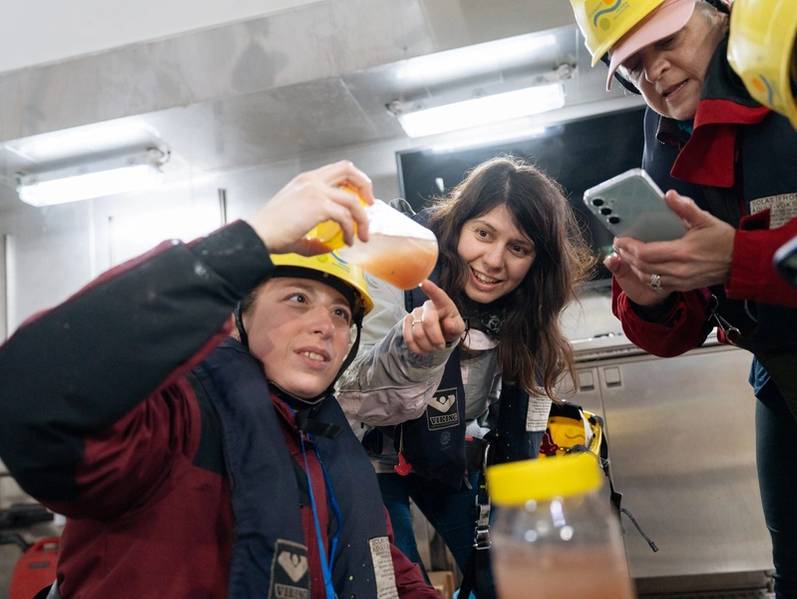
Scientific Expedition Advances Sustainable Development Goals in Argentinian Marine Ecosystems
Introduction: Aligning Oceanographic Research with Global Sustainability Targets
An Argentinian-led scientific expedition, conducted in collaboration with the Schmidt Ocean Institute aboard the R/V Falkor (too), has collected a comprehensive dataset on the Malvinas ocean current. The research focused on the interaction between the current and submarine canyons, aiming to understand the drivers of the region’s significant plankton blooms. This initiative directly supports several Sustainable Development Goals (SDGs), primarily SDG 14 (Life Below Water) by enhancing knowledge of marine ecosystems, and SDG 2 (Zero Hunger) by investigating the foundational food web that sustains Argentina’s vital fishing industry.
Research Objectives and Contribution to SDG 14 (Life Below Water)
The expedition, led by Dr. Silvia Ines Romero, was designed to test the hypothesis that submarine canyons act as conduits for deep-sea nutrients, fueling the large-scale phytoplankton blooms visible from space. The primary objectives align with key targets of SDG 14:
- Understand Ecosystem Dynamics: To analyze how physical and chemical oceanographic conditions within the canyons facilitate phytoplankton blooms, contributing to the sustainable management and protection of marine ecosystems (SDG Target 14.2).
- Support Sustainable Fisheries: To provide foundational data on the marine food web, which is essential for science-based management plans to ensure sustainable fish stocks (SDG Target 14.4).
- Increase Scientific Knowledge: To map and characterize previously under-explored marine environments, thereby increasing scientific knowledge and research capacity (SDG Target 14.a).
Methodology: Leveraging Technology for SDG 9 (Industry, Innovation, and Infrastructure)
Over a 27-day period, the research team deployed an array of advanced marine technologies, demonstrating a commitment to SDG 9 by utilizing innovative scientific infrastructure to gather data. The technology suite included:
- An autonomous underwater glider
- 46 sea surface drifters
- Two seafloor landers and a moored buoy
- Shipboard multibeam sonars for high-resolution seafloor mapping
- The Remotely Operated Vehicle (ROV) SuBastian for direct observation and sample collection
The high-quality maps generated will be provided to the Argentine Hydrographic Service to improve navigational charts and will contribute to the Nippon Foundation-GEBCO Seabed 2030 project, enhancing global marine infrastructure.
Preliminary Findings and Implications for SDGs
Initial observations have provided significant insights relevant to multiple SDGs. The data collected will inform strategies for biodiversity protection, climate resilience, and resource management.
- Seafloor Mapping (SDG 14): High-resolution maps revealed complex canyon features, including steep walls and terraces. Understanding this topography is the first step in modeling how currents concentrate nutrients and support life.
- Biodiversity Discovery (SDG 14): ROV dives discovered fragile and rich ecosystems, including coral-covered walls and large schools of fish, underscoring the area’s importance for biodiversity conservation.
- Climate Indicators (SDG 13: Climate Action): The observation of bubbling black sediment suggests the presence of methane seeps, a phenomenon relevant to understanding the ocean’s role in climate regulation.
Future Analysis and Long-Term Impact
The collected data will undergo extensive analysis in the coming months. The outcomes are expected to provide a deeper understanding of the specific mechanisms fueling phytoplankton blooms and controlling currents. This research will yield long-term benefits aligned with the SDGs:
- SDG 14 (Life Below Water): The findings will inform policies regarding the protection of marine biodiversity and the management of harmful algal blooms.
- SDG 2 (Zero Hunger): By clarifying the base of the marine food web, the research supports the long-term sustainability of Argentina’s fishing industry.
- SDG 17 (Partnerships for the Goals): This expedition exemplifies a successful international partnership between Argentinian scientific institutions and the Schmidt Ocean Institute, advancing shared goals for ocean health and sustainability.
Analysis of Sustainable Development Goals in the Article
1. Which SDGs are addressed or connected to the issues highlighted in the article?
-
SDG 14: Life Below Water
This is the most prominent SDG addressed. The article focuses entirely on a marine science expedition to understand ocean currents, submarine canyons, plankton blooms, and marine biodiversity in Argentina’s waters. The research aims to support the health of marine ecosystems, which are the basis for the local fishing industry, and involves the discovery and observation of “rich biodiversity and fragile cold-water coral ecosystems.”
-
SDG 13: Climate Action
The article connects the research to climate issues by stating that it will “provide insight regarding… climate change resilience.” The discovery of features that suggest “the presence of methane seeps” is also directly relevant to understanding and monitoring greenhouse gas sources, a key component of climate action.
-
SDG 17: Partnerships for the Goals
The expedition is a clear example of international partnership. It is described as an “Argentinian-led expedition onboard Schmidt Ocean Institute’s R/V Falkor (too),” highlighting a collaboration between a national scientific body (Argentina’s Servicio de Hidrografia Naval) and an international philanthropic research institute. This partnership facilitates the sharing of advanced technology and scientific knowledge.
2. What specific targets under those SDGs can be identified based on the article’s content?
-
SDG 14: Life Below Water
- Target 14.2: By 2020, sustainably manage and protect marine and coastal ecosystems to avoid significant adverse impacts… The expedition’s goal of understanding how currents and canyons support “thriving marine ecosystems” and its observation of “fragile cold-water coral ecosystems” directly contribute to the knowledge base needed for sustainable management and protection.
- Target 14.4: By 2020, effectively regulate harvesting and end overfishing… The research aims to understand “the basis of the food web that sustains the Argentinian fishing industry.” This scientific understanding is a prerequisite for implementing science-based management plans to ensure sustainable fishing.
- Target 14.a: Increase scientific knowledge, develop research capacity and transfer marine technology… The entire expedition is an exercise in this target. It involves an “Argentinian-led expedition” using advanced technologies like the “R/V Falkor (too),” its sonars, a “remotely operated vehicle (ROV) SuBastian,” a glider, and drifters to “collect the most robust data set available.”
-
SDG 13: Climate Action
- Target 13.3: Improve education, awareness-raising and human and institutional capacity on climate change mitigation, adaptation, impact reduction and early warning. The research provides “insight regarding… climate change resilience,” which directly enhances the institutional capacity of bodies like the Argentine Hydrographic Service to understand and adapt to climate impacts on marine ecosystems.
-
SDG 17: Partnerships for the Goals
- Target 17.6: Enhance North-South, South-South and triangular regional and international cooperation on and access to science, technology and innovation… The collaboration between “Dr. Silvia Ines Romero of Argentina’s Servicio de Hidrografia Naval” and the “Schmidt Ocean Institute” is a direct example of international cooperation on science and technology to achieve a common goal.
3. Are there any indicators mentioned or implied in the article that can be used to measure progress towards the identified targets?
-
Indicators for SDG 14 (Life Below Water)
- Data on Marine Ecosystems: The article explicitly mentions the collection of “physical and chemical oceanographic data” and the creation of “high-quality maps” of submarine canyons. These datasets serve as indicators for understanding and managing marine ecosystems (Target 14.2).
- Contribution to Global Mapping Efforts: The article states the maps “will also be a part of a global effort to map the seafloor through the Nippon Foundation-GEBCO Seabed 2030 project.” This contribution is a measurable indicator of increasing scientific knowledge (Target 14.a).
- Use of Advanced Marine Technology: The deployment of an “array of technologies” including an ROV, glider, sea surface drifters, and advanced sonars by Argentinian scientists is an indicator of technology transfer and research capacity development (Target 14.a).
-
Indicators for SDG 13 (Climate Action)
- Data on Climate Resilience and Methane Seeps: The research that provides “insight regarding… climate change resilience” and the observation of “black sediment that spewed bubbles, suggesting the presence of methane seeps” are qualitative and quantitative data points that can be used as indicators for building institutional capacity and knowledge on climate change (Target 13.3).
-
Indicators for SDG 17 (Partnerships for the Goals)
- Joint Scientific Expeditions: The expedition itself, described as “Schmidt Ocean Institute’s second in collaboration with Argentinian scientists,” serves as a concrete indicator of an ongoing international scientific partnership program (Target 17.6).
4. Summary Table of SDGs, Targets, and Indicators
| SDGs | Targets | Indicators |
|---|---|---|
| SDG 14: Life Below Water |
|
|
| SDG 13: Climate Action |
|
|
| SDG 17: Partnerships for the Goals |
|
|
Source: marinetechnologynews.com
What is Your Reaction?
 Like
0
Like
0
 Dislike
0
Dislike
0
 Love
0
Love
0
 Funny
0
Funny
0
 Angry
0
Angry
0
 Sad
0
Sad
0
 Wow
0
Wow
0