








































;Resize=620#)

















Serpro and Angola advance in the modernization of the country’s public finances – Serpro
Report on the Strategic Partnership for Digital Transformation and Sustainable Development in Angola
Introduction
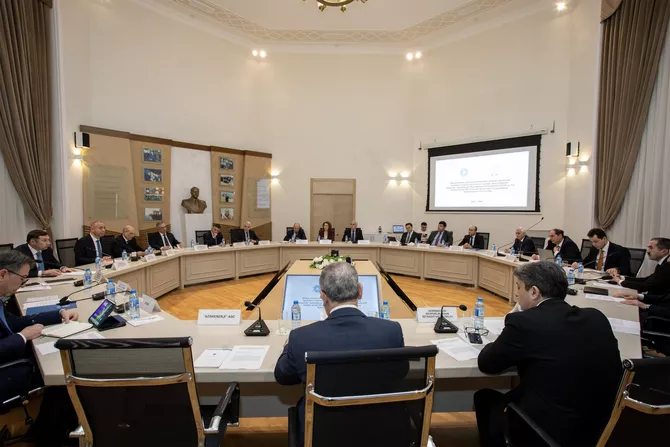
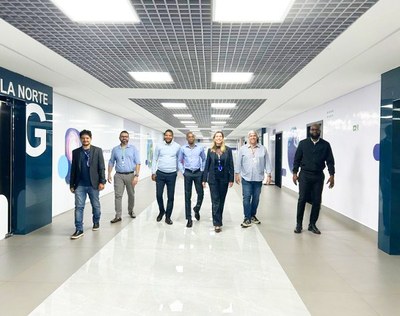
A strategic partnership between Brazil’s federal technology company, Serpro, and the National Service for Information and Communication Technologies of Public Finances (SETIC-FP) of the Angolan Ministry of Finance is advancing Angola’s public sector modernization. This collaboration, currently in its third phase, involves a 15-day immersion focused on an innovation consultancy initiated in March. The primary objective is to strengthen Angola’s public finance systems through knowledge transfer, institutional reorganization, and strategic guidance, directly contributing to the nation’s digital transformation and its commitment to the Sustainable Development Goals (SDGs).
Alignment with Sustainable Development Goals (SDGs)
The partnership is fundamentally aligned with several key SDGs, leveraging technology and international cooperation to foster sustainable development in Angola.
SDG 17: Partnerships for the Goals
This initiative is a prime example of South-South cooperation, where Serpro provides technical expertise and shares proven methodologies with SETIC-FP. The collaboration focuses on building local capacity and ensuring the long-term sustainability of Angola’s digital infrastructure, embodying the spirit of global partnership for sustainable development.
SDG 16: Peace, Justice, and Strong Institutions
By modernizing public finance systems, the project aims to build more effective, accountable, and transparent institutions. Key activities include:
- Improving cybersecurity and digital resilience to protect state assets.
- Ensuring data sovereignty for secure government operations.
- Implementing efficient digital services to reduce public spending and enhance citizen engagement.
- Establishing a national certificate authority to strengthen digital trust and security.
These efforts contribute directly to creating robust public institutions capable of delivering value and fostering trust.
SDG 9: Industry, Innovation, and Infrastructure
The core of the consultancy is to build resilient infrastructure and foster innovation within Angola’s public sector. The partnership supports the creation of a dedicated innovation structure, the Technology and Innovation Unit (UIIN), and an Innovation Hub. This fosters a culture of creative freedom and systematic innovation, from idea generation to product deployment, which is crucial for building a modern, digital economy and improving the country’s performance in the Global Innovation Index (GII).
Key Areas of Collaboration
Serpro is providing strategic consultancy and technical expertise to SETIC-FP across several critical domains:
- Innovation management and new product development
- Structuring of new business models and revenue streams
- Cybersecurity and digital resilience strategies
- Data sovereignty and governance
- Establishment of certificate authority functions
- Market intelligence and opportunity analysis
Three-Stage Innovation Consultancy Execution
The consultancy is structured in three distinct stages to systematically build SETIC-FP’s innovation capacity.
-
Stage 1: Diagnosis and Ecosystem Structuring
This initial phase involved an institutional diagnosis to understand perceptions of innovation within SETIC-FP’s senior management. Following this, a Minimum Viable Ecosystem (MVE) was designed using frameworks such as the Public Innovation Capacity Model. This stage defined the vision, priority actions, and required capabilities, articulating the roles of the public sector, private sector, academia, and society (the quadruple helix) to generate measurable public value.
-
Stage 2: Operational Model Definition
The second stage focused on defining the operational framework for the UIIN and its innovation laboratory. This included establishing a detailed innovation management process with clear stages, activities, management indicators, and decision criteria. Roles and responsibilities for the UIIN, an Innovation Committee, and other stakeholders were defined, resulting in a complete operational model to manage, measure, and scale innovation as an institutional capacity.
-
Stage 3: Refinement and Implementation
The current stage involves executing Proofs of Concept (POCs) to validate and refine the innovation management process. The MVE is being reviewed based on identified capabilities, and the Innovation Committee has been formally established. This hands-on phase allows the Angolan delegation to gain practical experience with Serpro’s innovation infrastructure and processes, including preparations for structuring SETIC-FP’s own certificate authority.
Future Outlook and Next Steps
The partnership will continue to build on the progress achieved. The next steps are designed to institutionalize innovation and scale its impact:
- Finalize the POCs to calibrate Version 1.0 of the innovation process and update the MVE.
- Formalize governance structures, including the Innovation Committee, and draft SETIC-FP’s official Innovation Policy.
- Develop a capability roadmap for the UIIN and its innovation lab.
- Launch programs to promote entrepreneurship and open innovation in partnership with universities and startups.
- Scale successful pilot projects and report on Key Performance Indicators (KPIs) that reflect public value and progress toward the Government.AO 27 Agenda objectives.
Analysis of Sustainable Development Goals (SDGs) in the Article
1. Which SDGs are addressed or connected to the issues highlighted in the article?
The article highlights issues and initiatives that are directly connected to the following Sustainable Development Goals (SDGs):
- SDG 9: Industry, Innovation and Infrastructure: The core of the article revolves around building innovation capacity, modernizing technological infrastructure, and fostering a digital transformation in Angola. This includes creating an “Innovation Hub,” developing new digital products and services, and structuring a national certificate authority.
- SDG 16: Peace, Justice and Strong Institutions: The partnership aims to modernize Angola’s public sector, specifically its public finance systems. This effort to create “effective, accountable and transparent institutions” by instituting “robust governance and processes,” reducing public spending, and providing “more citizen-connected services” directly aligns with the goal of building strong institutions.
- SDG 17: Partnerships for the Goals: The entire initiative is a form of South-South cooperation between Brazil (Serpro) and Angola (SETIC-FP). The article details a strategic partnership focused on “knowledge transfer,” “consultancy,” “capacity building,” and sharing expertise to achieve national development goals, which is the essence of SDG 17.
2. What specific targets under those SDGs can be identified based on the article’s content?
Based on the article’s content, the following specific SDG targets can be identified:
-
Under SDG 9 (Industry, Innovation and Infrastructure):
- Target 9.5: Enhance scientific research, upgrade the technological capabilities of industrial sectors in all countries, in particular developing countries… and encourage innovation. The project’s focus on structuring an innovation unit (UIIN), designing an innovation process “from the suggestion of an idea through to product generation,” and building an “Innovation Hub” directly supports this target. The explicit goal to “improve Angola’s performance in the Global Innovation Index (GII)” reinforces this connection.
- Target 9.b: Support domestic technology development, research and innovation in developing countries. The partnership is designed to build Angola’s domestic capacity (“a true space of creative freedom for Angolan talent”) to create its “next generation of Angolan products and services,” thereby reducing reliance on external development and fostering a local innovation ecosystem.
-
Under SDG 16 (Peace, Justice and Strong Institutions):
- Target 16.6: Develop effective, accountable and transparent institutions at all levels. The consultancy’s mission is to support SETIC-FP in its “institutional transformation” by articulating “people, processes, technologies, and culture.” The goal is to make public finance services more efficient, generate “fiscal value,” and achieve “real impact for the Angolan citizen,” all of which contribute to more effective and accountable governance.
-
Under SDG 17 (Partnerships for the Goals):
- Target 17.6: Enhance North-South, South-South and triangular regional and international cooperation on and access to science, technology and innovation and enhance knowledge sharing. The partnership between Brazil’s Serpro and Angola’s SETIC-FP is a clear example of South-South cooperation focused on transferring knowledge in innovation management, cybersecurity, and digital transformation.
- Target 17.9: Enhance international support for implementing effective and targeted capacity-building in developing countries. The article describes a detailed capacity-building program, including a “15-day immersion,” workshops, and hands-on guidance to help Angola structure and operate its Technology and Innovation Unit, supporting its national “Government.AO 27 Agenda.”
- Target 17.16: Enhance the global partnership for sustainable development, complemented by multi-stakeholder partnerships. The project explicitly mentions articulating the “quadruple helix (Public Sector, Private Sector, Academia, and Society)” and activating “open innovation in partnership with universities, startups, and key sectors,” which directly reflects the aim of building multi-stakeholder partnerships.
3. Are there any indicators mentioned or implied in the article that can be used to measure progress towards the identified targets?
Yes, the article mentions several direct and implied indicators for measuring progress:
- Improvement in the Global Innovation Index (GII): The article explicitly states that the consultancy guides the UIIN’s portfolio to “improve Angola’s performance in the Global Innovation Index (GII) of the World Intellectual Property Organization, through concrete steps.” This is a direct, high-level indicator for Target 9.5.
- Development of an Operational Innovation Model: The creation and formalization of a “complete operational model” for innovation, including a defined “innovation-management process,” “macro-process,” and “management indicators,” serve as a tangible indicator of institutional capacity building (Target 16.6).
- Key Performance Indicators (KPIs): The article mentions that a final step is to “report key performance indicators (KPIs) reflecting public value and measurable progress toward the objectives of the Government Agenda.” This points to a structured system for measuring outcomes related to efficiency and citizen impact (Target 16.6).
- Measurable Economic and Social Results: The partnership aims for “measurable economic and social results by 2027,” which serves as a long-term indicator of the project’s overall success and impact on the country (Targets 16.6 and 17.9).
- Creation of Institutional Structures: The establishment of a “specific structure for innovation,” an “Innovation Hub,” the “Innovation Committee,” and a formal “Innovation Policy” are concrete, verifiable indicators of progress in building institutional and infrastructural capacity (Targets 9.5 and 16.6).
- Execution of Pilot Projects: The number and success of “POCs (Proofs of Concept)” and the scaling of “approved pilot projects” are mentioned as practical measures of the innovation process’s effectiveness (Target 9.b).
4. Summary of SDGs, Targets, and Indicators
| SDGs | Targets | Indicators |
|---|---|---|
| SDG 9: Industry, Innovation and Infrastructure |
9.5: Enhance research and upgrade technological capabilities.
9.b: Support domestic technology development and innovation. |
– Improvement in Angola’s Global Innovation Index (GII) score. – Establishment of a functional “Innovation Hub” and a specific structure for innovation (UIIN). – Number of successful Proofs of Concept (POCs) and pilot projects developed and scaled. – Creation of a new generation of Angolan digital products and services. |
| SDG 16: Peace, Justice and Strong Institutions | 16.6: Develop effective, accountable and transparent institutions. |
– Formalization of robust governance and processes (e.g., Innovation Committee, Innovation Policy). – Reduction in public spending and increased efficiency in public finance. – Key Performance Indicators (KPIs) reflecting public value and citizen impact. – Development of more citizen-connected services. |
| SDG 17: Partnerships for the Goals |
17.6: Enhance South-South cooperation on science, technology, and innovation.
17.9: Enhance international support for capacity-building. 17.16: Enhance multi-stakeholder partnerships. |
– The existence and continuation of the strategic partnership between Serpro and SETIC-FP. – Successful transfer of knowledge and methodologies (e.g., Public Innovation Capacity Model). – Measurable economic and social results achieved by 2027. – Activation of the “quadruple helix” model through partnerships with universities, startups, and other sectors. |
Source: serpro.gov.br
What is Your Reaction?
 Like
0
Like
0
 Dislike
0
Dislike
0
 Love
0
Love
0
 Funny
0
Funny
0
 Angry
0
Angry
0
 Sad
0
Sad
0
 Wow
0
Wow
0