










































;Resize=620#)











South African women call purple protest at G20 over gender violence – BBC
Report on Gender-Based Violence Protests in South Africa and Alignment with Sustainable Development Goals
A nationwide protest movement is underway in South Africa, demanding that the government declare gender-based violence (GBV) a national disaster. This campaign highlights significant challenges to the nation’s progress on key United Nations Sustainable Development Goals (SDGs), particularly SDG 5 (Gender Equality) and SDG 16 (Peace, Justice and Strong Institutions).
Statistical Context: A Crisis Impeding SDG Progress
The protests are a response to alarming rates of violence against women, which starkly contrast with the targets set by the SDGs. The data underscores a critical failure to achieve SDG 5.2, which calls for the elimination of all forms of violence against all women and girls.
Key GBV Statistics:
- The rate of femicide in South Africa is five times higher than the global average, according to UN Women.
- Official crime statistics for the first quarter of the year indicate that 137 women were murdered.
- During the same period, over 1,000 women were raped.
Mobilization and Demands for Systemic Change
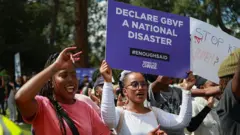
Civil society, led by the organization Women for Change, has organized the “G20 Women’s Shutdown” to coincide with the G20 Summit in Johannesburg. The movement utilizes both public demonstrations and digital campaigns to advocate for policy change.
Protest Actions and Objectives:
- A nationwide “shutdown,” urging women to withdraw from the economy for one day by refraining from work and school.
- A coordinated silent protest at 12:00 local time, where participants lie down for 15 minutes to honour victims of femicide.
- A call for participants to wear black as a symbol of mourning and resistance.
- An online petition demanding stronger government action, which has garnered over one million signatures.
Calls for Government Accountability and Institutional Strength (SDG 16)
A central demand of the movement is for GBV to be declared a national disaster. This call has been rejected by the National Disaster Management Centre (NDMC) on legal grounds. While President Cyril Ramaphosa acknowledged GBV as a “national crisis” in 2019, activists report a lack of meaningful implementation and transparency. This situation points to deficiencies in achieving SDG 16, which emphasizes the need for effective, accountable, and inclusive institutions at all levels and ensuring equal access to justice for all.
Grassroots Responses and Systemic Failures
The perceived inaction from state institutions has led citizens to develop their own safety and justice initiatives, while systemic failures continue to obstruct legal recourse for survivors.
Citizen-Led Initiatives and Justice System Shortcomings:
- Organizations such as “Girls on Fire” have been established to empower women through self-defense training, including licensed firearm ownership, as a last resort against violence.
- The experience of survivors highlights critical gaps in the justice system. One victim’s case was withdrawn after her rape kit was lost, a clear failure in the judicial process that undermines SDG 16’s goal of ensuring the rule of law.
- The protest’s call for an economic withdrawal also touches upon SDG 8 (Decent Work and Economic Growth), as reports indicate some women have faced backlash from employers for wanting to participate, illustrating the barriers that prevent women’s full and safe economic participation.
Conclusion: Aligning National Action with Global Goals
The widespread protests in South Africa represent a powerful call for the nation to address the systemic issue of gender-based violence. The movement’s demands are intrinsically linked to the country’s commitment to the Sustainable Development Goals. Achieving gender equality (SDG 5) and building a society with peace, justice, and strong institutions (SDG 16) requires immediate, transparent, and effective government action to end the scourge of violence against women and girls.
1. Which SDGs are addressed or connected to the issues highlighted in the article?
The article on gender-based violence (GBV) in South Africa directly and indirectly connects to several Sustainable Development Goals (SDGs). The primary issues of violence against women, calls for justice, and the socio-economic impact of these issues link to the following goals:
-
SDG 5: Gender Equality
This is the most central SDG addressed in the article. The entire piece focuses on the high levels of gender-based violence, femicide, and rape against women in South Africa, which are extreme manifestations of gender inequality. The protests and campaigns described are aimed at achieving safety and equality for women.
-
SDG 16: Peace, Justice and Strong Institutions
The article highlights significant failures within the justice system and a lack of effective governance in tackling GBV. The call for the government to take more decisive action, the criticism of “lack of implementation and transparency” of existing laws, and the personal account of a rape case being withdrawn due to a lost DNA kit all point to the need for stronger, more accountable institutions and equal access to justice.
-
SDG 8: Decent Work and Economic Growth
This SDG is connected through the planned protest, which urges women to “withdraw from the economy for one day.” This action underscores the economic contribution of women and uses economic disruption as a tool for protest. Furthermore, the article mentions that some women “have faced a backlash from employers for wanting to participate,” which touches upon the protection of labour rights and safe working environments.
2. What specific targets under those SDGs can be identified based on the article’s content?
Based on the specific issues discussed, several targets under the identified SDGs are relevant:
-
SDG 5: Gender Equality
- Target 5.2: Eliminate all forms of violence against all women and girls in the public and private spheres. The article’s core subject is the “commonplace” nature of attacks on women, including murder and rape. The protests are a direct call to action to achieve this target. The statistic that “137 women were murdered and more than 1,000 raped” between January and March directly relates to the need to eliminate such violence.
-
SDG 16: Peace, Justice and Strong Institutions
- Target 16.1: Significantly reduce all forms of violence and related death rates everywhere. The article explicitly states that South Africa’s rate of killing women is “five times higher than the global average,” directly addressing the need to reduce violence-related death rates.
- Target 16.3: Promote the rule of law at the national and international levels and ensure equal access to justice for all. This target is highlighted by the failures of the justice system. The activist’s statement about the “lack of implementation and transparency” of laws and Prudence’s story, where her case was withdrawn because her “rape kit – the DNA they take after the crime – was lost,” are clear examples of the failure to ensure equal access to justice for victims of GBV.
-
SDG 8: Decent Work and Economic Growth
- Target 8.8: Protect labour rights and promote safe and secure working environments for all workers. The article mentions that “some women have faced a backlash from employers for wanting to participate in the protest.” This points to a conflict between exercising civic rights and job security, touching upon the protection of labour rights.
3. Are there any indicators mentioned or implied in the article that can be used to measure progress towards the identified targets?
The article provides both explicit data and qualitative descriptions that can serve as or imply indicators for measuring progress.
-
Indicators for SDG 5 (Target 5.2) and SDG 16 (Target 16.1)
- Number of intentional homicides of women (femicide): The article provides a direct statistic: “Between January and March this year, 137 women were murdered.” This number serves as a direct indicator of progress (or lack thereof) in reducing femicide.
- Prevalence of sexual violence: The statistic that “more than 1,000 raped” in the same three-month period is a clear indicator for measuring the prevalence of sexual violence against women.
- Comparative rate of violence: The statement that the rate at which women are killed is “five times higher than the global average” is a comparative indicator that contextualizes the severity of the problem in South Africa.
-
Indicators for SDG 16 (Target 16.3)
- Effectiveness of the justice system: The article implies a qualitative indicator through the story of Prudence, whose case was withdrawn because her “rape kit… was lost.” The rate of case withdrawals due to administrative or procedural failures could be a measurable indicator of the justice system’s effectiveness.
- Implementation of legislation: The critique of the “lack of implementation and transparency” of existing laws is an implied indicator. Progress could be measured by tracking the enforcement of GBV-related legislation and the transparent allocation of resources to combat the issue.
4. SDGs, Targets, and Indicators Analysis
| SDGs | Targets | Indicators |
|---|---|---|
| SDG 5: Gender Equality | 5.2: Eliminate all forms of violence against all women and girls in the public and private spheres. |
|
| SDG 16: Peace, Justice and Strong Institutions |
16.1: Significantly reduce all forms of violence and related death rates everywhere.
16.3: Promote the rule of law… and ensure equal access to justice for all. |
|
| SDG 8: Decent Work and Economic Growth | 8.8: Protect labour rights and promote safe and secure working environments for all workers. |
|
Source: bbc.com
What is Your Reaction?
 Like
0
Like
0
 Dislike
0
Dislike
0
 Love
0
Love
0
 Funny
0
Funny
0
 Angry
0
Angry
0
 Sad
0
Sad
0
 Wow
0
Wow
0